Features
British High Commissioner: ‘Instigating a coup in Ghana?’

Mawuse Oliver Barker Vormawor, an apologist of the Opposition National Democratic Congress (NDC), was on 12th May, 2022, arrested by the police and charged with careless and inconsiderate driving and non- observance of road markings.
Barker Vormawor is again an ‘acclaimed’ strategist and convener of #FixTheCountry Movement. The FixTheCountry movement claims to be using street protests to ‘force’ the Government to fix myriad of ‘contentious’ issues the country is facing .
He pleaded not guilty before a Magistrate court and was granted bail in the sum of GHC 30,000 with two sureties to be justified.
Barker Vormawor was arrested together with other motor traffic offenders during police patrol to check indiscipline and other motor traffic offences. Two other offending drivers who also appeared on the same day in court with him (Barker Vormawor) pleaded guilty and were sentenced to a fine of GH¢300 each.
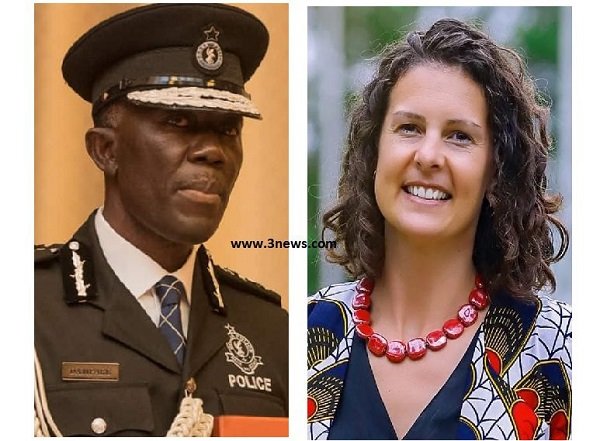
The arrest and prosecution of Barker Vormawor seemed to have ‘fascinated’ the new British High Commissioner to Ghana, Harriet Thompson.
So, on Tuesday, 17th May 2022, the British High Commissioner tweeted:”Oliver Barker Vormawor, covener of #FixTheCountry movement, arrested again, I understand for a motoring offence on his way to court. I’ll be interested to see where this goes…”
Readers, remember? Barker Vormawor is currently being prosecuted on a charge of treason felony.
His first arrest and prosecution was in relation to a social media post in which he threatened to stage a coup if the E-levy Bill, then before Parliament, was passed into law.
According to the police, Barker Vormawor’s social media post, “contained a clear statement of intent with a possible will to execute a coup in his declaration of intent to subvert the Constitution of the Republic of Ghana.”
And without any provocation from the Ghana Armed Forces, Barker Vormawor described the Ghana Army as “useless” in his social media post.
According to Wikipedia, a coup d’etat (French), often shortened to ‘a coup’ in English or ‘overthrow’, is a seizure and removal of a government and its powers.
Typically, it is an illegal seizure of power by a political faction, rebel group, military or by a dictator.
Ghana’s Inspector General of Police (IGP), Dr George Akuffo Dampare, was ‘incensed’ by the British High Commissioner’s tweet, thus, describing it as “misguided, unwarranted and biased.”
In a ‘hot’ statement issued in response to Harriet Thompson’s tweet, the IGP said:”Ordinarily, the Ghana Police Service would not have responded to comments such as yours, obviously made from either a biased or uninformed position.
“However, we have learnt from previous painful experience that it has not been helpful to ignore such misguided, unwarranted and biased comments, intended to tarnish the reputation of the Ghana Police Service and that of our country.
“For the moment, we would recommend a Ghanaian saying, that might guide you in your diplomatic engagements; ‘di wo fie asem’, meaning – ‘learn to keep within the limits of what concerns you’ .
“What is more; we consider your tweet a violation of the Vienna Convention on Diplomatic Relations (1961), which enjoins diplomatic missions not to interfere in the internal affairs of their host countries.”
Virtually lending support to the IGP’s statement, many Ghanaians have ‘chastised’ the British High Commissioner. For instance, Professor Ransford Gyampo, a political scientist and a senior lecturer at the University of Ghana says:”Ghana must be strict in calling out ignorant and low grade diplomats from other countries who unnecessarily poke their noses into the internal affairs of our country, which does not concern them.”
According to Professor Gyampo:”Ghanaian diplomats in other countries do not meddle in the internal affairs of their host countries, and I cannot fathom why it is the opposite in Ghana.
“Foreign diplomats who are of no relevance in their home countries and posted to Africa as punishment, cannot come and dictate to us.
“They should talk about the ills in their home countries first and confine themselves to their role as spies.”
Professor Gyampo added:”The fact that we receive aid doesn’t mean we must be puppets and tolerate diplomatic buffoonery.
“They exploit our natural resources and pay us pittance. They mine our gold and pay us only five per cent! They take our oil and pay us about 13 per cent!”
Professor Baffuor Agyeman-Duah, a governance expert and a former United Nations Senior Adviser shares similar views with Professor Gyampo. He also says;”we are a sovereign nation and there are diplomatic requirements when a nation engages another nation. When they send their diplomats, they are guided by the general convention.
“What some of our diplomatic officers here do, is to unduly poke their noses in our internal affairs.”
Others who “defend” the British High Commissioner, however, say the IGP should have conveyed his concerns about the tweet, to the British High Commissioner, through the Ministry of Foreign Affairs and Regional Integration “and that the IGP went overboard and overstepped his limits.”
The “defendants” of the British High Commissioner claim that her comments were so “innocuous” that she did not deserve any reprimand “because she was only seeking information that could have been given to her without turning it into a ‘battle’.”
Questions being asked by some critics of the British High Commissioner include:”Has the new British High Commissioner been posted to Ghana to instigate a coup, using Barker Vormawor-led #FixTheCountry movement ?
“As a brand new High Commissioner in Ghana, why is Harriet Thompson ‘so much in love’ with somebody who has clearly stated that he will stage a coup to overthrow the Government of the Republic of Ghana?
“There are a lot of motor traffic offenders who have been arrested and are facing prosecution in the country; why is the British woman singling out Barker Vormawor for mention and attention ?
“With the E-levy passed into law, is the British High Commissioner encouraging Barker Vormawor to operationalise his intents of staging a coup and with covert support?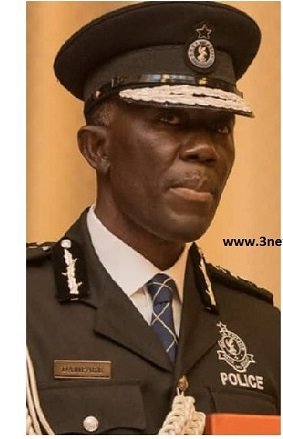
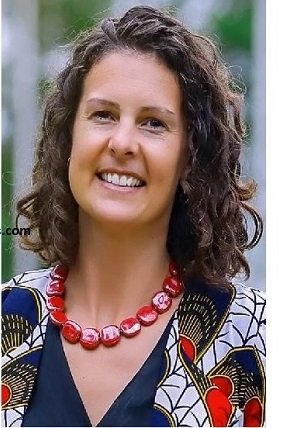
Thompson, British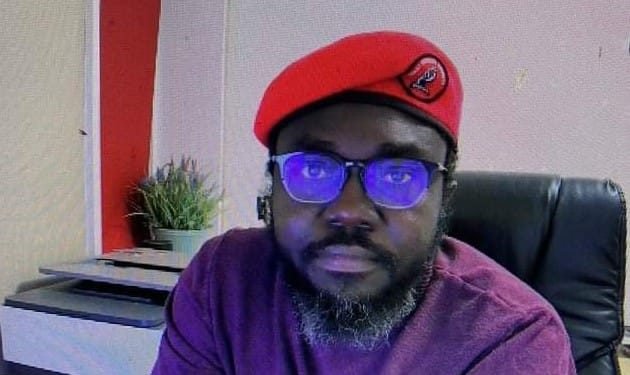
“Is the British High Commissioner not very much aware that the American Embassy in Ghana played a major role in overthrowing Dr Kwame Nkrumah’s regime in 1966?”
Readers, can you also ‘smell’ ‘anything’ in the tweet of the British High Commissioner?
Contact email WhatsApp/ of author:
asmahfrankg@gmail.com (0505556179)
By G. Frank Asmah

The discussion lasted only ten minutes. Mr Philip Sampson, Eunice’s father, had asked to see him, and he was led to the sitting room for the first time, and he indicated that he should sit down.
‘Yes, Kakraba. I know that you have been, er, friends with Eunice for some months now, and naturally, as her father, I thought it would be important to meet you, and to reach an understanding with you on, er, some basic issues. So, I hear you are a graduate in building technology. Now, tell me about what you do’. ‘Okay. I worked with the Electricity Company for two years after National Service. During that time I interacted with some lawyers and land surveyors on our project sites, so I suggested to some of them that we take some dilapidated buildings in some parts of Accra, rehabilitate them and find new owners. Soon after starting that I got a job as Project Manager with a group of development agencies who are executing projects in the Northern Region, so I have been balancing the two positions’.
‘I see. That sounds like a bold step. So is it going well, financially?’ ‘Well, sir, I absolutely enjoy what I’m doing now. Financially, I would only say that I am a work in progress. A lot of what I’m doing now involves some risk taking, as it involves trust issues with land and property owners.
I am partnering with prominent lawyers and land surveyors, so I am not taking any serious risks. So currently I doing okay financially, but it will take me some time before I reach the level where I can say I am comfortable financially.
‘Okay. Now tell me about your parents’. ‘My father was an Agricultural Extension Officer, so we spent some time at several locations with him. He is now enjoying his retirement. And my mother is a retired nurse. I have three elder sisters, all married’.
‘So you live with your parents?’ ‘Yes and no. My dad built his home on one acre at Pokuase, so he gave me one plot, and I have done a three bedroom house, where I live’. ‘
Okay, fine. Thanks for the answers. You see, in addition to my position socially, I spent many years in the diplomatic service, so I’m sure you will understand that I need to ensure that my kids, especially my daughters, maintain suitable relationships. For now I think it is fine that you and Eunice are friends. I’m sure you understand what I mean’.
‘Yes sir. I understand perfectly well’. ‘Great, okay, that would be all’. Kakraba stood up, bowed and said thank you to Mr Sampson, and walked to the garden where his girlfriend Eunice, her mother Mrs. Elaine Sampson and her two elder sisters, Yvonne and Emma, were seated, busily discussing some dresses being offered for sale online.
‘So, Mrs Elaine asked him, you and Daddy had a good discussion?’
‘Yes, Ma. We certainly did. I really appreciate Dad for the discussion. It was really good’. ‘Great. Although he has met you here on quite a number of occasions, I think it is good that you have met for a chat’.
‘Yes indeed, Ma, and I really appreciate it. So Eunice, I will be on my way. I will call’. Eunice led him to his car, and after driving off he exhaled and shook his head. Although he had long concluded that Eunice’s family were so snobbish that a future relationship with her would be problematic, this discussion, or was it interrogation, had virtually cancelled any likelihood.
Mr. Sampson just told him, in no uncertain terms, that the Sampson family was so prominent and socially connected that a union between his daughter and him was undesirable. He had a good relationship with Eunice. They shared some beautiful moments together, and often went out to entertainment joints, often with her three friends Marian, Patricia and Amanda. But Kakraba was often uncomfortable with their preferences. Eunice regularly spoke about her family’s experiences during her father’s postings in Europe and Asia, and her three friends were always discussing the latest fashion trends, always noting the importance of placing themselves among the best dressed ladies in town. Eunice, her mother and siblings had indicated in several ways that he did not quite fit into their social standing. They had only said a mild ‘thank you’ when he brought them a goat or sheep and a generous amount of foodstuffs from the north, every month. But Kakraba did not really take it to heart, because they were quite inexpensive up north. And moreover, he always went to the food market and arranged with the truck drivers for a big package which was picked up by his buddy Paa John and delivered to his family and a few others including the Sampsons.
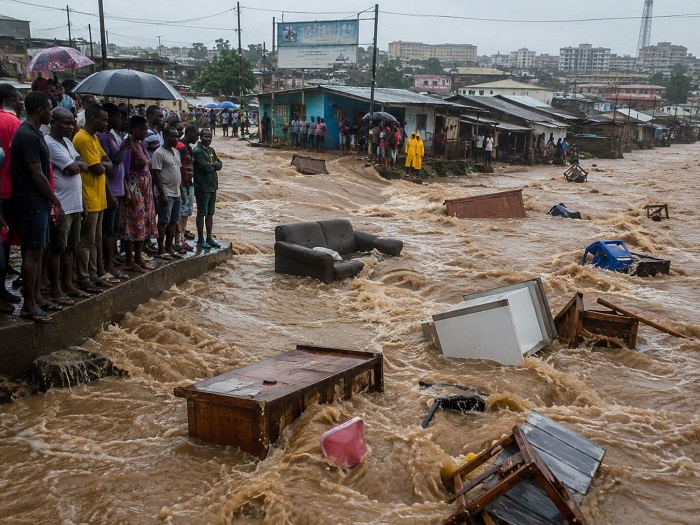
When the floodwaters swept through parts of Ghana on Monday, June 29, they carried away more than furniture and household belongings. They washed away years of hard work, children’s school books, market goods, and family savings and, tragically, claimed lives.
For the families that lost loved ones, no amount of assistance can replace the pain of the silence left behind by someone who got lost during the torrential rains.
For many other survivors, the ordeal did not end when the rains stopped, but rather will have the Herculean task of rebuilding their lives from almost nothing.
Mothers searched through debris for anything they could salvage. Children stood quietly beside damaged homes, unsure of when life would return to normal. Traders who lost their wares stared helplessly at soaked goods that represented their only source of income.
This is the situation whenever it rains continuously for hours, yet, once the waters recede, many of the behaviours that contribute to these disasters return.
Drains once cleared become clogged with plastic waste. Waterways are treated as dumping sites, while buildings continue to spring up on wetlands and natural drainage channels.
Effects on women, children
For many women, particularly market traders, farmers and owners of small businesses, the floods had erased years of hard work in a matter of hours.
Merchandise have been destroyed, equipment damaged, and incomes disappear overnight.
With many women working in the informal sector and having limited financial protection, recovery is often slow and difficult.
Beyond the economic losses, women frequently carry the added burden of caring for their families during and after disasters. They clean flood-damaged homes, care for children, older relatives and the sick, secure food and water under difficult circumstances, and help restore a sense of normalcy while coping with their own trauma.
Children are equally vulnerable. Floods disrupt their education by damaging schools and making roads impassable. Many children are displaced from their homes, exposing them to health risks, emotional distress and unsafe living conditions.
For children from already vulnerable households, a flood has deepened poverty and interrupted their development in ways that last long after the waters have receded.
Human activities
The scale of destruction witnessed during floods is often magnified by human behaviour.
Drains designed to carry storm water are clogged with plastic waste, discarded household items and other refuse.
Wetlands and natural waterways are encroached upon through unplanned development, leaving floodwaters with nowhere to go.
Although floods affect everyone in their path, women and children often suffer the greatest consequences.
Climate Change
Climate change has made rainfall more intense and unpredictable, but it is the actions of humans that often turn heavy rains into humanitarian disasters.
As the nation reflects on the devastation caused by the recent floods, one question demands urgent attention: How much of this destruction could have been prevented?
Climate change and increasingly intense rainfall are undeniable factors, the uncomfortable truth is that many of these disasters are worsened by human actions.
Choked drains, indiscriminate waste disposal and the encroachment on waterways continue to turn heavy rains into avoidable tragedies.
Climate change has undoubtedly increased the frequency and intensity of extreme weather events, but it is only one part of the story.
UNICEF report
These concerns are reflected in UNICEF’s Children’s Climate Risk Report 2026, which warns that hundreds of millions of children worldwide face multiple climate hazards, including flooding.
According to the report, climate-related disasters threaten children’s health, education, nutrition and protection, with children in vulnerable communities facing the greatest risks.
The report also highlights how existing inequalities often compound the impact of climate emergencies on women and children.
Floodwaters contaminated by waste also increase the risk of outbreaks of cholera, typhoid, diarrhoea and malaria. Pregnant women, nursing mothers, young children, older persons and people living with disabilities are particularly susceptible to these health threats.
United Nations (UN) Women notes that women and children are often disproportionately affected by climate-related disasters because they are more likely to experience poverty, carry greater caregiving responsibilities and have fewer resources to recover from disasters.
When floods destroy livelihoods, existing inequalities become even more pronounced. The painful truth is that many of these losses are avoidable.
Way forward
No drainage system, regardless of how well designed, can function effectively if it is filled with refuse. No flood prevention programme can succeed if wetlands continue to be reclaimed for construction or if sanitation regulations are ignored.
Preventing floods is therefore not the responsibility of government alone. It requires a collective commitment from every citizen.
Proper waste disposal, regular community clean-up exercises, respect for planning regulations and the protection of waterways are simple but powerful actions that can save lives.
Government must equally strengthen waste management systems, enforce environmental and building regulations without compromise, invest in climate-resilient infrastructure and ensure that disaster preparedness and response strategies address the specific needs of women, children and other vulnerable groups.
The United Nations Office for Disaster Risk Reduction has repeatedly emphasised that reducing disaster risk is far less costly than responding to disasters after they occur.
Investing in prevention, strengthening institutions and promoting responsible environmental practices remain among the most effective ways of protecting lives and livelihoods.
The recent floods should serve as more than another headline. They should be a national wake-up call.
Climate change may be beyond the control of any one individual, but how we treat our environment is not. Every plastic bottle thrown into a drain, every illegal structure erected on a waterway and every act of indiscriminate dumping contributes to a cycle of destruction that claims lives and undermines national development.
If Ghana is to break that cycle, environmental responsibility must become a shared national value.
By Esinam Jemima Kuatsinu