Health Essentials
Monkeypox outbreak 2022 …and what you need to know

Introduction
It was a warm day in October 2003 in San Diego, California, USA. I was attending the Infectious Disease Society of America’s annual conference. I passionately stood up at a meeting to express my thoughts about media reports connecting Ghana, my country of birth, to a monkeypox outbreak in the US. Fifty three people had contracted monkeypox in a multistate outbreak.
It turned out that after testing and investigation by the CDC, the infection was related to prairie dogs purchased as pets at a pet store in Illinois. The prairie dogs had been kept close to rodents imported from Ghana, a country where the human monkeypox disease has never been reported to date. These rodents were later found to test positive for the monkeypox virus.
The prairie dogs became infected as a result of proximity to the infected rodents and then transmitted the infection to their owners. This resulted in a ban on importation of African rodents into the US to date to prevent further outbreaks. That was the last time the US had an outbreak of monkeypox disease. No one died in the outbreak. One child developed a brain infection or encephalitis.
Monkeypox, a disease caused by the monkeypox virus, occurs very infrequently and in very scattered locations in parts of Africa. There are two clades (or types) of the virus: a West Africa (WA) clade in which 1 to 3.6 out of 100 infected patients die (1% to 3.6% mortality) and the Congo Basin (CB) variant, in which about 10 out of 100 infected patients can die (10% mortality). So far, the virus isolated in this current outbreak is of the West African variant, implying that the risk of dying from this disease is very low.
Background
The outcome of the 2003 outbreak reflects concepts in the natural history of the disease. It is a zoonosis in which humans get infected from infected animals. Monkeypox disease is usually a mild self-limited illness caused by the monkeypox virus. It usually does not require treatment. It can be severe in children, pregnant women, and those with impaired immune systems.
The virus belongs to the orthopox family of viruses. It is a disease that affects animals. It was first discovered in a laboratory monkeys in Copenhagen, Denmark in 1958. The monkeys had been imported from Singapore to study the polio vaccine, giving rise to the name, “monkeypox”. Since then there have been a few more outbreaks in laboratories around the world including the US. However, mentally, people tend to associate it with Africa because in 1970, the first human case was reported in an African child.
Since its discovery in 1970, there have been infrequent occurrences in a few locations around the world. From January 1, 2022, to May 1, 2022, the Democratic Republic of Congo reported 1,238 cases with 57 deaths, while Nigeria reported 46 cases and no deaths. In July and November of 2021, two travelers returning to the US from Nigeria were diagnosed with monkeypox and recovered. Between 2018 and May 2022, there have been nine cases related to travel in non-endemic countries: Two in the US, five in the UK, one in Israel and one in Singapore. None of the travel companions were infected, and only one healthcare worker in the UK became infected.
On May 18, 2022, a man in Massachusetts with no history of travel was diagnosed with a confirmed case of the disease, and eight suspected cases are under investigation. This is occurring at a time when 250 cases have been reported since May 13, 2022, in 18 countries, in persons who have not travelled to the countries where cases have occurred in the past- suggesting a worldwide outbreak. These countries include USA, Canada, Portugal, Spain, Australia, France, Germany, Italy, Netherland, Sweden, and the United Kingdom. Portugal and Spain have the largest numbers. The cases have been found mainly, but not exclusively, in men who have had sex with men, and are seeking care in sexual and outpatient clinics for a rash appearing around the genital areas.
Signs and symptoms
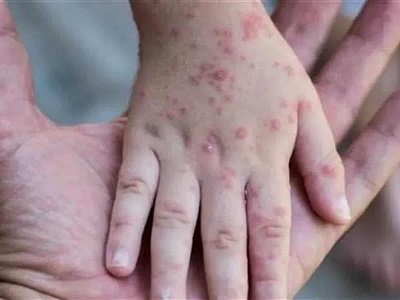
Monkeypox disease starts with a headache, fever, cough, sore throat, and lymphadenopathy (enlarged lymph nodes) accompanied by muscle aches and a profound sense of exhaustion. This lasts about three days and occurs about five to 21days after exposure to an index case. This period of carrying the disease without showing symptoms is known as the incubation period. These initial symptoms are followed by a rash. The rash is made up of flat lesions (macules), which progress to palpable flat-topped rashes (papules), and then to fluid-filled lesions (vesicles). These rashes start around the mouth, progressing to the head, chest and abdomen, and then to the arms and legs, including the palms of the hands and soles of the feet.
Symptoms can mimic chickenpox, smallpox, and syphilis. However, smallpox disease does not present with enlarged lymph nodes. Chickenpox disease has rashes at various stages of development while in monkeypox the stages of the rash is the same on all parts of the body. Chickenpox rash starts on the hands and moves to the centre of the body while the rash of monkeypox starts in the centre parts of the body and marches to the arms and legs. The monkeypox rash is deep in the skin and, therefore, firmer to touch. The individual rashes may have a dimple or appear umbilicated. The fluid in these rashes are infectious. Over a period of two to four weeks, the rashes will scab over and subsequently become noninfectious.
The infected person can transmit the infection in three main ways: direct contact, respiratory droplets and inanimate objects. This period of being infectious starts a day before the person is feverish, and if he or she has a rash, during the whole period of the active rash. First, very close contact may cause the virus in bodily fluids to get onto another person. Second, large respiratory droplets from the sick person can be inhaled leading to infection. Finally, fomites (particles of clothing or other inanimate objects) from the body of the patient can cause the disease to be transmitted too. A pregnant woman can also transmit to her unborn child leading a congenital infection and still birth.
Infection by droplets can occur if an individual is within three to six feet of sick persons. Unlike chickenpox, monkeypox is not airborne and cannot travel for long distances. In this current outbreak, the rash is in the genital area and seems to be occurring in men who have sex with men suggesting that close contact with the skin around the genital area of an infected person is key to the transmission.
Diagnosis
Diagnosis is established by finding the virus using with real time polymerase chain reaction (PCR) or DNA sequencing performed on body fluids from infected persons. There are three categories of sick persons for consideration in view of disease control and mitigation methods.
A suspected case is any person of any age presenting with an unexplained acute rash in a non-endemic country, who has a fever, lymph nose swelling and other characteristic symptoms, and whose rash cannot be explained by causes such as chickenpox, chikungunya virus, zika virus, dengue fever, drug reaction or the more common causes of an acute rash.
A probable case is a suspected case who also has the following: an exposure to a confirmed case, travel history to an endemic country, multiple anonymous sexual partners in the last 21 days, hospitalised or tested positive for the orthopox family of virus with an antibody test or other testing method.
A confirmed case is a probable or suspected case whose bodily fluids have been tested to be positive for the monkeypox virus by real time PCR testing or sequencing. This person should isolate for 21 days, and his or her contacts should be monitored closely.
Prevention and control action points
All doctors and healthcare workers worldwide should be on the lookout for all cases and report to local authorities to allow prompt diagnoses and prevent spread.
All probable and confirmed cases should be reported to the World Health Organisation.
Hospitals and healthcare workers should use standard contact and droplet precautions when they care for these patients. Masks must be worn when in proximity with an infected person because of the respiratory method of transmission. Healthcare workers must promptly identify infections so that confirmed or suspected patients can isolate themselves and prevent transmission and curtail the outbreak.
Specimen from infected, suspected, and probable cases should be handled with care when being transported to designated equipped laboratories to prevent transmission to the laboratory staff.
Treatment and vaccination
In September 2019, a new vaccine, JYNNEOS, was licensed by the FDA for prevention of smallpox and monkeypox in people older than 18 years of age. It was made from the Modified Vaccinia Ankara- Bavarian Nordic (MVA-BN), a live non replicating virus. Its other names are IMVAMUNE, MVA, or IMVANEX. ACAM 2000 is a live vaccinia virus vaccine that was approved in 2007. It tends to cause self inoculation and has been associated with heart muscle inflammation in 5.7 out 1000 recipients. It has 85 per cent efficacy against the monkeypox and has received emergency access investigational drug use for other orthopox viruses such as monkeypox in an outbreak. Both vaccines can be deployed in individuals whose risk of disease acquisition is high and in healthcare workers who have been exposed or may be exposed to the disease.
Tecovirimat is an antiviral agent that occurs in oral formulation and intravenous forms approved by the FDA in July, 2018, and in May 2022 respectively for the treatment of smallpox. Tecovirimat can be used to treat severe monkeypox and is available by calling the US CDC. It goes by the name TPOXX or ST-246. Vaccinia Immune Globulin intravenous (VIGIV) originally licensed for use in complications related to smallpox vaccination is also available for post exposure treatment.
The CDC will take requests for vaccines, Tecovirimat and VIGIV only from State or Territorial health authorities. Medical countermeasures for monkeypox can be obtained by calling the CDC Emergency Operations Centre at 770-448-7100. The CDC can be reached for information by also calling 1-800-CDC-INFO in the US (1800 232 4636)
The general risk of acquiring this infection is currently extremely low. It is nowhere as highly transmissible as COVID-19. The risk of dying from this disease is very low. It has no potential to cause a pandemic.
Stay calm and arm yourself with knowledge.
Ref: www.WHO.Int www.cdc.gov
Dr. Bertha Serwa Ayi is an infectious disease consultant who has been in practice for over 17 years as a specialist.
Www.berthaayi.com
Email: Serwabb@berthaayi.com
By Dr. Kojo Cobba Essel



Don’t we all dream of a life that is filled with laughter? That may be a reason for chasing big bucks, which like the golden-fleece eludes the majority of us. Financial Wellness is extremely important but there are other factors that make us happy and healthy and eventually wealthy.
You definitely do not need to live in Finland to experience happiness even though many people agree that is the “headquarters” of happiness. The happiness in Finland for instance is based on the provision of basic infrastructure and services, minimal corruption and strong social support among others. These go a long way to minimise anxiety making room for one to enjoy the good things of life.
Then when you live in Sikaman and any of its other cohorts, it is challenging to have those in authority create the environment where you can be happy. That’s why you need to “happy yourself” and the happiness hacks below will help you do just that. Even if you live in Finland, you will gain much more by following these steps.
- Wake-Up Ritual
- Say to yourself that today will be a beautiful day or a great day
- Ask God what He has in store for you. Use me Lord (if not a Christian what you believe in will be useful as well.
- Remind yourself of your purpose in life and get out of bed
- Do not grab your phone as the first thing for the day.
- Pray
- Talking to God has a way of calming our nerves. It brings about unexplained peace and when we add praise and worship then the floodgates open. That is how to win battles against unhappiness.
- Smile
- Definitely floods your body with feel good hormones and insulates you from stress
- Smiling is infectious so the more you smile the better and you set off a smiling OR happiness domino effect.
- Meditate
- Extremely good for your brain and an easy way to start is to do deep-breathing and just focus on your “breath” excluding all others. That is what some will prefer to call mindfulness. Being in the moment has immense benefits. Things you never knew existed suddenly spring up.
- Exercise
- That wonder drug that trumps virtually all others. Like smiling it does pour out feel good hormones. Strength training even goes an extra mile causing our muscles to act as “pharmacies” that pour out life-changing signals every time they contract.
- Be kind to yourself & to others.
- We are often too harsh on ourselves. Give yourself a break. Self-care is the real deal!!
- Being harsh to others has no benefits.
- Spend some time doing nothing
- We need to re-set from time to time. Spend about 10 minutes a day doing absolutely nothing. There is happiness and innovation in “idling”. Do not abuse idling though
- Spend time with loved ones
- This is another powerful happiness “hack”. You have to make time and be intentional about this; talk on phone, send messages, arrange to meet for a drink or meal. Social Wellness ranks very high on the happiness index and it’s fairly easy to plug into it.
- While spending time together remember that your choice of food and drinks also impacts on how happy or sad or anxious you may feel.
- Indulge in a hobby
- Our bodies and brain love variety. Do you have a hobby? Get one
- Write in your gratitude diary
- That is all it takes – keep doing it regularly.
This list is not exhaustive but definitely a good start. Share your happiness hacks with me via email and together we can keep the world smiling and happy.
At the end of each day ask yourself if you did better than the previous day. That is all it takes. Doing better than the previous day for 365 days, for 5 years, 10 years… How amazing that will be!!!
AS ALWAYS LAUGH OFTEN, ENSURE HYGIENE, WALK AND PRAY EVERYDAY AND REMEMBER IT’S A PRICELESS GIFT TO KNOW YOUR NUMBERS (blood sugar, blood pressure, blood cholesterol, BMI)
Dr. Kojo Cobba Essel
Health Essentials Ltd/Medics Clinic
(dressel@healthessentialsgh.com)
*Dr. Essel is a Medical Doctor with a keen interest in Lifestyle Medicine, He holds an MBA and is an ISSA Specialist in Exercise Therapy, Fitness Nutrition and Corrective Exercise. He is the author of the award-winning book, ‘Unravelling The Essentials of Health & Wealth.’
Thought for the week – “There is no magic formula to being happy but making a conscious effort to be happy goes a long way.” – Dr. Kojo Cobba Essel
By Dr. Kojo Cobba Essel
SKIP THE QUEUE, TAP THE NEWS

You can now read the Ghanaian Times and The Spectator newspapers from the comfort of your device via TimesNewsPlus.
Join our WhatsApp Channel: https://whatsapp.com/channel/0029VbBElzjInlqHhl1aTU27
There are thousands of diet plans and some people change them almost as often as they change their underwear. We have fallen in love with pills and injections all in a bid to fast-track the wellness dream. The plastic surgeon’s blade and even prayers have all been called upon to perform miraculous acts. Is there a single path to achieving Wellness or has man found that wonder pill yet?
Is the result of an annual medical examination all that is needed to determine how well one is? Can you have great reviews in the clinic yet feel tired and unhappy? Does wellness obey the all or none law or is it a whole spectrum where majority of us fall within?
Wellness involves at least six (6) areas or pillars that we need to balance since they all work together to make us the best versions of ourselves.
When we fall short in any one of them, it may have consequences in other areas but we don’t need to be perfect in any area; balance is all that is needed. The era of lockdown for instance brought to the fore the importance of Social Wellness; many of us felt isolated when we had to avoid our work colleagues for weeks on end. Even the output of some of us dipped. Oh, you surely are not alone. Even people you detested meeting in the office you now longed to spend time with. Breathe a sigh of relief; that feeling is normal, nothing untoward is happening to you. The majority of us humans are social beings and we blossom when surrounded by family and friends and hugs and handshakes are the norm.
The Six Pillars of Wellness.
- Physical
- Mental
- Social
- Financial
- Digital
- Spiritual
Physical Wellness
Are you taking proper care of your body? Do you exercise, eat right and get your regular medical examinations?
Avoid awkward postures like sitting slouched forwards or bending at the waist to pick an object. Surely you are washing your hands regularly with soap and water. Have you noticed the loud silence from cholera when handwashing was fashionable during the pandemic?
Mental Wellness
The way you think, act or feel falls into this category but it is definitely not an island on its own. Your physical well-being and all the others impact on your mental health.
Time to relax, sleep, manage your time, enjoy nature and be kind to others. These together with deep breathing and laughter, go a long way to keep your mental health in great shape.
Social Wellness
The relationships we have and the way we interact with others. Your mental health, physical health all impact on your relationships. When you exude happiness, people give it right back to you. Build strong relationships; just a few trustworthy people who you can share your challenges with will go a long way to stabilise your mental health and pave the way for all others to flow. When you feel unduly stressed do you have anyone you can speak to before getting professional help? Do not be a loner.
Financial Wellness
How secured is your money? Are we prepared for emergencies in an uncertain future? We need baseline financial security to be able to get all the other pillars working seamlessly. How can you eat well or get medical examinations done with no financial backing? Finances tend to be one of the greatest stressors in life. Do not ignore the need for financial stability, you need it more than you can imagine. Speak to someone who can assist you plan your future TODAY.
Digital Wellness
What measures are you taking that aim at regulating and improving healthy use of technology? If you set virtual meetings, training programmes etc. all day because you are working from home, then when do you get to rest your mind, eyes and back from prolonged sitting among many others? One thing will lead to another. Many of us can hardly unplug. Our phones are on 24/7 and we think sleep is a luxury. NO! Inadequate sleep will open the floodgates to a tonne of health challenges including stress, overeating, alcohol abuse, fatigue and even accidents from fatigue.
Get sleep; it’s a lifeline!
Spiritual Wellness
Are you connected to a greater being who provides us with a sense of purpose, values, principles, morals and beliefs among many others?
If you asked for my opinion, I recommend God. Speak to him daily (prayer) and he will set you on the right path.
In all things do not specialise in one or a few of these pillars of wellness. We should all aim at getting a fair balance in each area and we can be the very best of ourselves. Now do not put unnecessary pressure on yourself; everyone has challenges but taking one step at a time and always remembering that we need different aspects to make life the best that it can be.
AS ALWAYS LAUGH OFTEN, ENSURE HYGIENE, WALK AND PRAY EVERYDAY AND REMEMBER IT’S A PRICELESS GIFT TO KNOW YOUR NUMBERS (blood sugar, blood pressure, blood cholesterol, BMI)
Dr. Kojo Cobba Essel
Health Essentials Ltd/Medics Clinic
(www.healthessentialsgh.com)
*Dr. Essel is a Medical Doctor with a keen interest in Lifestyle Medicine, holds an MBA and is an ISSA Specialist in exercise therapy, fitness nutrition and corrective exercise. He is the author of the award-winning book, ‘Unravelling The Essentisals of Health & Wealth.’
Thought for the week – “Defining health and wellbeing; The World Health Organisation (WHO) defines health as ‘a state of complete physical, mental and social wellbeing and not merely the absence of disease or infirmity’ (WHO, 1948).”
SKIP THE QUEUE, TAP THE NEWS
You can now read the Ghanaian Times and The Spectator newspapers from the comfort of your device via TimesNewsPlus.
Join our WhatsApp Channel: https://whatsapp.com/channel/0029VbBElzjInlqHhl1aTU27