News
A Royal Reunion: Yagbonwura pays historic visit to Manhyia, pledges deeper traditional cooperation


The centuries-old relationship between the Gonja and Asante kingdoms received a significant boost on Monday when the Yagbonwura, Bii-Kunuto Jewu Soale I, paid a historic visit to the Asantehene, Otumfuo Osei Tutu II, at the Manhyia Palace in Kumasi.
The royal encounter, attended by paramount chiefs, queen mothers, traditional elders, government officials, academics and cultural enthusiasts, was more than a ceremonial exchange of greetings.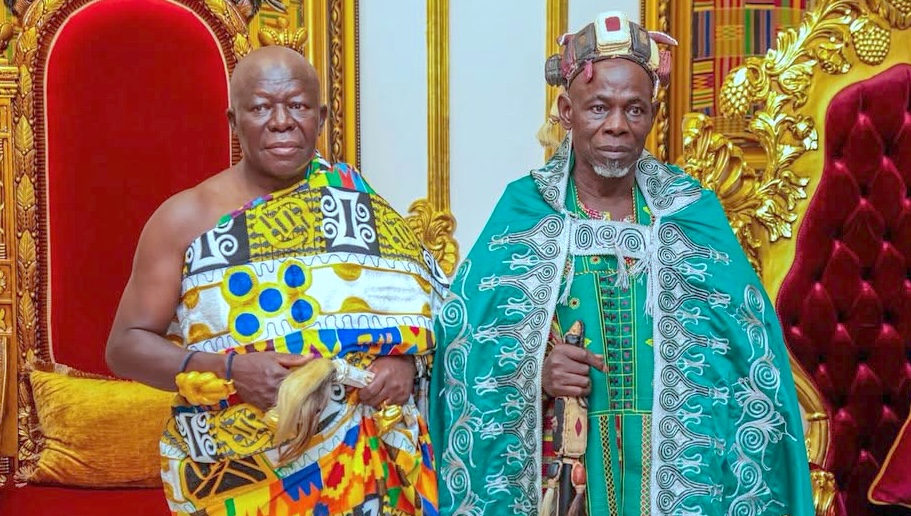
It underscored the enduring role of Ghana’s traditional authorities in promoting national unity, peaceful coexistence and cultural preservation.
Accompanied by a distinguished delegation from the Savannah Region, the Yagbonwura arrived in regal splendour, showcasing the rich cultural heritage of the Gonja Kingdom through traditional drumming, praise singing, symbolic gifts and elaborate royal protocol.
The reception at the Manhyia Palace reflected the dignity and grandeur associated with the Asante Kingdom, creating an atmosphere of mutual respect between two of Ghana’s most revered traditional institutions.
Although the Gonja and Asante kingdoms share a history marked by periods of diplomacy, trade, rivalry and political interaction, the meeting demonstrated how historical relationships have evolved into one founded on reconciliation, cooperation and mutual respect.
The discussions centered on strengthening collaboration among traditional authorities to address contemporary national challenges, including peacebuilding, youth empowerment, education, environmental protection, cultural tourism and economic development.
Both monarchs acknowledged that traditional leadership continues to complement constitutional governance by promoting dialogue, resolving disputes and mobilising communities for development.
Observers described the meeting as a significant demonstration of the critical role chiefs continue to play in safeguarding Ghana’s peace and social cohesion.
The visit highlighted the growing influence of traditional institutions in national development. Across Ghana, chiefs increasingly contribute to conflict resolution, environmental conservation, educational advocacy and community development while serving as custodians of the country’s cultural heritage.

For many participants, the gathering reaffirmed that the authority of traditional rulers extends beyond ceremonial functions to include moral leadership and social responsibility.
The occasion also offered younger generations a unique opportunity to witness centuries-old customs that continue to shape leadership, identity and governance in modern Ghana.
The colourful display of royal umbrellas, ceremonial swords, linguists, traditional drumming and court protocol served as a vivid reminder of Ghana’s rich cultural diversity and the resilience of indigenous governance systems.
A major highlight of the visit came when Otumfuo Osei Tutu II assured the Yagbonwura and the people of the Gonja Kingdom that he would pay a reciprocal visit to the Savannah Region.
The announcement was warmly received by the Gonja delegation and was widely interpreted as a symbol of renewed friendship and stronger collaboration between the two historic kingdoms.
The two monarchs reaffirmed their shared commitment to promoting peace, preserving Ghana’s cultural heritage, empowering young people, supporting education and healthcare, and fostering sustainable development within their traditional areas.
They emphasised that stronger collaboration among traditional rulers would contribute significantly to national cohesion and complement the country’s democratic governance structures.
As the royal delegation departed the Manhyia Palace, the significance of the visit extended far beyond its ceremonial splendour.
The meeting marked a renewed chapter in the relationship between the Gonja and Asante kingdoms and reaffirmed the importance of dialogue, reconciliation and mutual respect in strengthening Ghana’s traditional institutions.
At a time when societies around the world continue to grapple with division and conflict, the image of two revered monarchs meeting in friendship offered a powerful reminder that unity remains one of Ghana’s greatest strengths.
The historic encounter is expected to deepen cooperation between the two kingdoms, promote greater cultural exchange and reinforce the enduring contribution of traditional leadership to Ghana’s peace, stability and national development.
From Geoffrey Buta, Kumasi

News
GES directs Ashanti Regional, Obuasi Municipal Education Directors to step aside over Obuasi SHTS scandal

The Management of the Ghana Education Service (GES) has directed the Ashanti Regional Director of Education, Dr. William Amankrah Appiah, and the Obuasi Municipal Director of Education, Mr. Kwamena Owusu-Nketiah, to step aside with immediate effect.
The directive forms part of ongoing investigations into allegations of sexual misconduct involving the headmaster of Obuasi Senior High Technical School (SHTS), Mr. Zakaria Abdulai.
According to GES, the decision is intended to ensure that the investigations proceed without potential interference, nor the perception of it.
The two directors are to hand over their offices and all state property in their possession to the Deputy Ashanti Regional Director of Education, Mr. Thomas Kwame Boateng.
Management added that the headmaster, Mr. Zakaria Abdulai, also remains interdicted and therefore urged the public to ignore any news circulating that he has been cleared.
Management is calling for calm, support and cooperation as thorough investigations into the matter continue.
By Edem Mensah-Tsotorme
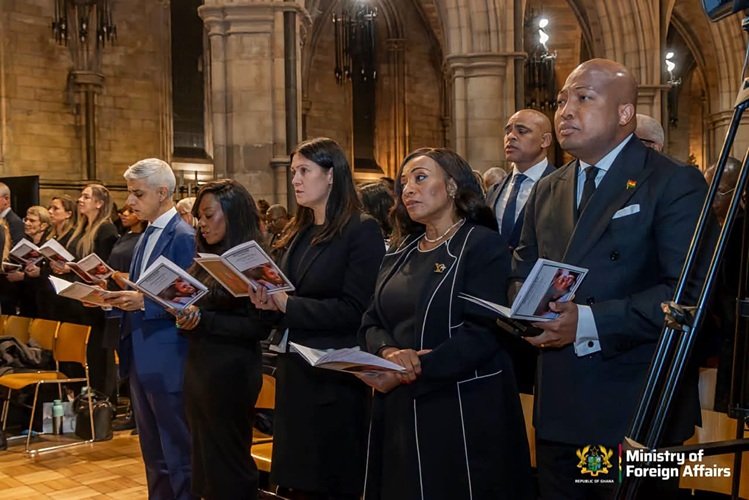
The Minister for Foreign Affairs, Samuel Okudzeto Ablakwa, has joined the family of the late Professor Jason Atta Kwei Arday, the Ghanaian community in the UK, and other dignitaries for a memorial service in Southwark, UK.
In a post, Mr. Ablakwa described the service as deeply moving and unforgettable, held in honour of the late professor’s memory.
According to him, in keeping with the government’s pledge, he joined the family, Ghana’s High Commissioner to London, British MPs, Ministers, the Mayor of London, Cambridge scholars, Prof. Arday’s students and loved ones to pay respects and honour his inspiring legacy.
Mr. Ablakwa noted that Prof. Arday’s accomplishments as the youngest Black professor appointed at the University of Cambridge and his widely appreciated charitable contributions will continue to inspire generations.
“The Government and People of Ghana will continue to stand by our compatriots everywhere they are in the world. As we do so, we profess our commitment to justice, equality and the creation of a new world,” he said.
He prayed for fortitude for the family in what he described as an extraordinarily difficult time.
“We shall always remember Prof. Arday for his response when asked what he will wish to do to change the world: ‘I would take a thread and a needle, and I’d interweave love into our society’,” Mr. Ablakwa added.
By Edem Mensah-Tsotorme