Sports
WAFCON 2026:Africa women chase continental glory

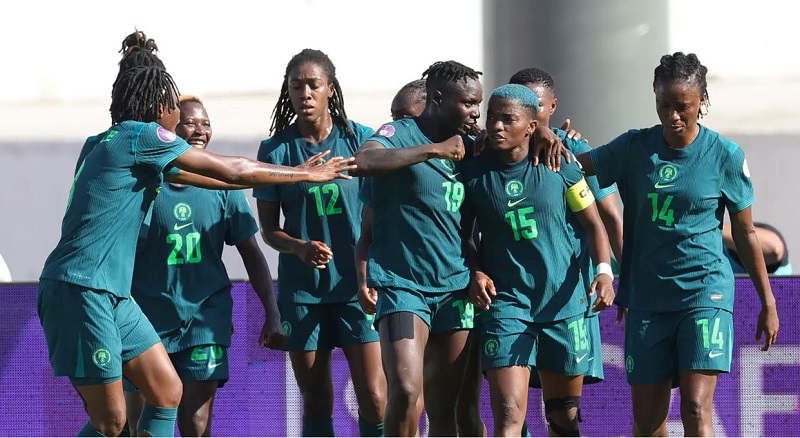
With the World Cup fever gradually dying down, attention would switch to other equally important competitions from now to the latter parts of the year.
Barely a week after the global football showpiece that saw Spain upstaged Argentina as World Champions, over 70 countries gathered in Glasgow, Scotland for the Commonwealth Games that is attracting hundreds of athletes from the Commonwealth community.
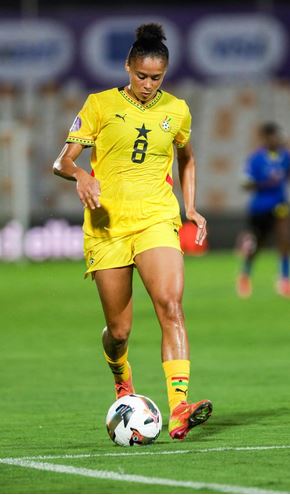
Equally, 16 top female national teams in Africa would commence competition for the bragging rights as African champions when the delayed Women’s Africa Cup of Nations 2026 kicks off in Morocco tomorrow.
The Super Falcons of Nigeria are usually considered favourites for this showpiece, having shown the strength and character to dominate the game on the continent.
As defending champions, they come in strongly again, expected to face a more difficult sides like the Black Queens of Ghana, Zambia and Morocco who have been touted as possible teams to cause an upset.
Of the 16 qualified teams, nine featured at the previous edition held in 2024.
Botswana, the Democratic Republic of the Congo and Tunisia, who qualified in 2024, missed out this time, while Cape Verde and Malawi will make their first appearance in the tournament.
Today, The Spectator Sports takes a look at some of the teams expected to rub shoulders with the big guns in the female game.
Cameroon
After missing the previous edition, Cameroon returns to the CAF Women’s Africa Cup of Nations Morocco 2026 determined to re-establish themselves among Africa’s elite.
The Indomitable Lionesses, one of the continent’s most successful women’s national teams, secured a place at the expanded 16-team tournament after receiving a second chance through CAF’s revised qualification system.
Now, under newly appointed head coach Valentine Nguele and inspired by emerging midfield star Naomi Eto, Cameroon will be aiming not only to reclaim their place among Africa’s leading nations but also to secure qualification for the 2027 FIFA Women’s World Cup.
Cameroon boasts one of the richest histories in the Women’s Africa Cup of Nations.
The Indomitable Lionesses have reached the final on three occasions—in 2004, 2014 and 2016—but are still searching for their first continental title.
Their consistency has also been reflected in three third-place finishes in 2002, 2012 and 2018, giving Cameroon six podium finishes overall.
Only Nigeria and South Africa have accumulated more top-three finishes in the history of the competition, underlining Cameroon’s long-standing status among Africa’s leading women’s football nations.
Zambia
After finishing third in 2022 and falling short of expectations at the 2024 edition, Zambia head to the TotalEnergies CAF Women’s Africa Cup of Nations Morocco 2026 determined to establish themselves among Africa’s elite.
With one of the continent’s most feared attacking units and new head coach Nora Häuptle at the helm, the Copper Queens will be aiming to lift the Women’s AFCON trophy for the first time.
Barbra Banda remains one of the biggest names in African women’s football.
The Orlando Pride striker has established herself among the leading forwards in the National Women’s Soccer League (NWSL) and returns to international competition after recovering from a hip injury suffered late last year.
Powerful, direct and clinical in front of goal, Banda will once again spearhead Zambia’s attack as the Copper Queens pursue their first continental title.
Burkina Faso
Burkina Faso (Stallions Ladies) return to the competition determined to make history after missing the 2024 edition. Encouraged by an impressive qualifying campaign, the Stallions Ladies head to Morocco aiming to progress beyond the group stage for the first time.
Burkina Faso secured qualification with convincing victories over Burundi and Togo.
The Stallions Ladies defeated Burundi 5-1 on aggregate, following a commanding 4-1 first-leg victory before completing the job with a 1-0 win in the return fixture.
They carried that momentum into the final qualifying round against Togo, winning 2-0 in the first leg before sealing qualification with another 1-0 victory to complete a 3-0 aggregate success.
Nigeria
Reigning champions Nigerias head to Morocco 2026 looking to extend their remarkable record in the competition. With 10 continental titles to their name, the Super Falcons remain the most successful team in the tournament’s history..
Led by Captain Rasheedat Ajibade and head coach Justine Madugu, Nigeria once again begin the competition among the favourites.
Nigeria secured qualification to Morocco 2026 by defeating Benin 3-1 on aggregate in the second round of qualifying.
Having received a bye in the opening round, the Super Falcons took control of the tie with a 2-0 away victory in Cotonou.
They completed the job in Abeokuta, drawing 1-1 in the second leg after Ashleigh Plumptre opened the scoring before Benin equalised through Yasmine Djibril.
The result ensured another successful qualification campaign for the reigning African champions.
Cote d’Ivoire
After a 12-year absence from Africa’s biggest women’s football competition, Côte d’Ivoire returns to the TotalEnergies CAF Women’s Africa Cup of Nations aiming to re-establish themselves among the continent’s leading nations.
The Elephants secured an unexpected route back to the finals following the expansion of the tournament from 12 to 16 teams.
Now guided by experienced French coach Reynald Pedros and inspired by prolific striker Habibou Ouedraogo, Côte d’Ivoire believe they have the talent to challenge Africa’s established powers once again.
The Elephants were knocked out in the final qualifying round after a fiercely contested tie against Senegal. Neither side managed to score across the two legs, with Senegal eventually prevailing 5-4 on penalties to deny the Ivorians automatic qualification.
Following the expansion of the Women’s AFCON from 12 to 16 participating teams, CAF allocated the additional places based on the FIFA Women’s World Ranking.
⚽ Group A: Morocco, Algeria, Senegal, Kenya,
⚽ Group B: South Africa, Ivory Coast, Burkina Faso, Tanzania
⚽ Group C: Nigeria, Zambia, Egypt, Malawi
⚽ Group D: Ghana, Cameroon, Mali, Cape Verde
By Andrew Nortey


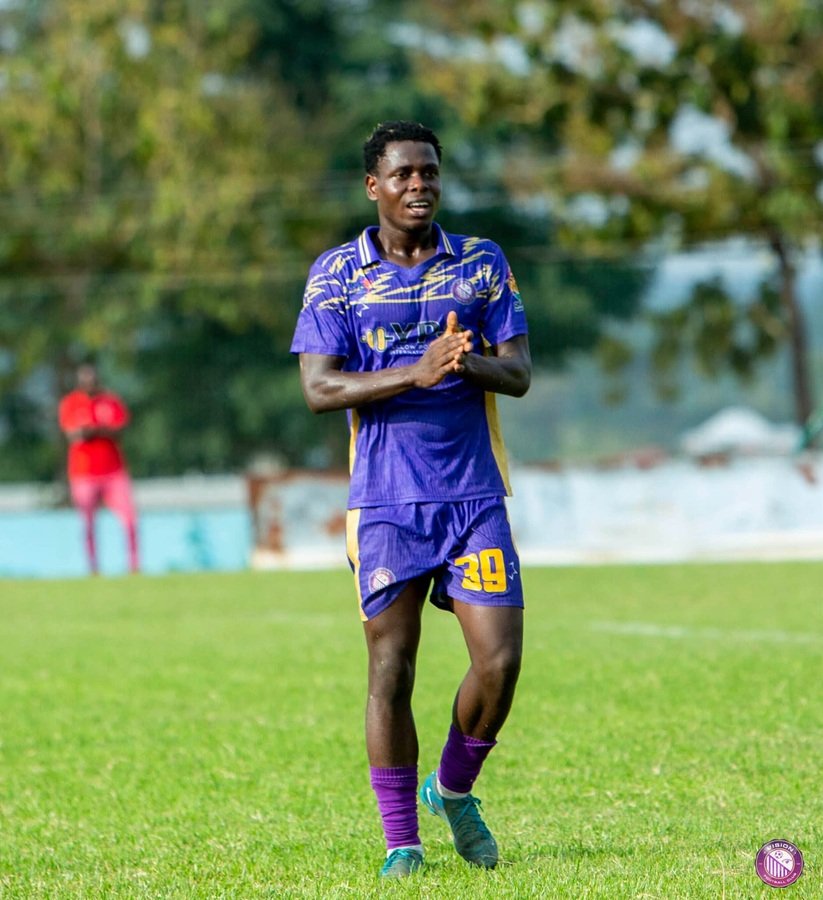
Accra Hearts of Oak will aim to assume the top spot of the Ghana Premier League (GPL) when they travel to Tema to face Vision FC at the Nii Adjei Kraku Sports Complex today.
Perched at the second spot and trailing leaders Medeama with three points, the Phobians would need to snatch the maximum points and a superior goal aggregate to have a taste of the top spot, at least for a day.
It will be a game full of fireworks considering Hearts’ impressive performance on the road against Vision’s strength at home.
The Matchday 6 games would also witness a Saturday clash between Heart of Lions and Berekum Chelsea FC at the Kpando Stadium.
Asante Kotoko’s home clash against Young Apostles will headline tomorrow’s games as they aim to bounce back after the previous week’s defeat in Swedru.
At the Nsenkyire Sports Arena, FC Samartex will test Medeama SC’s character when they clash in what could affect their respective positions on the table after the round seven matches.
After the giant-killing feat over Asante Kotoko, Swedru All Blacks will lock horns with Karela United at the Swedru Stadium just as Basake Holy Stars engage Bechem United at the AAK II Sports Arena,
Fireworks is anticipated at the Debibi Presby Park in the Bono region where Debibi United FC look poised to face Gold Stars.
At the Nana Agyemang Badu I Park, Aduana FC will welcome FC Ashantigold in a clash that will see fans applaud afternoon.
By Andrew Nortey
SKIP THE QUEUE, TAP THE NEWS
You can now read the Ghanaian Times and The Spectator newspapers from the comfort of your device via TimesNewsPlus.
Join our WhatsApp Channel: https://whatsapp.com/channel/0029VbBElzjInlqHhl1aTU27

Over two decades ago, I made a statement that if I was given the sole responsibility to come out with the league fixtures for the season, I could give some advantage to some clubs and make winning the league difficult for other clubs. People laughed it off.
To them, it didn’t make sense because in a league in which all clubs play each other twice, things will ‘balance out,’ and the best club will win. I disagree, and I will explain.
In recent times, it seems Kumasi Asante Kotoko has more difficult first five games in the league than arch rivals Accra Hearts of Oak. Debatable?
This is exactly one of the ways to make it difficult for a club to win the league (if a club is marginally better than the others). How can making the first matches in the league difficult for a club lead to a disadvantage for the club?
A. The club starts on a poor note and may struggle to catch up
Imagine a club playing its first five matches against its most difficult opponents. If the club draws all five matches, it will end up with five points. A rival club that plays its easiest matches in the first five games could end up with 15 points.
It will not be easy for the club with five points to catch up with the club with 15 points because other factors will come in.
B. Psychological ‘boost’ for the winning club and possible stress/’depression’ for the seemingly struggling club
The team that is winning gets a boost. They appear to be better. Their players get confident. Their strikers may be leading on the Goal King chart. Their goalkeeper(s) will be having more clean sheets – finishing matches without conceding goals.
This will be opposite for the team that played more difficult matches. The supporters may be demanding more from the players, putting them under more pressure.
Some of the players may ‘crack’ under the pressure. New players are especially more difficult to settle down. They may end up on the bench for subsequent matches and may struggle to recover and come back into the first team.
C. The coach may be sacked or may resign/leave under pressure
The coach of the club that plays more difficult matches will come under pressure. The coach is likely going to be judged by the points accrued and the position of the club on the league table, not by the quality of opposition faced.
The pressure will come from the bosses and the supporters. The coach may end up being sacked or resigning/leaving under pressure.
D. Players more likely to get injured in tough matches
The club that plays more difficult matches is likely to record more injuries of its players early in the season. Some players may miss the whole season through injuries.
On the other hand, the club that plays easier matches earlier in the season will have the luxury to substitute and rest players when they are comfortably leading in matches.
Players may not have to exert themselves so much, reducing the risk of injuries.
E. Supporters abandon the team that is not winning and may not go to the stadium to give home support
If a club is not winning, its supporters may not pay money to go to the stadium to watch matches. In fact, they may not even go to the stadium if they are asked to go and watch matches for free.
This will not only have financial consequences for the club, an almost empty stadium takes away the home advantage from the ‘intimidation’ of supporters.
The above are all reasons why the first games in the league can give an advantage or a disadvantage to clubs.
Once this it accepted, it means there must be fairness in coming up with the league fixtures if we want the best club(s) to emerge as winners who can represent the country and not disgrace the country internationally.
A transparent way of coming up with the league fixtures is needed (like how balloting is done for knockout competitions).
This way, clubs and individuals cannot complain that someone or some people decided to favour some clubs through the league fixtures.
By Dr. (Med) Kofi Effah
SKIP THE QUEUE, TAP THE NEWS
You can now read the Ghanaian Times and The Spectator newspapers from the comfort of your device via TimesNewsPlus.
Join our WhatsApp Channel: https://whatsapp.com/channel/0029VbBElzjInlqHhl1aTU27