
Features
Digitilisation to the rescue on our roads

A lot of ways have been tried in curbing the indiscipline on our highways, that have resulted in needless deaths and devastating injuries over the years, in this country.
There has been a lot of educational drives to let drivers plying these roads to realise the dangers of over speeding and the consequent destruction of properties and livelihoods, as well as the destabilisation of families.
Finally, the powers that be, have now decided that enough is enough and so they are now employing the assistance of AI to help ensure compliance with the road regulations by road users especially drivers.
What I like about this initiative is the elimination of the human element, which is prone to manipulation such that often times enable offenders to go scot free and also encourages corruption.
The abuse of power by some police officers on our roads, from the first of November, 2026 will hopefully be a thing of the past. No policeman will be required to demand to see your licence on the highways or roads anymore.
There is a funny twist to all this new initiative in the sense that I forsee a situation where some unscrupulous police officers who had been illegally making money on our roads, will now be seeking transfer from the MTTD.
Nigerian man would say the milk in the cash cow don dry up. There should be modifications in the software to capture things like worn tyres which has also been a source of some terrible crashes resulting in loss of lives.
This will go a long way in preventing needless deaths and injuries which in the long run affects the productivity of the nation and therefore the national economy.
There must be proactive initiatives to deal with vehicles that break down on our roads and punishment must be heavy and swift enough to serve as a deterrent to other drivers. A vehicle breaks down on the highway, for instance, and the driver instead of putting warning triangles behind it to warn other drivers, decides to leave it there and go searching for a mechanic to come and repair the fault.
There must be a system that should pick up the breakdown and monitor the actions of the driver in terms of him calling for a tow truck immediately and if this is not done after say five minutes, the control centre should immediately contact the nearest Tow Truck to handle the situation. The driver must then be sent a message to appear in court for attempted murder.
This will surely compel other drivers to comply with the road regulations and prevent avoidable crashes of vehicles on our roads.
The benefits that will accrue to the state by the implementation of this initiative are enormous. The first is the reduction in the number of vehicle crashes and therefore the reduction in the loss of lives and property.
We need to bear in mind that whenever there is fatality resulting from a crash of vehicles on our roads, the first cost to the nation is the loss that individual or individuals could have made to the economic growth of the nation.
If he, she or they were educated, it means government has list all the investment made in educating him, her or them. Therefore it is not just a simple matter of some people have died and life goes on.
The nation has lost something, families may have lost a provider, a brother, a sister, a son, a daughter, a mother or a father and the vacuum, the pain etc. to the families involved cannot be quantified.
The nation must therefore embrace this new initiative to bring sanity and discipline on our roads for the benefit of everyone. God bless.
By Laud Kissi-Mensah
SKIP THE QUEUE, TAP THE NEWS
You can now read the Ghanaian Times and The Spectator newspapers from the comfort of your device via TimesNewsPlus.
Join our WhatsApp Channel: https://whatsapp.com/channel/0029VbBElzjInlqHhl1aTU27

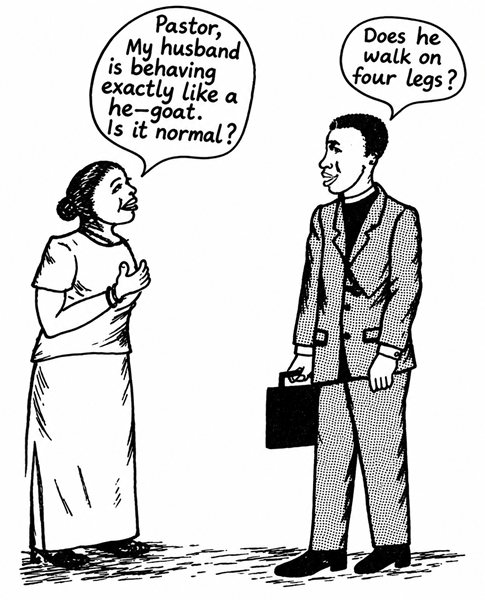
In a certain Asian country, it is fashionable for jilted males to commit suicide. So if you get jilted and you don’t hang yourself, it means you are not trendy.
You do not know what is happening on the bandwagon. You better get on board and die for love. You must show your love!
In many parts of Africa, I guess people are not prepared for such craze. When a man gets jilted, he thinks it is a blessing and he is grateful to God. He sings to the glory of God and gives thanks for His kind mercies.
The jilted man may even offer to hold a small farewell party for the lady. “Fare thee well, my sister! May God bless you and bless me too.”
In some countries, love is seen as a matter of life-and-death. So much is committed to it and that makes it a dangerous undertaking. You’ll find students jumping from fourth floors to their death, with a suicide note in their pocket.
“I have decided to end it Ken, my heart.” In Africa, this is called dog love. A dog can abandon its master and refuse food and go in search of love. If it doesn’t return, it means it has died in the process.
I hear a Ghanaian medical student has killed himself just because his parents wouldn’t allow him to marry his sweetheart whom he had allegedly impregnated. My heart goes out to him. Why kill yourself?
The fact is that student suicide is gradually becoming common in Ghana. A student who was reportedly sick for sometime recently went acrobatic and tumbled from the fourth floor. He was dead on arrival (DOA) to the floor below. Sad news! It was alleged that due to ill-health, he had to rewrite an exam paper. May be, that was too much for him.
‘Sikaman Palava’ is having feelers and fillers that broken love relationships in the universities are a cause of some dismal academic performances on the campuses.
It means the schools of higher learning have become love nests, where hearts can be broken and mended. If yours doesn’t mend, then you’re a goner.
Well, it is normal that when students get to the university, then they must have become adults. Naturally, they drift towards the opposite sex to find something called LOVE, Unfortunately, some of those who find it do not know how to handle it; they commit their hearts and souls to it.
University love is meant to be a game. And like every game, it has its rules and regulations. Love in university is a pastime, to relieve you of tension after a gruelling day of lectures and tutorials. It is not supposed to be conducted like full-blown marriage. No honeymoon is expected. Don’t get hooked like cocaine!
The first rule in university love is that: YOU CAN BOUNCE AND YOU ARE ALSO LIABLE TO BE BOUNCED. This rule is based on the premise that the university is not a marriage marketplace. It is primarily a place of academic advancement and must be regarded as such.
The second rule is that: WHEN YOU ARE BOUNCED, REORGANISE. It means when you are jilted, don’t go whining like a wounded dog. Go and get a more beautiful girl or more handsome akupa. That is how the game is played.
When we were in Legon, someone was bounced seven times. He didn’t give up. That is the spirit.
Those who have forgotten why they are in school should be reminded that their parents did not pay fees for them to be chasing love on campus. Nay. They must commit themselves to their books. That is their calling!
This article was first published on Saturday September 2, 2006
SKIP THE QUEUE, TAP THE NEWS
You can now read the Ghanaian Times and The Spectator newspapers from the comfort of your device via TimesNewsPlus.
Join our WhatsApp Channel: https://whatsapp.com/channel/0029VbBElzjInlqHhl1aTU27
Cultural myths and clinical misconceptions surrounding breast cancer remain prevalent, often leading to either unnecessary anxiety or dangerous complacency. Differentiating between anecdotal folklore and rigorous oncological science is vital for effective screening, early detection, and public health advocacy.
Common misconceptions examined
Misinformation manifests across several domains, from anatomical risk factors to diagnostic certainty:
Exclusive female prevalence: A widespread belief suggests that breast cancer is exclusively a women’s disease. While significantly less common, male breast cancer accounts for roughly 1% of all global diagnoses, stemming from the presence of a small amount of residual breast tissue and genetic factors such as BRCA2 mutations.
Universal malignancy of lumps: It is frequently assumed that any palpable mass discovered during a self-exam is definitively cancerous. In clinical practice, the vast majority of evaluated breast lumps are benign (non-cancerous) conditions, such as fluid-filled cysts, fibroadenomas, or localized inflammation.
External artifacts and consumer products: Persistent myths attribute breast cancer to wearing underwire bras (supposedly by restricting lymphatic drainage) or using aluminum-based antiperspirants. Extensive epidemiological research has found no scientific correlation linking these everyday consumer items to tumor development.
The family history guarantee: Many assume that a clean family lineage ensures immunity. Statistically, approximately 85 per cent of individuals diagnosed with breast cancer have no direct family history of the disease, making routine population-wide screening essential for everyone.
The implications of cultural myths on clinical outcomes
When patients internalize inaccurate narratives, clinical trajectories can be compromised. Misinformation often results in delayed medical consultations when symptoms appear, unwarranted fears regarding standard surgical or systemic treatments, or total avoidance of screening mammography. Grounding public understanding in evidence-based pathology ensures that individuals approach diagnostics and care with structural clarity rather than fear.
There are a lot of common rumors and myths floating around about breast cancer. Some of these myths cause unnecessary panic, while others make people ignore important warning signs.
Let’s clear up four of the biggest myths using everyday examples.
Myth 1: “Only women get breast cancer.”
The Reality: While it is much more common in women, men can get breast cancer too.
The Example: Both men and women are born with small amounts of breast tissue. Because men often assume breast cancer is impossible for them, they might ignore a warning sign for too long. About one per cent of all breast cancer cases happen in men.
Myth 2: “Finding a lump means you definitely have cancer.”
The Reality: Discovering a lump in the breast can be scary, but most lumps are benign (non-cancerous).
The Example: Think of finding a small, smooth pebble in your shoe-it feels uncomfortable and catches your attention, but it’s just a harmless pebble, not a dangerous nail. Most lumps turn out to be harmless fluid-filled sacs (cysts) or normal tissue changes.
Myth 3: “Underwire bras and antiperspirants cause breast cancer.”
The Reality: An old rumor says that tight underwire bras block lymph fluid or that antiperspirants trap toxins in the body, causing cancer. Scientists have studied this extensively, and there is zero link.
The Example: Wearing your favorite deodorant or an underwire shirt does not change your cancer risk. Your body has its own natural ways of filtering waste; everyday clothing and hygiene products don’t cause tumors.
Myth 4: “If no one in my family had it, I am 100 per cent safe.”
The Reality: Many people believe breast cancer only happens if it runs in the family. While having a family history can raise your risk, it is not a requirement.
The Example: Getting breast cancer is a bit like winning a lottery-you don’t need a family member who won it before to buy a ticket. In fact, about 85 per cent of people diagnosed with breast cancer have no family history of the disease at all. That is why routine screenings for everyone are so important.
By Robert Ekow Grimmond-Thompson





