Features
Smooth changeover – Part 1

My name is Bernard Forson. I was fortunate to have been blessed with three elder sisters, who contributed to give me a smooth tertiary education.
My dad taught Economics in senior high schools all his working life, mostly in the Central Region, and my mother worked as a matron or catering officer, either in the same school with Dad, or in senior high schools and polytechnics close by. My parents gave their four children a good upbringing and education.
Interestingly, all my three sisters studied catering at the polytechnic, and after a few years working in government establishments, established the Sankofa Restaurant and Catering, where they provided first class local dishes for patrons and delivered regular orders. They were strategically on the Circle-Achimota road, and many customers stopped for breakfast, lunch and supper all day.
I was a ‘retirement baby’, born ‘by accident’ when my parents were close to retirement, so my sisters took over all issues relating to my education. I sailed smoothly through university, earning a first class degree in development economics.
I did my National Service with the Electricity Company of Ghana, and was offered a job in the Projects Department, My sisters advised me to acquire a postgraduate qualification, so with the ECG experience in mind, I did an 18 month Masters Degree in Project Management at the Ghana Institute of Management and Public Administration, during which time I often went to help my colleagues at the Projects Department.
I was re-engaged at the ECG, but six months into the new job my fatherly Head of Department, Mr. Osekre, encouraged me to apply for the job of Northern Sector Project Manager at what was advertised as a ‘development agency’.
It turned out to be the European Union, which gave me the responsibility of coordinating the development jobs being done by various contractors in the northern regions. I was offered a comfortable flat in Tamale, and given a new pick-up truck.
I established good rapport with the contractors, and sent monthly reports which informed them about the progress of work. I established an online portal which enabled them to easily monitor what was happening in all their projects.
This was greatly appreciated, and the Commissioner wrote to thank me, and informed me that due to my work, the regular visits by expatriate staff to the north had become unnecessary. And better still, the offices in Brussels and other countries heard about me. I was sent to several African countries to help them establish similar online facilities, and was soon promoted to Consultant.
I often came to Accra by air to spend a few days with family and friends, but I preferred to drive, because it gave me the opportunity to bring a substantial amount of foodstuffs for use in the restaurant. Of course, I was very well paid, Upon the advice of my elder sisters and my mentor Mr. Osekre, I took two major decisions. I decided to find a stable lady partner to marry and start a family. I also decided to invest in housing projects. Mr. Osekre took me to some areas in Accra with several uncompleted buildings, and suggested that I buy a couple of these houses, finish them and sell.
Under his guidance, I did extensive investigations to find the actual owners of the properties and completed negotiations with them.With all the resources I could muster, I put them into perfect condition, and buyers rushed to take them even when I was putting final touches to them. Having made a substantial profit, I registered a company, opened an office and employed two graduates to scout for properties, conduct searches on property documents, and arrange meetings with the owners of the properties. This became a very successful business to which I could retire anytime I wanted.
On the relationship side, I reconnected with Abena Gyasi, who was two years behind me at the university, and was working in a recruitment agency. We had gone out a few times, and I had visited her family and enjoyed their company.
Apart from the fact that her parents were well known to mine, we got on well together, and although I did not propose directly, all indications pointed to our heading towards marriage. She was tall and quite elegant with a commanding presence, and I felt proud about the glances that were cast in her direction when we went out. We enjoyed each other’s company, and spent long hours on the phone when I was out of town.
Everything went well until I went to her house one morning, and she introduced her friend Jennifer, who was her mate in senior high school. She was a big girl, quite fashionable and outgoing. They talked excitedly about new fashion trends, and called other mates to chat.
I was quite glad that she had found someone to spend time with when I was not around. She smiled and even joked with me, but I felt a bit uneasy that she was not too excited about me. I thought this was normal, as she perhaps wanted Abena all to herself.
A few weeks later, Abena started asking questions about my job, even though I had told her a lot about my work in the north. On Mr. Osekre’s advice, I had only told my family about the investment business.
It was better to wait till it was on firm ground, he advised, and that would take at least a couple of years. Of course, I would tell her everything when we decided to get married. She started asking some funny questions like ‘did you say you were doing agricultural extension work or development projects?’
Initially I gave her answers with some details, but when she persisted along the same lines, I said out of exasperation, ‘Abena, why do you keep asking the same questions even though I have answered you? Listen, there is nothing wrong with agricultural extension work, but that is not my line of work. But if that is what you wish to believe, then please go ahead, if it makes you happy.
I just don’t understand this’. Not long after, some friends said they had seen her with Jennifer eating lunch with some young guys. I complained, and said that I would prefer it if she went out with only me at that stage in our relationship. And if she needed to go out with others, I had to know.
To my great surprise, she brushed it off, saying ‘but Bernard, what is wrong with going out for lunch with friends? As for this one, I think you are doing too much?’ That was the beginning of the end.
By Ekow de Heer
SKIP THE QUEUE, TAP THE NEWS
You can now read the Ghanaian Times and The Spectator newspapers from the comfort of your device via TimesNewsPlus.
Join our WhatsApp Channel: https://whatsapp.com/channel/0029VbBElzjInlqHhl1aTU27

THE Orthodox Church is leading a moral revolution. At least the Methodist Church will no longer permit entry to church members or visitors dressed as if they were heading for a beach party. Those dressed in hot-pants and skimpy tops will be ushered out or physically prevented from entering.
It has taken a lot of courage for the Methodist Church to come to this decision, even at the risk of losing members who believe in sartorial liberalism and ecclesiastical democracy.
Some churches have still not mustered that courage, because they still nurse misconceptions about the church. Some say the church must be built with increased membership, which is unbiblical. Narrow is the path of righteousness.
The house of God is not a market-place or a discotheque. It must be kept holy. Anyone who wants salvation should be humble enough to dress decently before coming to the altar of the Lord. Jesus had to cane people who desecrated the synagogue.
CONTROVERSIAL
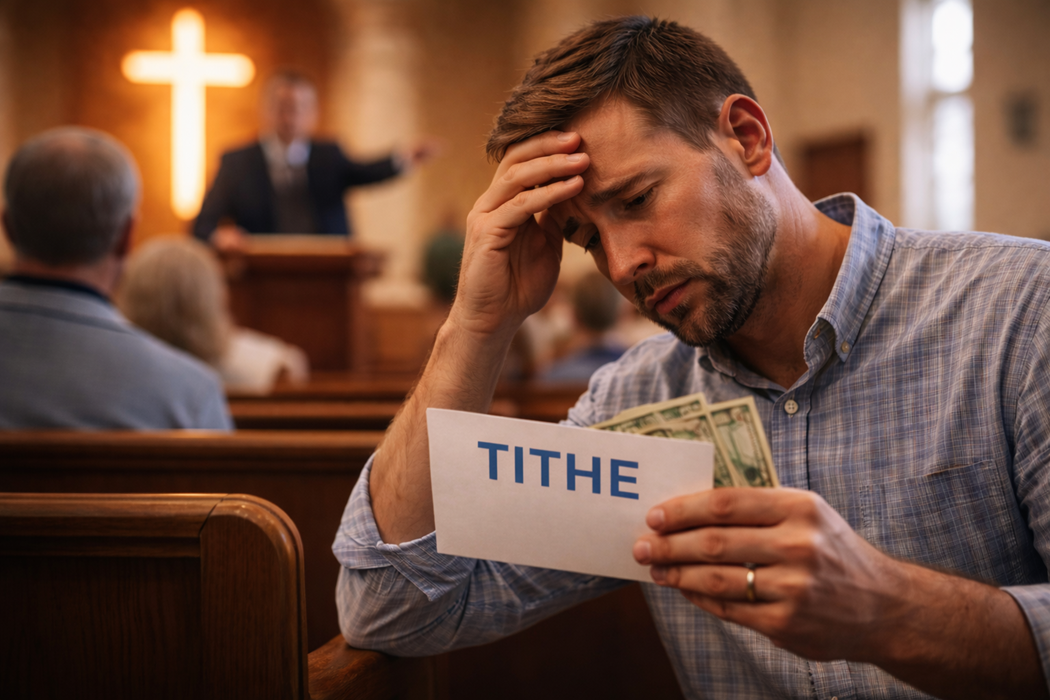
The other change people want in the church is about TITHING. It is a very controversial matter, made more controversial by some pastors insisting that all church members must pay tithe.
In other words, tithing has been made compulsory. Even some tithes are allegedly calculated and deducted at source. When Jesus hears some of these things he’d lament.
In some churches, you must pay tithe, otherwise when you die, the church will have no hand in your burial. Is that the unscriptural mandate the church has arrogated to itself?
Tithing began with the Levites, the priesthood. Because priests were not permitted to work, God stipulated that Israelites should see to their welfare through the sub-mission of 10 per cent of their crop and animal yield. This was to be put in the storehouse of the Lord. Anyone who did this was expected to be blessed in terms of increased farm or animal yield.
The priesthood itself has gone through many changes. Today, it is only the Catholic Church that properly undertakes to cater to the needs of the Catholic Church cannot be challenged
In other churches, what pastors are given is so puny that they virtually have to fend for themselves. So pastors have drifted into other vocations, and pastoring has become a part-time job.
When Jesus came, He neither condemned nor promoted tithing, probably because He did not want to be an impediment in the way of the Law and neither did He want to condone a practice that was outliving its usefulness. So He spoke very little about tithing, not saying whether it was good or bad.
What He however stressed was GIVING. “Give and it shall be given unto you…” Luke 6:38. He emphasised kindness to the poor, because both the rich and poor have the spirit of God in them.
What I am sometimes curious about is why the modern church has abandoned all the Old Testament edicts and laws, but sticks so rigorously to only tithing.
In the Old Testament, believers in God were sacrificing sheep, cows, doves and burning grain as a way of atoning for their sins or as offering to God. They were barred from eating certain animals and birds because they were labelled unclean.
When Jesus came, all these stopped because there was a new dispensation. It no longer mattered what your sins were or what you ate. If you became penitent and believed in the Lord Jesus as your personal saviour, you were indeed saved
OBLIGATORY
Jesus or the church did not come to prosper anybody. He said give and it would be given unto you. And giving must not only be to the church, but to fellow human beings who need our support. With the advent of Jesus, tithing had become an issue of little relevance, because instead of tithing (giving to the church a tenth), Jesus declared no limits. You give according to your freewill “because God loves a cheerful giver.”
Today, those who tithe give it grudgingly because it is not of their own freewill. It is like a tax. This should not be!
And because it has become more compulsory than obligatory, believers are paying tithes on gifts, on loans they take and whatever monies they get. Even those who do not work borrow money to pay tithe, when your tithe is supposed to be from your income earned out of productive work.
Those who don’t work are not supposed to pay tithe. You can give money to the church but not in the form of tithe, because tithe is paid only from productive work. Once you pay tithe, you are supposed to be working.
Now, should tithing be abolished? I would say no, because I feel that the priest-line must still be maintained so that we cease having part-time pastors who have divided attention. So the church must look after their pastors so that they can lead the flock safely to heaven. However, those who give towards this cause should not be called tithers. They should be called GIVERS TO THE CHURCH.
It doesn’t have to be 10 per cent. It could be 20 or 30 per cent so long as you give of it cheerfully. It could be five per cent or a widow’s mite.
I personally do not believe that unless you tithe, you will not prosper. What of if I give more than a tenth? It is not a tithe, but would God not appreciate it?
I believe, there must be no limit to giving. The tithing was God’s limit to Israel at the time so as not to overburden them. That should not be the standard-of today. Jesus didn’t say “tithe.” He said “give”
Giving to the church will open doors of blessings. And giving to the poor will open even greater doors.
This article was first published on Saturday September 30, 2006
SKIP THE QUEUE, TAP THE NEWS
You can now read the Ghanaian Times and The Spectator newspapers from the comfort of your device via TimesNewsPlus.
Join our WhatsApp Channel: https://whatsapp.com/channel/0029VbBElzjInlqHhl1aTU27
I saw a video of two young men mistreating a guy in school uniform. The manner in which a man in a white shirt was stamping on the head of the student on the ground and kicking him, was heart wrenching. It was like a scene from an action movie.
Comments in the video made me to understand that the two people engaged in the dastardly attack on the chap on the ground were teachers. How teachers who had been trained by teacher training institutions could do what they did, defies logic; simply mind boggling.
This brings the issue of screening of would-be teachers to mind. Is there a psychological vetting system in place to identify unsuitable characters like those two teachers so that they are barred from being teachers or are helped to have the right mindset as teachers? We cannot continue to let the status quo remain and expect a different result.
Digitalisation of the economy has brought in its wake a whole lot of ways that seeks to address pertinent socio-economic issues. One of them is the introduction of the TraffiTech-GH system of regulating traffic flow without human intervention.
This clearly is an innovative way of enforcing compliance which obviously would ensure discipline and therefore safety on our roads. The drivers are raising some issues which are legitimate and must be addressed as soon as possible or should I rather say immediately.
If a Bus Stop is occupied by traders and therefore the drivers cannot stop for passengers to alight or board, they would have no option than to park in the road, blocking traffic flow, which would be an offence that TraffiTech-GH would capture as a violation and punish accordingly, by imposing a fine.
A very sad incident occurred last week resulting in the senseless murder of an uncle and her niece in the Greater Accra Region. The story making the rounds on social media was that, the uncle took a loan from the suspected murderer but failed to honour his obligation to pay back the money.
The suspect accompanied by a lady, went to the residence in the Sakumono area and a heated argument ensued, resulting in the suspect shooting the Uncle and her niece in the process. The first question that came to mind was that “Why did they not allow patience to carry the day?” If it is true that the uncle indeed owed the man, he ought to have maintained a certain demeanor that portrayed a willingness to pay the money and not to enrage the suspect in any way.
Again, if someone owes you, you do not take the law into your hands by going to confront him with a loaded gun in your pocket. The proliferation of small arms must be given serious attention.
The leaders in the educational sector need to sit up to address the misbehaviour of both students and teachers, especially the teachers who have been sexually harassing students. The fallout, in the recent Obuasi Senior High School (SHS) issue, has been an official statement directing teachers not to ask students to work in their bungalows.
This code has been in the books of the Ghana Education Service (GES) all this while. It is nothing new and so like everything else in this country, the issue is not the lack of laws but the enforcement. What I find surprising is that after breaking this code of ethics, the GES has not sacked the notorious Headmaster who evidence has been established beyond reasonable doubt that he had grossly flouted this regulation, repeatedly. This is a gross failure on the part of leadership, from the ministry level down to the school level. This must not be allowed to repeat itself. God bless.
SKIP THE QUEUE, TAP THE NEWS
You can now read the Ghanaian Times and The Spectator newspapers from the comfort of your device via TimesNewsPlus.
Buy Maps
Join our WhatsApp Channel: https://whatsapp.com/channel/0029VbBElzjInlqHhl1aTU27