News
Government launches 3 new policies to speed up digital payments

The government has launched three new policy initiatives designed to deepen financial inclusion and accelerate digital payments in line with its vision of building a payment system that accelerates economic development.
The policies are National Financial Inclusion and Development Strategy, Digital FinancialServices Policy and Cash-Lite Roadmap.
Mr Ken-Ofori Atta, Minister of Finance launching the policies said “Digital payments help drive transparency, accountability, efficiency, as well as greater women’s participation in the economy. Moving away from cash helps our country advance towards achieving many of the Sustainable Development Goals.”
The National Financial Inclusion and Development Strategy, developed in collaboration with the World Bank, aims at increasing financial inclusion from currently 58 per cent to 85 per cent by 2023, helping create economic opportunities and reducing poverty.
The Digital Financial Services Policy, developed in partnership with CGAP, builds on existing technological gains to create a resilient, inclusive and innovative digital ecosystem that contributes to social development, a robust economy and a thriving private sector.
The Cash-Lite Roadmap, designed in collaboration with the United Nations-based Better Than Cash Alliance, puts forward concrete steps to build an inclusive digital payments ecosystem. This includes better access to financial services, enabling regulation and oversight, and promoting consumer protection.
According to the Finance Minister, “public and private sector actors need to work hand in hand, digitising in a responsible manner to turn these new policy initiatives into tangible benefits for all Ghanaians. These assertions are even more relevant in the era of the COVID-19 pandemic.”
In 2017, the Ghana Interbank Payment and Settlement Systems (GHIPPS) under the auspices of the Central Bank of Ghana, launched the Mobile Money Interoperability scheme to facilitate the simple and convenient movement of funds across mobile money platforms.
In November 2019, the Governor of the Bank of Ghana, Dr Ernest Addison, announced an initiative to pilot a Central Bank digital currency (CBDC) in a sandbox environment. This would foster competition, reduce the operational costs associated with cash and move the country closer to achieving its cash-lite objectives.
The Central Bank has also set up a Fintech and Innovation Office to drive the Bank’s Cash-lite, e-payments and digitisation agenda. Efforts at ensuring the development of the FinTech industry culminated in the establishment of the Ghana Chamber of Technology by industry players as its umbrella body. Among other things, the Chamber provides a forum for FinTechs and Payment Service Providers to share experiences and also serve as a single point of interaction with the Central Bank and key stakeholders.
Latest figures from GhIPSS show that the use of electronic payment channels that go through GhIPSS platform, went up by 81 per cent in the first quarter of this year compared to the same period last year.
According to Dr Ruth Goodwin-Groen, Managing Director of the United Nations-based Better Than Cash Alliance, “Ghana is already recognised as a global digital payments success story! We look forward to continuing working with our member, the Government, as well as with the private sector and international organisations, to accelerate the new ambitious cash-lite roadmap, in a way that is responsible and responsive to the needs of all Ghanaians.”
BY TIMES REPORTER


The Executive Director of DAD Micro-Credit Limited (MCL), Mrs Christiana S. Dzitse-Awuku, has called for urgent and collective action to prevent the recurring loss of lives and destruction caused by flooding during the rainy season.
Reacting to the devastating effects of last Monday’s heavy rainfall in parts of the country, she expressed condolences to families who lost loved ones and sympathised with residents whose homes, businesses and livelihoods were affected.
In a statement signed by Mrs Dzitse-Awuku and copied to The Spectator in Accra on Friday, she said although rainfall was a natural occurrence, the destruction associated with it was largely preventable.
According to her, DAD Micro-Credit Limited provides financial support to owners of small and medium scale enterprises, the majority of whom are women.
She noted that the recent heavy rains have significantly affected these businesses, resulting in many clients losing their capital and facing challenges rebuilding their livelihoods.
She noted that clogged drains, indiscriminate dumping of refuse, poor drainage infrastructure, and buildings constructed on waterways, and disregard for environmental and planning regulations had worsened the impact of heavy rains over the years.
“This is a wake-up call to all of us. The responsibility does not rest solely on government institutions. It is a shared duty,” she stated.
Ms Dzitse-Awuku urged citizens to desist from dumping waste into drains, maintain clean surroundings, and comply with environmental and planning regulations to reduce the risk of flooding.
She also called on the relevant authorities to intensify efforts to desilt drains regularly, remove unauthorised structures obstructing waterways without fear or favour, and strictly enforce city planning laws.
According to her, investing in preventive measures would save lives and reduce the enormous cost of rebuilding communities after disasters.
She appealed to government, local authorities, traditional leaders, civil society organisations and all Ghanaians to work together to build safer, cleaner and more resilient communities.
Ms Dzitse-Awuku stressed that the country must not wait for another rainy season to revisit the same challenges, emphasising that every life lost to flooding was one too many.
She offered prayers for bereaved families and those who had lost their homes and property, expressing hope that the nation would be spared further tragedies.
“The Ghana we develop today will be our safe haven tomorrow,” she stated.
By Esinam Jemima Kuatsinu

Last week’s heavy rains that got parts of Accra heavily flooded have left residences and offices in difficult situations as they try to gather the remains of their properties.
“Life after the flood has been difficult because we have lost a lot of things; some were also destroyed. We are currently gathering the pieces left but as to whether they would serve any use, we can’t tell for now,” a resident of Adabraka told The Spectator on Wednesday.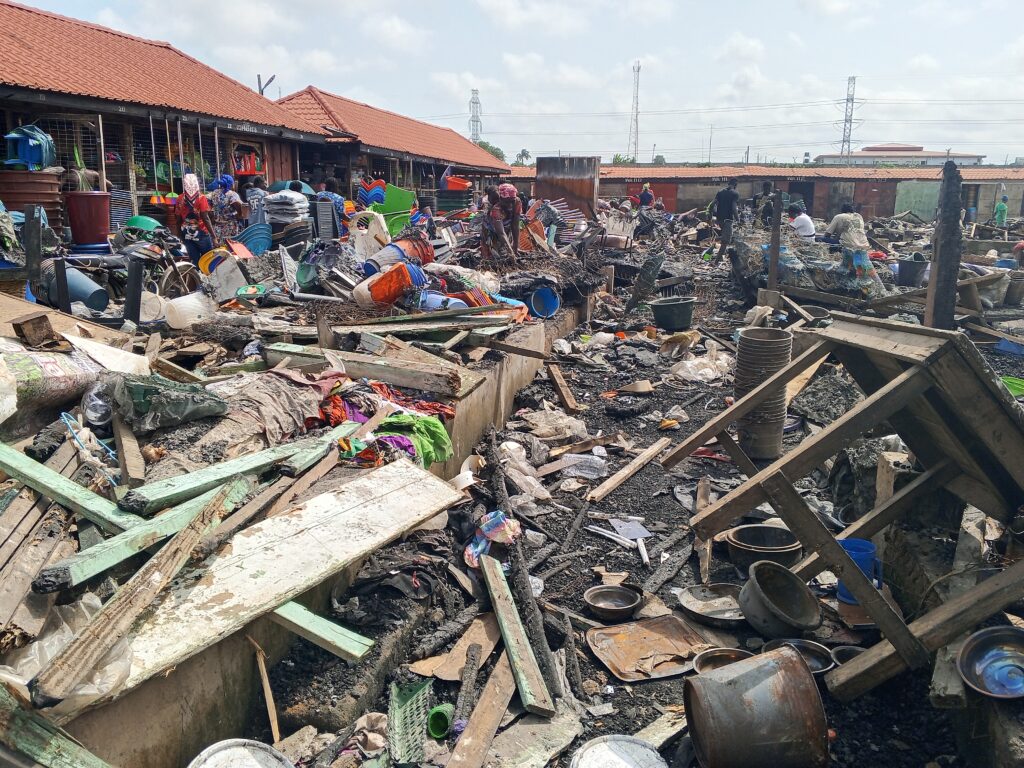


Along the North Industrial Area enclave, a number of office structures were flooded with water rising to unimaginable height.
The New Times Corporation (NTC) and other nearby establishments were not spared the flood ordeal as they became receptacles for excess water that were supposed to flow in the choked gutters around.
For workers of the NTC, the days after the flood were ones for cleaning and putting the offices in shape.
Staff had to get documents, furniture and other equipment dried, affecting production on the first day after the flood.
The situation was similar to what was seen in nearby offices where The Spectator visited.
Visits to some communities around ‘Circle’, Alajo, and Kaneshie revealed heaps of rubbish left behind by the flood waters.
In some of the areas, floodwaters have negatively impacted streets, gutters and homes with those areas littered with plastic waste, broken furniture, mud and other debris.


In some of the huge drains, vehicles were seen stuck in heavy mud.
This waste and stagnant pools of water have become a major concern for residents as they generated an unpleasant odour. A number of residents in the affected areas have since called for urgent intervention from local authorities.
Some residents said the waste has still blocked drains, increasing the risk of further flooding should the rains come again.
Others expressed concern that the accumulated rubbish could become breeding grounds for mosquitoes and thereby, expose the communities to diseases such as malaria and cholera.
At the Kwame Nkrumah Circle and Odawna market areas, traders continue to tidy up their stalls and shops.
By Linda Abrefi Wadie