News
Breaking barriers: Lieutenant Colonel Galley commands Military Police


Lieutenant Colonel Jacqueline Dela Galley has become the first woman to command the Ghana Military Police Unit, marking a milestone in the Ghana Armed Forces (GAF).
Lt. Col. Galley said her appointment, announced at the beginning of the year, came as a surprise.
“I was very happy. I was very excited because I was not really expecting it,” she said in an interview with the Ghana News Agency, describing it as “a very nice New Year package.”
She said her family was equally delighted, particularly as the appointment coincided with her recent completion of a Master of Philosophy degree in Human Rights, Conflict and Peace Studies.
Lt. Col. Galley said her rise reflected years of deliberate gender mainstreaming within the GAF, supported by international frameworks and initiatives aimed at expanding opportunities for women in uniform.
She said her journey into the military was unplanned, explaining that her interest was sparked while studying at the University of Ghana, Legon.
“I did not really know anything about the military, but I was privileged to be in the same class with some service persons. I liked the way they carried themselves. They were more disciplined… very focused, and that motivated me,” she said.
She said she applied after national service, completed the required training and was commissioned into the Ghana Armed Forces on September 7, 2008.
Lt. Col. Galley said she became the first female officer to be posted directly to the Military Police Unit from the academy, a decision facilitated by the then Commanding Officer of the Ghana Military Academy, Brigadier General Ishmael Ben Quartey.
“I told him later that he made the history,” she said. “His decision 19 years ago is manifesting today.”
Lt. Col. Galley said her early years in the Military Police involved administrative duties and investigations, including serving as a provost officer with the United Nations Mission in Côte d’Ivoire and commanding detachments across the country.
“Every course I went to shaped me. My principle is to come up with something. I don’t just go and sit there,” she said.
Lt. Col. Galley said she had balanced her career with family life and is married to Colonel Dominic Buah, with whom she has four sons.
“It didn’t disturb my work,” she said. “If you are supposed to produce something by 10 o’clock, it should be there.”
She said her husband’s understanding of military life had been critical to managing her responsibilities.
“He understands the system. He knows I must be there,” she said.
Lt. Col. Galley rejected suggestions of tokenism, saying female officers who rose to leadership positions did so on merit.
“Women who get to the top merit it. They are qualified. They are experienced. Command has confidence in them,” she said.
Lt. Col. Galley said gender mainstreaming had allowed women to demonstrate their capabilities.
“When women were allowed to come out of their shells, they start doing wonders,” she said.
Lt. Col. Galley advised young female officers to remain focused and committed to their oath of service.
“It was not a joke when you were taking that oath… That is why me, if you say, go here, I’m going,” she said.
On her priorities as Commander of the Military Police, Lt. Col. Galley said her focus would be on discipline within the Armed Forces.
“My immediate priority will be tailored towards my role. And that is enforcing discipline in the Ghana Armed Forces,” she said.
Lt. Col. Galley said all military deployments included briefings on human rights and rules of engagement, adding that violations were treated as individual misconduct.
“Anyone who goes contrary to that is dealt with,” she said.
Lt. Col. Galley said enforcing discipline could be unpopular but was necessary.
“If you are meticulously enforcing the law, you won’t have friends. Some people will call you wicked. But once you know you’ve done the right thing, you shouldn’t be bothered,” she said.
Lt. Col. Galley said relations with other security agencies remained cordial and cooperative.
“We are all doing the same thing – ensuring the security of the state,” she said.
Reflecting on her appointment, Lt. Col. Galley said it reinforced the importance of integrity.
“This appointment has made me realise that whatever you do, you are being watched. It’s good to do the right thing, even when nobody is watching,” she said.
Lt. Col. Galley encouraged young Ghanaians to pursue their ambitions but remain resilient.
“Pursue your dream… But if you don’t get the opportunity, it doesn’t mean you are not good,” she said. -GNA
Join our WhatsApp Channel now!
https://whatsapp.com/channel/0029VbBElzjInlqHhl1aTU27








News
Christians, Muslims kick against surrogacy …as medical experts calls for cultural, religious shift
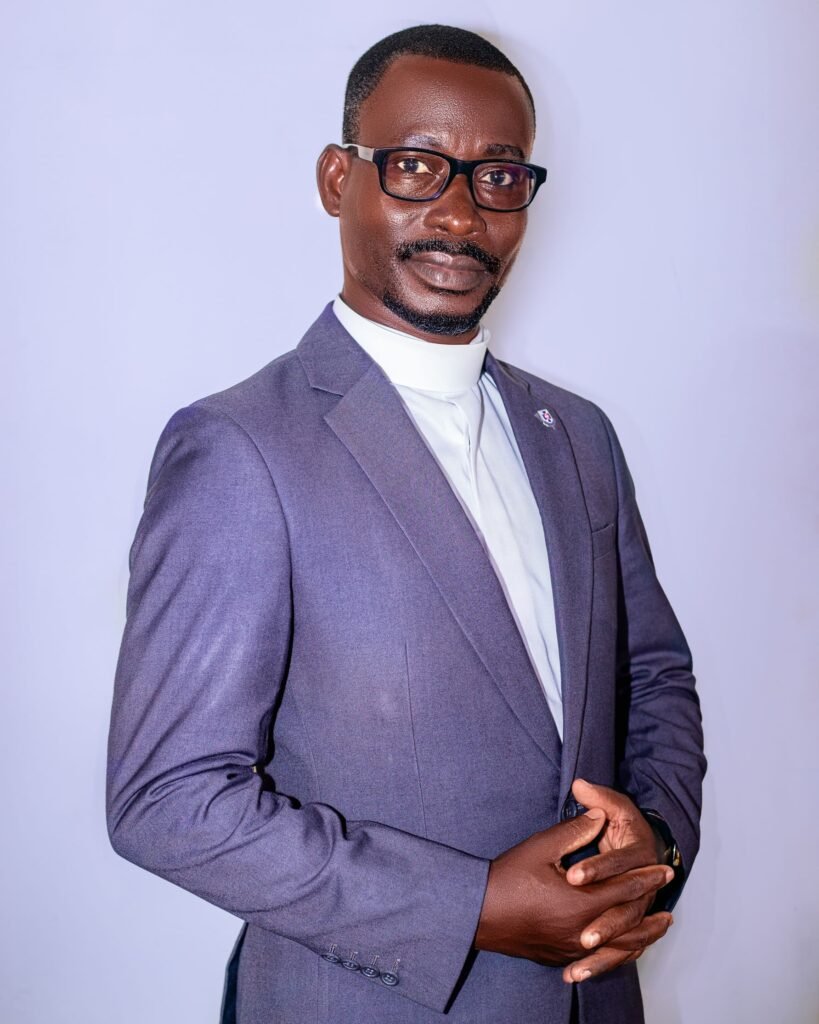
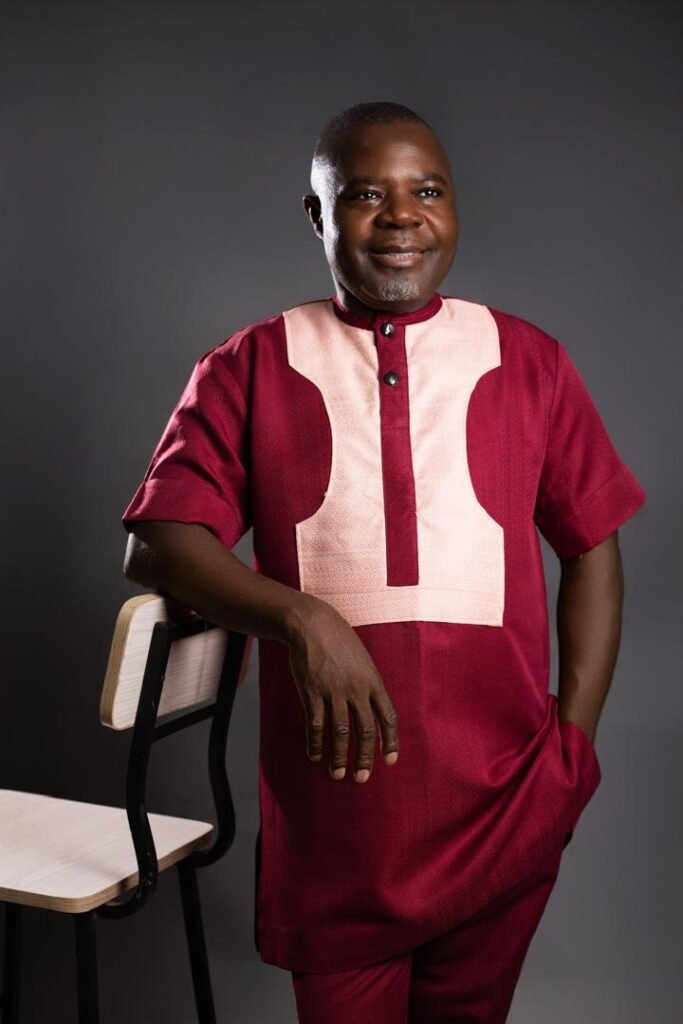
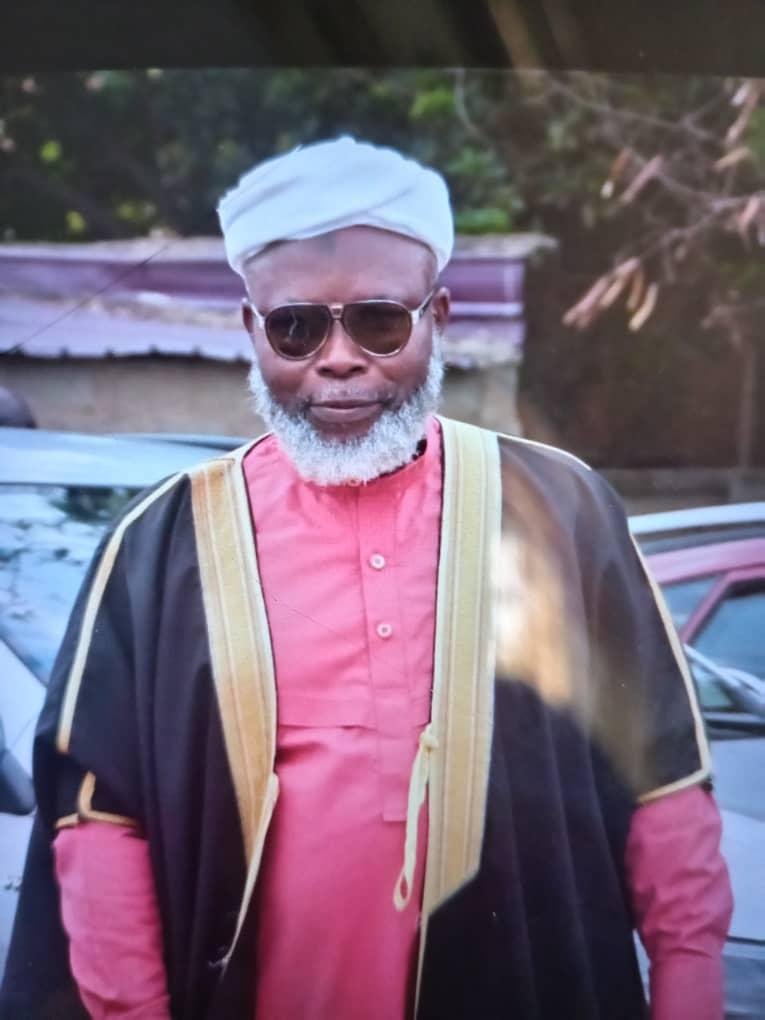
The conversation around fertility in Ghana is shifting as The Walking Egg Medical and Fertility Centre makes headlines for its breakthrough surrogacy cases.
The Medical Director of the facility, Dr Nana Yaw Osei, is now calling for a cultural and religious shift in the narrative, asking religious leaders to see assisted reproduction not as a challenge to faith, but as a vital solution for childless couples seeking to build their families.
Surrogacy remains controversial in deeply religious societies, with assisted reproduction often viewed as interference with divine will.
However, Dr Osei, a practicing Christian, insists that faith and medicine are not opposed.
According to Dr Osei, advancement in reproductive medicine has made parenthood possible for many couples once considered hopeless, yet social and religious attitudes have been slow to change.
“Growing up, if a couple could not conceive, it was considered the end,” Dr Osei said in an interview with The Spectator, but added that, “today, science has changed that reality, but society and faith have not fully accepted it.”
“Medicine does not and cannot replace God,” he emphasised, citing that “It is an expression of the knowledge and wisdom God has given humanity. Compassion must guide how we treat people who are struggling with infertility.”
He noted that Ghana has taken steps to recognise surrogacy under the Registration of Births and Deaths Act, 2020 (Act 1027), which allows children born through assisted reproduction to be legally registered. While the law provides a basic framework, it does not fully address critical issues such as egg and sperm donation, embryo handling, or the distinction between traditional and gestational surrogacy.
“These gaps need attention to protect surrogates, intended parents and the children,” he mentioned.
Dr Osei said many women seeking surrogacy have lost their wombs through fibroids, cancer or childbirth complications and should not be further burdened by stigma.
“One of the most painful encounters in my career was with a woman who lost her uterus and felt God had abandoned her,” he said.
He called on churches and mosques to engage medical professionals and adopt a more informed approach to infertility.
“Surrogacy is not about convenience, it is about restoring hope and dignity to people who want a family,” Dr Osei stated.
However, sharing an Islamic perspective on surrogacy, Imam Alhaji Saeed Abdulai, an Islamic Scholar said the Islamic religion prioritises lineage, dignity and family stability, and in the process making surrogacy impermissible.
He explained that: “Surrogacy involves a woman carrying a child for another couple, a process which is unacceptable in Islam which makes lineage (nasab) and marital bounds very central.”
Quoting Qur’anic texts to support his claim, Imam Alhaji Saeed said the majority of scholars prohibit surrogacy because it mixes lineage and violates marital exclusivity (Fiqh Academies, OIC).
“The Prophet Mohammed said: “The child belongs to the (marital) bed” (Bukhari, Muslim), safeguarding clear parentage.
“So, for another woman to carry a pregnancy and eventually give birth for them clearly violates this clear instruction and admonition. This makes it impermissible,” he added.
Mentioning another Qur’anic text, he stated what Allah said in Qur’an 58:2: “Their mothers are only those who gave birth to them,” affirming biological motherhood.
What this clearly mean is that a couple can make the necessary efforts to have kids but as long as they resort to surrogacy, the surrogate mother would be recognised as the biological mother of the child and not the wife of the union.
According to him, Islam approaches reproduction as a sacred trust governed by divine guidance.
Procreation in Islamic law, he explained, was inseparably linked to lawful marriage, moral responsibility, and the preservation of lineage (ḥifẓ al-nasab), making surrogacy a critical ethical concern.
“The dominant and authoritative position among Islamic scholars is that surrogacy is prohibited (ḥarām), regardless of its form. This ruling has been affirmed by reputable international bodies such as the International Islamic Fiqh Academy (OIC) and Al-Azhar’s Council of Senior Scholars,” he explained.
The prohibition, he emphasised, rests on several foundational principles. “First, surrogacy introduces a third party into the reproductive process, violating the exclusivity of marriage. Second, it leads to confusion in lineage, which Islam strictly seeks to protect due to its implications for inheritance, guardianship, marriage eligibility, and social identity. Third, pregnancy itself establishes a form of motherhood in Islamic law, rendering any contractual reassignment of motherhood invalid (OIC Fiqh Resolution No. 16).
Thus, even gestational surrogacy, despite the absence of genetic linkage, remains impermissible.
Also contributing, a Resident Minister of the Ga West Model Presbyterian Church, Tetegu, Accra, Rev. Emmanuel A. Wiafe, says surrogacy conflicts with biblical teachings, Christian holiness and human dignity and should not be practiced by Christians.
According to him, although the Bible contains narratives often cited in support of surrogacy, such accounts were descriptive rather than instructional.
“The fact that the Bible mentions similar situations does not mean it approves of them,” he said.
Rev. Wiafe maintained that God’s design for procreation is rooted in marital intimacy between a man and a woman, describing childbearing as a divine gift, not a right to be claimed.
“Children are a gift to be received, not something to be demanded. Compassion must always be guided by holiness,” he stressed.
Addressing cases where women lose the ability to conceive through no fault of their own, Rev. Wiafe urged believers to place their trust in God rather than medical alternatives such as surrogacy, citing instances of unexpected childbirth as evidence of divine intervention.
He referenced the biblical account of Sarah, Abraham and Hagar, noting that although the arrangement produced a child, it also resulted in jealousy, conflict and emotional trauma.
“When humans try to play God, the consequences are often painful,” he mentioned.
Beyond theology, Rev. Wiafe raised ethical concerns, arguing that surrogacy risks commodifying the female body, which the Scripture describes as the temple of the Holy Spirit.
While acknowledging that medical knowledge was a gift from God, he cautioned that not every scientific capability aligns with holiness.
“We may have the right to do many things, but not everything pleases God,” he added.
By Esinam Jemima Kuatsinu
Join our WhatsApp Channel now!
https://whatsapp.com/channel/0029VbBElzjInlqHhl1aTU27
Dear Obaa Yaa,
I wrote sometime in 2024 to share a strange ordeal I have been going through. I contracted a sexually transmitted disease during my period of national service.
Initially, I thought it was a normal illness, so I visited a nearby hospital for treatment. However, I continue to experience persistent itching and pain in my manhood.
As the situation worsened, I became worried and wrote to you. You advised me to see a specialist. The doctor did his best, but the condition still persists. I have also undergone several laboratory tests, all of which show that there is nothing medically wrong with me.
Some doctors and pharmacists I have consulted have suggested that the problem could be psychological. There is a sore at the tip of my male organ, and it causes me great distress.
I feel pain when urinating, followed by sharp pains in my waist. At the moment, I am not only suffering physically but also psychologically. I cannot concentrate on my work for even five minutes.
Could this be spiritual?
Mawuli, Keta
Dear Mawuli,
There is still hope for your situation. I strongly advise you to see a qualified urologist at the Korle-Bu Teaching Hospital for further assessment and treatment.
I cannot say for certain whether your condition is spiritual or not. However, do not lose faith. Continue praying to God, because your healing may come when you least expect it.
Stay strong.
Obaa Yaa
Join our WhatsApp Channel now!
https://whatsapp.com/channel/0029VbBElzjInlqHhl1aTU27

 Features1 week ago
Abigail Fremah: The calm authority behind Ghana’s rise in armwrestling refereeing
- Entertainment3 days ago
Roland Amartey set to cover 2026 Ghana Music Awards USA for Sammyflex TV
- News1 week ago
Finance Minister pledges support to improve working conditions and reduce congestion in courts