Health Essentials
Fibroid… Threat to female reproductive health

- /home/u249204778/domains/spectator.com.gh/public_html/wp-content/plugins/mvp-social-buttons/mvp-social-buttons.php on line 27
https://spectator.com.gh/wp-content/uploads/2023/11/A-diagram-on-types-of-fibroids.jpe&description=Fibroid… Threat to female reproductive health', 'pinterestShare', 'width=750,height=350'); return false;" title="Pin This Post">
- Share
- Tweet /home/u249204778/domains/spectator.com.gh/public_html/wp-content/plugins/mvp-social-buttons/mvp-social-buttons.php on line 72
https://spectator.com.gh/wp-content/uploads/2023/11/A-diagram-on-types-of-fibroids.jpe&description=Fibroid… Threat to female reproductive health', 'pinterestShare', 'width=750,height=350'); return false;" title="Pin This Post">
“It is not my time of the month, what is wrong with me,” was the question Setriakor (not her real name) asked herself as she looks at her blood stained dress.
As the days went, the flow was heavier with thick dark clots, for which her usual pad could not sustain. She later resorted to the use of diapers. That also failed to absorb the amount of blood and clots ‘gushing out.’
She dares not laugh, cough or do any strenuous activity, lest her dress will be soiled, wherever she finds herself.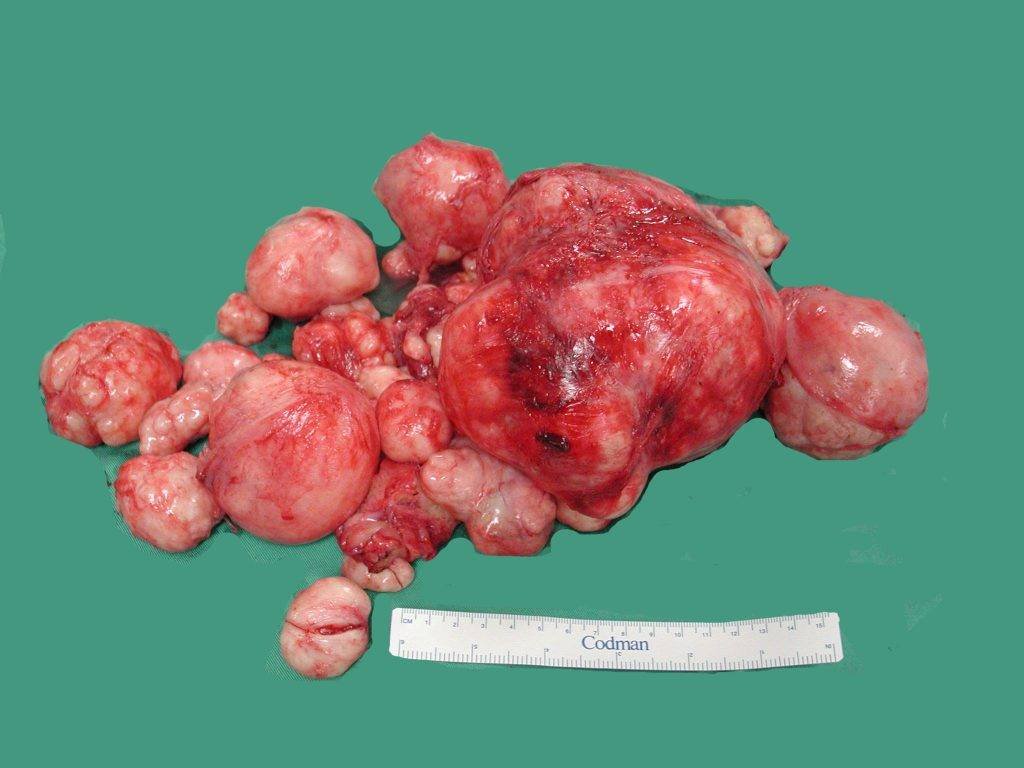
Setriakor, a 36-year old Scripter, looked pale and found it difficult to work for a number of weeks.
She decided to visit a local Chemist to explain her ordeal. In the end, a blood tonic was prescribed for her with the hope to replenish the lost blood.
He also advised her to visit the hospital to see a doctor.
Her visit to the health facility the following week ended up with the gynaecologist who performed a scan on her. The results of the scan revealed she had multiple fibroids.
Suddenly, all the stories she had heard about fibroid began racing through her mind. It took a lot of counselling from the gynaecologist to calm her down.
This is the challenge most young and adult women go through with some either losing their uterus or life in the process due to delay in seeking medical attention.
Fibroid, is non-cancerous growth that develops in or around the womb or uterus. The growth or growths are made up of muscle and fibrous tissue. They vary in size.
Many women are unaware they have fibroids because they do not have any symptoms.
Women who do have symptoms of fibroid are likely to experience heavy or painful periods, abdominal pains, lower back pain, frequent urge to urinate, constipation and pain or discomfort during sex.
Women who are diagnosed of fibroid often undergo hysterectomy in order to have it removed.
Most women of African-Carribean origin tend to develop fibroids more frequently and are common with around one in three women.
Types
The Chief Executive Officer of Ladybits Health and Wellness Clinic, Dr Victoria Partey-Newman in an interview with The Spectator said there were four types of fibroids which can occur in women.
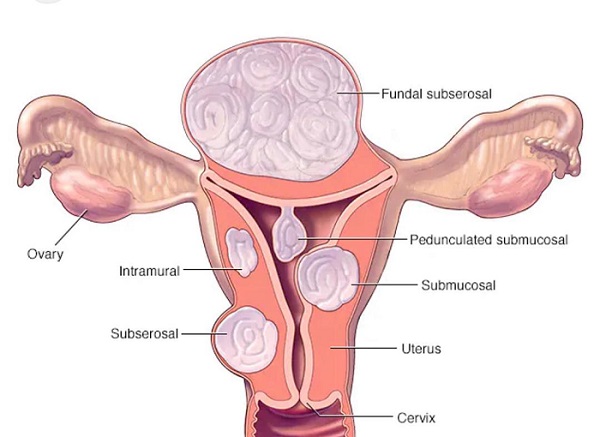
The types, she said, were intramural, subserosal, submucosal and pendunculated fibroids.
She explained that intramural fibroids occur in the wall of the uterus. This type of fibroid grows quite large.
Subserosal fibroids grow outside the uterus and may press on other organs of the pelvic area.
Submucosal fibroids grow beneath the lining of the uterus and grow into the uterine cavity which is the central part of the uterus.
“Submucosal fibroids can make it harder for one’s uterus to support conception and maintain pregnancy,” Dr Partey-Newman stated.
According to her, submucosal fibroids are most likely to cause painful cramping as well as bleeding between periods.
Pedunculated fibroids are mushroom-like and grows at the end of small stalks within or outside of the uterus. When the stalk of a pedunculated fibroid become twisted, it can cause intense pain.
The uterine fibroids, however, are the most common tumour in women and very prevalent in infertility issues.
Infertility
Dr Partey-Newman said fibroids could be the sole cause of infertility in two to three per cent of women but the exact cause is unknown. It has often been linked to the hormone oestrogen.
Oestrogen is the female reproductive hormone produced by the ovaries.
Dr Partey-Newman said fibroids most often develop between the start of puberty and menopause, adding that the risk increases with age.
According to her, having a family member with fibroids could increase one’s risk of having it but said “you should not discount the symptoms simply because you do not have a family member with fibroids.”
She said fibroids cannot be prevented but can reduce risk by maintaining a healthy body weight and have a regular pelvic examinations.
Treatment
Dr Partey-Newman said surgery was not the only option for the treatment of fibroids.
They can be treated with medication.
Currently, Gonadotrophin-releasing hormone (GnRH) agonists and selective progesterone receptor modulators (SPRMs) are the most effective medical therapies with the most evidence to support the reduction of fibroid volume in menstrual bleeding.
Another way to treat fibroid was uterine fibroid embolisation which is done by cutting off blood supply to the fibroids. That causes them to shrink.
Dr Partey-Newman, however, said “if symptoms do not improve with medication or nonsurgical treatment, or if the gynaecologist suspects fibroids may be causing infertility, surgery may be the next treatment option.
“The goal of surgery may be to relieve pain, reduce menstrual blood flow, or improve fertility.”
Advice
She said since fibroids could reoccur after surgery, it was important for women to quickly get married and start making babies, especially those who have had their fibroids removed.
“In our society, where men are the ones that propose mostly, it somehow makes it difficult for women to marry early and start giving birth.
That contributes in making the fibroids recur again.
She advised women to visit the hospital when they notice changes in their reproductive cycle and urged them to adhere to doctor’s advice when diagnosed of the disease.
She cautioned that women diagnosed of fibroids must avoid herbal concoctions which could affect their kidneys in the long term.
By Jemima Esinam Kuatsinu


Sleep comes in different shades. There are those who sleep pretty and hardly move an inch in bed. Then we have those who are virtually at war when in bed and may turn a whole 360 degrees several times in the land of the unknown. Woe betide you if you find yourself in the same “sleep ring” with such a fighter. The most “decorated” ones bring music to sleep and the noise that exudes from their throats, nostrils and mouth could compete with any orchestra except that harmony is often thrown to the wind; those of us who belong to this category know ourselves.
Inspite of all the above, when I am hard pressed to pick one thing that has the greatest impact on one’s health, I will say SLEEP reigns. Too many challenges spring up when we fail to get enough sleep and it’s no wonder that at the doctor’s office we hear many complaints of not being able to sleep.
Most of the time the solution is not in popping pills but the Sleep Hygiene Tips below will go a long way to make a difference in your sleep and subsequently your health.
Sleep hygiene tips
- Create darkness in the room
- Sleep is easier when your room is dark. A bright room may be a challenge especially if you already have a bunter with sleep.
- Have a Regular sleep plan
- Keep to the safe time you go to bed and also time you wake up. Regularity is key.
- Ensure room is cool and well ventilated
- An extremely hot or cold room may keep you awake just tossing and turning. A nice breeze makes sleep even better.
- Wind down or unplug about an hour to bedtime
- Rushing throughout the day and then diving into bed may not be the best remedy for sleep. Slow down, start putting off lights, stop working and maybe spend about 5 minutes meditating or speaking to God.
- Avoid phones, laptops, work in bed/bedroom
- These have no business in your sleep area and should not be in your bed for sure. The glare from lights, the vibrations or sounds from messages and even calls may keep you awake and give you a nightmare with your eyes wide open.
- Exercise
- Exercise and laugh and you will be preparing yourself for a sound sleep. You may exercise anytime of the day but when you struggle a lot with sleep the ideal time may be four to six hours before bedtime. Exercising an hour or two before you sleep may rather keep you alert and awake.
- Watch your food intake; don’t overeat, avoid spicy food and lots of oil
- Gluttony is definitely “sinful” and one of the instant punishments is discomfort and difficulty sleeping. A full stomach at bedtime makes one wish for daybreak. The spices can also cause havoc especially when eaten late. That heartburn will wake you up and keep you sitting and cursing all night.
- Watch what you drink; stimulants may affect your sleep e.g. caffeine, fizzy drinks, alcohol and energy drinks
- If you have trouble with sleep or you do not want your sleep to be disturbed in any way, avoid these 4 clear hours or more before sleep time. ACOHOL deceives you into thinking you will sleep only to wake up early, feeling unrested or making dashes to the washroom.
- Discuss with your doctor when to take some of your prescribed medication
- Sometimes some medications we are on may cause us to wake up several times to urinate and should preferably be taken much earlier in the day. Others keep us alert over several hours.
- Writing your TO DO LIST for the next day relaxes the brain
- The brain sometimes will keep “working” in an attempt not to forget what you need to do the following day. Hack your brain by writing down or typing out your To Do List for the following day and you will be blessed with good sleep.
- Get professional care to diagnose and manage medical conditions
- Sometimes it’s a medical condition that is directly or indirectly depriving us of good sleep and our health professional can help us find and treat this so we can once more enjoy the bliss of the Lotus Eaters. Maybe it could be a medication that is just not right for you.
Popping pills to sleep in most cases will not solve the challenge and should never be our first line of correcting our sleep wars. Adopt these hygiene tips today even if you sleep well and your health will be on the right path. Not even the decorated bedroom trumpeter or the sleep fighter can take your sleep away from you.
AS ALWAYS LAUGH OFTEN, ENSURE HYGIENE, WALK AND PRAY EVERYDAY AND REMEMBER IT’S A PRICELESS GIFT TO KNOW YOUR NUMBERS (blood sugar, blood pressure, blood cholesterol, BMI)
Dr. Kojo Cobba Essel
Health Essentials Ltd/Medics Clinic
(www.healthessentialsgh.com)
*Dr. Essel is a Medical Doctor with a keen interest in Lifestyle Medicine, He holds an MBA and is an ISSA Specialist in Exercise Therapy, Fitness Nutrition and Corrective Exercise. He is the author of the award-winning book, ‘Unravelling The Essentials of Health & Wealth.’
Thought for the week – “ A good laugh and a long sleep are the best cures in the doctor’s book.” – Irish Proverb
SKIP THE QUEUE, TAP THE NEWS
You can now read the Ghanaian Times and The Spectator newspapers from the comfort of your device via TimesNewsPlus.
Join our WhatsApp Channel: https://whatsapp.com/channel/0029VbBElzjInlqHhl1aTU27

These last few months of 2026, I am embarking on a new journey. Over the past several months I have tried out some aspects of my “new way of life” but not in the manner I am doing now and I am sure you are doing same too. Draft your own points based on what is important to you and let us begin the journey together. It is never too late.
Many of the things I am working on now are guided by years of interaction with different people, what may be my purpose in my opinion, great family and friends and the type of wisdom that comes only with years.
- Self-Care
Quite often we try to take care of everything and everyone without ensuring we are appropriately “charged”. There is nothing to give out if you are empty. Self-care is NOT a luxury and it has taken me years to appreciate this;
- I will add a new hobby I have been toying with.
- Surrounding myself with like-minded people who energise me, make me laugh and be the best version of myself. Building Social capital pays.
- I am spending quality time with God daily
- Spending time in nature is key and I ensure that I take much needed breaks
- Spending a few minutes a day to meditate, exercise and spoil myself sometimes
- I will have some hours each day that will be blocked out as “no phone time”
- Keeping a Goal Diary
Many people have described ways of putting down your goals and seeing them happen. My coach taught me the power of VISUALISATION but over the years I went off that golden path. It’s time to get back. This is what I am doing now;
- In a diary I am writing everything I want to be or do as long as I have breath. No pressure.
- I am writing in the present tense; “I am spending an amazing week in a 7-Star resort with the people I love the most”
- I will look at this list everyday
- Start a Gratitude Bank
I listened to this recently and though it was not referred to as a Gratitude Bank, I believe that is exactly what it is
- I picked a diary to write in but others choose a transparent container to drop in written points. Choose what you are comfortable with.
- At the end of each week I will write something(s) I am grateful for and put in the container.
- Whenever I feel “ungrateful” I will read through them to remind myself how blessed I am and surely I will be holding the “evidence”
- On December 31, I will go through the list irrespective of my mood.
- Practice. Practice. Practice
This is exactly as it is – whatever you have written out in your diary to do from self-care through your goals etc. prioritise or focus on a few at a time. As you practice e.g. meditating, exercising, eating right and the many great things you want to do, these will all GROW. Whatever you practice GROWS.
- Make the world a better place
I believe that we can make a difference in our corner no matter the challenges.
- That smile will change someone’s life
- An act of kindness is contagious and the giver, receiver and all those observing benefit immensely. Let us spread kindness.
- The Blood Bank on my mind for this year and beyond.
What are you focusing on, what are you practicing?
Do share your list with me via email.
AS ALWAYS LAUGH OFTEN, ENSURE HYGIENE, WALK AND PRAY EVERYDAY AND REMEMBER IT’S A PRICELESS GIFT TO KNOW YOUR NUMBERS (blood sugar, blood pressure, blood cholesterol, BMI)
Dr. Kojo Cobba Essel
Health Essentials Ltd/ Medics Clinic
(dressel@healthessentialsgh.com)
*Dr. Essel is a Medical Doctor with a keen interest in Lifestyle Medicine, He holds an MBA and is an ISSA Specialist in Exercise Therapy, Fitness Nutrition and Corrective Exercise. He is the author of the award-winning book, ‘Unravelling The Essentials of Health & Wealth.’
Thought for the week –“Never change your originality for the sake of others because no one can play your role better than you. So be yourself. You are the best.” – Unknown
References:
- Unravelling the Essentials of Health & Wealth; Dr. Kojo Cobba Essel