News
Health alert : Seek immediate medical care after exposure to flood water

A Public Health Nurse at the Roman Ridge Sub-Municipal of the Ayawaso West Health Directorate, Ms Patience Adoli Kporxah, has cautioned the public against coming into contact with floodwaters, warning that exposure can lead to serious diseases, infections and injuries.
Floodwater, she said, should always be treated as contaminated, regardless of how clean it appears, because it may contain sewage, human and animal waste, chemicals, fuel, sharp objects and disease-causing micro-organisms.
In an interview with The Spectator in Accra on Thursday, Ms Kporxah explained that contact with contaminated floodwater exposes people to bacteria, viruses, parasites, hazardous chemicals and other physical hazards that can result in illness or injury.
Her advice came in the wake of recent exposure to floodwater following Monday’s torrential rains that left vast areas of the capital flooded.
As a result, a lot of people were seen either ‘swimming’ in the floodwater to rescue people or retrieving items being washed away.
According to her, exposure to floodwater could cause skin infections, particularly where there are cuts or open wounds, as well as diarrhoea diseases such as cholera, typhoid fever, dysentery and other forms of gastroenteritis if contaminated water was swallowed.
Other health risks, she said include hepatitis A, eye and ear infections, tetanus in people with untreated wounds or incomplete vaccination, and injuries from submerged sharp objects, debris or electrical hazards.
Ms Kporxah advised anyone who had contact with floodwater to monitor their health closely and seek immediate medical attention if they develop symptoms such as fever, diarrhoea, vomiting, abdominal pain, severe headache, muscle aches, skin rash, difficulty breathing, or yellowing of the eyes or skin.
She also urged people whose wounds became red, swollen, painful or begin to discharge pus, as well as those who accidentally swallow floodwater, to report to the nearest health facility without delay.
Although not everyone exposed to floodwater requires immediate treatment, she stressed that pregnant women, people with weakened immune systems, individuals living with chronic illnesses and those with significant wounds should seek prompt medical evaluation.
On water safety, Ms Kporxah cautioned that rainwater was not automatically safe for drinking or cooking, especially during or after flooding. She explained that rainwater collected from roofs, gutters or open containers could be contaminated by bird and animal droppings, dust, leaves, bacteria, viruses, parasites and chemical pollutants.
She advised that rainwater intended for drinking should first be treated by boiling, chlorination or another approved water purification method before use.
Touching on food safety, Ms Kporxah said factory-sealed bottled drinks and canned foods with intact packaging might still be safe after flooding.
However, she stressed that any containers submerged in floodwater should be thoroughly cleaned and disinfected before handling. Foods in paper packaging, damaged containers or products with broken seals should be discarded because contaminated water may have seeped into them.
She further warned that flooding increases the risk of outbreaks of cholera, typhoid fever and other waterborne diseases through contaminated water sources.
In addition, she said flooding could contribute to respiratory illnesses in overcrowded shelters and mould-infested buildings, foodborne illnesses from spoiled or contaminated food, and mental health conditions such as anxiety, stress, depression and trauma.
It could also disrupt access to medicines and healthcare for people living with chronic conditions, including diabetes, hypertension, asthma and kidney disease.
Ms Kporxah therefore urged the public to practice good hygiene, avoid unnecessary contact with floodwater, consume only safe food and drinking water, and seek medical attention promptly whenever symptoms develop.
She said observing these preventive measures would help minimise the risk of disease outbreaks and protect lives as the country continues to experience heavy rains and flooding in some communities.
By Esinam Jemima Kuatsinu

News
GES directs Ashanti Regional, Obuasi Municipal Education Directors to step aside over Obuasi SHTS scandal


The Management of the Ghana Education Service (GES) has directed the Ashanti Regional Director of Education, Dr. William Amankrah Appiah, and the Obuasi Municipal Director of Education, Mr. Kwamena Owusu-Nketiah, to step aside with immediate effect.
The directive forms part of ongoing investigations into allegations of sexual misconduct involving the headmaster of Obuasi Senior High Technical School (SHTS), Mr. Zakaria Abdulai.
According to GES, the decision is intended to ensure that the investigations proceed without potential interference, nor the perception of it.
The two directors are to hand over their offices and all state property in their possession to the Deputy Ashanti Regional Director of Education, Mr. Thomas Kwame Boateng.
Management added that the headmaster, Mr. Zakaria Abdulai, also remains interdicted and therefore urged the public to ignore any news circulating that he has been cleared.
Management is calling for calm, support and cooperation as thorough investigations into the matter continue.
By Edem Mensah-Tsotorme
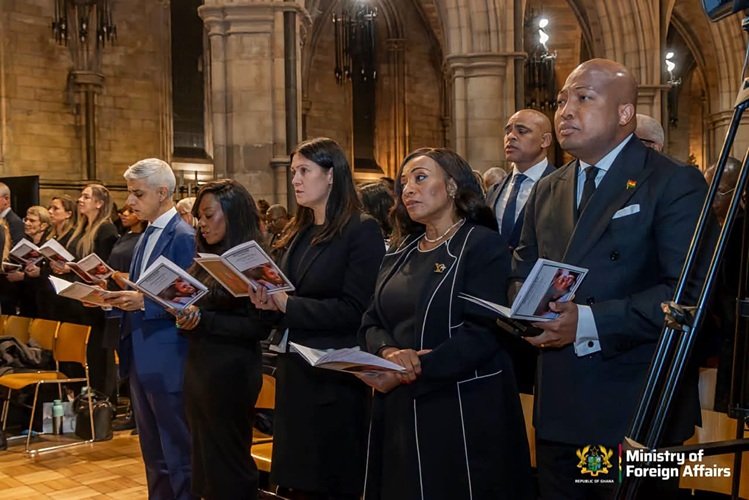
The Minister for Foreign Affairs, Samuel Okudzeto Ablakwa, has joined the family of the late Professor Jason Atta Kwei Arday, the Ghanaian community in the UK, and other dignitaries for a memorial service in Southwark, UK.
In a post, Mr. Ablakwa described the service as deeply moving and unforgettable, held in honour of the late professor’s memory.
According to him, in keeping with the government’s pledge, he joined the family, Ghana’s High Commissioner to London, British MPs, Ministers, the Mayor of London, Cambridge scholars, Prof. Arday’s students and loved ones to pay respects and honour his inspiring legacy.
Mr. Ablakwa noted that Prof. Arday’s accomplishments as the youngest Black professor appointed at the University of Cambridge and his widely appreciated charitable contributions will continue to inspire generations.
“The Government and People of Ghana will continue to stand by our compatriots everywhere they are in the world. As we do so, we profess our commitment to justice, equality and the creation of a new world,” he said.
He prayed for fortitude for the family in what he described as an extraordinarily difficult time.
“We shall always remember Prof. Arday for his response when asked what he will wish to do to change the world: ‘I would take a thread and a needle, and I’d interweave love into our society’,” Mr. Ablakwa added.
By Edem Mensah-Tsotorme