Features
Publicans at the airport

The publicans were the most detested people in ancient Israel during the time of Jesus, when the Roman Empire ruled the nation as an imperial occupying power. They were Jewish tax collectors employed indirectly by the Roman government and classified by their fellow Israelites as collaborators of the enemies of Israel.
Roman businessmen usually established companies through which they would acquire certain Jewish provinces for renewable periods of five years, and charge taxes on behalf of the imperial government. These entrepreneurs would then employ local Jewish men in their acquired territories to collect those taxes comprising duties on imports and exports, bridge tolls, poll tax, and levies on merchants who came to Israel to buy and sell.
The position was open to bids and the highest bidder, invariably a wealthy Jew, got his proposal accepted and won the right to do business in the territory concerned. Such collectors would be given a threshold of revenue expected from them. Whatever they got over and above the threshold was theirs. And so, they used all kinds of unethical methods to collect it for the government and themselves.
First, they would impose a fictitious assessment on property or income and inflate the rates at their discretion in order to rake in a higher percentage of tax and make maximum profit at the expense of the hardworking and helpless people. Moreover, these unscrupulous tax collectors harassed the people and charged them on the spot.
And it did not end there. Hours or even minutes after your unpleasant encounter, you were likely to meet another tax collector who would also demand tax. Sometimes, the publicans were accompanied by Roman soldiers and the oppressed people had no recourse to justice anywhere.
For their corrupt practices, these cruel tax collectors were regarded by their fellow Jews as, not just traitors working for their oppressors, but also, as extortioners and leeches that drained the lifeblood of the people by their exorbitant taxes.
Even more condemning of these hated people were the rabbis, that is, the religious leaders, who considered them unclean because of their contact with the Romans. They excommunicated them from the synagogues, forbade them from exchanging their money at the temple treasury, and prohibited them from testifying as witnesses in court. Thus, despite the substantial wealth they made, these publicans were derided and ostracised from their own communities. Yet, in defiance, they furrowed their brows and shrugged off the jeers and sneers. Now, Israel is a democratic country; they are not under the hegemony of any empire, and thankfully, the publicans are nowhere to be seen.
But, sadly, the publicans have resurfaced, not in Israel, but in Ghana. They are everywhere but in this article, those on the radar are the kind operating at the airport. They are encouraged by the powers that be for the share they would get. The operations of this new breed remind me of a certain woman somewhere in the Ashanti Region nicknamed, “Maame Ap3nkwa nya wuo,” which translates to, “The woman who got death while looking for life.”
It happened that the woman’s pastor proclaimed a fast for the congregation with the following instruction: “You may do it continually for seven days from six to six, or you can fast-track it by doing three days dry fasting,” which implied that you could not drink any water or eat for three days. The woman weighed the options and chose the latter. After just one day, she realised that she was gasping for breath. In anguish, she exclaimed: “Ei, me b3 p33 nkwa anaa s3 owuo,” meaning: “Did I come seeking life or death,” That is how she got her name.
The inception of COVID 19 brought in its wake the loss of precious lives. The National Security Coordinator, Mr. Joseph Kyeremeh, a family friend, known among my siblings as K-Joe, succumbed painfully to the virus. Another heavyweight who was not spared by the deadly virus was Dr. Jacob Plange-Rhule, FRCP, FWACP, FGCP (July 27, 1957 –April 10, 2020), a Ghanaian physician, academic, and Rector of the Ghana College of Physicians and Surgeons from October 2015 until his death in 2020.He was the private doctor of my first son about three decades ago in Kumasi, and one of the finest gentlemen I ever came across. How can I forget the loss of Nanabanyin Pratt, my own former Managing Director at New Times Corporation who, perhaps, in admiration of my straight talk, called me “Wogyafo.” You have to find out what that means.
Given the frequency and scope of death resulting from COVID, it became imperative for the Government to adopt stringent measures to stem the tide. As part of the interventions, personal protective equipment were supplied to healthcare workers. The wearing of masks was enforced while the use of sanitisers was also recommended. Mass gatherings were banned, compelling churches to go online, and become financially unstable. Funerals suffered a drastic cut in donations adding to the sorrow inflicted by a COVID-related death.
Another intervention adopted in the heat of the pandemic, was the introduction of a regime of testing by the Government to determine the COVID status of arriving international travellers, and prevent a situation where a positive person would slip into the country and spread the virus. The Ghana Airports Company Limited, in collaboration with a group calling itself the Frontier Healthcare Services Limited, is in charge of the programme at the Kotoka International Airport. All these measures were taken because we were seeking life. But, like the Ashanti woman in the tale related above, we are gasping for breath.
From the way things are going, I see some similarity between Israel’s ancient experience at the hands of the tax collectors and the imperial government. In those days, the Roman government just waited for what it deemed its fair share. Whatever the publicans imposed on the people was none of their business. I smell the presence of the publicans at the airport and other places. Fortunately, we are not under the hegemony of any foreign power. “Y3n ara asaase ni.”“This is our own land.” Yet, unfortunately, the publicans are operating as typical of them, with all impunity and the Government, through its agent, has given them the latitude to impose an unjustifiable and unbearable testing fee on the people.
In many jurisdictions the world over, the fee has been drastically reduced due to mass vaccination everywhere and the reduction in the spread of the virus. So, for what justifiable reason should the testing cost $50 for Ghanaian and other ECOWAS citizens, and $150 for other nationals? The most painful and irritating aspect of the whole thing is that even people with proof of being vaccinated within the stipulated timeframe before arriving, are still compelled to undertake the test.
Yet, according to information on their own website, passengers must possess a COVID-19 negative PCR test from an accredited laboratory in the country of origin. The test should have been done not more than72 hours before the scheduled departure time from the country of origin. You take all this precaution, and they still insist on taking the test and charging you unjustifiably.
Annoyingly, they have the guts to tell travellers arriving from the US or UK, with all their stringent testing regimes that they have tested positive for COVID and must be quarantined at a hotel at their own expense, which is all part of the grand scheme to extort money from people.
Is the Government not just folding its arms and waiting for its “fair share” of the revenue from the “publicans?” Have they considered the pain it takes to make $50? That is more than GH¢300 which is somebody’s monthly pay in Ghana in this day and age. Miss Mercy Agyei-Ankomah, a former English language teacher at the Juaben Senior High School, now based in Vietnam, says she used to be paid GH¢1,500, Do you know how much that is in dollars? It is about $250. That means Frontier Healthcare Services charge a fifth of a teacher’s monthly salary for a few minutes they spend testing an arriving passenger.
For all you know, the Government just gets a token while the collectors pocket the biggest chunk of the money accruing from the testing. That is the way it worked in ancient Israel. There must be an immediate intervention to save passengers from this rip off by these latter-day publicans.
In January, the MP for North Tongu, Mr. Samuel Okudzeto-Ablakwa described the fees as an extortion and cautioned that if the cheating was not stopped by February, Parliament would intervene. Please, Homourable, February ended a long time ago, and March has already crossed the half-way mark. We are anxiously waiting for your next move.
Meanwhile, another legislator, Mr. Davis Opoku Ansah, the MP for Mpraeso Constituency, has added his voice to calls for a drastic reduction of the fees, saying that even though we need to keep track of the virus and deal with it through interventions like testing, we must reduce the charges because they are harming trade and tourism.
Whoever the cap fits, let them wear it. Over to you, Joe Lartey!
Contact:
teepeejubilee@yahoo.co.uk
By Tony Prempeh


On Sunday, October 11, 2026, it was the turn of Ghanaian Catholics in Finland to lead the singing in the church service of the African Catholic Chaplaincy in Finland (ACCF).
It was indeed a spirit-filled feeling for worshippers present. And for the Ghanaian migrants, the occasion also brought back to them memories of church services in their home country, Ghana.
The ACCF has a roster for each country/community to sing from time to time. Next Sunday will be the turn of the Nigerian community. Other communities that usually sing are the Kenyan/Tanzanian community, the Cameroonian, the Ugandan, group, etc.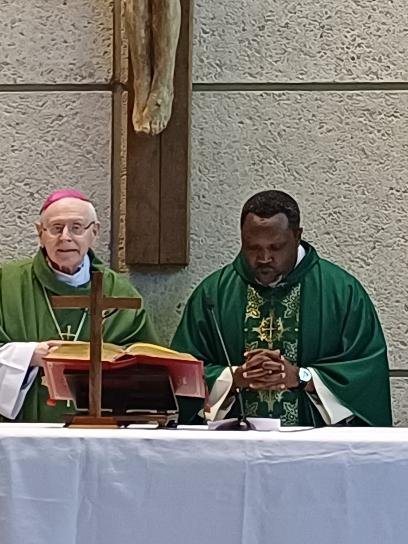
A powerful religious experience
The mass services of the Chaplaincy usually give a powerful religious experience and a display of cultural diversity, especially in occasions such as when the Bishop of Helsinki, Bishop Raimo Goyarrola, celebrated mass with the Chaplaincy on Pentecost Day, May 24, 2026.
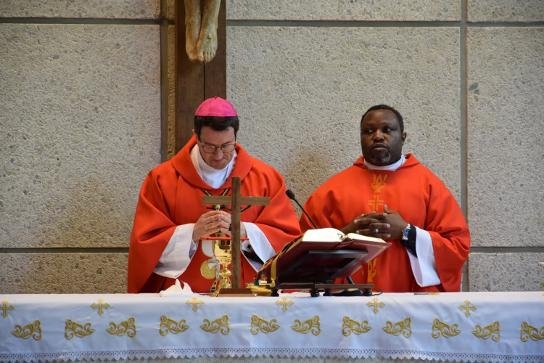
There was a similar time of spiritual joy last month (September 27, 2026) when Emeritus Bishop Teemu Sippo, former Bishop of Helsinki, visited the Chaplaincy. Bishop Teemu was the main celebrant, assisted by the Chaplain, Reverend Father Thomas Otieno.
Last Sunday, Reverend Father Bernard Sor, a Ghanaian Catholic priest based in Austria, was the main celebrant in the mass service where he performed a rite of baptism. Fr Bernard had celebrated mass a few months ago when he visited his sister and her husband in Helsinki. 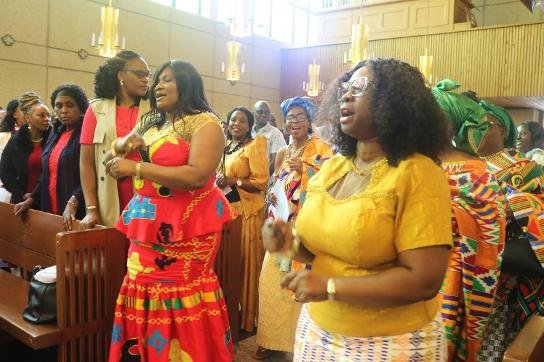
All these well-attended religious occasions indeed leave lasting memories. The homilies (peaching) by the priests usually emphasize religious tenets such as the importance of loving and serving God in truth, existing in peace with our fellow humans to promote unity in diversity, etc.
Unity in diversity and a colourful display of cultures
The African Chaplaincy church services usually produce impressive displays of diverse cultures from different parts of Africa and elsewhere. The events are often spiced by rich cultural displays of dances and colourful attires which are a delight to watch.
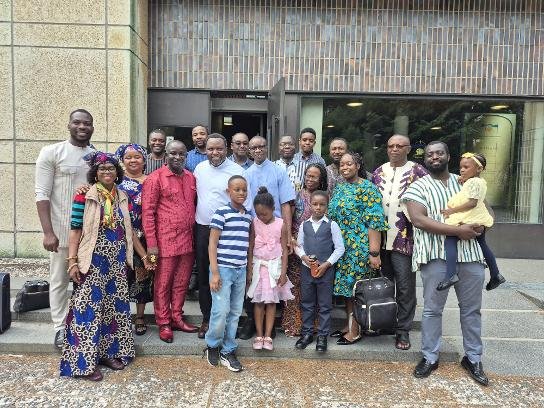
On special occasions, members of the Ghanaian Catholic community, in their gay and colourful kente attire and with adowa dance and music, usually lead the procession into the church. Other communities such as the Cameroonian, Nigerian, Kenyan and Tanzanian as well as Sudanese/South Sudanese groups also put up well-choreographed performances from their cultures.
The African Catholic Chaplaincy in Finland
The African Chaplaincy was founded on June 4, 2017, which was a Pentecost Sunday, in a Pontifical High Mass celebrated by Monsignor Emeritus Sippo S.C.I., the then Bishop of Helsinki, at the St. Mary’s Catholic Parish Church in Helsinki.
The Chaplaincy was created by Bishop Teemu in collaboration with the Diocesan body when they detected a great flocking of African immigrants to Finland, the majority of whom were Catholics. This was to give the immigrants a possibility to integrate into the Finnish society by worshiping as Catholics and in their African cultural identity.
The responsibility of the Chaplaincy was given by Bishop Teemu to Father Dr Leonard Wobilla Shwei, who is thus the first Chaplain and ably led the Chaplaincy. He was succeeded a few years ago by Father Thomas Otieno, who continues to move the Chaplaincy forward. Thank you!
GHANA MATTERS column appears fortnightly. Written in simple, layman’s terms, it concentrates on matters about Ghana and beyond. It focuses on everyday life issues relating to the social, cultural, economic, religious, political, health, sports, youth, gender, etc. It strives to remind us all that Ghana comes first. The column also takes a candid look at the meanings and repercussions of our actions, especially those things we take for granted or even ignore. There are key Ghanaian values we should uphold rather than disregard with impunity. We should not overlook the obvious. We need to search for the hidden or deeply embedded values and try to project them.
With Dr Perpetual Crentsil
SKIP THE QUEUE, TAP THE NEWS

You can now read the Ghanaian Times and The Spectator newspapers from the comfort of your device via TimesNewsPlus.
Join our WhatsApp Channel: https://whatsapp.com/channel/0029VbBElzjInlqHhl1aTU27
She did not find out he was cheating. She found out he was drowning.
It was two weeks after their beautiful wedding. The jollof was still in the fridge. A loan officer called her number-not his-and politely asked, “Madam, please tell your husband to pay his overdue loan. We have been calling him.”
That was how she discovered her new husband had entered their marriage with a hidden debt of over GH¢ 40,000. No cheating. No other woman. Just a financial secret.
And that is how many Ghanaian marriages begin to die. Not with a shout, but with a secret alert on a phone.
We prepare for the wedding. We do not prepare for the wallet.
What is money honesty?
Let me define it simply. Money honesty is not that you both earn the same. It is that you both know the same. It is the ability to sit down and say without fear:
“This is how much I earn.”
“This is how much I owe.”
“This is how I was raised to see money.”
“This is what scares me about money.”
Financial transparency is not about control. It is about clarity. You cannot build trust on top of secrets.
Many couples tell me, “Counsellor, we love each other, love will handle money.” I always answer, “Love is the car, but money honesty is the fuel. Love without honesty cannot move.”
How To Buy Your Marriage Insurance Today – My 5-Step Protocol
If you are engaged, newly married, or even 20 years in marriage, you can still fix this. At Counsellor Prince & Associates Consult—CPAC, this is what I give couples:
Step 1: The 90-Minute Money Naked Session.
No phones, no blame. Each partner writes down on paper: Monthly income, monthly debts, monthly family obligations, savings, and your biggest money fear. Then you exchange papers. Read it. Don’t react for 24 hours. Just absorb.
Step 2: Create OUR Money, YOUR Money, My Money.
You need three pots. OUR money for rent, food, school fees, utilities, properties, and the like— joint contribution. YOUR money and MY money—a small agreed allowance no one questions. This stops the feeling of being controlled.
Step 3: The No-Secret Debt Rule.
Agree from today: No new loan, no new hire purchase, no new family financial commitment above GHS 500 without telling each other first. Not permission, but information.
Step 4: Talk About Your Money Personality.
Are you a Spender or a Saver? Are you Risky or Safe? Most Ghanaian marriages are a Spender married to a Saver. Neither is wrong. But if you don’t understand your partner’s personality, you will call his saving “stinginess” and her spending “wastefulness.”
Step 5: Do a Monthly 30-Minute Money Date
Not an argument date. Light, with tea. “How did we do this month? What worried you? What should we plan for next month?” Couples who do this divorce far less.
My Final Word
Before you say “I Do” at the altar, have pre-marital counselling and also have the money talk on the sofa.
Ask your partner:
“If I lost my job today, how long can we survive?”
“What debt are you bringing into this marriage?”
“How much do you send to your family monthly and will that continue?”
If he or she gets angry that you asked, don’t get married yet. A person who is angry about accountability will be abusive about money.
Marriage insurance is not bought at Star Assurance or Enterprise. It is bought in honest conversations when no one is watching.
The wedding costs one day. The marriage costs a lifetime. Don’t enter a lifetime contract and covenant with hidden costs.
You can still insure your marriage today.
Source:
Counselor Prince Offei, CPAC’s founder, is a leading Mental Health Professional, Marriage Counsellor, Author, ADR Expert/Arbitrator, and Spectator Newspaper Columnist. He writes on relationships, marriage, parenting, special needs support, and their connection to mental health. For therapy, counselling, or enquiries, contact Counselor Prince & Associates Consult (CPAC) in Accra on 0559850604 / 0551428486.
SKIP THE QUEUE, TAP THE NEWS
You can now read the Ghanaian Times and The Spectator newspapers from the comfort of your device via TimesNewsPlus.
Join our WhatsApp Channel: https://whatsapp.com/channel/0029VbBElzjInlqHhl1aTU27