Features
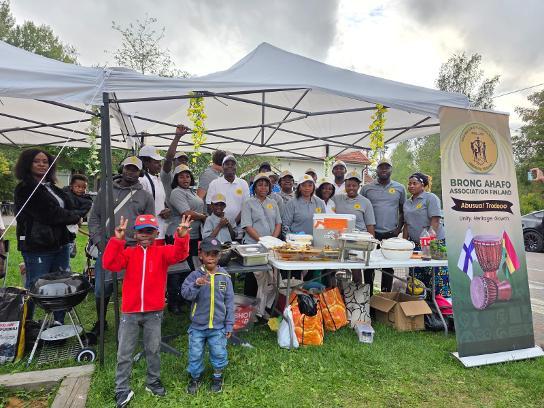
On the Brong Ahafo Association Finland

- /home/u249204778/domains/spectator.com.gh/public_html/wp-content/plugins/mvp-social-buttons/mvp-social-buttons.php on line 27
https://spectator.com.gh/wp-content/uploads/2026/07/Brong-Ahafo-Association-group-pose-for-the-camera.jpg&description=On the Brong Ahafo Association Finland', 'pinterestShare', 'width=750,height=350'); return false;" title="Pin This Post">
- Share
- Tweet /home/u249204778/domains/spectator.com.gh/public_html/wp-content/plugins/mvp-social-buttons/mvp-social-buttons.php on line 72
https://spectator.com.gh/wp-content/uploads/2026/07/Brong-Ahafo-Association-group-pose-for-the-camera.jpg&description=On the Brong Ahafo Association Finland', 'pinterestShare', 'width=750,height=350'); return false;" title="Pin This Post">
Today, I focus on the Brong Ahafo Association Finland, as I continue with my description of institutions or personalities and their accomplishments as part of the Ghanaian Diaspora in Finland.
The association in Finland has chalked significant achievements or successes which must be made known to the public.
Aim and mission
The Brong Ahafo Association Finland was established in 2007. The three people who met to plan the birth of the association are Mr Augustine Tweneboah-Kodua, Elder Matthew Anini, and the late Mrs Comfort Dapaah Agyemang. They invited many others to help establish the association, which is officially registered as the Brong-Ahafo Association Finland.
The mission of the Brong Ahafo Association includes the promotion of unity among people from the former Brong-Ahafo Region of Ghana, which is currently divided into three regions—Ahafo, Bono, and Bono East Regions.
The association also aims to preserve and promote the Bono and Ahafo culture or traditions. Also, its goals include contributing to developmental projects in the Ahafo, Bono and Bono East Regions of Ghana. Another key aim is to help strengthen cooperation of its members and other Ghanaian migrants with others in Finland as the host country.
Events and achievements
The Brong Ahafo association acts as a family to its members. In this way, it can be said that although Finland has a robust social welfare system, the association comes in where close family support or interaction is needed.
Living away from one’s home country and family is not easy and as such the Brong Ahafo Association becomes an important part of social networks, vital in providing informal social security that cannot be provided by public institutions.
The association also serves as an ambassador of Ghanaian culture in the Finnish society by promoting cultural engagements. Its members engage in volunteering its time and skills, in helping individual members and for charity projects in their home regions in Ghana. The association also actively participates in cultural celebrations and family gatherings organised by individual members. It also holds an annual Easter party during Easter period.
Role in the Ghanaian community in Finland
The association plays a prominent role in the Ghanaian community in Finland. The association was the first to be formed after the Ghana Union Finland. It is thus a pioneer in that sense of an association representing a Ghanaian ethnic group. The association helps or gives support to its members who are bereaved as a way to commiserate with them and to help them organise the funeral.
The Brong and Ahafo association also collaborates with the Ghana Union Finland, an association for Ghanaian migrants in Finland whose aims include bringing together all Ghanaian migrants resident in Finland and promoting cultural activities for a better intercultural and multicultural understanding. Thus, the group also mobilises members for various activities that help in integration efforts in the Finnish society.
Displaying a rich culture
By its activities, the Brong Ahafo association proudly displays the Bono and Ahafo culture, as part of the larger Akan culture in Ghana. Like other groups representing the Ga-Adangbe, Mfantseman, Eastern Region, and Nzema, the association endeavours to showcase the culture and values of their ethnic origins as well as hold the general Ghanaian heritage in high esteem.
“The association has been quite effective in maintaining cultural identity of the Bono and Ahafo people, creating social networks among members and with others in Finland”, the Secretary, Mr Kwasi Owusu Afriyie, stated.
Members volunteer to support in informal ways that public institutions may lack the full capacity to accomplish, which also helps to integrate members into the Finnish society. Through social events, traditional celebrations, and home visits, the association acts as family for its members during postpartum periods, child dedication in church, funeral rites, etc.
Challenges
The pace of organising things for the association can slow down sometimes, but it is quite impressive to note how members revive it and keep the ‘family spirit’ alive.
The COVID-19 period made the association quite dormant. Bringing back people together has been quite challenging, and requires much dedication before reorganisation can pay results, the Secretary hinted.
Finding a suitable venue and the funding for organising cultural events is quite challenging. It is also not easy supporting important life events such as helping nursing mothers who have no family in Finland. Thank you.

The emotional lives of women are deep and complex. They are shaped by biology, the brain, and how women interact with the world around them. While everyone feels emotions, science shows unique patterns in how women process and express them.
1. How the brain and body work
Emotions are not just feelings in the mind. They are physical processes controlled by the brain and body:
Connected brain halves: Studies show that women often have strong connections between the left and right sides of the brain. This helps women link logic with intuition and feelings very quickly.
Strong memories: The brain’s emotional centre helps women remember emotional events with vivid detail. This builds strong gut feelings and helps women learn from past experiences.
Hormone changes: Hormones like estrogen and progesterone change throughout the month. Estrogen can boost good moods and energy, while progesterone can cause calmness or quiet reflection. These shifts are natural physical responses.
2. Empathy and connection
Women often show high levels of empathy and social skill:
Mirror neurons: People have brain cells called mirror neurons that let us feel what others feel. Research suggests these networks help women deeply sense and understand the emotions of people around them.
The “Tend-and-Befriend” Response: When stressed, men often react with fight or flight. Women often use a “tend-and-befriend” response. Driven by bonding hormones, women are wired to care for others and seek support from friends and community during hard times.
3. Society and expectations
Society also shapes how women express their feelings:
Different rules: Girls are often taught to be nurturing and expressive. However, society sometimes judges women harshly if they show anger or act too assertive at work. This forces women to balance their true feelings with outside expectations.
Emotional labor: Women often carry the weight of keeping families and workplaces happy. While this builds strong bonds, it can also lead to tiredness if they do not take time for themselves.
4. Resilience and Intuition
These biological and social factors give women great emotional strength:
The Power of Sharing: Many women are good at processing sadness, joy, and love by talking with others. This helps them heal and grow.
Listening to intuition: “Woman’s intuition” is real. It is not magic; it is the brain quickly putting together past experiences, physical clues, and deep observations into a clear gut feeling.
Conclusion
Women’s emotions are a powerful and sophisticated system. They are driven by brain science, body chemistry, and deep empathy. Understanding these systems helps us see the vital role women play in building strong relationships and communities.
By Robert Ekow Grimmond-Thompson
Features
Confronting newborn abandonment in Ghana: When a cry for help is heard in a dustbin – Part 2
The root causes: It is never just one reason
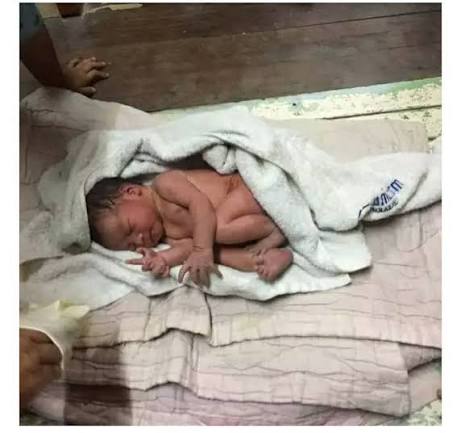
My years of counselling at CPAC show me abandonment is rarely an act of malice. It is the tragic endpoint of seven overwhelming distresses:
1. Severe maternal mental illness —The hidden emergency
a) Clinical Postpartum Depression (PPD): This is far beyond “baby blues.” It is a severe mood disorder that can appear weeks to months after birth. Due to a massive drop in hormones, extreme sleep deprivation, and emotional exhaustion, the mother feels deep sadness, worthlessness, and complete emotional numbness towards her baby. Picture: A new mother sits by her bed all day, staring blankly. Her baby cries for hours, but she cannot lift her hands to carry the baby. She whispers, “This baby would be better off without me.” She does not hate the baby; she feels she has completely failed as a mother.
b) Peripartum Psychosis (Postpartum Psychosis): This is a psychiatric emergency. Rare but extremely dangerous, appearing suddenly within the first 2-3 weeks after delivery. The mother completely loses touch with reality. She hears commanding voices telling her to abandon the baby, or believes the baby is possessed by an evil spirit or is a “spirit child” who will bring a curse. Picture: A mother genuinely believes she heard a voice saying, “Leave this child at the crossroads at midnight or your family will die.” She abandons the baby not out of hatred, but because her broken mind believes she is obeying a higher spiritual order to save her family.
c) Pre-existing untreated Schizophrenia: This is a chronic, severe mental disorder that existed before the pregnancy. The stress of pregnancy and labour shatters her fragile coping. She suffers from paranoid delusions — believing people want to poison her and the baby — flat affect (zero facial expression), and grossly disorganised thinking, making it impossible to plan how to feed or clean a baby. Picture: A young woman whose family called her illness “spiritual attack” instead of taking her for medication wanders away after delivery, completely forgetting she even gave birth, leaving the infant behind.
2. Extreme socio-economic deprivation: For many girls in some parts of Ghana such as Kasoa, Madina, or Bekwai, poverty is not a statistic; it is a daily panic. No money for antenatal care, no money for hospital delivery, no money for baby diapers or formula. When a mother cannot feed herself, the thought of feeding another mouth feels impossible. Some mothers say, “I left her where someone richer would find her, because I could not watch her starve to death in my hands.” It is a distorted act of survival.
3. Intense societal stigma and shame: In Ghana, pregnancy outside marriage, teenage pregnancy, or pregnancy from rape can bring extreme family rejection. The girl is called “spoilt,” beaten, banned from church, or sacked from school. The fear of bringing shame to the family name is heavier than the fear of police. So she hides the pregnancy for 9 months, delivers alone, and abandons in secret to protect her family’s “honour.”
4. Paternal abandonment — The Man Who Ran Away: Behind almost every abandoned baby is a man who vanished. He says, “It is not mine,” or “Abort it,” and switches off his phone. The mother is left utterly isolated — no emotional, financial, or social support. She is criminalised alone, but the abandonment started with him. Psychological research shows paternal denial is one of the strongest predictors of maternal panic and newborn abandonment.
5. Substance abuse disorders: Alcohol, tramadol, and other drug addiction impair the brain’s executive functioning — the ability to plan, judge consequences, and process emotions. A mother struggling with addiction may give birth in a highly intoxicated or withdrawal state, unable to comprehend the needs of the newborn, leading to neglect and eventual abandonment.
6. The spirit child cultural phenomenon and superstition: In some remote pockets of Northern Ghana and even in few parts of Central and Ashanti regions, public health research shows babies born with congenital deformities, severe disabilities, or whose mothers die in childbirth are branded as “spirit children” or cursed. In extreme instances, families, under cultural pressure, mandate that such babies be exposed or abandoned at shrines or bushes. This is not mental illness, but a harmful cultural belief system that still kills.
The invisible wounds
On the baby: Risk of death from hypothermia, sepsis, and infection. Survivors suffer Anaclitic Depression and Failure to Thrive due to lack of touch. As adults, they battle Reactive Attachment Disorder, chronic mistrust, and identity crisis — “Why did my mother leave me in a dustbin?”
On the mother: Lifelong hidden grief, intense guilt, chronic PTSD, depression, and elevated suicide risk. A prison cell does not heal this.
On the nation: Overburdened orphanages like Osu Children’s Home, draining health budgets, and overworked Social Welfare officers.
SKIP THE QUEUE, TAP THE NEWS

You can now read the Ghanaian Times and The Spectator newspapers from the comfort of your device via TimesNewsPlus.
Join our WhatsApp Channel: https://whatsapp.com/channel/0029VbBElzjInlqHhl1aTU27