News
President Akufo-Addo salutes Ghanaian journalists at 28th GJA Awards


President Nana Addo Dankwa Akufo-Addo has lauded the critical role of Ghanaian journalists in the country’s democratic journey, during his speech at the 28th Ghana Journalists Association (GJA) Media Awards, held on Saturday, 28th September 2024.
This event marked 75 years of excellence in Ghanaian journalism, under the theme “75 Years of Excellence in Journalism: The Role of the Media in Democratic Governance and Elections.”
Delivering the keynote address, President Akufo-Addo expressed his gratitude for the media’s unwavering commitment to truth, transparency, and accountability. He highlighted how journalism in Ghana has not only borne witness to historical moments but actively shaped the nation’s progress, particularly in its fight for independence.
He recounted how early journalists fueled the fires of freedom and encouraged national unity through their fearless reporting during colonial times.
“Long before the celebrations of 6th March 1957, journalists were already playing a crucial role, using their pens and their voices to fuel the fires of freedom,” the President remarked.
He referenced notable figures such as Dr. J.B. Danquah and Osagyefo Dr.Kwame Nkrumah, who, in addition to their political activism, were journalists. He said, their work laid the foundation for Ghana’s independence movement, inspiring a spirit of resistance against colonial rule that could not be silenced.
The President also touched on the media’s indispensable role in Ghana’s democratic governance, emphasizing how the press has been instrumental in shaping the nation’s democratic culture.
According to the President, the media was crucial during the restoration of democracy in 1992, educating the public on their rights, informing them about political processes, and ensuring transparency in governance.
“The story of Ghana’s democracy is incomplete without the contribution of the media. You have been there in moments of triumph and trial, standing as pillars of truth and integrity,” the President stated.
He credited the Ghanaian media for their diligent work in monitoring electoral processes, reporting on irregularities, and ensuring peaceful transitions of power.
In the modern context, President Akufo-Addo acknowledged the new challenges journalists face, such as disinformation, misinformation, and the rising influence of social media.
He called on journalists to be vigilant in their role as gatekeepers of truth, particularly as the country prepares for the 2024 elections.
“The responsibility of the media during elections cannot be overstated. You have been at the forefront, monitoring the polls and ensuring that the voices of the electorate are heard,” he said, urging the media to continue to act with integrity and uphold professional standards.
As the event also marked President Akufo-Addo’s last attendance at the GJA Awards as President of the Republic, he shared a personal reflection on his journey alongside the media throughout his career. He recounted his legal battles to protect press freedoms, such as the historic court case against the Ghana Broadcasting Corporation (GBC) to ensure fair access to state media, and his work as Attorney General in repealing the Criminal Libel Law in 2001.
He concluded his speech by expressing his deep commitment to ensuring media freedom in Ghana, describing it as a cornerstone of democracy. As he prepares to retire from active political life, President Akufo-Addo extended an invitation to journalists to visit him in Kyebi, where he looks forward to continuing his engagement with the media and reflecting on the country’s democratic progress.
In his final remarks, President Akufo-Addo reminded journalists of the importance of their work: “The media has always been, and will continue to be, a cornerstone of our democratic journey. Your work is essential to the strength of our democracy, the integrity of our elections, and the progress of our nation.”
The awards ceremony, which brought together the finest journalists in the country, was a fitting tribute to 75 years of Ghanaian journalism and its vital role in shaping the nation’s democratic governance.






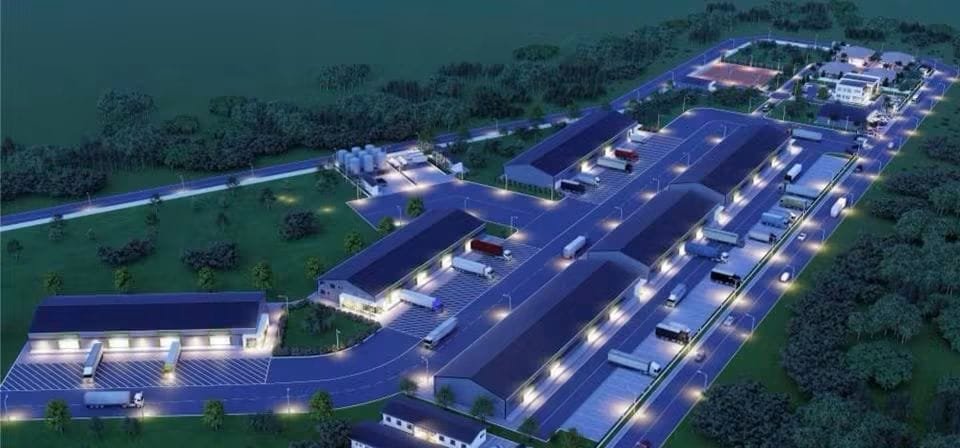
President John Dramani Mahama over the weekend inspected ongoing works on a 6,000-birds-per-hour meat processing factory at Bechem in the Ahafo Region.
The facility, being developed by the Ministry of Food and Agriculture, is a key component of government’s broader strategy to achieve self-sufficiency in poultry production and reduce Ghana’s heavy dependence on imported chicken.
President Mahama, who toured the site to assess the pace of work, was briefed by the project contractor that the factory is currently 50 percent complete.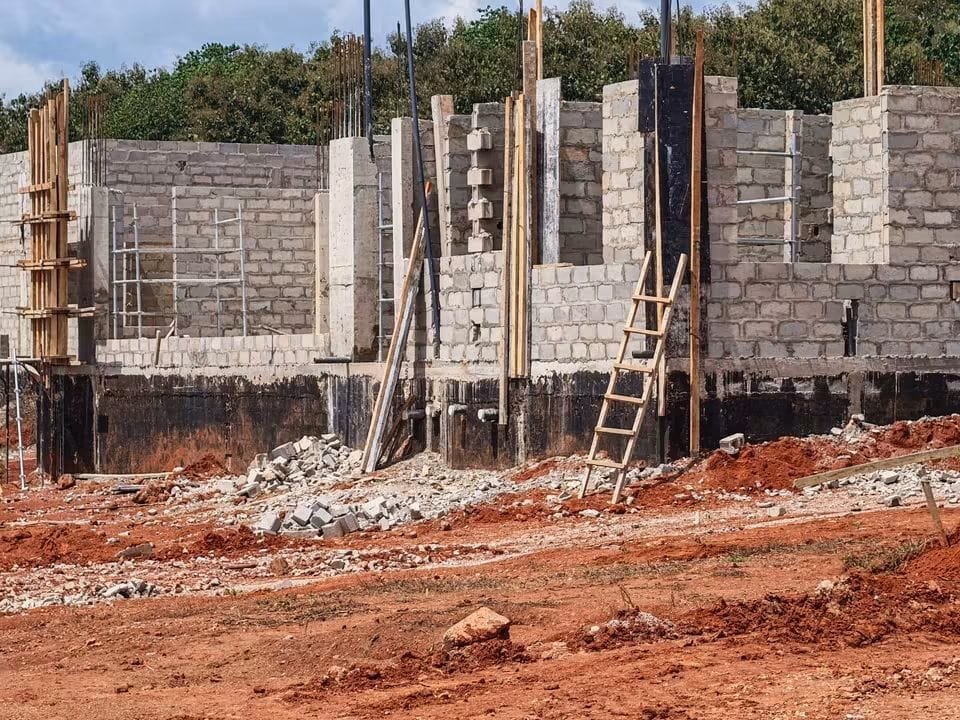
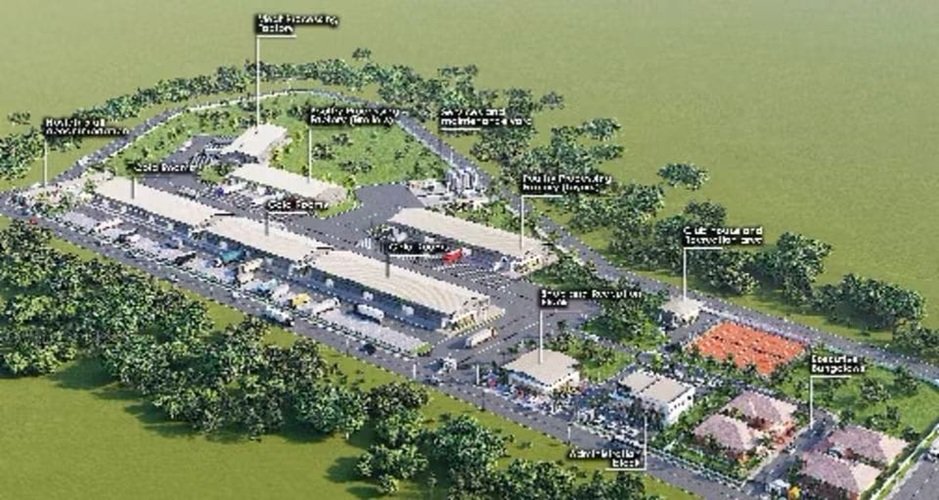
The contractor assured the President that construction would be fully completed by March next year.
He further disclosed that all required equipment for the processing plant has already been procured and is ready for installation once the building works are finished.
Once operational, the factory is expected to significantly boost local poultry processing capacity, create jobs and support poultry farmers within the Bechem enclave and beyond.
By Edem Mensah-Tsotorme
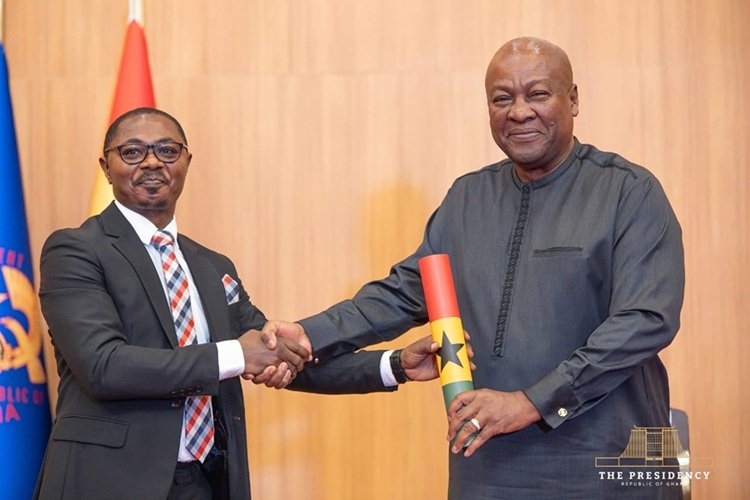
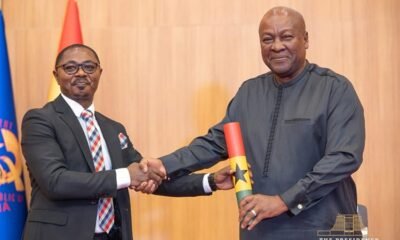
Newly appointed Electoral Commission (EC) Deputy Chairperson Joseph Kwaku Asamoah has pledged to work towards restoring public confidence in the Commission, describing it as an obligation he and his colleagues must fulfil.
Speaking after his appointment by President John Dramani Mahama, he said the Commission would work closely with its staff to review electoral processes and pursue continuous improvements.
He said the Commission was committed to delivering its mandate without fear or favour, stressing that every Ghanaian mattered.
According to Mr Asamoah, restoring public trust was particularly important because confidence in the Electoral Commission had fallen to its lowest level in more than two decades.
Citing Afrobarometer data, he said only 33 per cent of Ghanaians expressed some or a lot of trust in the Commission, compared with 75 per cent in 2005 and 63 per cent in 1999.
He described the figures as a call to action, insisting that rebuilding public confidence was not optional but an obligation imposed on the Commission.
Mr Asamoah identified misinformation, disinformation and fake news as major challenges facing electoral processes in modern times.
He warned that false information could undermine political interests and deepen divisions in the country, while calling for responsible use of new media to promote civic education and encourage public participation, particularly among young people.
He stressed that credible elections were not the responsibility of the Electoral Commission alone but a national duty requiring the involvement of political parties, Parliament, the security services, the judiciary, civil society organisations, the media and every citizen.
He therefore called on all stakeholders to work together with the Commission to strengthen Ghana’s electoral processes and restore public confidence.
By: Jacob Aggrey