News
President Akufo-Addo challenges Ghanaian journalists to combat disinformation ahead of 2024 elections

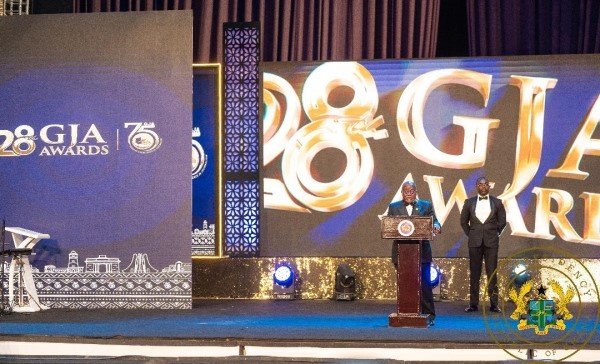
At the 28th Ghana Journalists Association (GJA) Media Awards held on Saturday, September 28, 2024, President Nana Addo Dankwa Akufo-Addo underscored the critical responsibility of Ghanaian journalists in safeguarding the nation’s democracy, particularly as the 2024 elections draw near.
Addressing an audience of media professionals, the President emphasized the growing challenges posed by disinformation, misinformation, and the digital age.
As part of the celebration marking 75 years of journalism excellence, the President noted that while technology has democratized access to information, it has also created new vulnerabilities. In the current media landscape, where social media platforms enable the rapid spread of information, journalists are faced with the task of ensuring that facts prevail over falsehoods.
“In this digital age, we face new challenges—disinformation, misinformation, fake news, and sensationalism—that can distort the electoral process. Journalists must rise to the occasion by being the gatekeepers of truth,” the President stated.
With the country set to embark on yet another crucial election in December 2024, President Akufo-Addo called on the media to report with integrity, fairness, and accuracy, ensuring that citizens are well-informed to make decisions that affect their future. He stressed that the stakes are higher than ever, and the role of the media has never been more critical.
“The responsibility of the media during elections cannot be overstated. It is through your work that citizens are informed about the policies of political parties, the integrity of candidates, and the issues that matter most to their lives,” he added.
The President’s speech also reflected on the broader role of journalism in shaping Ghana’s democracy. He credited the media for its role in promoting transparency, accountability, and the public good, particularly in periods of political transition. He highlighted the media’s contribution to the restoration of democracy in 1992 and its continued involvement in educating the public and safeguarding democratic values.
The President noted that journalism, as the “fourth estate,” has been pivotal in moving Ghana forward. He urged media practitioners to maintain their professionalism and safeguard the public’s trust by adhering to the principles of truth, fairness, and impartiality.
However, he was quick to caution that with great power comes great responsibility. “The bond between journalists and the public is built on trust, and it is this trust that must be continually safeguarded by your professionalism and dedication to accuracy, fairness, and balance,” he said.
As a passionate advocate for press freedom, President Akufo-Addo recounted his efforts in advancing the rights of journalists in Ghana. He highlighted his government’s commitment to passing the Right to Information Act, which empowers journalists and the general public to access critical information to hold leaders accountable.
This, coupled with the repeal of the Criminal Libel Law during his tenure as Attorney General in 2001, has strengthened the foundation of press freedom in Ghana.
President Akufo-Addo, whose term as president is set to end, reflected on his long-standing relationship with the media. He emphasized the personal significance of attending the awards ceremony, noting that it would be his last as President of the Republic. Despite returning from a demanding schedule at the United Nations General Assembly in New York, he made it a priority to attend the event in recognition of the invaluable role the media has played in his presidency and the democratic journey of Ghana.
In conclusion, President Akufo-Addo commended the resilience, courage, and dedication of Ghanaian journalists. He reaffirmed his belief that a free and vibrant press is crucial to democracy, and as the country prepares for the 2024 elections, he called on the media to uphold its duty as the torchbearer of truth and fairness.
“I remain deeply committed to ensuring that the media in Ghana remains free, vibrant, and independent. Your work is essential to the strength of our democracy, the integrity of our elections, and the progress of our nation,” the President declared, leaving the audience with a message of hope and responsibility as they prepare for the next chapter in Ghana’s political history.

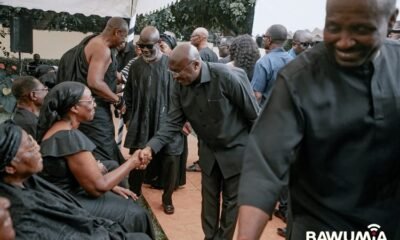




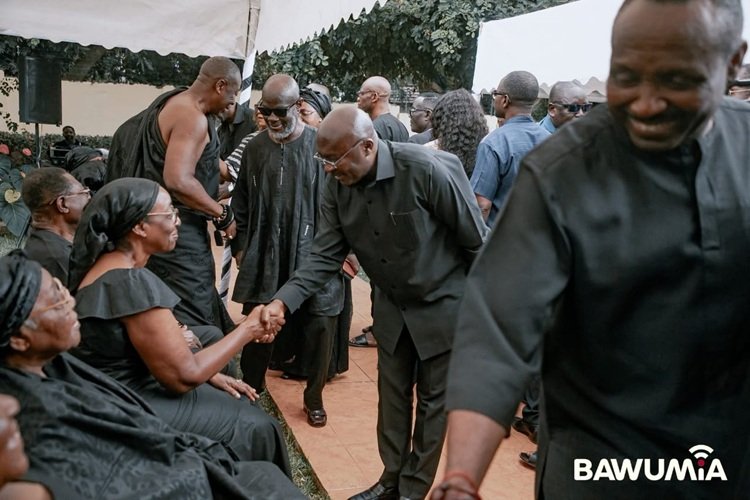
The flagbearer of the New Patriotic Party (NPP), Dr. Mahamudu Bawumia, today led the National Executives of the party to pay a condolence visit to the family of the late H.E. Samuel Odoi-Sykes.
Odoi-Sykes, former National Chairman of the NPP, was a distinguished lawyer, diplomat and statesman.
In a message after the visit, Dr. Bawumia said the leadership shared in the family’s grief and extended heartfelt sympathies during the difficult time.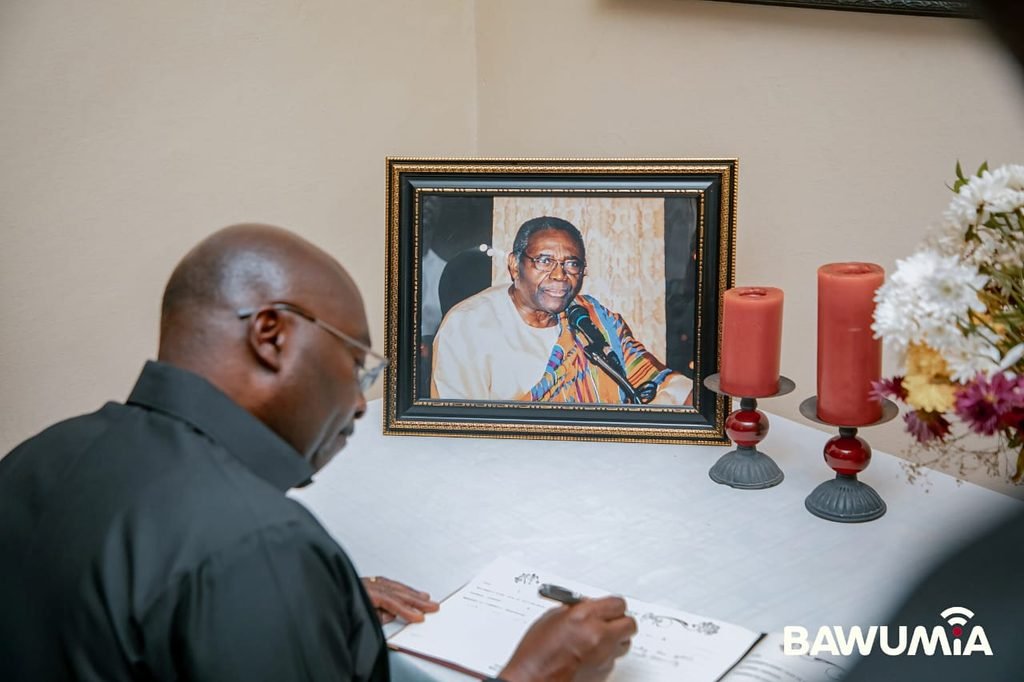
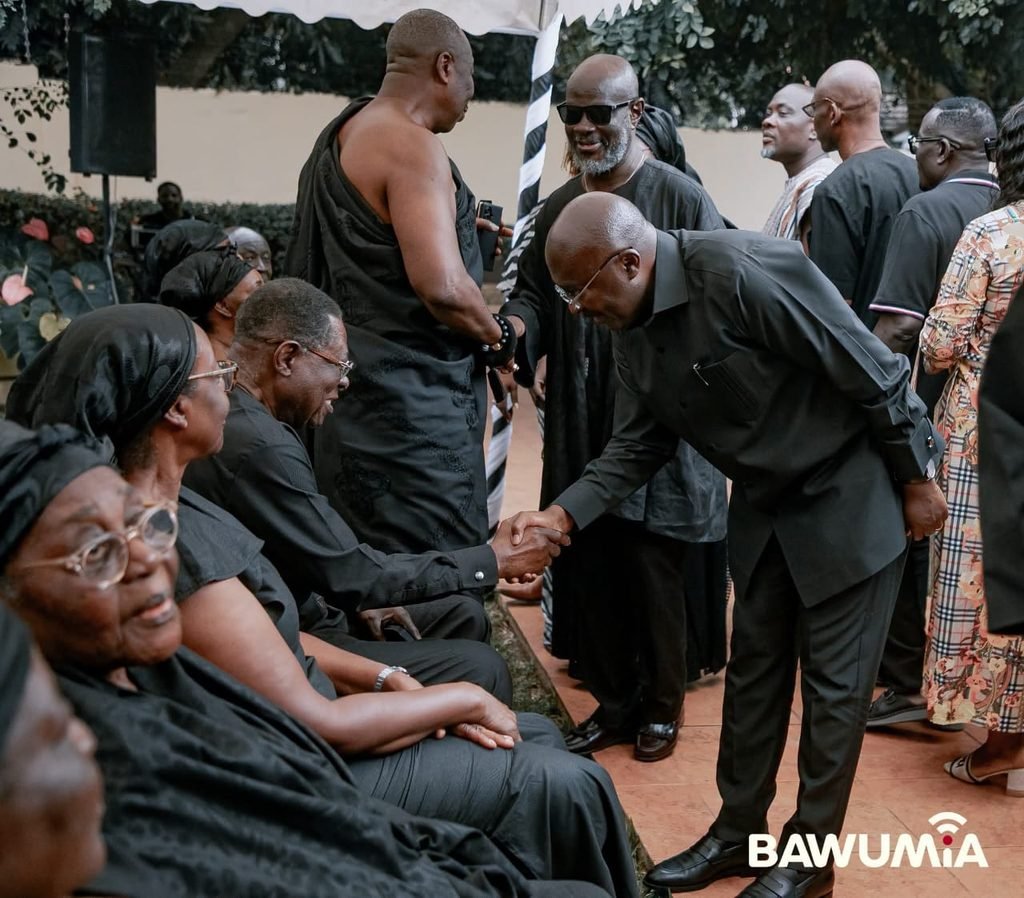
“H.E. Odoi-Sykes served our party with dedication and commitment, and his contributions will always be remembered,” he stated.
He prayed for comfort and strength for the bereaved family and for the soul of the late former Chairman to rest in eternal peace.
By Edem Mensah-Tsotorme
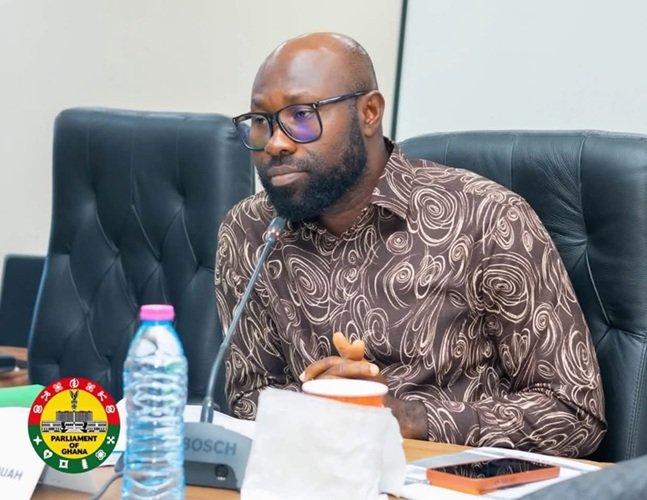
Suame Member of Parliament (MP) John Darko has denied any involvement in a post-court settlement between SIC Savings and Loans and Equity Savings and Loans, insisting that he had no part in any decision to compromise a court judgment in favour of SIC.
His position follows an interrogation by the Economic and Organised Crime Office (EOCO) on Tuesday, October 13, 2026, as part of its ongoing investigations into the affairs of the two financial institutions.
In a press release dated Wednesday, October 14, his lawyers, Darko, Keli-Delataa & Co, said he met EOCO investigators after receiving an invitation to assist with the investigations.
According to the firm, the questioning focused on his role as legal counsel for Equity during its court dispute with SIC over a matured investment that had not been paid. It also covered his membership of Equity’s board between 2015 and 2023.
The lawyers explained that their firm’s involvement was limited to the litigation and the recovery of part of the amounts awarded to SIC by the court.
They said the firm had no further involvement in any settlement reached between the two companies after the court proceedings.
The statement further indicated that the firm was unaware of Equity’s decision to sell land that had been attached by a court to secure the judgment to a third party, ECOSWISS.
It added that the firm had already stopped providing legal services to Equity because of unpaid legal fees before the events that followed the court judgment.
The lawyers maintained that Mr Darko had ceased to be a member of Equity’s board by September 2023 and was not involved in any decision to compromise the court judgment.
They rejected any suggestion that he participated in a scheme to deny SIC the benefits of the court awards.
“ Our client is committed to the ongoing investigations and stands ready to provide any further assistance to EOCO concerning his role and that of our firm in this SIC and Equity matter,” the statement said.
The firm commended EOCO’s investigators for their professionalism during the questioning and the courtesies extended to the MP.
It maintained that both Mr Darko and the firm acted ethically and professionally throughout their period of representing Equity.
The statement was signed by K. Keli-Delataa, Managing Partner of Darko, Keli-Delataa & Co.
EOCO’s investigations into the affairs of SIC Savings and Loans and Equity Savings and Loans remain ongoing.
By: Jacob Aggrey