Sports
Another World Cup failure unacceptable

In another disappointing fashion, keen followers of the Black Queens, Ghana’s senior female national team, watched the quest for a FIFA World Cup return disappeared into thin air.
A 2-0 match day one victory over Cape Verde got confidence soaring. Hit woman Doris Boaduwaa scored a brilliant goal to snatch the leader before Cape Verde conceded an own goal midway through the second half to secure the feat.
The Queens were, however, pegged back by a more purposeful Cameroon side that defeated the Ghanaians in their second match.
That left them with a difficult mountain in Mali to climb. It was a make-or-break affair since a slip could prematurely end the World Cup campaign.
Although the team never played like a side needing the points to survive, they were able to share the spoils to progress to the quarter final stage with a date against Malawi.
Malawi was not a force at the continental level until the last few years when the rise of the Chawinga sisters – Tabitha and Temwa, sparked a fast period of growth of women football in the country.
So despite the Black Queens unconvincing displays, they were massive favourites in that tie.
On the match day, they proved the bookmakers right, establishing a pattern that saw them dominate the exchanges and deservingly got the leader through Chantelle Boye-Hlorkah.
But that dominance was short-lived by a group of young but physical Malawian girls inspired by the Chawingas – and managed to get an equaliser via a deflection from a Temwa strike.
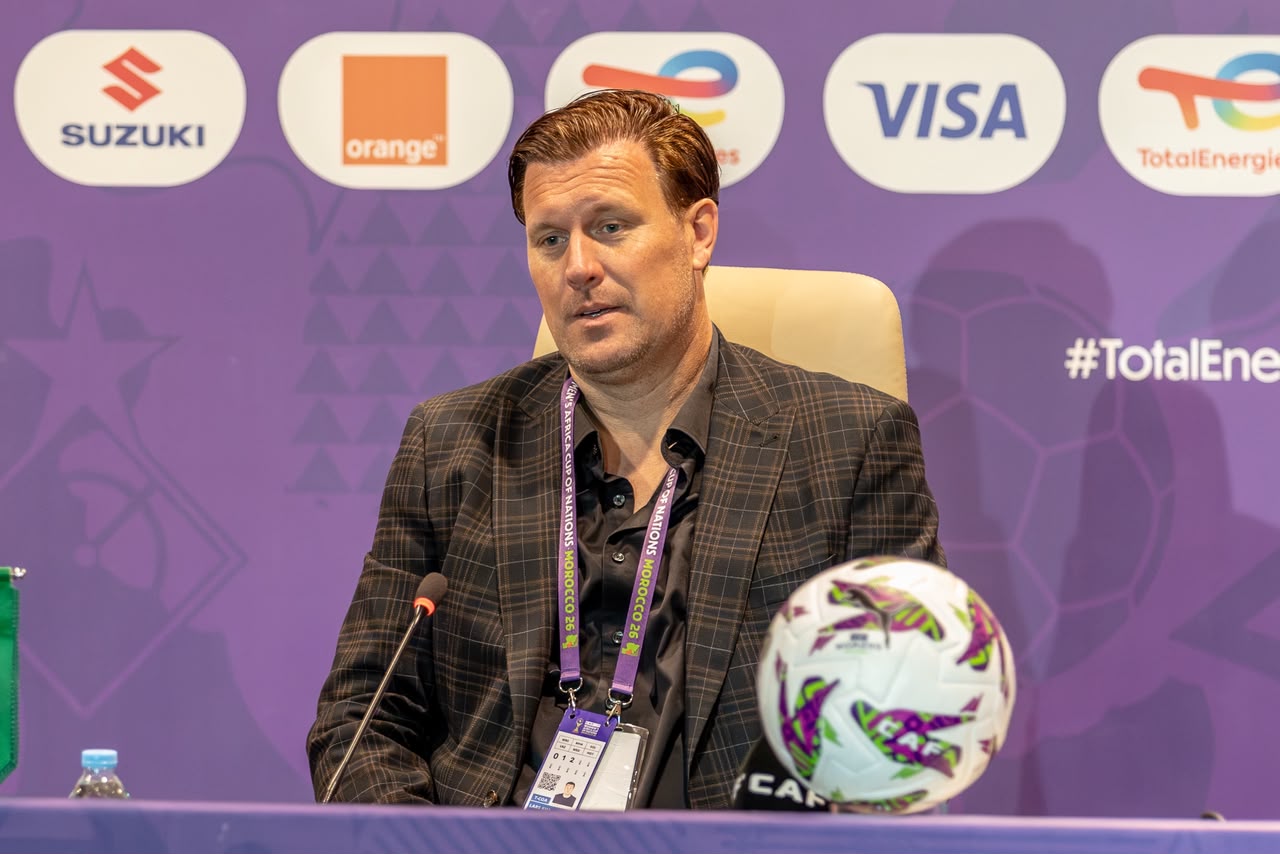
Rose Smith Kadzere grabbed the winner in the 79th minute after a period Black Queens coach, Kim Lars Björkegren, felt his side lost control of the game.
As of the time of writing this piece, the Malawians were not just celebrating their semifinal win over Algeria which grants them the chance to vie for the ultimate continental trophy but a maiden FIFA World Cup appearance.
Ghana’s hopes is now pinned on a long and tortuous play-off that saw them engage Cote d’Ivoire while Nigeria battles South Africa in a similar clash.
But from where I stand, the earlier we forget about the so-called African and inter-continental play-offs that offers a more difficult route to the FIFA women Mundial, the better it would be.
May be, honouring it is only for academic purpose and also, to avoid a sanction.
What this means is that Ghana, previously a superpower in the female game in Africa; second only to Nigeria-perennial winners of the Women African Cup of Nations (WAFCON), would have to wait for another four years to launch another campaign.
This is a very poignant picture every football loving fan and the Ghana Football Association (GFA) must be worried about.
Had this been their male counterparts, the Black Stars, every discussion would have centred on the team, its coaches and the GFA.
By now, debates would be dissecting which players played poorly and should not have been featured; the competence of the coaches and which roles some GFA officials played to affect the team negatively.
But maybe, because of our love and respect for our women, we have in a way gagged ourselves from analysing the Black Queens and constructively criticize the team.
In this era where equal rights for both men and women have been propounded, leading to calls for equal pay to players, the Black Queens must face the same backlash as their male counterparts in periods of failures like this.
Gone were the days where the Black Queens were noted for scoring freely in their games. Anytime they win a game by a single of a two-goal margin, then it is assumed something went wrong.
But currently, the team has moved so far from that reality in the face of the emerging challengers like South Africa, Cote d’Ivoire, Cameroon, Mali, Equatorial Guinea, Morocco and others.
The reason for this fast decline must be identified and addressed before the start of a new WAFCON and World Cup cycles.
A lot has been told about the player selection which has resulted in some half-baked players getting the chance to play ahead of others who were mysteriously dropped from the Nora Huptle side.
Although the team is not as poor as others want it to been seen, it appears something is fundamentally wrong with it.
This was clearly exposed in the game against Malawi as the team lacked ideas, especially in the attacking area; resorting to long balls that never found the targets.
That reduced the work of the striker, Doris Boaduwaa to chasing those balls and wasting her energy on slugging it out with the stronger and physically endowed Malawian girls.
How the coach spoke about this in his post-match conference but was never seen conjecturing to the players on any of those circumstances when the match was ongoing left many in awe.
Secondly, player positioning in his setup also appears to be something he must take a second look at. Clearly, the freedom Boye-Hlorkah used to enjoy in the middle of the park appears to have been curtailed.
Hovering at the left and right sides of attack has reduced her creative abilities, reflecting the lack of passes to Boaduwaa upfront.
Björkegren has been quite lucky. He has enjoyed the favour and goodwill of Ghanaians. The usual sack him campaign has not been heard. Quickly, he must be seen to be getting his acts right before fans lose their patience with him and the team.
Like he stated, watching the Black Queens break down after the exit was his most painful experience in his 20-year old career as a coach. Within that same period, the Black Queens have failed in their bid to make a World Cup appearance.
That is something every stakeholder must be concerned about.
By Andrew Nortey

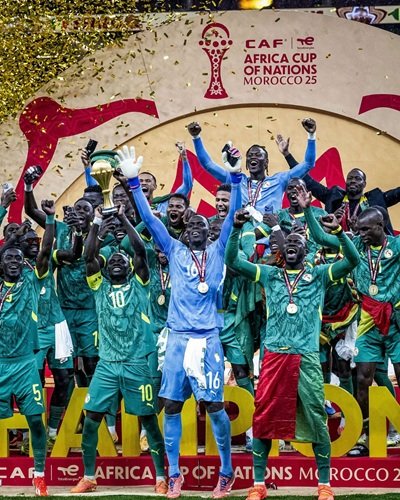
The Court of Arbitration for Sport (CAS) has upheld the appeal by the Senegalese Football Federation (FSF) against the Confederation of African Football (CAF) and the Royal Moroccan Football Federation (FRMF) concerning the final of the Africa Cup of Nations Morocco 2025 (AFCON 2025).
The decision rendered by the CAF Appeal Board has been set aside and the decision by the CAF Disciplinary Board reinstated. Consequently, the result obtained at the end of the AFCON 2025 final is confirmed — 1-0 for Senegal.
The FSF had appealed to CAS against a decision of the CAF Appeal Board declaring that the Senegal national team forfeited the AFCON 2025 final and recording the Moroccan national team as the winners.
In their appeal, the FSF argued that the decision of the Referee, Mr Jean-Jacques Ngambo Ndala, to resume the match at the 109th minute (90+19) during the final and to allow it to be concluded with a sporting result could not be reviewed, pursuant to the ‘field of play’ doctrine.
The FRMF argued, on the contrary, that the Referee’s decision did not fall under the ‘field of play’ doctrine, as it cannot be applicable to the disciplinary consequences of the Senegalese team’s behaviour.
The FRMF alleged that, by leaving the pitch temporarily, the Senegalese team breached Articles 82 and 84 of the AFCON Regulations, which should have led the Referee to bring the match to an early conclusion. The FRMF also argued that the Referee erred in law and that his decision was arbitrary.
After examining the arguments raised by the parties, the Arbitral Panel considered that the Referee’s decision to resume the match or to stop it fell definitively within his sole authority. By blowing his whistle to restart play, the Referee considered that the conditions for resuming the match had been met both teams were on the pitch again, and both expressed their willingness to resume.
In the Panel’s view, there is no doubt that the effects of the Referee’s decision were limited to the pitch. As such, the Panel considers that the Referee’s decision was covered by the ‘field of play’ doctrine.
Since Articles 82 and 84 of the AFCON Regulations are intended solely to determine the outcome of a match when a team’s conduct leads the referee to call off the game permanently, they are therefore not applicable in this case. In conclusion, the Panel considers that in resuming the match, the Referee did not err in law.
The Panel acknowledged that the Referee had to make a decision in an atmosphere of extreme tension. However, these circumstances do not justify describing the decision as “arbitrary”. On the contrary, the Referee’s judgment did not appear to have been affected by factors external to the game.
Regarding the disciplinary aspects of the case, the Panel noted that the FSF, the FSF coach Mr Pape Thiaw, and certain players had already been sanctioned by CAF following separate disciplinary proceedings.
Consequently, the appeal by the FSF was upheld. This was a unanimous decision by the CAS Panel.
The appeal by the FSF was registered by CAS on 25 March 2026. It sought to set aside the CAF decision declaring that the Senegal national team forfeited the AFCON 2025 final and recording the Moroccan national team as the winners of the match by 3-0. The appeal requested that CAS declare the FSF winners of AFCON 2025.
An in-person hearing took place behind closed doors at CAS headquarters, in Lausanne, on Thursday 8 October 2026.
By Edem Mensah-Tsotorme
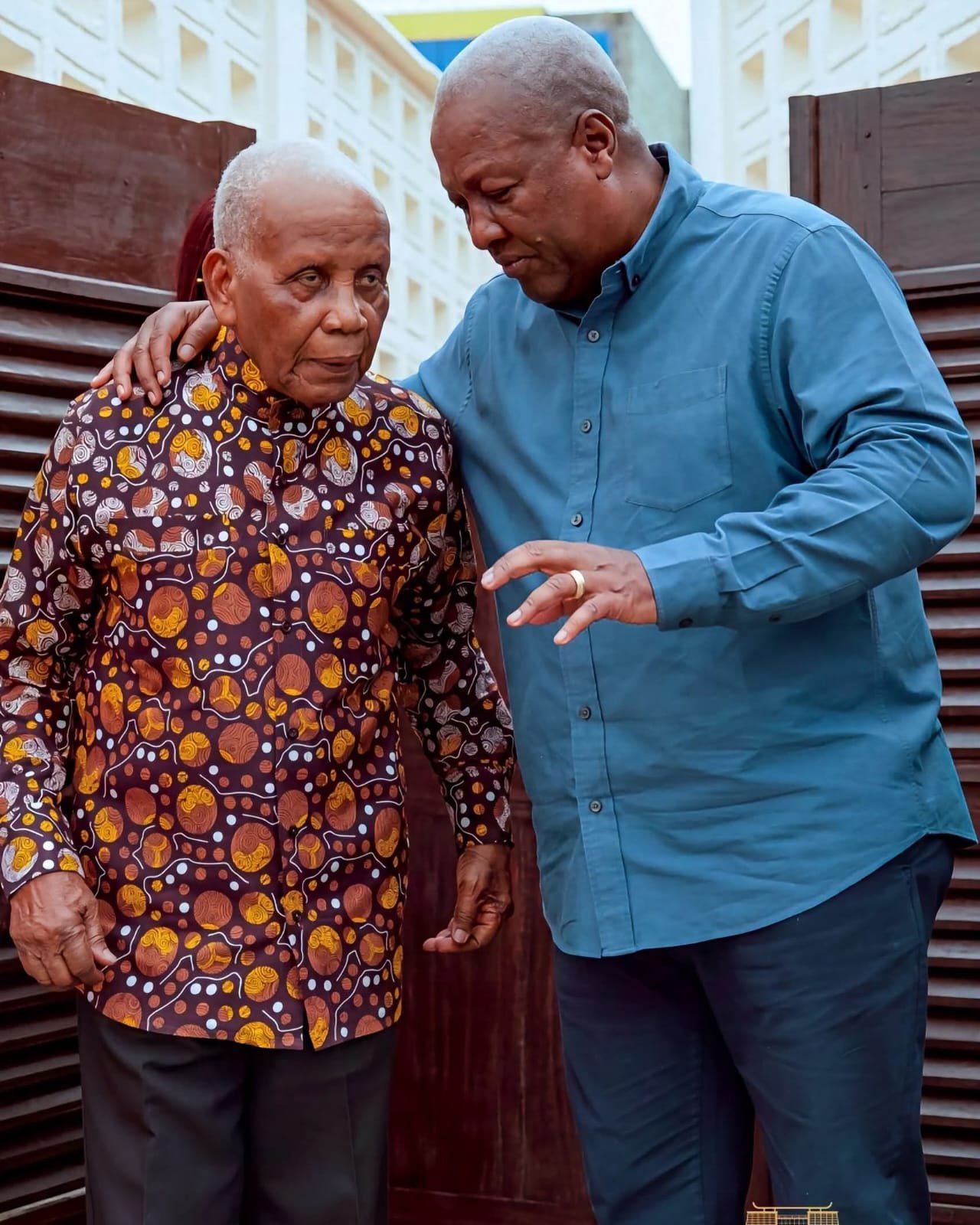
President John Dramani Mahama has paid a courtesy visit to veteran Ghanaian photographer and filmmaker, Dr Chris Hesse, in recognition of his invaluable contribution to the preservation of Ghana’s historical and cultural heritage.
Dr Hesse is renowned for documenting the life and presidency of Ghana’s first President, Dr Kwame Nkrumah.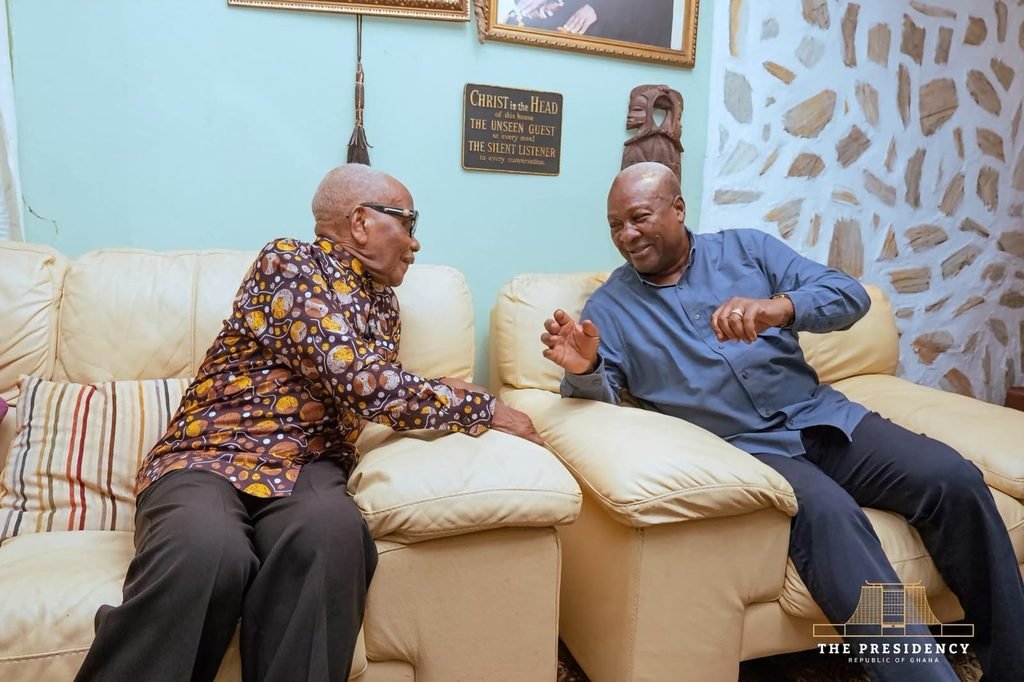
The visit, which took place at Dr Hesse’s residence at South La Estate Square, gave the President the opportunity to interact with the celebrated photographer and acknowledge his remarkable role in documenting some of the most significant moments in Ghana’s political and cultural history.
During the visit, President Mahama recounted his longstanding relationship with Dr Hesse, whom he affectionately described as Uncle Chris, and recalled his immense contribution to preserving Ghana’s historical film archives.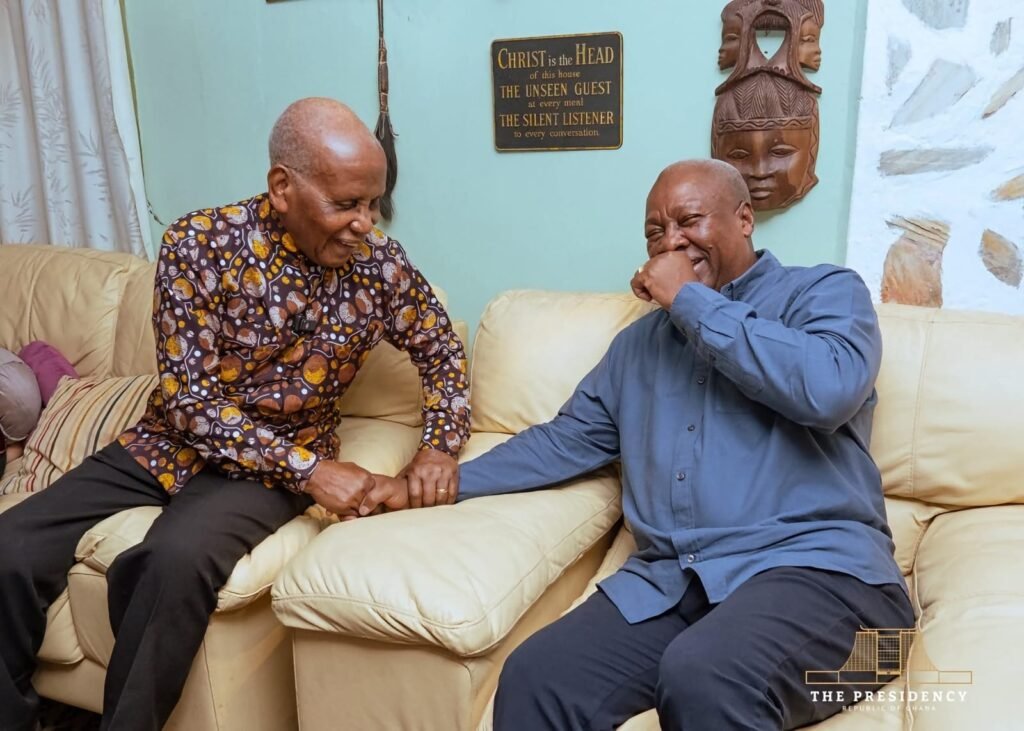
The President disclosed that he became more closely acquainted with Dr Hesse during his tenure as Deputy Minister for Communications, when the veteran filmmaker drew his attention to the deteriorating state of historical film materials held at the Information Services Department.
He explained that several reels of archival footage had suffered extensive deterioration due to age and poor storage conditions, particularly following the transfer of the Ghana Film Industry to private operators, whose modernisation efforts did not adequately prioritise preservation.
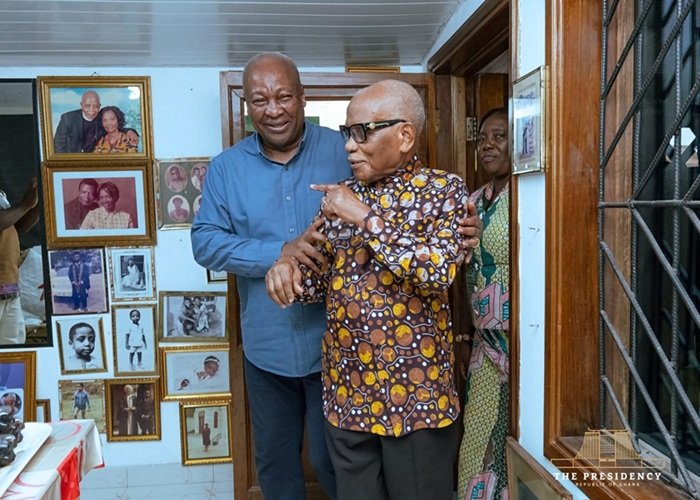
President Mahama recalled that through Dr Hesse’s intervention, efforts were made to retrieve and preserve some of the materials, including film copies that had been kept at the Rank Xerox laboratory in London.
He further recounted how government intervened to settle outstanding payments to prevent the destruction of the preserved materials, although the footage was eventually returned to Ghana and deposited at the Ghanaian Embassy in London after subsequent payments were discontinued.
According to the President, Dr Hesse subsequently took on the responsibility of ensuring that the historical footage was retrieved and digitised to safeguard it for future generations.
President Mahama expressed appreciation for the veteran photographer’s dedication, noting that some of the historical footage from Ghana’s early post-independence era, now accessible on social media and other platforms, is a result of Dr Hesse’s painstaking preservation efforts.
He described the work as an important contribution to national memory and the preservation of Ghana’s history, particularly the legacy of Dr Kwame Nkrumah.
The President was accompanied by the Deputy Minister for Tourism, Culture and Creative Arts, Yussif Issaka Jajah, who led officials from the Ministry and its agencies in representing the Sector Minister, Hon. Abla Dzifa Gomashie, who is currently out of the country.
The visit underscored the importance of recognising individuals whose dedication and professional contributions have helped preserve Ghana’s historical records, cultural identity and national heritage for present and future generations.
Other officials present included the Chief Executive Officer of the Ghana Tourism Authority, Maame Efua Houadjeto; the Executive Director of the Kwame Nkrumah Memorial Park, Dr Collins Rawlings Nunyonnam; the Executive Director of the National Film Authority, Kafui Danku; the Director of Culture and Creative Arts at the Ministry, Divine Kwame Owusu-Ansah; the Chairman of the National Film Authority Board, Mr Ivan Quashigah; and the Director of Human Resources at the Ministry, Mr Otto Langmagne, among other officials.
By Edem Mensah-Tsotorme

 News1 week ago
Fiifi Boafo questions Health Minister over Korle-Bu patient who paid GH¢77,561 but had no bed
- News1 week ago
Côte d’Ivoire introduces mandatory online registration for travellers from African countries
- News6 days ago
Council of State member calls for investment in cultural heritage preservation