Features
KRIF Ghana Limited launches “Stay Safe” campaign

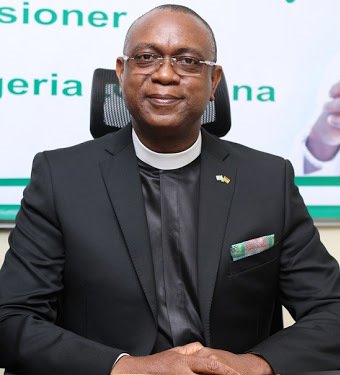
The Executive Chairman of KRIF Ghana Limited, Rev. Kennedy Okosun, has urged the public to adopt simple and hygienic methods of handling money as part of measures to help curb the spread of COVID-19.
According to him, it was inappropriate to count bulks of money with bare hands as that could increase the risk of contracting the virus found on surfaces including currency notes and coins.
He said the company, as part of its own internal measures, was therefore embarking on a ‘Stay Safe’ campaign to help individuals and corporate bodies procure quality money counting machines at affordable prices to facilitate their operations and limit exposure to infections.
Rev. Okosun said the campaign was to support other government efforts meant to curb the spread of the disease especially in Ghana, and across the world.
“We all have the responsibility to protect ourselves, and loved ones at home and at our offices in these trying times of a never seen coronavirus pandemic.
“To facilitate this campaign, KRIF Ghana Limited is offering the best quality, easy to use money counting machines at the lowest prices so that all and sundry will be able to process money using the machines in safety, without headaches and minimal risk,” he noted.
While urging the public to abide by safety protocols, Rev. Okosun further stressed the need to rely on “appropriate equipment and technology” for money handling purposes.
“Monies received or paid out must be processed without doubt. As the leading distributor of office stationary and equipment, we will do whatever it takes make our money counting machines affordable and accessible to everybody who must count their daily receipts in a safe and efficient way,” he added.
The Executive Chairman further hinted that existing KRIF Ghana customers would enjoy considerable discount for any money counting machine purchased during the ‘Stay Safe’ campaign period.
The money counting machines for the campaign, he explained, were from renowned manufactures such as Olympia of Germany and Magner of USA. They include Olympia NC-540, NC-450 and Magner 175 and 125, among others.
KRIF Ghana said the money counting machines which were also being offered on lease as well as on hire-purchase arrangements, were designed for counting and detecting Ghana Cedi and US dollars counterfeits and other currencies.
By Ernest Nutsugah


MY bosom friend Kofi Kokotako once told me that a person’s haircut portrays his character. I disagreed with him and said a person’s character portrays his haircut. All in all, we agreed between us that a presidential aspirant whose haircut is excessively punk cannot win even a unit committee election, much more a castle-bound one.
One thing I hated as a kid was getting my hair barbered because I never had the style I wanted. Usually, it was my father who was the tormentor-in-chief, and he chose the kind of design that would suit the shape and nature of my head and that of my elder brother Christian, whose name is more civilised than mine.
When we were through, we looked quite different from the other kids. I didn’t know where my Pop learnt that kind of style but I realised it was very colonial in form and outlook and I became sad when the girls giggled at my design.
Actually, it was something resembling a half-bow with a line cut through at about 38 degrees to the perpendicular. After the ordeal we looked half like the resident catechist and half like a fierce Regimental Sergeant-Major.
When I told my daddy that I had had enough of the ancient cut and wanted an Afro or at least a Tokyo Joe, he quickly explained that Tokyo Joe was for ruffians and that his style was tailor-made for aspiring doctors, lawyers, engineers and great states-men. He didn’t mention journalists though.
So I went and told the giggling girls that my hairdo was a magical one that was going to transform me into a doctor whether they liked it or not. I added that their brothers who had modern haircuts invariably were going to be labourers and tangas (town council). They laughed at me even the more.
They referred me to the conservancy labourer not far away who always wore my kind of cut and asked me why he wasn’t wearing a white gown with a stethoscope hanging from his neck, if that kind of haircut was indeed miracle-performing!
My Dad was quite scrupulous and dished us the haircut in its hardest form just before Palm Sunday. It helped boost our religious conviction and the Holy Spirit almost descended and settled on our wonderful heads.
At Sunday school one Palm Sunday, the lady teacher asked me to stand so that she could admire my hairdo. I was quite flattered and happy that I was the centre of attraction on a great occasion like Palm Sunday. So I quickly stood up and turned round like a model for all to see and envy my design.
It was when the teacher asked me whether my daddy was a policeman that I lost heart. At the mention of policeman, everybody started laughing and I concluded that the teacher wasn’t admiring my head after all. All she wanted to do was to predict my daddy’s occupation using my head as a determinant. I wasn’t pleased with the attempt.
Today whenever it is getting to Palm Sunday 1 remember the incident. And actually I have always enjoyed Palm Sunday because deep within me, I’m a very religious person and I believe that once God will judge us by the purity of our hearts and not the bottles of beer we quaff, I shall also be in heaven together with Korkorti.
Now if you observe properly, you’d realise it is those who are not believers who celebrate Easter to the fullest. They understand the real meaning of Palm Sunday because they equate it to the birthday of palm wine. They actually mourn the death of Christ and rejoice at his resurrection using palm in the form of wine.
Palm Sunday is best marked in the rural areas where palm wine is always available from dawn to dusk and vice versa. Normally, people start Palm Sunday at exactly 4.15 am when the freshly-tapped wine starts arriving. But you have to begin slowly otherwise you’d be in coma before the sun rises.
Easter is due again and this time as usual, the action is right in the countryside. Kwahu is going to shake, Tapa Abotoase will somersault and Peki would explode. All over the world, these three Sikaman towns are ranked as places where Easter is best celebrated with a hangover assured.
People from Britain, Germany and Holland come down either to Obo Kwahu or Avetile Peki to celebrate Easter. They never miss it. It is a yearly ritual. They save towards the occasion.
So during the celebrations, people from all over the country also converge on these places and the celebrants compare haircuts and note carefully those who have grown lean and those who are neither growing lean or growing fat.
In fact, people assess their fellow human beings to ascertain whether they are becoming prosperous or are chewing grass. News is also brought from all over the globe and those from Germany (Jaaamani) are the loudest. The way they talk, you would never know they are cleaning the whiteman’s toilet to make some dough. You’ll think they are Managing Directors of a multinational corporation in Dusseldof. Such is life.
It is during church service on Easter Sunday that the been-tos and the locals alike display whatever they have under their sleeves. The gentlemen are often resplendent in suits and black shining pairs of shoes, and the way they walk can be a clue as to where they are sojourning. With seamen for instance, it can be quite psychedelic. It is a real sight to behold especially if they hail from Kromanti, Moree or Abandze.
With the ladies, the spectacle is breathtaking. It is unbelievable! You can’t comprehend it using the human senses. You have to employ spiritual means. The kaba styles are of different kinds, styles, colour and combination of colours. Some of the styles are complemented with wings and when the lady wearing it is hurrying to “chapel” you’ll think she is actually airborne. She is practically a human vulture.
Then comes the picnic sessions which are normally well-attended by gate crashers, mental patients and political strategists who are also well-versed with what is going on between Kwame Pianim and kukrudu. So they brief their listeners and prophesy the outcome of court cases and election results. In exchange, they are well-fed, well-boozed and all.
But things do not happen only during the day time. At night, the devil usually takes over. Friendships are entered into, old girlfriends are re-baptised and there is love and romance.
By Easter Monday, marriages are broken, new marriages contracted, girlfriends are jilted and pregnancies are on the way awaiting abortion. Every year it happens, and this year it is going to happen again. The death and resurrection of the Lord will really be marked in both righteous and evil ways.
Perhaps, this is not how Judas intended it to be celebrated. Judas was the architect of the Holy Friday coup d’état against the Son of Man.
This article was first published on Saturday March 30, 1996

The Ghanaian community in Finland on Saturday, March 14, 2026, celebrated Ghana’s 69th independence anniversary in an impressive event in Helsinki, the capital city of Finland.
The event was organised by the Ghana Union Finland (GUF), an association of Ghanaian migrants in Finland. It was an occasion well attended by many people from the Ghanaian community in Finland, Finns and other nationalities.
The occasion was graced by the Special Guest, Her Excellency Abigail Naa Adzoko Kwashi, the Ambassador of Ghana to Norway with concurrent accreditation to Finland and Iceland. In her speech, the Ambassador encouraged Ghanaians living in Finland to pursue unity, actively participate in, and support the Ghana Union Finland to build a stronger body better positioned to advocate for its interests and goals.
Also present at the event was the Honorary Consul of Ghana in Finland, Mrs Kati Kivisaari, who has replaced the retired Ms Ulla Alanko. Mrs Kivisaari urged Ghanaians in Finland to remain good ambassadors of Ghana in their lives in Finland.
The event saw the inauguration of new executive members of the Ghana Union Finland. The team was inducted by Elder Samuel Anini, Patron of the Ghana Union Finland.
Earlier, a “royal entry” was performed by leaders of the Asanteman Finland and Mfantseman Kuw and other personalities in their colourful kente attire adorned with ornaments, amidst traditional music and adowa dance to usher in the Ambassador.
Unity and harmony
I see such events, especially the ones marking independence anniversaries, as ample display of unity and harmony in the Ghanaian migrant community as well as in the larger Ghana and Finland relations.
Some personalities present at the event were Nana Ekuoba Gyasi Gyimah and other leaders of Asanteman Finland, Mfantseman Kuw Finland, as well as representatives of other Ghanaian ethnic groups.
It was a very colourful occasion with dance and other performances such as poetry recitals. The audience was also treated to tasty Ghanaian dishes such as jollof rice, fried yam, and soft drinks.
For me personally, whenever I think about Ghana’s Independence Day anniversary every 6th of March, my mind also goes to Finland’s own day on 6th of December. The two dates always give me such a special, positive feeling. As soon as one of the dates ends, I begin a countdown to the other (next) date.
Last year on December 6, 2025, when Finland celebrated its 108th independence anniversary and I participated in two events marking the celebration in Helsinki, I started looking forward to Ghana’s 69th anniversary this year. Now that Ghana’s anniversary is over, I am looking forward to Finland’s 109th anniversary on December 6, 2026. That’s the beauty of it all for me.
Ensuring integration
What I see in all this, especially for Ghanaian migrants in Finland, is the chance for members of the Ghanaian diaspora in Finland to integrate into the Finnish society through such celebrations that are marked by social activities, affiliations and ideas of inclusion.
Inclusion is key to integration, and the two ideas undoubtedly build a sense of belonging. As I previously wrote, Finland sees the role of migrant associations as bridge-builders for the integration and inclusion of migrants through participation in the decision making process and by acting as a representative voice, which is highly appreciated in Finland.
As I keep pointing out, Finland encourages migrants’ participation in the planning of issues concerning the migrants themselves, using such a strategy as one of the efficient ways to improve their inclusion.
Thus, there is an enabling environment created within the Finnish cultural ecology that undoubtedly helps migrants to integrate into the host Finnish society. Thank you!
By Perpetual Crentsil

 News3 days ago
Agona West NDC demands unqualified apology from Paul Adom-Otchere over alleged misleading editorial
- News1 week ago
Eid not only moment of celebration but call to sustain values of discipline – President Mahama
- Profile2 days ago
Aziz Adimah raising the bar in International Hockey officiating