Health Essentials
Health tips you can live with!


Over the years, I have built a store of exciting and relevant health tips from many sources. I believe that if we are able to master a few of them it will go a long way to enrich our lives.
“The doctor of the future will give no medicine but will interest his patients in the care of the human frame, in diet and in the cause and prevention of disease” –Thomas Edison.
- The keys to successful lifestyle changes are staying on track when times get tough and bouncing back after a setback. Keep trying most people succeed after several attempts.
- A number of addictions can be linked to stress: overeating, smoking, drinking and drug abuse. By eliminating or minimising stress, you are more inclined to kick a bad habit.
- “STIGMATISATION has no place in fighting this pandemic. It will cause people to hide and not disclose their status, seek medical care late and reduce all the benefits of protocols. We should all be comfortable enough to tell our close contacts when we test positive for COVID-19 so that the proper measures are taken. This is extremely important if we have to win this fight.”- Dr. Kojo Cobba Essel
- Cut down your fat intake:
- use fats and oils sparingly (watch excess palm oil, groundnut, fried foods)
- drink non-fat or low-fat milk and choose low-fat or non-fat versions of yoghurt
- Use low-fat salad dressings and limit the amount of cheese in your eating plan. You may avoid the dressings altogether and only indulge occasionally.
- Following an eating plan that is high in fibre and low in saturated fat and cholesterol reduces the risk of diseases such as diabetes and heart disease.
- Choose whole-grain pastas, bread and cereals whenever possible. Brown rice is great and available
- eat whole fruits most of the time instead of drinking fruit juices
- include legumes such as beans, peas several times per week
- It’s not snacking that’s bad; it’s the usual snack choices – chips, crackers, biscuits, candy etc that cause the problem. Your body works best when it refuels every four to six hours. The best way to fuel your body is to eat light, well-balanced meals and two or three healthy snacks per day. Snacking may even help you lose weight by taming your appetite, thus preventing the tendency to overeat and make poor choices. Learn to make healthy snacks a part of your daily eating plan and hold the guilt! Fruits, carrots, cucumber, tomatoes are certainly adorable.
- Did you know that, about half of all cancer deaths are related to tobacco use, unhealthy diet, physical inactivity and being overweight or obese.
- Drink plenty of water, it does wonders to your body including;
- it aids in digestion and absorption of foods and nutrients
- it is the vehicle your body uses to flush out the waste produced in normal body functions
- it is necessary for proper bowel function
- it helps you maintain normal temperature
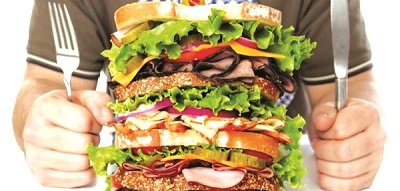
- A sedentary lifestyle increases the risk of heart disease nearly two times. This risk is as high as that caused by abnormal cholesterol levels, high blood pressure and cigarette smoking combined. Despite the known risks, more than half of adults don’t get enough physical activity to benefit their health. Regular moderate physical activity cuts your risk of dying from heart disease in half.
- Excess body fat increases the risk for both heart attack and stroke. Obesity is also associated with increased blood pressure, abnormal cholesterol levels and diabetes. Losing just 10 per cent of excess weight and keeping it off can significantly lower risk.
- Common sense ways to reduce back pain
- move the driver’s seat (in car) closer to steering wheel
- tighten abdominal muscles whenever you are about to lift anything
- do flexibility exercises daily
- do back exercises regularly
- never twist forcefully
- push, don’t pull – it is even better to ask for help
- Sleep on a firm surface.
- Exercise is important for people with arthritis because it;
- increases strength and flexibility around joint
- helps maintain or increase bone strength
- provides nourishment and lubrication to joints
- prevents muscle loss from lack of use
- provides feeling of control and self-worth
If we manage to do all or most of the above that crippling pain will become manageable.
Many of the points listed above are not too difficult to follow just remember that “the most efficient way to reach your realistic health goals is to make small healthy choices daily”-Dr Kojo Essel
AS ALWAYS LAUGH OFTEN, ENSURE HYGIENE, WALK AND PRAY EVERYDAY AND REMEMBER IT’S A PRICELESS GIFT TO KNOW YOUR NUMBERS (blood sugar, blood pressure, blood cholesterol, BMI)
Dr. Kojo Cobba Essel
Health Essentials Ltd/ St Andrews Clinic/Mobissel
Dr. Essel is a medical doctor, holds an MBA and is ISSA certified in exercise therapy, fitness nutrition and corrective exercise.
Thought for the week – “For heart health you need to relax and have fun as well; schedule time for leisure, laugh often, learn to breathe deeply and maybe get a pet.”
References:
- Health by Choice Not Chance – Aileen Ludington, MD & Hans Diehl, DrHSc, MPH
- Unravelling The Essentials of Health & Wealth – Dr. Kojo Cobba Essel

Health Essentials
Why Ghana’s ‘no bed syndrome’ is a policy failure, not a clinical failure – Part one


OVER the years, No Bed Syndrome has been a major headache in Ghana’s health system. People have expressed different views and today my friend and classmate Professor Jonathan Laryea takes his turn and makes extremely important contributions that should start a deep conversation.
Professor Laryea writes;
Every few months, Ghana wakes up to a familiar, tragic headline. A prominent citizen, a pregnant mother, or a young accident victim has died in the back of an ambulance. They didn’t die because medical science failed them; they died because they spent their “Golden Hour”, the critical window between life and death, touring the gates of hospitals that had no room to receive them.
The public outcry follows a predictable script: anger at the hospitals, calls for “compassion” from doctors and nurses, and a frantic directive from the minister of health and parliament. A few years ago, the directive was simple: No hospital can turn a patient away. The result? We didn’t create more beds; we simply moved the crisis from the ambulance floor to the hospital floor. That also created another outrage.
It is time to stop blaming the frontline workers and start looking at the math. The “No Bed Syndrome” is not a failure of healthcare workers; it is a failure of a country that has not matched its resources to its population growth. Most recently, an engineer lost his life after being involved in an accident. The ambulance drove around for hours before getting to Korle Bu. Though the outcome was sad, I would venture to say that even if Korle Bu had a bed to treat this patient, the outcome would likely have been the same given the time between the accident and when the ambulance got to Korle Bu. When you have a patient exsanguinating, time is of the essence. Even if he got to the right place in time, the other question is would they have enough blood to resuscitate him without requiring family to donate prior to administering the blood?
The impossible equation
Consider the capital city. Accra has a population of approximately 2.9 – 4 million people, depending on who you ask. To serve this massive, high-density population, there are fewer than 400 dedicated emergency room beds across major public facilities.
Let’s do the math: that is roughly one emergency bed for every 10,000 citizens. That is not a recipe for success. When a system is constantly operating at 110 per cent capacity, “No Bed” isn’t an excuse, it is a physical reality. When we force doctors and nurses to treat patients on the floor, we aren’t “solving” the problem; we are compromising hygiene, dignity, and clinical outcomes. You cannot perform a high-quality resuscitation on a crowded floor. This is a capacity issue. We cannot expect this issue to fix itself. There is the need to increase emergency capacity across the metropolis and indeed across the country.
A system in need of coordination
The second failure is logistical. Ghana has made strides in developing a National Ambulance Service (NAS), but we have failed to give that service a “brain” to coordinate it. Currently, an ambulance driver picks up a patient and begins a desperate, manual search for a vacancy. They drive from Ridge Hospital to 37 Military Hospital to Korle-Bu, burning through the patient’s oxygen and time. In an era of digital transformation, it is inexcusable that our ambulances do not have a real-time, cloud-based dashboard showing exactly where the nearest available specialised bed is located. An ambulance without a coordinated dispatch system is just a high-speed hearse.
Beyond the furniture: The “emergency mindset”
A bed, however, is just a piece of furniture if it is not backed by an emergency pathway. The true “No Bed Syndrome” includes a lack of specialised systems. In modern medicine, the “Golden Hour” dictates that, for example:
• For a heart attack: We must be able to perform cardiac catheterization within 60 to 90 minutes.
• For a stroke: We must have the ability to perform a CT scan and administer clot-busting medication within an hour.
In Ghana, if you have a stroke or heart attack, your survival depends more on your luck and your traffic route than on a standardised medical protocol. If a patient reaches a bed but the CT scanner is broken or there is no Cardiac Catheterisation Laboratory or the Catheterisation laboratory is unstaffed/unresourced, the “syndrome” has simply moved from the ambulance to the ward. We have failed to develop the specialized “hubs” required to treat these time-sensitive killers. Accident cases are even worse. The ability to give blood emergently to exsanguinating patients does not exist. Some patients need immediate surgery; for example, patients with gunshot wounds and stab wounds. Sending such patients to a facility where they cannot do emergency surgery is unhelpful.
We must develop a system for triaging patients to the right facilities. There is a need to do a thorough evaluation of our healthcare delivery system and redesign a system that works for Ghanaians. It looks like we have done a patchwork of modifications to what Governor Guggisberg left us and after 69 years of self-governance, we have failed to redesign a system that works for modern-day realities.
Prof. Jonathan Laryea is a Professor of Surgery at the University of Arkansas for Medical Sciences in Little Rock, Arkansas. He is board certified in General Surgery, Colorectal Surgery and Clinical Informatics.
He is a graduate of the University of Ghana Medical School (Class of 1997).
Health Essentials
Children Believe, Norsaac present medicines, medical equipment to three Health Directorates

THE Northern, Upper East and Savannah Regional Health Directorates have taken delivery of various medicines and medical equipment to improve care for pregnant/lactating mothers, adolescent girls and children under five years.
The medicines and medical equipment, worth GH¢1.6 million, were procured with funding support from the Canadian Government through Global Affairs Canada.
They included Combined Iron (III) Hydroxide Polymaltose and Folic Acid – 5,500 Boxes, Mebendazole (Wormalex 400mg) – 10,000 Packs, Albendazole (400mg) – 20,000 Packs, Combine Ferrous Sulphate and Folic Acid (Folidyn Tab mp) – 2880 cartons, Tarring Weighing Scale- 18 pieces, Digital Thermometer – 108 pieces, and Height Rod in CMS/Feet HOM Stadiometer – 27 pieces.
The rest were Blood Pressure Monitor Digital, Andon- 27 pieces, Ultrasonic Pocket Doppler, 1.5v Sonotrax Basic – 9 pieces, Glucose meters – 54 pieces, Glucose meter stripes (50’s)- 500 pieces, Delivery set (used for facility-based delivery) – 27 pieces, Hb Testing System/URIT -12 – 36 pieces, Hb Test Stripes (50’s) – 800 pieces, Weighing Scale, Hanging (Salter) HOM- 27 pieces.
Some 96,374 individuals comprising pregnant/lactating mothers, adolescent girls and children under five years in nine districts in the three regions are expected to benefit from the medicines and the medical equipment.
A total of 54 health facilities in the nine districts, namely Bole, Sawla-Tuna-Kalba, East Gonja, Tolon, Kumbungu, Nanumba South, Builsa South, Kassena-Nankana West and Kassena-Nankana North, are to benefit from the supplies.
They were donated by Children Believe, an international NGO, under the Championing Nutrition and Gender Equality (CHANGE) project, which is funded by Global Affairs Canada.
The CHANGE project is being implemented in partnership with Norsaac; the national implementing partner, amongst other governmental agencies.
The overall objective of the project is to improve nutrition for the poorest and most marginalised, especially women and adolescent girls.
Madam Esenam Kavi De Souza, the Country Director, Children Believe, speaking to hand over the medicines and the medical equipment to the authorities of the Ghana Health Service (GHS) at the Regional Medical Stores in Tamale, said it was geared towards achieving the project’s commitment to improve women’s leadership and control resources for community and individual gender equitable nutrition practices.
The authorities of the GHS in the Upper East and Savannah Regions also received their share of the donated items in their respective regions.
Madam De Souza said the gesture followed assessments conducted with the GHS to identify the most critical healthcare needs in the targeted communities. She said the intervention was designed to ensure that the support would make a meaningful difference in healthcare delivery for the poorest and most marginalised populations in the targeted districts.
Dr Chrysantus Kubio, the Northern Regional Director, GHS, who received the items, said they would significantly improve health service delivery in the beneficiary districts in the region.
He said as part of the project, motorbikes and laptops were also supplied to the districts to facilitate the work of health personnel and improve data analysis for health services.
He lauded the project saying such partnerships were crucial in supporting vulnerable populations, who faced financial barriers to healthcare and expressed appreciation to Global Affairs Canada and the implementing partners for their support. —GNA