
News
Ghana moves to preserve Nkrumah’s legacy as forgotten historic sites face decay

A deserted house overlooking the Gambaga Escarpment in northern Ghana once served as a strategic rest stop for Kwame Nkrumah during the country’s struggle for independence.
From the elevated site in what is now the North East Region, Ghana’s first president could survey vast stretches of the surrounding terrain, a position that offered both security and advantage at a time of political uncertainty.
The structure now stands in disrepair; its walls cracked and roof partially collapsed, and its history largely absent from public record. Yet the remote outpost remains one of the few surviving physical traces of Nkrumah’s movements within Ghana before his overthrow in 1966 and subsequent exile, offering a little-known glimpse into the domestic geography of a leader more often remembered through speeches, monuments, and international diplomacy.
It is against this backdrop that a major decision by the government of Ghana, announced last week, takes on deeper meaning.
On the instructions of President John Dramani Mahama, the Ministry of Foreign Affairs has initiated negotiations with the family of Guinea’s first president, Ahmed Sékou Touré, to allow Ghana take possession of the house where Dr Nkrumah lived and worked as Co-President of Guinea in his final years.
The announcement, conveyed by Foreign Affairs Minister Samuel Okudzeto Ablakwa, followed a high-level visit led by Vice President Prof. Jane Naana Opoku-Agyemang to Conakry.
The aim, according to the ministry, was to renovate and preserve the residence not only as a mark of respect, but as a way of allowing visitors to trace Nkrumah’s extraordinary life from Ghana to Guinea, from leadership to exile, from power to Pan-African persistence.
It is a landmark decision, and a commendable one.
According to history, in Guinea, Nkrumah found more than refuge after the 1966 coup that overthrew his government. President Sékou Touré welcomed him as a brother, granting him the rare title of Co-President. Though physically removed from Ghana, Nkrumah continued to write, organise, and advocate for African unity until his death in 1972.
Preserving that home
One of the deserted buildings preserves a vital chapter of Africa’s political history—one that reminds the world that ideas do not end in exile.
Yet as Ghana looks outward to reclaim this chapter of its past, it is worth pausing to look inward.
Long before Conakry, there was Nakpanduri.
Situated along the Gambaga Scarp, the Nakpanduri rest house was deliberately positioned on high ground, away from major settlements. During the volatile years of the independence struggle and early nationhood, it served as a secure retreat for Nkrumah and his family—a place of protection, reflection, and strategy.
The North’s terrain offered both concealment and command, qualities essential in an era when political survival was far from guaranteed. In this sense, Nakpanduri is not merely a historical footnote; it is evidence of the risks Nkrumah lived with and the lengths to which the independence movement went to safeguard its leader.
Today, however, the site has been reduced to a ruin. Despite its proximity to other natural attractions along the Gambaga Scarp and its potential role in cultural and eco-tourism, it remains neglected, often described in reports as a “white elephant.”
The contrast with the decisive action now being taken in Guinea is striking.
This is not an argument against the preservation of Nkrumah’s residence in exile. On the contrary, the Vice President’s engagement with the Sékou Touré family, and the Ministry of Foreign Affairs’ commitment to transparency and expert-led conservation, signal a welcome seriousness about heritage preservation.
If Ghana is prepared to restore and preserve Nkrumah’s home beyond its borders, then the historic places that sheltered him within Ghana deserve no less attention. Sites like Nakpanduri are integral to the national story, particularly in regions whose contributions to independence are too often overlooked.
Preserving these spaces would do more than honour memory. It would expand heritage tourism beyond traditional centres, bring economic opportunity to underserved areas, and offer future generations a fuller understanding of how Ghana was built not only in conference halls and capitals, but in remote sanctuaries and quiet strongholds.
Taken together, Nkrumah’s resting places in Ghana and his residence in Guinea form a continuous geographic narrative of African leadership. From the hilltops of the North East Region to the seashore of Conakry, his life unfolded across borders, shaped by both danger and solidarity.
The government’s initiative in Guinea opens the door to a broader vision—a coherent Nkrumah heritage trail that allows citizens and visitors alike to follow the arc of a man whose ideas helped shape a continent.
As a Ghanaian and a photographer, standing among the ruins at Nakpanduri, one cannot escape a simple truth: seeing history here and in other spaces needs documentation and preservation. When those places are allowed to disappear, so too does our connection to the past.
But many of the spaces that protected him, inspired him, and sustained him are still here. They are waiting to be seen.
By Geoffrey Buta
Join our WhatsApp Channel now!
https://whatsapp.com/channel/0029VbBElzjInlqHhl1aTU27


News
Oxfam in Ghana donates medical equipment and essential drugs worth GH¢1.5 million to Kasoa Polyclinic
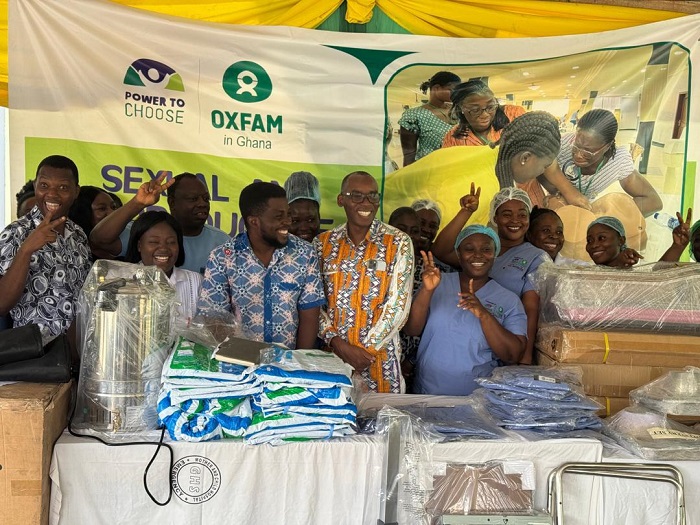
Oxfam in Ghana has donated medical equipment and essential drugs worth about GH¢1.5 million to the Kasoa Polyclinic to strengthen maternal and reproductive healthcare services in the municipality.
The presentation, which took place on Tuesday, June 24, 2026, at the premises of the clinic in Kasoa, formed part of the sustainability and legacy activities under the Power to Choose (P2C) Project.
The donated items included delivery beds, maternity beds, oxygen cylinders, neonatal resuscitation equipment, blood pressure monitors, newborn weighing scales, suction machines, delivery kits, essential medicines, medical theatre wear and other critical supplies to support quality healthcare delivery.
The Power to Choose Project is a seven-year initiative being implemented by Oxfam in Ghana in partnership with the Planned Parenthood Association of Ghana (PPAG), WiLDAF Ghana, SEND Ghana, Norsaac and PARDA, with funding from Global Affairs Canada through Oxfam Quebec.
The project seeks to improve sexual and reproductive health and rights for young people, particularly adolescent girls, young women and young men living in vulnerable and marginalised conditions.
Addressing nurses and management of the hospital, the Country Director for Oxfam in Ghana, Mohammed-Anwar Sadat Adam, said the project, which began in 2021 and will run until early 2028, is being implemented in seven countries across Africa, Latin America and the Middle East.
He said Ghana and the Democratic Republic of Congo are the two African countries benefiting from the project.
Mr. Adam noted that the project has already trained about 102 health workers in areas including youth-friendly services, emergency obstetric and neonatal care, family planning, gender-based violence response, respectful maternity care and inclusive healthcare delivery.
He said Oxfam and its partners conducted assessments at beneficiary facilities and identified equipment needs to help improve healthcare delivery.
According to him, the donation would create safe spaces where young women and girls could seek healthcare services without fear or stigma and would improve health outcomes in the community.
Mr. Adam thanked the Government of Canada, the Ghana Health Service, the Society of Obstetricians and Gynaecologists of Ghana (SOGOG), World Health Ghana and other partners for supporting the implementation of the project.
He urged the beneficiary facilities to ensure that the equipment is properly used and maintained to serve the community for many years.
A speech by the Municipal Health Director for Awutu Senya East, Dr. Stanley Kweku Yaidoo, which was read on his behalf by the Municipal Accountant, Rev. Dr. Askari Thomas, described the donation as timely and important.
He said quality healthcare delivery depends on manpower, financial resources and equipment, adding that healthcare workers cannot effectively deliver services without the necessary tools.
Dr. Yaidoo thanked Oxfam and its partners for selecting Kasoa as one of the beneficiary facilities and assured them that the equipment would be put to good use.
The Acting Medical Superintendent of Kasoa Polyclinic, Dr. Papa Kojo Arthur, expressed appreciation to Oxfam for its continuous support over the years through training and capacity building.
He said the equipment would greatly support the effective management of patients, particularly in maternal and child healthcare.
According to him, the donation would help reduce maternal and perinatal mortality in the municipality.
The donation formed part of efforts to strengthen the capacity of youth-friendly health facilities in eight implementing districts across five regions of Ghana to continue providing quality and accessible sexual and reproductive healthcare services beyond the lifespan of the project.
By: Jacob Aggrey
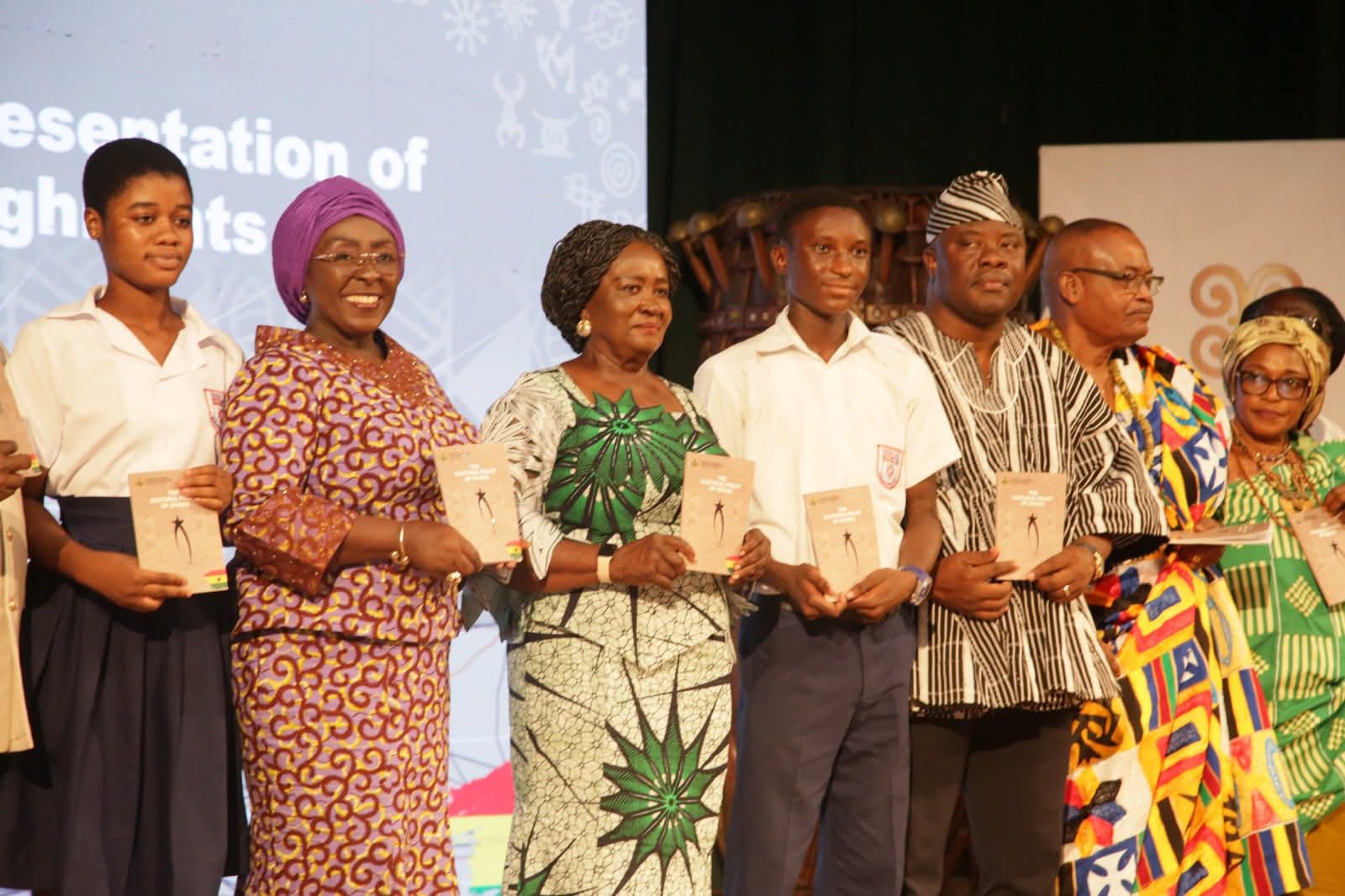
The Ministry of Tourism, Culture and Creative Arts (MoTCCA) has announced that an electronic copy of Ghana’s revised National Cultural Policy is now available online for free access by the public and stakeholders in the creative sector.
In a statement issued on June 22, the ministry said the revised policy was officially launched on June 9, 2026, at the National Theatre of Ghana in Accra.
According to the ministry, the decision to upload the document on its official website is aimed at ensuring widespread dissemination, increasing public awareness and promoting the effective implementation of the policy.
The ministry encouraged sector practitioners, stakeholders and members of the public to visit its website and read the document.
“The Ministry of Tourism, Culture and Creative Arts, in the spirit of the Black Star Experience, remains committed to a transparent, inclusive and collaborative approach to building the better Ghana we want,” the statement said.
It added that it looks forward to the active participation of stakeholders in implementing the policy for the benefit of the country.
The ministry urged the public to take advantage of the free access to the policy document and familiarise themselves with its contents.
By: Jacob Aggrey

 News1 week ago
NFS, AACMA raise GH¢300K for new fire tender
- News6 days ago
FSD Africa, others launch Green Project Preparation Facility to unlock investment in climate infrastructure in Ghana
- News6 days ago
Merck Foundation holds 13th Africa Asia Luminary with 12 First Ladies to advance healthcare capacity across Africa and Asia


