News
Teenage pregnancy cases rise in Akatsi South, exceeds national target

- /home/u249204778/domains/spectator.com.gh/public_html/wp-content/plugins/mvp-social-buttons/mvp-social-buttons.php on line 27
https://spectator.com.gh/wp-content/uploads/2026/02/participants-at-the-annual-review-workshop.png&description=Teenage pregnancy cases rise in Akatsi South, exceeds national target', 'pinterestShare', 'width=750,height=350'); return false;" title="Pin This Post">
- Share
- Tweet /home/u249204778/domains/spectator.com.gh/public_html/wp-content/plugins/mvp-social-buttons/mvp-social-buttons.php on line 72
https://spectator.com.gh/wp-content/uploads/2026/02/participants-at-the-annual-review-workshop.png&description=Teenage pregnancy cases rise in Akatsi South, exceeds national target', 'pinterestShare', 'width=750,height=350'); return false;" title="Pin This Post">
THE Akatsi South Municipality recorded 314 teenage pregnancies in 2025, exceeding the national target despite intensified efforts by health officials to curb the situation.
“Sad as it may be, six girls aged 10–14 years were pregnant, and 269 teenagers delivered, of which five were between 10–14 years, all making up 12.1 per cent against the national target of reducing below 11.5 per cent,” Miss Justine Sefakor Alornyo, Municipal Director of Health Services, disclosed during the 2025 health performance review at the Akatsi South Municipal Assembly Hall.
Under Antenatal Care (ANC), 2,594 pregnant women were registered in 2025, representing 65.9 per cent coverage, up from 2,278 in 2024 with 58.4 per cent coverage.
The Municipality recorded 2,071 supervised deliveries in 2025, a slight increase from 1,997 in 2024. All 2,071 newborns received BCG, Penta, and Measles-Rubella vaccines.
Miss Alornyo attributed the gains to continuous education and advocacy across the Municipality.
On HIV, 151 cases were identified—108 females and 43 males. All are on treatment, including 15 pregnant women who tested positive. Eighteen exposed babies have been placed on prophylaxis.
She added that 60 tuberculosis cases were managed, while investigations into six suspected measles cases, two yellow fever cases, and one Acute Flaccid Paralysis (AFP) case all tested negative.
Highlighting achievements, Miss Alornyo thanked stakeholders, especially the Municipal Assembly, for supporting service delivery. In 2025, the construction of CHPS compounds at Zuta, Ahlepedo, and Asafotsi, as well as the renovation of the Wute Health Centre, is ongoing.
Midwives were posted to Wuxor, Gui, Dzogadze, Akuave, and Livega CHPS facilities, while Dzogadze and Gui CHPS were officially handed over for service delivery.
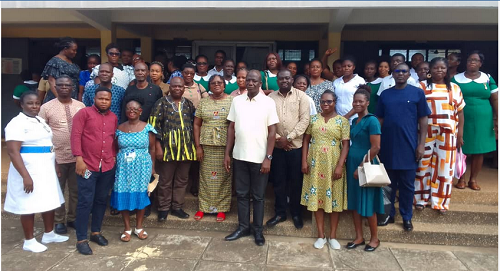
The annual review assessed progress, achievements, gaps, and innovative strategies to address health challenges.
Akatsi South Municipality is served by 40 health facilities: two hospitals (one private and one municipal), six health centres, 27 CHPS compounds, one CHAG facility, and four clinics.
Infrastructure deficits and transportation challenges remain key concerns.
—GNA
Join our WhatsApp Channel now!
https://whatsapp.com/channel/0029VbBElzjInlqHhl1aTU27








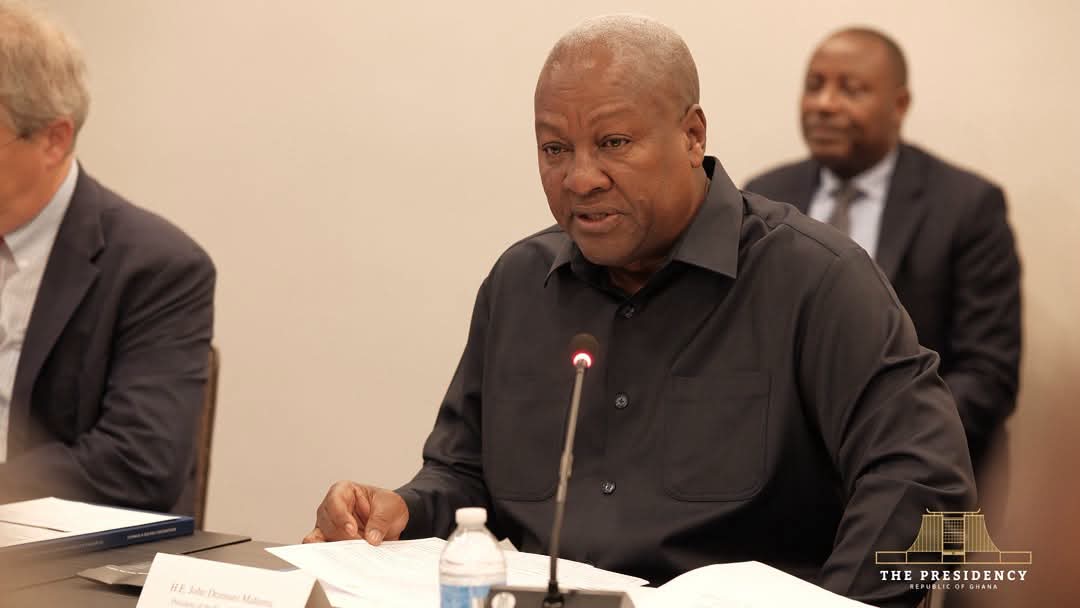
President John Dramani Mahama has called for stronger domestic capacity, effective institutions and sustainable financing as countries in the Global South continue to face growing debt pressures and disruptions in the international development landscape.
Speaking at a Presidential Roundtable organized by the Open Society Foundation in New York on Monday, on the sidelines of the 81st UN General Assembly, President Mahama said the priority for developing nations must be to create jobs, improve public services, build infrastructure and expand opportunities, particularly for young people.
“When I speak about sovereignty in this context, I am speaking about the capacity to act,” President Mahama stated.
He further stressed the need for stronger coordination across government, greater domestic resource mobilisation, sound financial management and institutions capable of delivering measurable results.
“Where an approach proves successful, the next step should be its adoption into public systems, local delivery institutions, and long-term financing models,” he added.
The high-level roundtable brought together presidents and chief executives of major global foundations to discuss sustainable development, financing and strengthening institutions across the Global South.
By Edem Mensah-Tsotorme
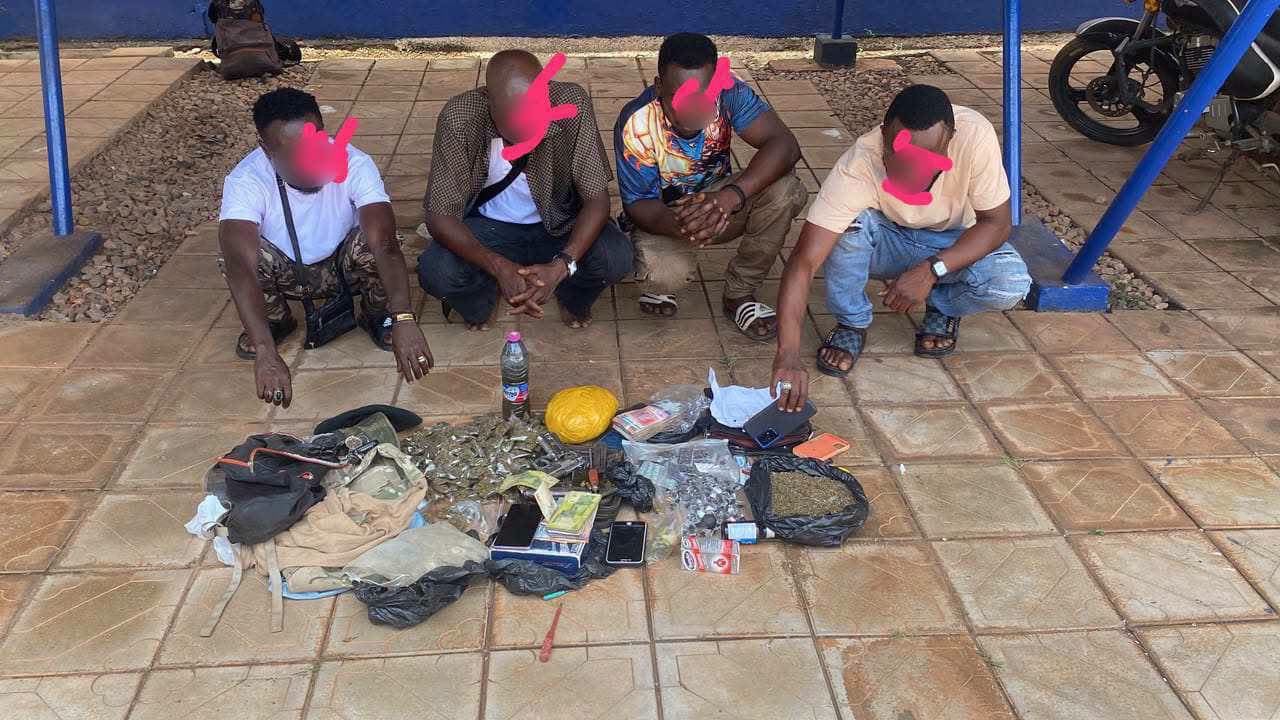
The Northern Regional Police Command has arrested five people during an operation at the Aboabo scraps area in Tamale, where two pistols, ammunition, suspected narcotics and cash were recovered.
The operation was carried out on Monday, September 21, 2026, at about 11:30 a.m. by the Special Operations Team, known as RED MARIA, as part of efforts to clamp down on drug peddling, drug use and other criminal activities in the Tamale Metropolis.
According to the police, the team acted on credible information and proceeded to the Aboabo scraps area, near the forest, where they arrested five suspects.
They were identified as Ibrahim Issahaku, 39; Mohammed John, 28; Mohammed Nawas, 25; Mohammed Osman Awal, 41; and Kwame Boateng, 28.
The police said a search at the residence of Ibrahim Issahaku led to the recovery of two foreign made pistols, two rounds of 9mm ammunition, one parcel of suspected Indian hemp and GH¢1,880 in cash.
The police also found GH¢18,825 concealed inside the motorcycle of Kwame Boateng at the ghetto. The money is suspected to be proceeds from the sale of narcotic drugs.
Other items recovered included 123 wraps of suspected Indian hemp, 12 sachets of 1mg Rohypnol, seven sachets of 250mg Tramadol, 111 wraps of suspected ashes and three motorbikes.
In a statement issued on Tuesday, September 22, 2026, the Northern Regional Police Commander, DCOP Wisdom Lavoe, said the suspects and the exhibits had been handed over to the Regional Drug Law Enforcement Unit for further investigation and the necessary action.
He added that the Regional Command would continue to conduct intelligence led operations to disrupt drug related activities and other criminal activities in the region.
By: Jacob Aggrey

 Entertainment1 week ago
Rhythms On Da Runway returns November 28 with 16th edition themed ‘Unbound’
- News1 week ago
48 Engineer Regiment to be major sub-contractor on Accra-Kumasi Expressway, $2bn ready- Prez Mahama
- Entertainment1 week ago
Ohemaa Mercy’s Tehillah Experience outfit was priestly regalia, not costume – Management clarifies