Nutrition
The NHIS Opportunity: Leveraging Ghana’s uncapped health levy for nutrition services

Ghana’s decision to uncap the National Health Insurance Levy in 2025 marks an important shift in health financing. By removing limits on how much revenue the National Health Insurance Scheme (NHIS) can receive, government has created room to strengthen and expand essential health services.
This change comes at a crucial time for maternal and child nutrition, where effective solutions already exist but are yet to reach everyone who needs them.
Two such interventions are Ready-to-Use Therapeutic Food (RUTF) for children with severe acute malnutrition and Multiple Micronutrient Supplements (MMS) for pregnant women. Both are included in Ghana’s Essential Medicines List and Standard Treatment Guidelines, confirming their safety and effectiveness. Yet neither is currently covered under NHIS, leaving access dependent largely on donor-supported programmes.
The consequences are visible. An estimated 68,517 children in Ghana need treatment for severe acute malnutrition, but only about 15 per cent receive RUTF. For pregnant women, iron–folic acid supplements remain the standard, even though they address only two of the 15 essential micronutrients required during pregnancy. As a result, maternal anaemia remains widespread, affecting between 37 and 63 per cent of pregnant women depending on the trimester.
What makes this moment different is that Ghana already has the systems needed to deliver these services at scale. NHIS enrollment among mothers of children under five stands at about 84 per cent. National guidelines for the use of RUTF and MMS are finalised and in use, and more than 600 health workers have been trained on updated protocols. Supply chain structures are in place. The missing link has been sustainable, predictable financing.
Cost should not be a barrier. A full course of MMS costs about USD 2.50 per pregnancy and has been shown to reduce low birth weight by 12 per cent and preterm births by 11 per cent. This represents a small share of current spending on undernutrition. RUTF, while more resource-intensive, reduces the need for expensive hospital admissions by enabling effective community-based care, with recovery rates of 75 to 90 per cent. Ongoing Health Technology Assessments will provide Ghana-specific evidence to guide NHIS reimbursement decisions.
Including RUTF and MMS in the NHIS benefits package would change how nutrition services are delivered. Coverage would no longer depend on where donor programmes operate. Families would be protected from out-of-pocket costs, and services would be delivered as part of routine maternal and child healthcare. Importantly, data on coverage and outcomes would flow through national systems, strengthening monitoring, accountability, and planning.
Ghana has committed to achieving 80 per cent coverage of essential health services by 2030 under its Universal Health Coverage agenda. Nutrition is central to this goal, as it underpins child survival, maternal health, and long-term human development. The uncapping of the National Health Insurance Levy offers a rare chance to close long-standing nutrition financing gaps using domestic resources.
The opportunity is clear. The systems are ready. The evidence is established. What remains is a deliberate policy choice to use this expanded fiscal space to ensure that lifesaving nutrition services reach mothers and children across the country, consistently, equitably, and sustainably. The levy uncapping opens the door; leadership must walk through it.
Feature article by Women, Media and Change under its Nourish Ghana: Advocating for Increased Leadership to Combat Malnutrition project
Join our WhatsApp Channel now!
https://whatsapp.com/channel/0029VbBElzjInlqHhl1aTU27


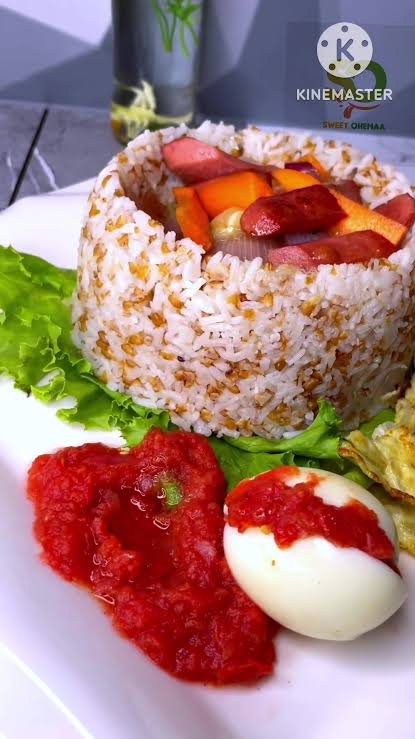
Ingredients
-Oil
-1 large onion
-2 cups of rice
-Salt
-2 cups of wheat
Preparation
-In a medium saucepan, heat oil over medium-low heat
-Add the onion and cook, stirring frequently, until soft and turns golden brown
-Wash rice and wheat and put into pan. Sauté for two to three minutes, until toasty and fragrant
-Add water and salt and allow to boil.
– Reduce heat to low and allow to simmer for 10 to 15 minutes until rice is tender and the water is absorbed.
-Taste the rice/wheat; if it is still a bit firm, add a few more tablespoons of water and cook a few more minutes.
-When the rice/wheat is ready, take it off the fire and serve hot
Benefits of wheat
–Improves digestion: High levels of insoluble fibre- wheat promotes regular bowel movements, prevent constipation, and support a healthy gut microbiome.
-Supports heart health: Whole-grain wheat helps lower LDL (bad) cholesterol, reduces blood pressure, and decreases the risk of stroke and heart disease.
-Aids weight management: Complex carbohydrates and dense fibre slow digestion, increase feelings of fullness, and help prevent sharp blood sugar spikes.
-Lowers type 2 diabetes risk: Steady glucose release and minerals like magnesium improve insulin sensitivity.
– Provides essential vitamins and minerals: Wheat supplies B vitamins, iron, magnesium, phosphorus, zinc, and selenium, which help build bones and boost immune function.
–Delivers Antioxidants: Compounds like phenolic acids, ferulic acid, and lutein protect cells from oxidative stress and support eye health.
SKIP THE QUEUE, TAP THE NEWS
You can now read the Ghanaian Times and The Spectator newspapers from the comfort of your device via TimesNewsPlus.
Join our WhatsApp Channel: https://whatsapp.com/channel/0029VbBElzjInlqHhl1aTU27

Ingredients
-4 cups of crushed corn
-1 cup of sugar
Method:
-Soak crushed corn for two or more days to ferment
-Boil the fermented corn for about 20-30 minutes until foamy substance is dried up
-Pour sugar in a saucepan and heat until almost burnt
-Strain water from the boiled corn and pour in the saucepan containing sugar
-Use a strainer to strain the chaff
-Allow to cool and store in refrigerator
– Serve with milk
By Linda Abrefi Wadie