News


From policy to practice: Making productivity a national movement in Ghana- Part 1
Management Development and Productivity Institute (MDPI), Ghana
Productivity is not a corporate buzzword. It is the bedrock of national transformation. Until Ghana moves productivity from the language of policy documents into the lived reality of every worker, farmer, entrepreneur, and public servant, our development aspirations will remain aspirations.
Introduction: A Nation with Ambition but an Execution Gap
Ghana has never suffered from a shortage of ambition. From the bold industrialisation dreams of the Nkrumah era to the Ghana Beyond Aid agenda and successive medium-term development frameworks, the country has produced visionary policy blueprints that articulate what a prosperous, self-reliant Ghana should look like. Yet a persistent and troubling gap remains between policy design and policy delivery — between what is promised and what is practised.
Ghana’s labour productivity, while growing in pockets, continues to lag behind peers in sub-Saharan Africa and falls far short of what is required to accelerate structural transformation. According to the Africa Productivity Report, productivity growth on the continent remains constrained by low technology adoption, weak institutional frameworks, and limited investment in human capital. Ghana is not immune to these forces.
The question before us, therefore, is not whether Ghana needs a productivity revolution. It plainly does. The question is: how do we move from policy intent to national practice? How do we turn productivity from a technical concern of economists and planners into a movement that every Ghanaian owns and champions?
Why policy alone is not enough
Ghana has had a National Productivity Policy. It has had the Ghana Shared Growth and Development Agenda. It has the Coordinated Programme of Economic and Social Development Policies. These are serious, well-intentioned frameworks. So why does the average Ghanaian worker not feel them?
The answer lies in what management scholars call the implementation deficit — the widening chasm between policy as written and policy as lived. Several structural weaknesses deepen this gap in Ghana. First, our productivity agenda has remained largely top-down, conceived by technocrats and rolled out through bureaucracies without sufficient grassroots ownership.
Second, institutions mandated to drive productivity, including the Management Development and Productivity Institute (MDPI), the Ghana Enterprise Agency (GEA), and sector-specific agencies, have historically been under-resourced relative to their mandates. Third, the culture of measurement is weak: what is not measured is rarely improved, and in many of our workplaces and public institutions, productivity is neither tracked nor rewarded.
There is also the matter of culture. Productivity is ultimately a behavioural phenomenon. It thrives where there is discipline, accountability, a sense of urgency, and institutional trust. Building that culture in Ghana requires more than new policies. It requires sustained leadership, behavioural change, and a shift in what we celebrate as a society.
Lessons from the Kaizen Philosophy: Small changes, big results
One of the most instructive case studies in translating productivity policy into national practice comes from an unlikely source, Japan’s post-war reconstruction. Faced with the ruins of industrial capacity and a shattered economy, Japan did not simply craft more ambitious plans. It changed the way every worker, manager, and citizen thought about their daily work. The Kaizen philosophy, meaning “change for the better,” spread from factory floors to hospitals, schools, government offices, and eventually entire supply chains.
The Africa Kaizen Initiative (AKI), championed by the African Union Development Agency-NEPAD and supported by Japan’s International Cooperation Agency (JICA), has begun introducing these principles to the African continent, including Ghana. The approach is deliberate: start with enterprises and individuals, embed a culture of continuous improvement at the operational level, and then allow that culture to scale upward into sectors, value chains, and national systems.
The lesson Ghana should draw is powerful: national productivity movements do not begin with national policies. They begin with the person at the desk, the farmer in the field, the nurse on the ward, the teacher in the classroom, deciding that today, they will do their work a little better than yesterday. Policy creates the enabling environment. But the movement must be human.
Five pillars for making productivity a national movement
Drawing on global best practices and Ghana’s specific development context, I propose five pillars for transforming productivity from a policy commitment into a national movement.
1. Embed productivity in education and early career development
No nation sustains a productivity culture without instilling its values from the earliest stages of human development. Ghana’s educational curriculum at the basic, secondary, and tertiary levels must give explicit attention to time management, work ethic, quality consciousness, problem-solving, and continuous improvement. Technical and Vocational Education and Training (TVET) programmes should become rigorous schools of craft excellence, not holding grounds for those who could not access universities. Employers, universities, and TVET institutions must collaborate to define what “productive work” looks like in Ghana’s context and ensure graduates are equipped to deliver it.
2. Build a national productivity measurement system
You cannot improve what you do not measure. Ghana needs a robust, regularly updated national productivity database that tracks productivity across sectors, enterprises, and regions. The Ghana Statistical Service, MDPI, and sector ministries must collaborate to develop key productivity indicators, including output per worker, total factor productivity, and process efficiency ratios, and to report on them publicly. This data should inform budget allocation, incentive design, and policy adjustments. Transparency about where Ghana stands and which sectors are improving fosters accountability and healthy competition.
By Ethel Ansah-Antwi









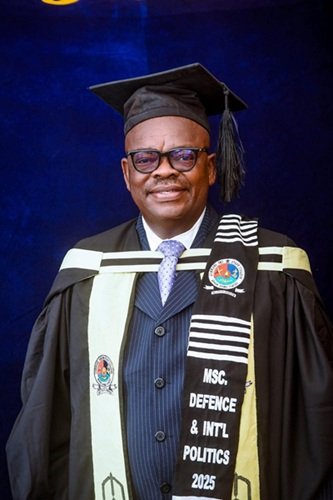
Management and staff of Owass FM have announced the passing of media personality, comedian and politician Seth Kwame Dzokoto following a medical emergency during a live morning show discussion at the station earlier today.
According to the station, Dzokoto was participating in a panel discussion on its morning show “Oman Nkoso” when he suddenly took ill and collapsed.
A statement from the station said its team immediately rushed him to the hospital for medical attention, but he was pronounced dead by the attending medical doctor upon arrival.
“We are deeply saddened by this unfortunate incident, which occurred in the course of our regular programming. Our thoughts and prayers are with his family, loved ones, colleagues, and all those who have been affected by his passing,” the statement said.
Management acknowledged that information about the incident is already circulating in the public domain, but appealed to the public and colleague media houses to respect the privacy of the bereaved family and refrain from circulating unverified information or speculation regarding the circumstances of his death.
Owass FM extended its heartfelt condolences to the family of Seth Kwame Dzokoto.
By Edem Mensah-Tsotorme

The State through the Attorney General (AG) has filed an appeal at the Supreme Court challenging the suspension of the trial in the case of The Republic v Hanan Aludiba and Faiza Seidu.
On Monday, the Court of Appeal suspended the trial in the case. But the prosecution says it has filed an appeal against the suspension order.
According to the update, the law does not allow a criminal trial to be suspended simply because an accused person has complained about some of the charges on the charge sheet, particularly when those complaints were dismissed as meritless.
It argues that if the Court of Appeal’s decision is allowed to stand, no prosecution will ever be possible, since all it would take for a trial to be suspended is an accused person complaining about anything on the charge sheet.
By Edem Mensah-Tsotorme