News
GHS urges Ghanaians to stay physically active to prevent diabetes

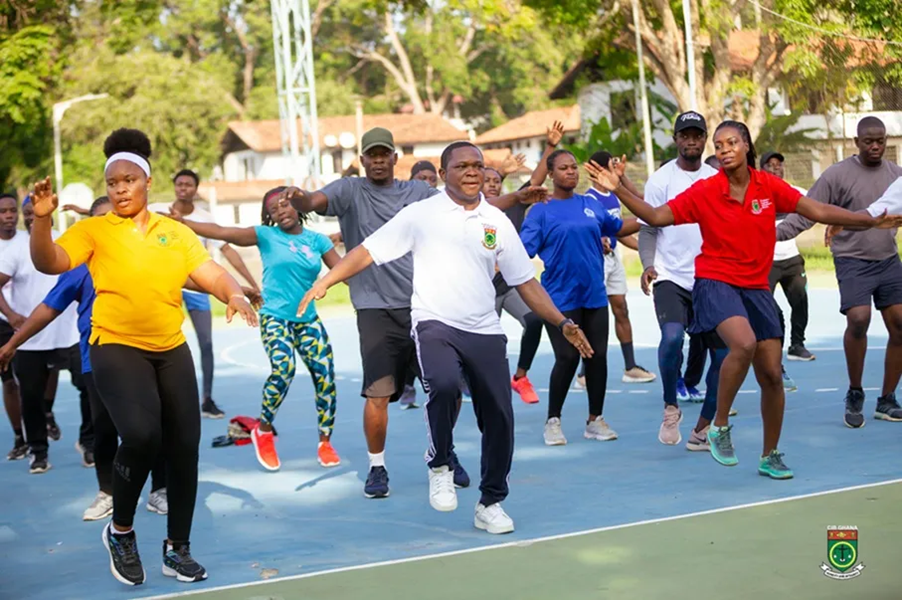
The Ghana Health Service (GHS) has urged Ghanaians to make regular physical activity part of their daily routines to improve blood glucose control and reduce the risk of developing Type 2 diabetes.
It said regular exercise helped the body use insulin more effectively, thereby improving blood sugar regulation and contributing to better overall health.
The call forms part of the Service’s 30-day diabetes awareness campaign ahead of this year’s World Diabetes Day, which is observed on November 14.
The GHS encouraged people to engage in simple physical activities such as walking, dancing, cycling and gardening.
It noted that staying physically active did not necessarily require expensive gym memberships, as everyday activities, including household chores, could contribute to maintaining an active lifestyle.
The Service advised adults to aim for at least 150 minutes of moderate-intensity physical activity each week, stressing the importance of starting with manageable activities and gradually building consistency.
It further encouraged people living with diabetes to combine regular physical activity with prescribed treatment and a healthy diet to help manage the condition.
The awareness campaign, being undertaken ahead of World Diabetes Day, is aimed at promoting healthy lifestyle choices and encouraging early action to prevent and manage diabetes.
This year’s World Diabetes Day is being observed under the theme “early action on diabetes,” with November 14 set aside to raise awareness of the condition and the importance of prevention, early detection and proper management.
By Esinam Jemima Kuatsinu
SKIP THE QUEUE, TAP THE NEWS
You can now read the Ghanaian Times and The Spectator newspapers from the comfort of your device via TimesNewsPlus.
Join our WhatsApp Channel: https://whatsapp.com/channel/0029VbBElzjInlqHhl1aTU27


We take certain things for granted but it should not be so, especially if you can read, write and understand what is said on TV and Radio in English. Usually at 7:00 pm, I watch the news on one of the popular media channels and it was no big deal until a few days ago.
As I listened to a radio presenter on a popular Fm station, the important role my parents played in my life, as far as education is concerned, suddenly dawned on me. The usual style at the start of the programme, is to play a very funny interaction between a man who identifies himself as Barry …and a Ghanaian man called Akwasi.
This Barry guy apparently was talking to Akwasi by phone and he was speaking in English and Akwasi asked him to speak English, meanwhile Akwasi did not understand the English language, so he quickly asked the Barry guy to change to Twi, when he realised that the intonation was not the normal Ghanaian one.
I really had a good laugh and that was when I realised that my parents had indeed helped me by giving me access to education.
Imagine going to enter a place and they have written push on the door frame and because you cannot read, you decide to assume that you need to pull the door towards you and the embarrassment you will go through, pulling with all your might and especially at places with glass doors at the main entrance, everybody watching you and you struggling with the door for quite a few seconds before deciding to push.
It is in moments like that, that you either start blessing your parents or otherwise, depending on whether they sent you to school or not. There are things we consider as little that we take for granted but in reality, it is a big deal if you are not educated.
I recently had to go to an office located in the Ridge Hospital area and it was located on one of the floors of a story building. The protocol requires that visitors to the place log their details in a book provided for that purpose.
You write the date, your name etc., the usual. Imagine for a moment that you are Akosua Seiwaa, an uneducated person, who is going to see someone in one of the offices in the building and you are required to fill the log book with your details. It suddenly generates a stressful situation for you.
The FM programme really set me thinking about how grateful we ought to be to our parents or guardians who gave us access to education such that we have the confidence to go boldly to all kinds of places without stress.
Just imagine going to a hospital and given a whole bunch of medication. As is usually the case, the pharmacist mentions your name and immediately starts telling you the number of times and the various dosage you are to take them.
He or she then goes to the next person and chances are you are likely to forget some of the instructions. If you are uneducated, how are you going to identify the right dosages and any other special instructions you need. There is a saying that ‘If you can read this, thank a teacher.’ I think it should rather be, ‘If you can read this, thank your parents.’
There was another recording of a hilarious conversation on the show between two ladies one of whom was uneducated and did not understand “It’s been a while”. Apparently a church member met her and she said to her it’s been a while and did not know how to respond till a young girl she was walking with explained to her in Twi “Ose ohuu wo aky3”.
She was bitterly complaining to the friend that had it not been the young girl, she would have been greatly embarrassed with this “it’s been a while, it’s been a while” that the church member said to her. Do not laugh alone. Share. God bless.
For many Ghanaians, including market women, farmers, and construction workers, spending hours under the scorching sun is a normal part of making a living.
However, recent rising temperatures across the country has the tendency to turn the daily discomfort into a severe health crisis.
This is the exact situation the Ghana Meteorological Agency (GMet), is anticipating as a developing El Niño is projected to impact Ghana’s weather from November 2026 through April 2027, extending into the first half of the year.
Already, Ghanaians are beginning to feel the heat at the initial stage of the spectacle.
When The Spectator visited a few markets in Accra including the Lapaz market, Odawna market and the Accra Central area, many of the traders have resorted to the use of umbrellas to prevent the direct rays of the sun.
But according to an Environmental Health Expert, Professor Mawuli Dzodzomenyo, this is the harsh weather condition Ghanaians would endure for the period and has since urged the government to roll out early warning systems to safeguard communities.
What is El Niño?
El Niño is a natural climate pattern characterised by the warming of ocean surface temperatures in the central and eastern tropical Pacific Ocean and can disrupt weather patterns worldwide.
According to Meteorologists, it happens when trade winds that blow west along the equator and push warm water toward Asia becomes weak or reverse direction, and allow warm water to shift back eastward toward the Americas.
This stops or slows down the normal upwelling of cold, nutrient-rich deep water off the coast of South America, which harms local fish and marine life.
This occurs irregularly in every 2 to 7 years cycle and typically last from nine to 12 months.
Heat surveillance concern
GMet says the event could bring hotter, drier conditions, prolonged dry spells and possible sudden heavy rainfall. These changes could affect farming, water supplies, power generation and public health.
Although Ghana has made progress on climate-related health threats, its heat monitoring and response systems remain inadequate, says Professor Dzodzomenyo of the University of Ghana’s School of Public Health.
He says weak surveillance and limited protocols leave uncertainty about when authorities should intervene.
He urged the Ministry of Health and other stakeholders to monitor temperatures, set action thresholds and issue timely alerts so that communities and health facilities can prepare, adding that authorities need local temperature information and clear steps to enable them respond appropriately when thresholds are crossed.
Health threat
According to Prof Dzodzomenyo, excessive heat can overwhelm the body’s temperature regulation and cause serious illness.
Some of the health conditions that can be associated with it include heatstroke, heat exhaustion, severe dehydration and kidney-related conditions among the possible consequences. High temperatures may also worsen cardiovascular and respiratory problems.
Heat exhaustion can also cause sweating, weakness, dizziness and headaches. Heatstroke is a medical emergency and dehydration is a concern for outdoor workers who lose fluids through sweating.
He said recognising symptoms early and seeking medical help can reduce complications.
“People should watch for tiredness, dizziness, headaches and excessive sweating. Anyone feeling unwell should move somewhere cool, rest and drink water; severe symptoms require urgent medical care,” he cautioned.
Risks
Prof Dzodzomenyo identifies children, pregnant women and older people as especially vulnerable to heat, therefore facing greater risk.
“Children face exposure during outdoor play; older people may struggle to cope with high temperatures. Heat and dehydration can create additional concerns during pregnancy while people with heart or respiratory conditions may also experience worsening symptoms.”
He stated that water, shade, ventilation and rest can reduce exposure and advised that public health messages must reach vulnerable people and caregivers on time.
Protection
Farmers, construction workers and market traders often cannot avoid spending hours outdoors.
Professor Dzodzomenyo advises shifting work to cooler hours, taking regular breaks, drinking water and seeking shade.
For employers, he called for the introduction of rest cycles and adjust schedules during extreme heat because worker protection was a shared responsibility.
Protection for school children
According to the Environmental Expert, poorly ventilated classrooms and strenuous outdoor activities in intense sunlight can put pupils at risk.
Professor Dzodzomenyo called for regular breaks and outdoor activities during cooler hours and also urged schools to provide water, ventilation and shaded areas.
For teachers, “they must recognise heat-related illness and respond promptly. Schools may also need to adjust sports during particularly hot periods.”
Weather forecasts/public health alerts
In his view, people would need to be advised as well as get daily forecasts. Professor Dzodzomenyo wants weather information linked to public health alerts through the media.
“Through the medium of radio, television, newspapers and digital platforms, the risks associated with El Nino could be explained to all. Frontline personnel also need training to recognise heat-related illness.”
“Warnings must reach vulnerable communities in time and be practical, giving workers opportunities to rest, drink water and find shade. Community leaders, employers and health workers can ensure advice reaches people who may not receive alerts. Informal workers may have little control over their hours,” he said.
Past El Niño episodes
He said Ghana has experienced strong El Niño events in 1982/83, 1997/98 and 2015/16, and a moderate event in 2023/24. They underline its vulnerability to rainfall changes affecting agriculture, water, power generation and health.
The developing event is an opportunity to improve coordination among weather, health, agriculture and disaster management agencies.
Professor Dzodzomenyo says heat surveillance and protection for vulnerable groups must form part of Ghana’s climate response. Communities, workplaces, schools and health facilities must be ready to act.
By Esinam Jemima Kuatsinu
SKIP THE QUEUE, TAP THE NEWS
You can now read the Ghanaian Times and The Spectator newspapers from the comfort of your device via TimesNewsPlus.