News
Footballer sentenced to life imprisonment over murder of 2

AN Accra High Court has sentenced Richard Appiah, a footballer, to life imprisonment for the murder of two boys at Abesim in the Bono Region.
The convict was found guilty by a seven-member jury on two counts of murder.
The court heard that on August 20, 2021, Appiah murdered Stephen Sarpong, 15, and Louis Agyemang, 12, at his residence in Abesim.
The case began at the Kaneshie District Court, now the Adabraka District Court, where committal proceedings were held before it was transferred to the High Court in Accra.
The prosecution, led by Nana Ama Adinkra, a Senior State Attorney, called five witnesses, while the defence team, led by Mr Faustinus Yirilabuo, called two witnesses.
According to the prosecution, the complainant, a driver and father of Louis Agyemang, resided in the same community as the accused.
On the day of the incident, Appiah allegedly lured Louis Agyemang, his half-brother, to his residence. When the boy could not be found later in the evening, a relative, Mr Akwasi Boateng, questioned the accused about his whereabouts.
The accused joined in the search, after which a report was made to the police. Mr Boateng later went to the accused’s residence and, through a window, saw the victim lying motionless in his room. The police were alerted and forced open the locked room, where they made further discoveries.
The remains of both victims were subsequently conveyed to the Police Hospital for preservation and investigation.
During investigations, the accused led police to another location where additional evidence was retrieved. A brown envelope containing GH¢7,960 was also found in his room.
Appiah was charged with two counts of murder and pleaded not guilty.
In his defence, he expressed condolences to the families of the deceased and claimed he was suffering from severe depression and hallucinations at the time of the incident. His lawyers urged the jury to return a verdict of guilty but insane, arguing that he was mentally unstable and, therefore, not criminally responsible.
The defence maintained that their client acted under delusion and did not have the mental capacity to appreciate the consequences of his actions.
However, the prosecution argued that the accused was aware of his actions and took steps to conceal evidence, indicating that he knew the difference between right and wrong. The State further argued that insanity was an exception to criminal responsibility and must be strictly proven.
The jury returned a unanimous verdict of guilty.
Following the judgment, defence counsel, Mr Theophilus K. Dzimegah, indicated that the legal team would appeal the decision in the coming days.
-GNA

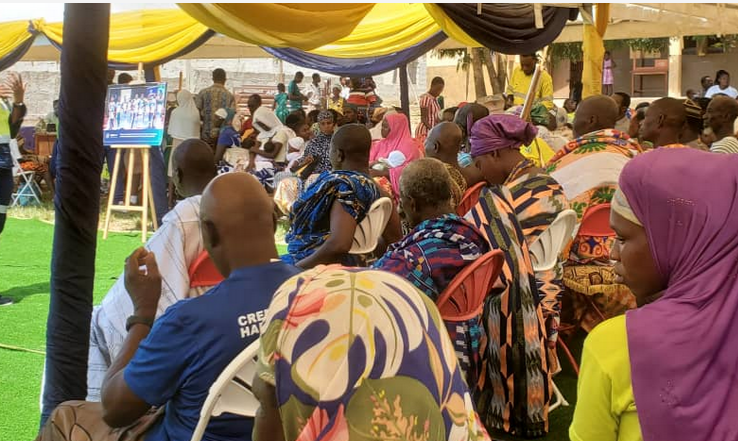
GOLD Fields Ghana Foundation (GFGF), has organised a sensitisation programme at Mile 10, one of its catchment communities in the Prestea Huni-Valley Municipality to raise awareness about childhood cancer.
The programme formed part of activities to observe this year’s World Childhood Cancer Day which falls on February 15 every year.
Speaking at the event, Dr Magdalene Bakari, the Lead specialist for health services for Gold Fields Ghana (GFG), said as part of their commitment to improve upon the health and lives of the people that they worked with, they decided to spend time with the residents of Mile 10.
She said one of the things they did was to focus on schooling the community about childhood cancers because such cancers were affecting their young ones, who were the country’s future leaders.
“We wanted to reinforce the education on childhood cancer, so people could identify the early signs, get treatment on time, and go on to live productive lives” Dr Bakari stated.
The lead specialist explained that GFG have a large catchment area, and over the years, they have tried to get to each community, adding that last year, they visited Subri, and earlier covered Koduakrom, Pepesa, and Huniso.
“In Mile 10 community, we noticed, it’s a community where poverty levels are high, and they also have a very youthful population with a high fertility rate. So, we wanted to bring this message to them as well” she indicated.
Dr Bakari reiterated that with so many children around, they felt it was important to educate the community to help parents and caregivers to pick up some of the issues early and further support them to have access to healthcare when needed.
Mr Abdel-Razak Yakubu, the Executive Secretary of the GFGF, said hundreds of residents were registered free of charge with the National Health Insurance programme to enable them have access to affordable health care.
He said staff from the National Health Insurance guided and showed residents how to renew subscription on their mobile phones when they expired, so they would not have to travel down to their office in Tarkwa for renewal.
Nana Obaatanpa Kojo Etroo I, Odikro of Mile 10 community, praised GFGF for selecting his community for the impactful health programme, stressing that, though the Mine would be leaving them, they would remember their efforts.
Maame Abena Owusu-Ansah, a mother of six expressed appreciation to the GFGF for facilitating her children’s NHI registration. -GNA
Join our WhatsApp Channel now!
https://whatsapp.com/channel/0029VbBElzjInlqHhl1aTU27

IN 2016, more than 94,000 Ghanaians died from Non-Communicable Diseases (NCDs), according to the World Health Organisation. That figure, experts warned, was not just a statistic but a silent epidemic eroding the nation’s future.
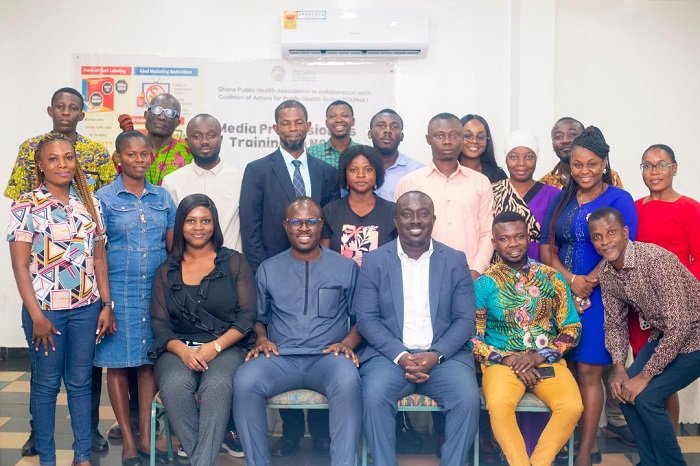
At a training workshop for media professionals in Kumasi last Thursday, Dr Charles Apprey, a nutritional biochemist and lecturer at Kwame Nkrumah University of Science and Technology (KNUST), issued a stark call: Ghana must urgently tax unhealthy foods and subsidise healthier options if it hopes to stem the tide of preventable deaths.
“What stops us as a country from taxing these unhealthy foods, build silos in our markets, and reduce their consumption?” Dr Apprey challenged, arguing that fiscal measures could save thousands of lives.
Globally, NCDs account for 71 per cent of all deaths, and Ghana mirrors this trend with about 45 per cent of national deaths linked to hypertension, diabetes, cancers, and chronic respiratory diseases. Hypertension alone affects over 34 per cent of men and 51 per cent of women, with prevalence among older persons exceeding 50 per cent.
Dr Apprey warned that the Ghanaian plate was changing dangerously—from kontomire, abomu (local stew) and abεkwan (palm soup) to fries, sodas, and pizza. “These are lifestyle-driven illnesses,” he said, “and they demand bold policy intervention.”
The KNUST lecturer outlined a five-point agenda to reduce exposure risks such as poor diet; strengthen early detection and management; build resilient health systems; foster multisectoral collaboration; and secure sustainable funding.
He highlighted front-of-pack labelling (FOPL) as a proven tool, citing South Africa, Mexico, Chile, and the UK, where warning labels and traffic-light systems have reduced purchases of high-sugar and high-salt products.
Dr Apprey also called for bans on junk food advertisement during children’s TV programming, restrictions on celebrity endorsements, and limits on outdoor advertising near schools. “The aim is to create healthy-enabling food environments where the healthier choice becomes the easier choice,” he stressed.
The workshop, organised by the Ghana Public Health Association in collaboration with the Coalition of Actors for Public Health Action (CAPHA), positioned journalists as frontline allies in the fight against NCDs. With their reach and influence, media professionals were urged to amplify the urgency of food policy reforms and help shift public attitudes toward healthier diets.
Mr James Mckeown Amoah, Project Coordinator for Ghana Public Health Association (GPHA), called for all hands to be on deck towards the reduction of NCDs in Ghana. He, therefore, urged the media to devote airtime and spaces to create more awareness for Ghanaians to embrace the consumption of healthier food devoid of unhealthy foods.
From Kingsley E. Hope, Kumasi