Hot!
‘Economic, relationship crises can trigger mental disorders’

- /home/u249204778/domains/spectator.com.gh/public_html/wp-content/plugins/mvp-social-buttons/mvp-social-buttons.php on line 27
https://spectator.com.gh/wp-content/uploads/2022/04/Dr.-Richard-Eghan.jpg&description=‘Economic, relationship crises can trigger mental disorders’', 'pinterestShare', 'width=750,height=350'); return false;" title="Pin This Post">
- Share
- Tweet /home/u249204778/domains/spectator.com.gh/public_html/wp-content/plugins/mvp-social-buttons/mvp-social-buttons.php on line 72
https://spectator.com.gh/wp-content/uploads/2022/04/Dr.-Richard-Eghan.jpg&description=‘Economic, relationship crises can trigger mental disorders’', 'pinterestShare', 'width=750,height=350'); return false;" title="Pin This Post">
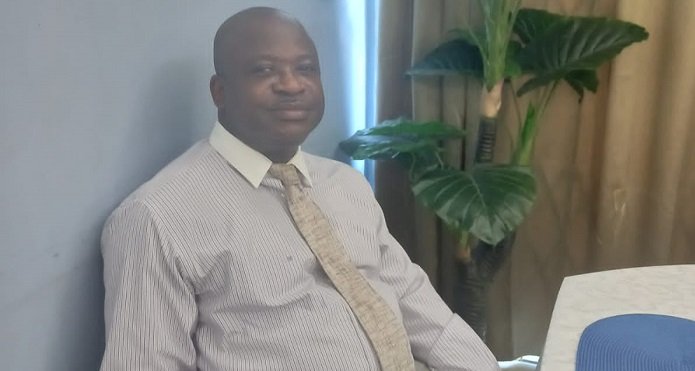
Depressed individuals are at a higher risk of having serious mental disorders if things go worse, Dr. Richard Eghan of Nature’s Green Medical Centre has disclosed.
According to the Medical Practitioner, mental health disorders are more prevalent in our current dispensation due to issues ranging from economic, family, and relationship crises among others.
Dr Eghan said that persons “who have any of the conditions or symptoms of having mental health problems of any form need to seek help or timely psychological, psychiatric or medical intervention from an expert.”
The CEO of Nature’s Green Medical Centre at Taifa in Accra indicated that it was important for individuals living in a sound state of mind to constantly preserve their mental well-being to avoid any form of future mental disorders.
In an interview with The Spectator last week, he said “most mental health disorders are treatable, but required one to seek help if any state of abnormalities begins to show up.”
He cautioned persons living with or in close proximity with people with mental health problems to take safety and precautionary measures in their encounter with such individuals and must treat them in a welcoming way which would not lead to stigmatisation.
The Public Health Scientist said some persons living with serious mental and psychological health disorder could live a normal life in their daily day-to-day life encounter without any evidence or symptoms of abnormalities but could easily cause harm to an individual and treat them with respect to avoid stigmatisation.
“Imagine having a wife, girlfriend, husband or boyfriend who has serious depression or personality disorder whose symptoms could go out of control one day and bring serious harm to your life, yet the person seems normal to you because they have not shown any sign of aggression or violence towards you,” Dr. Eghan said.
He lamented that in Ghana, because much attention was not paid to mental health conditions and victims of mental health disorders, mental health patients may continue to suffer the symptoms of their conditions until they became completely insane.
“The world is sitting on a ‘time bomb’ with mental health problems as the level of mental health issues keep soaring on a daily basis especially during this global COVID-19 pandemic period”, he stressed.
According to a global health statistics, about 792 million people lived with mental health disorder of some kind translating to 10.7 per cent of global population.
Dr. Eghan said those with living anxiety constituted 384 million people, representing 3.8 per cent of the population while depression accounted for 264 million people which is about 3.4 per cent of the population.
He said a data published also estimated that mental disorders are attributable to 14.3 per cent of death worldwide or approximately eight million deaths each year.
Mr. Nicholas Nartey, a mental health advocate who produced an award winning film titled “KORO” underscored the need for recovered mental health patients who have undergone treatment and are living a normal life in society not to be stigmatised.
By Alfred Nii Arday Ankrah



The Tema Regional Police Command has arrested a 32-year-old man for allegedly posing as a soldier and extorting money from unsuspecting members of the public at Ashaiman.
The suspect, identified as Bright Atsu Kudiabor, was arrested by the Ashaiman Police on Wednesday, September 16, 2026, at about 7:00 a.m.
According to the Police, he was arrested at an area known as “I Shall Return”, where he was allegedly parading himself as a soldier and demanding money from people.
The Police said Kudiabor, who is an ex-convict, was initially arrested by personnel of the Ghana National Fire Service in Ashaiman with assistance from other members of the public.
A search conducted on him after he was handed over to the Police reportedly led to the recovery of a set of military camouflage uniform.
The suspect is currently in Police custody and assisting with investigations.
The Tema Regional Police Command said he would be processed for court after investigations are completed.
The Police urged the public to remain vigilant and report anyone who falsely presents themselves as a soldier or a member of another security agency to deceive or extort money from the public.
By: Jacob Aggrey

Volta Regional Minister, James Gunu, says the Volta Region holds enormous agricultural potential and efforts must be geared towards connecting farmers to the needed resources to unlock that potential.
He said focus must be on linking farmers to resources, technology, financing and markets to increase production, create jobs and build sustainable livelihoods.
Hon. Gunu made the remarks at the national launch of the Ghana Tomato Self-Sufficiency Initiative (GHATSI) held at Anloga in the Volta Region on Tuesday, September 15.
The initiative, under the theme “Produce at Home. Feed the Nation. Export the Surplus,” seeks to boost local tomato production, processing and marketing while reducing Ghana’s heavy reliance on imported tomatoes.
The launch was attended by the Minister for Food and Agriculture, Eric Opoku, his Deputy, John Setor Dumelo, Feed Ghana Coordinator, Bright Demordzi, Members of Parliament, traditional leaders, MMDCEs, farmers and other stakeholders.
Mr.Gunu expressed appreciation to the Minister for Food and Agriculture for the support announced for the region, including two excavators, 200 cartons of organic fertiliser, and GH¢200,000 for Ms. Kuatudzo Esther Dela, a tomato farmer and processor from Ziope.
He described the initiative as an important step towards making agriculture a stronger driver of food security, job creation and economic growth in the Volta Region.
By Edem Mensah-Tsotorme