Hot!
Dr Mohamed Ibn Chambas – Diplomat extraordinaire …champions AU’s agenda to ‘Silencing the Guns’

- /home/u249204778/domains/spectator.com.gh/public_html/wp-content/plugins/mvp-social-buttons/mvp-social-buttons.php on line 27
https://spectator.com.gh/wp-content/uploads/2023/01/Dr-Mohammed-Ibn-Chambas.jpg&description=Dr Mohamed Ibn Chambas – Diplomat extraordinaire …champions AU’s agenda to ‘Silencing the Guns’', 'pinterestShare', 'width=750,height=350'); return false;" title="Pin This Post">
- Share
- Tweet /home/u249204778/domains/spectator.com.gh/public_html/wp-content/plugins/mvp-social-buttons/mvp-social-buttons.php on line 72
https://spectator.com.gh/wp-content/uploads/2023/01/Dr-Mohammed-Ibn-Chambas.jpg&description=Dr Mohamed Ibn Chambas – Diplomat extraordinaire …champions AU’s agenda to ‘Silencing the Guns’', 'pinterestShare', 'width=750,height=350'); return false;" title="Pin This Post">
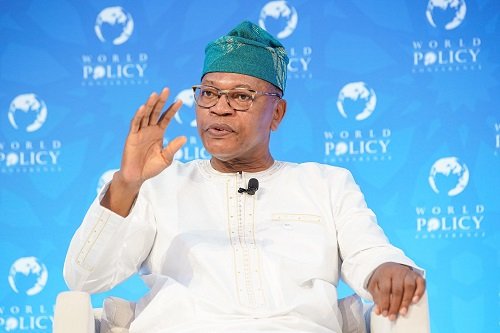
● Dr Mohamed Ibn Chambas
Number of Ghanaians have excelled and continue to excel on the diplomatic missions and other international assignments. Some notable names would readily come to mind and that of Dr Mohamed Ibn Chambas is no exception.
His portfolio has grown over the years with the most recent being his appointment as High Representative for Silencing the Guns by African Union (AU) Chairperson H.E. Moussa Faki Mahamat.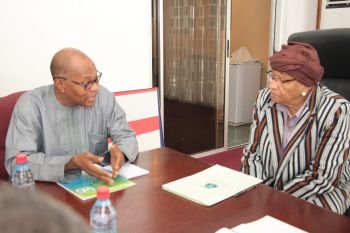
Ellen Johnson Sirleaf and Dr.
Chambas in discussions on
peace and security in Africa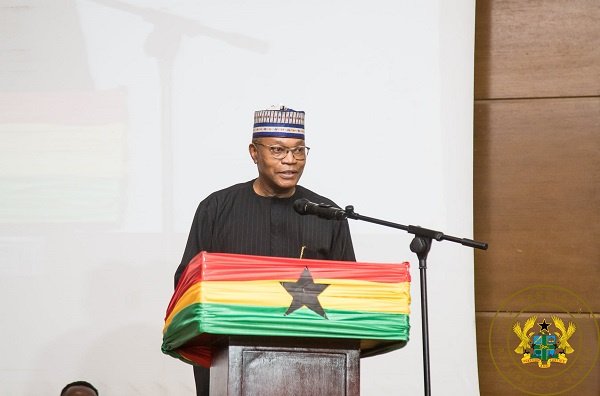
The chairperson, making the announcement, was thrilled that Dr. Chambas’ outstanding credentials and commitment to Pan-Africanism and Agenda 2063 would help him succeed in his new position.
Silencing the Guns is an initiative of the AU promulgated in 2016 to ultimately end all forms of conflicts on the African Continent by the year 2020. However, due to many setbacks the initiative could not be achieved as a result the AU extended the initiative to 2030.
In order to implement the AU Master Roadmap on Practical Steps to Silence the Guns, the release states that the High Representative will prioritise promoting and energising advocacy, mediation, and preventive diplomacy as directed by the Chairperson of the Commission.
Portfolio
Dr. Mohamed Ibn Chambas is a politician, attorney, diplomat, and scholar from Ghana.
From 2014 to 2021, he held the positions of Head of the UN Office for West Africa (UNOWAS) and Special Representative of the UN Secretary-General for West Africa.
Between 2013 and 2014, Dr. Chambas served as the Joint Chief Mediator (JCM) and Joint Special Representative (JSR) of the African Union-United Nations Hybrid Operation in Darfur (UNAMID), respectively.
He held the position of Secretary General of the African Caribbean and Pacific Group (ACP) from 2010 until 2013. .
Dr. Chambas presided over the 15-nation Economic Community of West African States (ECOWAS) from 2006 to 2009 before taking the helm of the ACP.
Beginning in February 2002, while ECOWAS established a Secretariat, he again served as the organisation’s Executive Secretary.
Dr. Chambas, a former member of the Ghanaian parliament, worked as the country’s Deputy Foreign Minister in 1987 and the deputy minister of education in-charge of tertiary education from 1997 to 2000.
He played a key role in the ECOWAS mediation efforts in Liberia between 1991 and 1996 and actively took part in the negotiations that resulted in the agreements that ended the Liberian civil war.
Advocate
As the Head of United Nations Office for West Africa and the Sahel (UNOWAS), Dr
Mohamed Ibn Chambas, urged government and stakeholders to provide more support for women leaders and groups so they could continue their “transformative works” towards ensuring peace and security on the African continent and beyond.
He noted that women, over the years, had played leading roles in the mitigation of conflict but their impact was still limited due to inadequate resource allocation, hence the need to scale up institutional support.
The Special Representative of the Secretary General was speaking at the Kofi Annan International Peacekeeping Training Centre in Accra to commemorate the 20th anniversary of the UN Security Council Resolution 1325 on Women, Peace and Security in West Africa and the Sahel.
Held under the theme: “Beyond 2020: Building Local Capacity to Advance the WPS Agenda in West Africa and the Sahel”, the symposium brought together experts from the sub-region to discuss progress made as well as areas to improve upon.
Call for gender parity
Dr Chambas indicated that immense achievement had been made in the implementation of the resolution for the past 20 years but there was still more to be done, especially for women in peace and security.
While acknowledging the role of African women leaders in peace processes on the continent, he noted that women represented only two per cent of mediators in peace processes. That, he emphasised was woefully inadequate hence the need for gender parity to remain the core of peace and stability discussions on the continent and beyond.
“We have to back our actions with the requisite financial and political support and give more opportunities for women and the youth to advance sustainable development and peace”.
“We need to work and invest in gender parity and women empowerment to achieve the goal of preventing conflict and ensuring peace and prosperity in the region,” he said.
However, he said the inclusion of women in peace process should not only be about “increasing the numbers” but should as well focus on the protection of women’s rights and interest and seeking justice for the vulnerable
By Portia Hutton-Mills


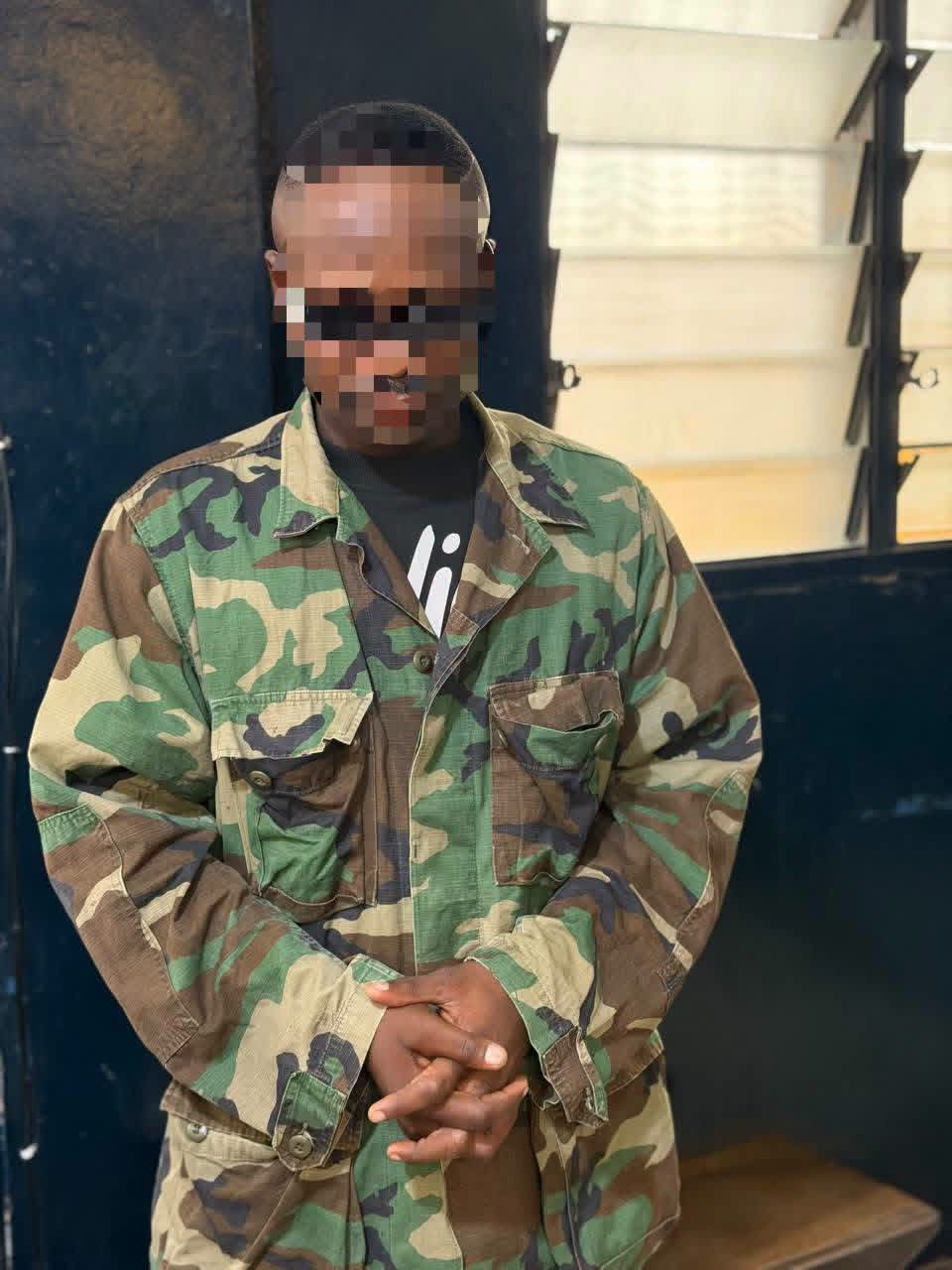
The Tema Regional Police Command has arrested a 32-year-old man for allegedly posing as a soldier and extorting money from unsuspecting members of the public at Ashaiman.
The suspect, identified as Bright Atsu Kudiabor, was arrested by the Ashaiman Police on Wednesday, September 16, 2026, at about 7:00 a.m.
According to the Police, he was arrested at an area known as “I Shall Return”, where he was allegedly parading himself as a soldier and demanding money from people.
The Police said Kudiabor, who is an ex-convict, was initially arrested by personnel of the Ghana National Fire Service in Ashaiman with assistance from other members of the public.
A search conducted on him after he was handed over to the Police reportedly led to the recovery of a set of military camouflage uniform.
The suspect is currently in Police custody and assisting with investigations.
The Tema Regional Police Command said he would be processed for court after investigations are completed.
The Police urged the public to remain vigilant and report anyone who falsely presents themselves as a soldier or a member of another security agency to deceive or extort money from the public.
By: Jacob Aggrey
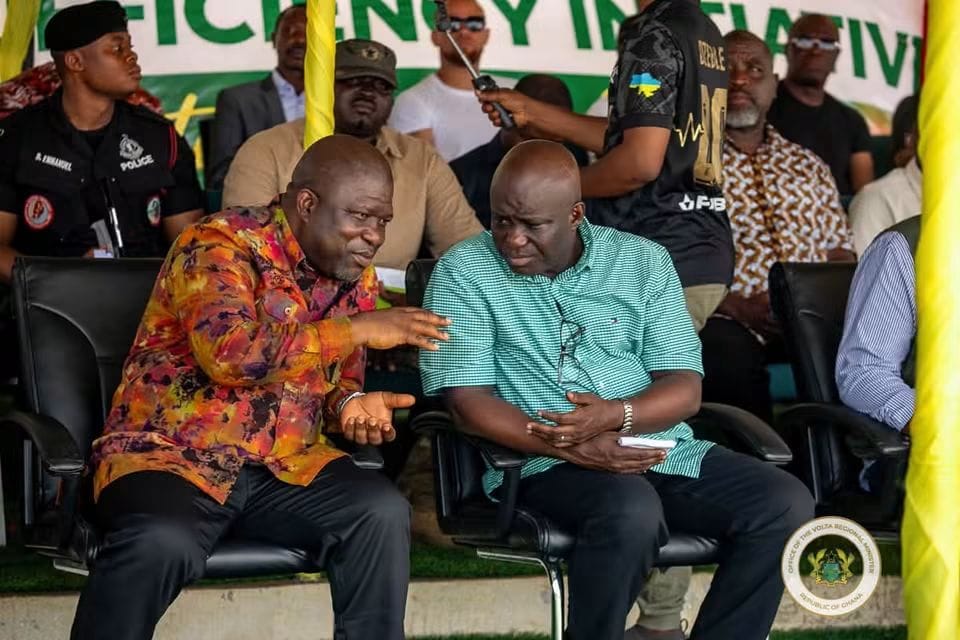
Volta Regional Minister, James Gunu, says the Volta Region holds enormous agricultural potential and efforts must be geared towards connecting farmers to the needed resources to unlock that potential.
He said focus must be on linking farmers to resources, technology, financing and markets to increase production, create jobs and build sustainable livelihoods.
Hon. Gunu made the remarks at the national launch of the Ghana Tomato Self-Sufficiency Initiative (GHATSI) held at Anloga in the Volta Region on Tuesday, September 15.
The initiative, under the theme “Produce at Home. Feed the Nation. Export the Surplus,” seeks to boost local tomato production, processing and marketing while reducing Ghana’s heavy reliance on imported tomatoes.
The launch was attended by the Minister for Food and Agriculture, Eric Opoku, his Deputy, John Setor Dumelo, Feed Ghana Coordinator, Bright Demordzi, Members of Parliament, traditional leaders, MMDCEs, farmers and other stakeholders.
Mr.Gunu expressed appreciation to the Minister for Food and Agriculture for the support announced for the region, including two excavators, 200 cartons of organic fertiliser, and GH¢200,000 for Ms. Kuatudzo Esther Dela, a tomato farmer and processor from Ziope.
He described the initiative as an important step towards making agriculture a stronger driver of food security, job creation and economic growth in the Volta Region.
By Edem Mensah-Tsotorme

 Entertainment1 week ago
Rhythms On Da Runway returns November 28 with 16th edition themed ‘Unbound’
- Entertainment1 week ago
Ohemaa Mercy’s Tehillah Experience outfit was priestly regalia, not costume – Management clarifies
 News1 week ago
Janet Asana Nabla criticises Mahama over China curriculum controversy involving Haruna Iddrisu