News
ICGC inaugurates 19 Presbytery Committees


The International Central Gospel Church (ICGC) has inaugurated 19 Presbytery Committees to support the church’s governance and advance its global ministry.
The inauguration of the committees forms part of ICGC’s efforts to strengthen institutional leadership and enhance the delivery of its ministries as the church continues its international expansion.
The inauguration ceremony was held at Christ Temple East in Teshie, Accra, on July 9, 2026, under the leadership of the General Overseer of ICGC, Rev. Dr Mensa Otabil, and the General Secretary, Rev. Morris Appiah.
This was contained in a statement copied to The Spectator in Accra on Monday.
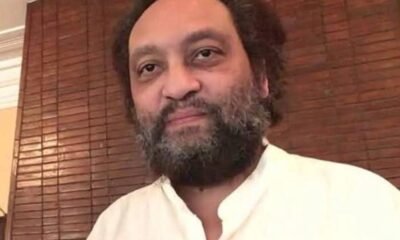
Rev. Counsellor Prince Offei, a columnist with the paper was also appointed as a member of the Presbytery Family Life Support Committee by the National Presbytery on June 29, 2026, with the committee’s work taking effect from July 9.
He joins a team comprising the chairman, Rev. Samuel Awuku Gyekye, Rev. Dr Fred Brako, Professor Irene Kretchy, Dr Sena Owusu-Gibson and Dr Albert Rockson.
The Family Life Support Committee was tasked with providing strategic direction and resources to strengthen marriages, families and individual well-being across ICGC assemblies worldwide.
Its mandate includes promoting marriage enrichment and premarital counselling, supporting families through crises, grief and trauma, strengthening parenting education and family discipleship, enhancing mental health and counselling services based on biblical principles, promoting Alternative Dispute Resolution (ADR) for reconciliation, and training pastors and lay counsellors.
The committee, the statement said, forms part of the church’s broader governance structure, which also includes committees responsible for ordination and licensing, legal affairs, education, church order and doctrine, and disciplinary matters.
Rev. Counsellor Offei is a lecturer and faculty member of the Daniel Institute of Central University. He is also a mental health professional, ordained minister, certified Alternative Dispute Resolution practitioner, author, television personality, and marriage and family counsellor.
He is the founder and Executive Director of Counsellor Prince and Associates Consult (CPAC) and is known for his writings on relationships, family life and mental wellness, including contributions to The Spectator.
Present at the ceremony were senior presbyters which included Rev. Christopher Yaw Annor and Rev. Anthony Cudjoe.
By Spectator Reporter

News
GES directs Ashanti Regional, Obuasi Municipal Education Directors to step aside over Obuasi SHTS scandal

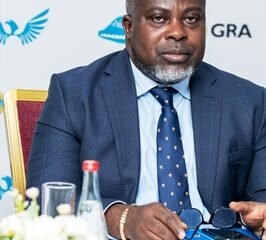
The Management of the Ghana Education Service (GES) has directed the Ashanti Regional Director of Education, Dr. William Amankrah Appiah, and the Obuasi Municipal Director of Education, Mr. Kwamena Owusu-Nketiah, to step aside with immediate effect.
The directive forms part of ongoing investigations into allegations of sexual misconduct involving the headmaster of Obuasi Senior High Technical School (SHTS), Mr. Zakaria Abdulai.
According to GES, the decision is intended to ensure that the investigations proceed without potential interference, nor the perception of it.
The two directors are to hand over their offices and all state property in their possession to the Deputy Ashanti Regional Director of Education, Mr. Thomas Kwame Boateng.
Management added that the headmaster, Mr. Zakaria Abdulai, also remains interdicted and therefore urged the public to ignore any news circulating that he has been cleared.
Management is calling for calm, support and cooperation as thorough investigations into the matter continue.
By Edem Mensah-Tsotorme
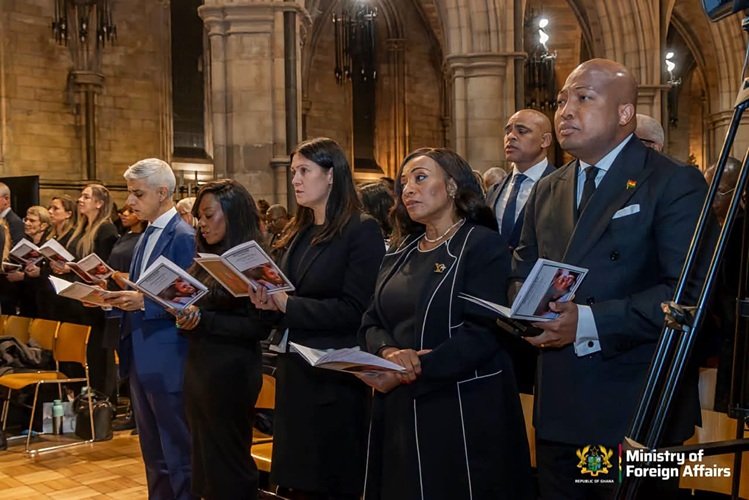
The Minister for Foreign Affairs, Samuel Okudzeto Ablakwa, has joined the family of the late Professor Jason Atta Kwei Arday, the Ghanaian community in the UK, and other dignitaries for a memorial service in Southwark, UK.
In a post, Mr. Ablakwa described the service as deeply moving and unforgettable, held in honour of the late professor’s memory.
According to him, in keeping with the government’s pledge, he joined the family, Ghana’s High Commissioner to London, British MPs, Ministers, the Mayor of London, Cambridge scholars, Prof. Arday’s students and loved ones to pay respects and honour his inspiring legacy.
Mr. Ablakwa noted that Prof. Arday’s accomplishments as the youngest Black professor appointed at the University of Cambridge and his widely appreciated charitable contributions will continue to inspire generations.
“The Government and People of Ghana will continue to stand by our compatriots everywhere they are in the world. As we do so, we profess our commitment to justice, equality and the creation of a new world,” he said.
He prayed for fortitude for the family in what he described as an extraordinarily difficult time.
“We shall always remember Prof. Arday for his response when asked what he will wish to do to change the world: ‘I would take a thread and a needle, and I’d interweave love into our society’,” Mr. Ablakwa added.
By Edem Mensah-Tsotorme