News
Seek regular medical eye care for children- Parent told

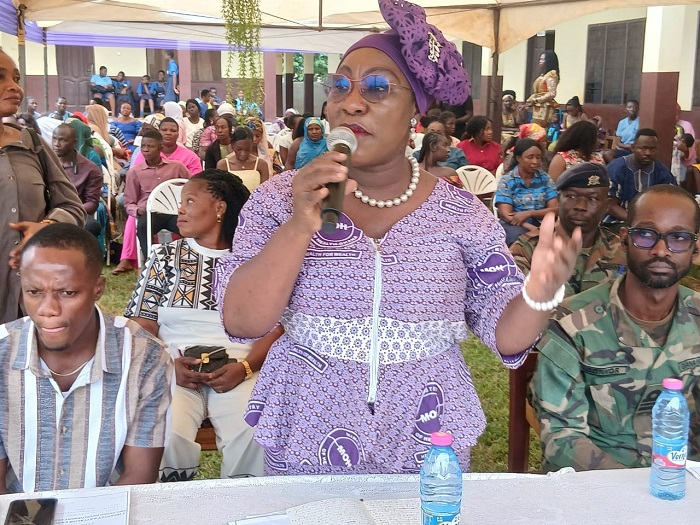
An Optometrist, Dr Adjoa Pokua Osae Awulai has called on parents to take keen interest in regularly presenting their wards for eye screening.
That, he said, would help with early detection of defects or abnormalities with the eye and seek lasting solution for them.
Dr Osae Awulai made the call at the 13th graduation ceremony of the 3 Garrison Early Childhood Development Centre, Liberation Barracks in Sunyani where a total of 106 pupils made up 50 boys and 56 girls graduated.
According to her, problems with the eye have usually been ignored by some parents that preferred to self-medicate and in the process, making the condition worse.
But she stated that the eye was an important organ that must be treated or handled with extreme care.
According to Dr Awulai, the first eye examination must actually start from birth to six months, adding that “this must be done at least twice in a year.”
This, according to her, was a significant step in improving the wellbeing and academic performance of the children as they grow.
She explained that kids with eye defects develop low self-esteem, lack confidence and perform poorly in school due to their condition.
Dr Awulai said despite her regular school visits to sensitise and create awareness on eye health and safety, most people are just reluctant and find excuses not to seek medical care.
“Some people have become so superstitious; they hold on to their religious beliefs rather than seeking medical care,” she said and urged parents to be regular and intentional about problems with their wards eyes.
She commended the management and staff of the 3 Garrison Early Childhood Development Centre for the care, sacrifice, love, and compassion for the training of the school children.
The Headmistress of 3Garrison Early Childhood Development Centre Mrs Helen Korkor Bamfo appealed to parents and teachers to show and demonstrate love, care, patience, and empathy in nurturing the young children.
This she said is a responsibility that must guide every efforts being made to train the future leaders of our dear country.
Mrs Bamfo said training kids with creative skills encompasses providing the essential support and nourishment conducive for developing their cognitive, social, emotional, spiritual and problem solving skills.
Lt. Michael Tetteh, who represented the Commanding Officer of 3BN Lt Col. Michael Naar, appealed to fathers to make their presence count, indicating that “it is critical in raising children.”
Lt. Tetteh praised the teachers for their professionalism and selfless dedication to duty.
The school pupils entertained their parents and guests with choreographed dances and poetry recitals at the ceremony.
From Daniel Dzirasah, Sunyani










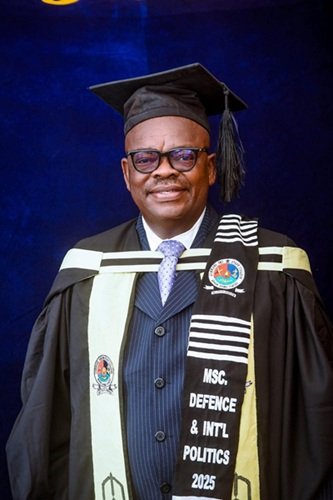
Management and staff of Owass FM have announced the passing of media personality, comedian and politician Seth Kwame Dzokoto following a medical emergency during a live morning show discussion at the station earlier today.
According to the station, Dzokoto was participating in a panel discussion on its morning show “Oman Nkoso” when he suddenly took ill and collapsed.
A statement from the station said its team immediately rushed him to the hospital for medical attention, but he was pronounced dead by the attending medical doctor upon arrival.
“We are deeply saddened by this unfortunate incident, which occurred in the course of our regular programming. Our thoughts and prayers are with his family, loved ones, colleagues, and all those who have been affected by his passing,” the statement said.
Management acknowledged that information about the incident is already circulating in the public domain, but appealed to the public and colleague media houses to respect the privacy of the bereaved family and refrain from circulating unverified information or speculation regarding the circumstances of his death.
Owass FM extended its heartfelt condolences to the family of Seth Kwame Dzokoto.
By Edem Mensah-Tsotorme

The State through the Attorney General (AG) has filed an appeal at the Supreme Court challenging the suspension of the trial in the case of The Republic v Hanan Aludiba and Faiza Seidu.
On Monday, the Court of Appeal suspended the trial in the case. But the prosecution says it has filed an appeal against the suspension order.
According to the update, the law does not allow a criminal trial to be suspended simply because an accused person has complained about some of the charges on the charge sheet, particularly when those complaints were dismissed as meritless.
It argues that if the Court of Appeal’s decision is allowed to stand, no prosecution will ever be possible, since all it would take for a trial to be suspended is an accused person complaining about anything on the charge sheet.
By Edem Mensah-Tsotorme