News
Cyclone devastates Kolkata, leaves scores dead


- /home/u249204778/domains/spectator.com.gh/public_html/wp-content/plugins/mvp-social-buttons/mvp-social-buttons.php on line 27
https://spectator.com.gh/wp-content/uploads/2020/05/SCORES-Thousands-of-trees-were-uprooted-in-gales-electricity-and-telephone-lines-brought-down-and-houses-flattened-by-the-powerful-cyclone.jpg&description=Cyclone devastates Kolkata, leaves scores dead', 'pinterestShare', 'width=750,height=350'); return false;" title="Pin This Post">
- Share
- Tweet /home/u249204778/domains/spectator.com.gh/public_html/wp-content/plugins/mvp-social-buttons/mvp-social-buttons.php on line 72
https://spectator.com.gh/wp-content/uploads/2020/05/SCORES-Thousands-of-trees-were-uprooted-in-gales-electricity-and-telephone-lines-brought-down-and-houses-flattened-by-the-powerful-cyclone.jpg&description=Cyclone devastates Kolkata, leaves scores dead', 'pinterestShare', 'width=750,height=350'); return false;" title="Pin This Post">
The eastern Indian city of Kolkata has been devastated by a powerful cyclone which has killed at least 84 people across India and Bangladesh.
Amphan made landfall on Wednesday, lashing coastal areas with ferocious wind and rain. The storm is weakening as it moves north into Bhutan.
Thousands of trees were uprooted in the gales, electricity and telephone lines brought down and houses flattened.
Many of Kolkata’s roads are flooded and its 14 million people without power.
The storm is the first super cyclone to form in the Bay of Bengal since 1999. Though its winds had weakened by the time it struck, it was still classified as a very severe cyclone.
Coronavirus restrictions have been hindering emergency and relief efforts. COVID-19 and social-distancing measures made mass evacuations more difficult, with shelters unable to be used to full capacity.
Amphan began hitting the Sundarbans, a mangrove area around the India-Bangladesh border home to four million people on Wednesday afternoon, before carving north and north-eastwards towards Kolkata, a historic city that was the capital of the British Raj and widely known as Calcutta.
Parts of West Bengal and Orissa (also known as Odisha) states in India, and areas in south-west Bangladesh, bore the brunt, with winds gusting up to 185km/h (115mph).
At least 72 people have died in India’s West Bengal state, and 12 deaths have been confirmed in Bangladesh.
West Bengal chief minister Mamata Banerjee said the devastation in Kolkata, the state capital, was “a bigger disaster than COVID-19”.
“Area after area has been ruined,” Ms Banerjee was quoted as saying by the Press Trust of India news agency. “I have experienced a war-like situation today.”
Three districts in West Bengal – South and North 24 Parganas and East Midnapore – were very badly hit.
In Bangladesh, there are reports of tens of thousands of homes damaged or destroyed and many villages submerged by storm surges in low-lying coastal areas like Khulna and Satkhira. The authorities evacuated nearly 2.5 million people ahead of the cyclone.
Initial assessments of the damage are being hampered by blocked roads and flooding in all these areas. -BBC

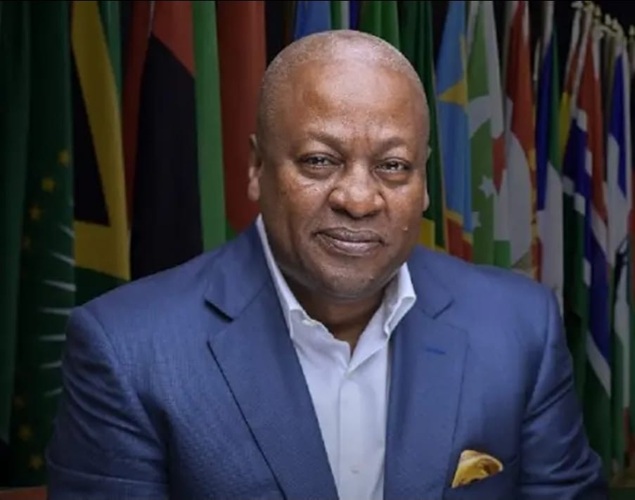
President John Dramani Mahama will be joining African heads of state, business leaders, investors and innovators shaping Africa’s next chapter, at the inaugural Alamein Africa Forum scheduled to take place from 2nd to 4th October 2026 in the historic city of Alamein on Egypt’s Mediterranean coast.
The three-day Alamein Africa Forum is established as a permanent African Business Forum to convene biennially in Egypt.
It is to become the continent’s premier gathering where political power meets entrepreneurial prowess, bridging the established engines of African growth with the new sectors defining its future.
Co-organised by the Government of Egypt, African Export – Import Bank (Afreximbank), the African Union and AUDA-NEPAD, it is expected to bring together more than twenty (20) heads of state and government representatives alongside business leaders, bankers and development institutions.
Ghana’s President, who on 23rd September 2026 declared Ghana is open for business in New York after ringing the ceremonial closing bell at the Nasdaq Stock Market will be leading the Ghanaian delegation, to include the Minister for Trade, Agribusiness, and Industry, Elizabeth Ofosu – Adjare, to the forum.
Other members of the Ghanaian delegation are the Head and Presidential Advisor for Ghana’s 24-Hour Economy and Accelerated Export Development Programme, Hon. Augustus Goosie Tanoh, Ghana’s Special Envoy to the Alliance of Sahel States, Colonel Larry Gbevlo – Lartey alongside key Ghanaian private sector players.
Bringing together leaders in politics, business and policy from across the continent, the Alamein Africa Forum will provide a unique opportunity to shape Africa’s growth agenda by aligning policy and investment priorities, mobilising partnerships for implementation and strengthening financing and investment pathways.
The private sector must become an integral part of Agenda 2063, the African Union’s strategic fifty-year masterplan to transform the continent. The private sector is the core economic engine required to turn the African 2063 from an aspirational government roadmap into realized infrastructure, jobs, and value-added trade.
By Chris KONEY
News
Contractors move to site to begin construction of 120-Bed Trauma Hospital at Bole – Felix Kwakye Ofosu


Minister for Government Communications, Felix Kwakye Ofosu, has revealed that contractors have moved to site to begin construction of a 120-bed Specialised Trauma and Emergency Hospital at Bole in the Savannah Region.
According to the Minister, the 16,000 square metre facility will be equipped with modern medical infrastructure to provide emergency and trauma care.
The hospital will have a 24-hour Accident and Emergency Unit, trauma resuscitation bays, emergency operating theatres, an Intensive Care Unit (ICU) and a High Dependency Unit (HDU).
It will also include specialised trauma wards, a burns treatment unit, orthopaedic and surgical units, as well as imaging and diagnostic facilities, among others.
By Edem Mensah-Tsotorme