News
controversial China proposes controversial Hong Kong security law

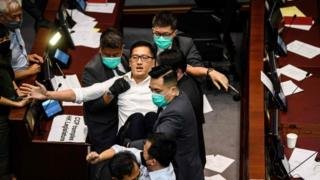
China is proposing to introduce a new security law in Hong Kong that could ban sedition, secession and treason.
The move is likely to provoke strong opposition internationally and in Hong Kong, which last year saw months of pro-democracy protests.
China’s delayed National People’s Congress, its legislature, will debate the issue when it opens on Friday.
Hong Kong’s mini-constitution requires it to bring in such a law but it failed to do so amid widespread opposition.
The so-called Basic Law was introduced when the UK handed back Hong Kong’s sovereignty to China in 1997 and provides certain freedoms not available on the mainland.
The Hong Kong dollar dropped sharply yesterday in anticipation of the announcement.
The issue has been introduced on the NPC agenda, under the title of Establishing and Improving the Legal System and Enforcement Mechanism of Hong Kong. The opening of the NPC had been delayed because of the coronavirus outbreak.
A spokesman for the NPC said yesterday that China was planning to improve on the “one country, two systems” policy that Hong Kong has observed.
Zhang Yesui said: “National security is the bedrock underpinning the stability of the country. Safeguarding national security serves the fundamental interest of all Chinese, our Hong Kong compatriots included.”
Beijing has always had the power to enact the national security law into Hong Kong’s Basic Law but has so far refrained from doing so.
But Hong Kong is heading for elections to its own legislature in September and if last year’s success for pro-democracy parties in district elections is repeated, government bills could be blocked.
A mainland source told the South China Morning Post that Beijing had decided Hong Kong would not be able to pass its own security law and the NPC would have to take the responsibility.
Hong Kong’s government had tried to enact the so-called “sedition law” in 2003 but more than 500,000 people took to the streets and it was dropped.
China has the option to impose it into Annex III of the Basic Law, which covers national laws that must be observed in Hong Kong.
It is almost certain to do so, both in Hong Kong and abroad. -BBC


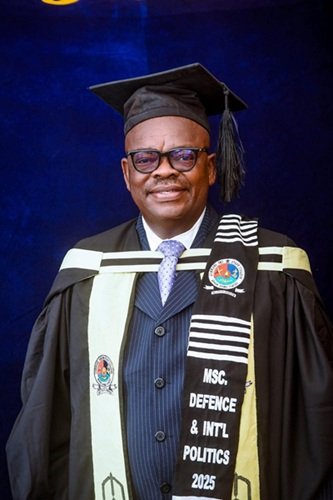
Management and staff of Owass FM have announced the passing of media personality, comedian and politician Seth Kwame Dzokoto following a medical emergency during a live morning show discussion at the station earlier today.
According to the station, Dzokoto was participating in a panel discussion on its morning show “Oman Nkoso” when he suddenly took ill and collapsed.
A statement from the station said its team immediately rushed him to the hospital for medical attention, but he was pronounced dead by the attending medical doctor upon arrival.
“We are deeply saddened by this unfortunate incident, which occurred in the course of our regular programming. Our thoughts and prayers are with his family, loved ones, colleagues, and all those who have been affected by his passing,” the statement said.
Management acknowledged that information about the incident is already circulating in the public domain, but appealed to the public and colleague media houses to respect the privacy of the bereaved family and refrain from circulating unverified information or speculation regarding the circumstances of his death.
Owass FM extended its heartfelt condolences to the family of Seth Kwame Dzokoto.
By Edem Mensah-Tsotorme

The State through the Attorney General (AG) has filed an appeal at the Supreme Court challenging the suspension of the trial in the case of The Republic v Hanan Aludiba and Faiza Seidu.
On Monday, the Court of Appeal suspended the trial in the case. But the prosecution says it has filed an appeal against the suspension order.
According to the update, the law does not allow a criminal trial to be suspended simply because an accused person has complained about some of the charges on the charge sheet, particularly when those complaints were dismissed as meritless.
It argues that if the Court of Appeal’s decision is allowed to stand, no prosecution will ever be possible, since all it would take for a trial to be suspended is an accused person complaining about anything on the charge sheet.
By Edem Mensah-Tsotorme