Features
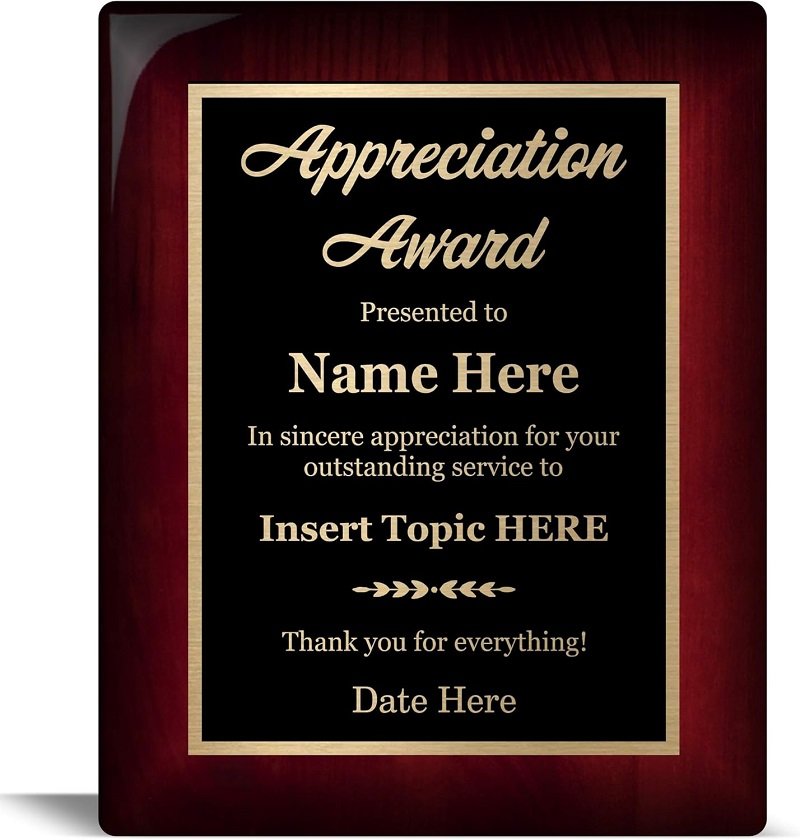
Award schemes, NOTICEBOARDon merit or for sale?

- /home/u249204778/domains/spectator.com.gh/public_html/wp-content/plugins/mvp-social-buttons/mvp-social-buttons.php on line 27
https://spectator.com.gh/wp-content/uploads/2025/12/Plaque1-800x600.jpg&description=Award schemes, NOTICEBOARDon merit or for sale?', 'pinterestShare', 'width=750,height=350'); return false;" title="Pin This Post">
- Share
- Tweet /home/u249204778/domains/spectator.com.gh/public_html/wp-content/plugins/mvp-social-buttons/mvp-social-buttons.php on line 72
https://spectator.com.gh/wp-content/uploads/2025/12/Plaque1-800x600.jpg&description=Award schemes, NOTICEBOARDon merit or for sale?', 'pinterestShare', 'width=750,height=350'); return false;" title="Pin This Post">
Across Ghana today, awards schemes have become almost as common as billboards. From business and entertainment to leadership and social impact, dozens of organisations now host glamorous ceremonies promising to honour ‘excellence.’
But behind the glitz, red carpets, and gold-plated plaques, a troubling reality is emerging: for many nominees, recognition is no longer earned; it is purchased.
Paid path to excellence
In interviews across Tamale and Accra, several nominees revealed a pattern that has become all too familiar. They receive a congratulatory call announcing their nomination, often framed as a recognition of hard work and impact.
Days later, the real message follows: they must pay to secure a seat, table, or plaque.
Event organisers often invite high-profile dignitaries’ like regional ministers, public officials, celebrities to appear on their flyers and at their events, creating a façade of legitimacy that convinces nominees and the public alike.
Yet, beneath the polished speeches lies a difficult question: How relevant or credible are these awards?
A young creative professional in Tamale, who asked not to be named, shared her experience.
“They congratulated me for my exceptional work,” she recounted. “But later, they said I had to pay GH¢2,000 for a table and for the plaque. When I said I couldn’t afford it, they told me maybe next year. That’s when I realised it was never about merit.”
The rise of ‘Vote-to-Win’ economy
Beyond direct payments, another trend is sweeping through Ghana’s awards landscape: vote-based competitions where winners are determined not by impact or quality, but by how many votes they can garner often through paid SMS on mobile money platforms.
This has turned recognition into a popularity contest.
“I had to beg people every day,” said a young social entrepreneur. “Friends, strangers, WhatsApp groups everywhere. I thought I was being honoured for my work, but I was really just competing for airtime and mobile money.”
High cost of chasing validation
For some, the pursuit of recognition has come with a heavy financial burden. One woman revealed she spent more than GH¢23,000 on various awards over three years.
“Each organiser said the award would boost my credibility,” she said. “I paid for seats, plaques, adverts everything. I have the awards, but sometimes I wonder if any of them were truly earned,” she added.
While a few beneficiaries argue that such awards help with publicity or branding, many more believe the practice cheapens the meaning of excellence.
Booming industry built on prestige
Award events often staged in luxury hotels with celebrity hosts and elaborate decorations have become lucrative business ventures. They earn revenue through seat sales, sponsorship deals, photography packages, nomination fees, and promotional slots.
A former event planner admitted that financial targets sometimes influence who gets honoured.
“We had quotas,” he said. “If someone expresses interest, we followed up with payment details. Those who couldn’t pay didn’t make the final list,” he revealed.
Growing calls for regulation
Veteran journalist, Frederick Osei Agyemang, described the current situation plainly: “Some of these awards are nothing short of scams. They damage public trust. Awards should reward genuine achievement, not financial contributions.”
He emphasised that while organisers have operational costs, those expenses must not determine who receives recognition.
As the boundary between genuine honour, commercial interest becomes increasingly blurred, many Ghanaians are beginning to question the credibility of these award events.
One young entrepreneur from Tamale, Sidney Adjetey, recalled being informed that he had won an award but to attend the ceremony, he needed to pay for two or three tables ranging between GH¢5,000 and GH¢10,000.
“I kept wondering whether I was truly qualified,” he said. “Because if I am, why must I pay for a seat?”
He added that he has since stopped attending award ceremonies altogether.
“I’d rather invest in my work than spend money on a trophy.”
Future
With public skepticism rising, the pressure for accountability and ethical standards in the award industry is intensifying. Many believe that unless transparency improves, these schemes risk eroding the very essence of honour.
Until reforms take root, one question hangs heavily in the air:
When did honour stop being earned and start being bought?
By Geoffrey Buta, Tamale
Join our WhatsApp Channel now!
https://whatsapp.com/channel/0029VbBElzjInlqHhl1aTU27










GHANA’S Parliament is a peaceful one. The arguments on the floor of the House can be fierce, but the House doesn’t catch fire. Ghana’s democracy has passed the acid-test of constitutional pluralism, and her legislature is a model of democratic beauty others are learning from.
Sometimes it is edifying following proceedings in Parliament and you are likely to catch the voice of Honourable Alban Bagbin in full flight. He doesn’t talk much. His English vocabulary does the talking.
Last week, I heard another MP talking on bad dressing, and I must congratulate him on his brilliant exhibition of vocabulary, delivered in Westminster tradition.
Such explosive delivery titillates the floor of the House and brings joy to members and Mr Speaker.
In the parliament of some countries, there is no need for such niceties. The floor of the House is regarded as a battle ground. Others, including lady members, see it as a boxing ring, where the spoken word is often jettisoned and supplanted with punches and upper-cuts.
PART-TIME
So the average parliamentarian trains part-time as a boxer, in case boxing skills will be needed in the House to iron out knotty points.
The ladies’ pedicure and manicure are carefully designed to fulfil a dual purpose. One is to showcase trendiness and the other is to scratch the faces of opponents in the House whether they are ladies or gentlemen.
Sometimes, the Speaker has to keep shouting and banging for well over 15 minutes as a recalcitrant MP dashes across and grabs the tie of another MP, thus precipitating a free-for-all brawl. Some MPs return home with a half nose, a missing left ear and a double forehead.
None of the offending parties is sanctioned because brawling in parliament is seen as a democratic process, since some MPs are so stubborn that only a sidekick to the ribs can mellow them. Meanwhile, a free-for-all is good exercise for the MPs, some of whom have grown too fat due to over-feeding.
Fortunately, the parliament of Sikaman has a civil democratic culture and debates get fierce but punches are not unleashed. For comic relief however, MPs do some break dancing once in a while.
When ROPAB was passed into law, some MPs caused a stir by bursting into song and dance. Mr. Speaker was be wildered, but obviously pleased that his announcement of the passage of the bill had brought joy to the House.
Others were not happy, though. The bill and the debates had caused them enough distress. As for the passage, it was like cutting their throats. They groaned in their hearts. No punches, no karate. That is democracy in its maturing stage. It is tempered with reason and civility. One day, it will be their turn to laugh and dance.
Now, the MP who spoke on bad dressing did a good job by all standards and added value to his delivery by going highfalutin. He wanted a law to be enacted against bad dressing, because it was not good for society.
What constitutes bad dressing? That is a very difficult question. Judging what is good or bad as far as dressing is concerned will obviously depend on the setting or context.
For example, going virtually naked on a holiday beach is considered good dressing. But when a man and his wife storm a church room in their birth-time suits (naked) the pastor and his deacons will surely take cover. It means a sartorial revolution has precipitated and only the Holy Spirit can hold tempers at bay.
STYLISH
In the streets of Sikaman, a lady with a very short skirt is admired by some as trendy and stylish. Others would think she is indecent and a bad influence. But the question that arises ultimately is this: Don’t people have the right to wear what they want to wear, so long as the unseemly parts of their bodies are not laid bare?
Certainly, nobody will go totally naked in the streets, unless the person is either in-sane or is a Black Stars supporter painted in the national colours. Even then, he’d be in what is called ‘pioto,’ with his ‘instrument’ well-positioned. That is called proper dressing.
So in the streets, this kind of dressing will be considered good or bad depending on the setting and the extent of exposure of the private parts (breasts, thighs, lower back, buttocks, etc).
Personally, I feel the churches should be very scrupulous about the dressing of those who go in to worship. The ushers should be tasked with ushering away badly-dressed worshippers. Incidentally, they are the worshippers who like the front pews, and the pastor is so distracted he can’t preach any meaningful sermon.
However, a law on dressing is something I won’t advocate, for the simple reason that, first, there is no clear definition of what is bad dressing and second, society must be left to evolve its own dress culture so that fashion and creativity in fashion design will not be stifle Any law to regulate dressing will kill such creativity.
This article was first published on Saturday July, 2006
Most people think stress is just in your head. When you feel overwhelmed, overworked, or emotionally drained, you might think you just need a good night’s sleep or a quick mental break.
However, science and biology show us something entirely different. Chronic, long-term stress is not just an emotion—it is a full-body physical condition. When you live in a constant state of survival mode, pushing past your limits without real rest, your body pays a very heavy physical price.
Here is a clear, step-by-step look at how ongoing stress physically breaks down the human body, explained simply.
Step 1: The endless flood of stress chemicals
What happens normally: When you face a sudden emergency, your body releases stress hormones like adrenaline and cortisol. They give you a quick burst of energy, speed up your heart, and help you react fast. This is a great survival tool for short bursts.
How stress breaks you down: If you never truly relax, your body never turns off that alarm. Your bloodstream stays flooded with cortisol and adrenaline day after day. Over time, having these chemicals constantly sloshing around acts like a slow poison. It damages your blood vessels, raises your blood pressure, messes with your metabolism, and even wears down your DNA, making you age faster.
Step 2: The silent internal fire (Chronic Inflammation)
What happens normally: When your brain senses danger or stress, it assumes you might get hurt, so it tells your immune system to cause inflammation (swelling and heat) to fight off germs and heal injuries.
How stress breaks you down: When stress lasts for months or years, your immune system gets confused and leaves that “fire” burning permanently. Instead of healing an injury, this silent internal inflammation starts attacking your healthy cells, joints, and organs. Over time, it paves the way for serious health issues, heart trouble, and total body fatigue.
Step 3: Turning your muscles into armor (Fascial Hardening)
What happens normally: Your body is wrapped in a web of strong connective tissue called fascia that holds your muscles, bones, and organs together. When you face pressure or trauma, that tissue automatically tightens up to protect you like a suit of armor.
How stress breaks you down: If you stay tense for years, that tissue never softens back up. It freezes in place, creating tight, painful physical knots (often called emotional lesions). Blood and oxygen can’t flow easily through those locked-up areas, leaving you stiff, aching, and physically unable to truly let go of tension.
Step 4: Burning out your body’s engine (Nervous System Overdrive)
What happens normally: Your nervous system has two main gears:
The Gas Pedal (fight-or-flight mode for dealing with emergencies).
The Brake Pedal (rest-and-digest mode for healing and repairing your body).
How stress breaks you down: Chronic stress forces your foot down hard on the gas pedal 24/7. Your heart beats faster than it should, your digestion shuts down, and your body is denied the deep rest it needs to repair itself. Eventually, your heart and nervous system run completely out of fuel from sheer exhaustion.
Reclaiming your health and sovereignty
Chronic stress wears you down slowly by keeping your body chemically toxic, inflamed, and locked-up in physical armour, and running on empty.
By understanding that stress is a physical breakdown rather than just a bad mood, you can stop glorifying endless endurance. It allows you to recognise when your body is screaming for a reset, helping you shift away from burnout and back toward true physical calm, balance, and sovereignty.
SKIP THE QUEUE, TAP THE NEWS
You can now read the Ghanaian Times and The Spectator newspapers from the comfort of your device via TimesNewsPlus.
Join our WhatsApp Channel: https://whatsapp.com/channel/0029VbBElzjInlqHhl1aTU27

 News1 week ago
Ghanaian journalist celebrates Texas town’s ‘Eden of the Far West’ tag after mayor’s nod
- News4 days ago
48 Engineer Regiment to be major sub-contractor on Accra-Kumasi Expressway, $2bn ready- Prez Mahama
- Entertainment6 days ago
Fiifi Coleman Productions adapt ‘I Told You So’ stage play into feature film