News
NuGhana Expat Center to launch ‘AfroTango Platform’ to support diasporans in Ghana and Africa — Nana Kofi Opoku-Agyemang


- /home/u249204778/domains/spectator.com.gh/public_html/wp-content/plugins/mvp-social-buttons/mvp-social-buttons.php on line 27
https://spectator.com.gh/wp-content/uploads/2026/05/WhatsApp-Image-2026-05-25-at-15.19.05.jpeg&description=NuGhana Expat Center to launch ‘AfroTango Platform’ to support diasporans in Ghana and Africa — Nana Kofi Opoku-Agyemang', 'pinterestShare', 'width=750,height=350'); return false;" title="Pin This Post">
- Share
- Tweet /home/u249204778/domains/spectator.com.gh/public_html/wp-content/plugins/mvp-social-buttons/mvp-social-buttons.php on line 72
https://spectator.com.gh/wp-content/uploads/2026/05/WhatsApp-Image-2026-05-25-at-15.19.05.jpeg&description=NuGhana Expat Center to launch ‘AfroTango Platform’ to support diasporans in Ghana and Africa — Nana Kofi Opoku-Agyemang', 'pinterestShare', 'width=750,height=350'); return false;" title="Pin This Post">
The Executive Director of the NuGhana International Expat Center, Nana Kofi Opoku-Agyemang, has disclosed that the organisation is preparing to launch the “AfroTango Platform” to support diasporans with integration in Ghana and across Africa.
According to him, the platform is intended to help diasporans navigate African systems, which many often find difficult to understand after relocating from Western countries.
“The AfroTango Platform will provide a structured bridge, offering orientation, vetted service referrals, and a trusted community to help them integrate smoothly for business or relocation,” he said.
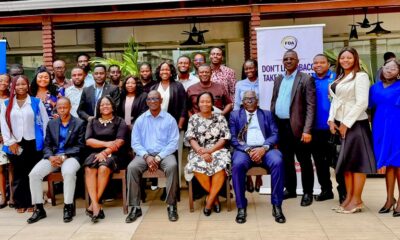
Mr. Opoku-Agyemang made the disclosure while speaking about a proposal submitted by the NuGhana International Expat Center to the government of President John Dramani Mahama for the establishment of a specialised multi-agency Diaspora Protection and Human Capital Task Force.
According to their statement, the proposal has been submitted to the President and shared with key institutions, including the Bureau of National Intelligence (BNI), the Ministry of the Interior, the Office of National Security, the Ghana Immigration Service (GIS), the Ministry of Foreign Affairs, the Office of Diaspora Affairs, and the Black Star Experience Secretariat.
Mr. Opoku-Agyemang explained that the proposed task force would help protect diasporans and foreign nationals from organised fraud and exploitation while also helping the country benefit from their expertise, investments, and professional skills.
He noted that many diasporans relocating to Ghana often face challenges such as land disputes, business fraud, and difficulties finding trusted people to guide them through local systems.
President of the African Chamber of Content Producers (ACCP), Nana Dwomoh-Doyen Benjamin, who endorsed the proposal, described the initiative as timely and necessary.
According to him, the leadership of NuGhana understands the realities and expectations of diasporans because of their experience living in Western countries.
He appealed to the government to consider the proposal seriously, stating that it could help protect lives and investments while encouraging more diasporans to contribute to national development.
The statement identified key challenges facing diasporans, including organised land and business scams, the absence of a unified system to engage skilled professionals entering the country, and fears over investment security.
Some diasporans who spoke on condition of anonymity also welcomed the initiative and said a state-backed protection system would give them more confidence to relocate and invest in Ghana.
NuGhana said it has already built a human capital and risk database over the past four years to catalogue diasporans and foreign nationals according to their professions, skills, investment interests, and reported incidents.
The organisation added that it is ready to engage the President’s designated team to demonstrate its database and begin a pilot phase of the proposed framework.
By: Jacob Aggrey









Dr Mahamudu Bawumia has become the new leader of the New Patriotic Party (NPP) after delegates approved a constitutional amendment making the party’s flagbearer its leader.
The amendment was approved on Saturday, October 3, 2026, at the NPP’s National Delegates Conference held at the Baba Yara Sports Stadium in Kumasi.
The decision makes Dr Bawumia the leader of the NPP as the party prepares for the 2028 general elections, having earlier been elected as its presidential candidate.
The change was contained in one of 14 constitutional amendments presented to delegates by the party’s Constitution Amendment Committee.
The amendments were approved through a voice vote, with delegates responding in favour of the motions.
The latest amendment reverses a provision approved at the party’s January 31, 2026 conference, which made the National Chairman the leader of the party at all material times.
The approved amendment provides for the flagbearer to assume the leadership of the party when the NPP wins an election and the flagbearer becomes President.
The amendment also reinstates the President as a member of the National Executive Committee when the party is in government.
The Chairman of the NPP Constitution Amendment Committee, Frank Davies, explained that the amendments were necessary to address gaps identified in the party’s previous constitutional review.
The constitutional amendments formed the first part of the conference before delegates proceeded to elect new national executives.
A total of 7,163 delegates from all 16 regions participated in the conference, with voting conducted at 31 polling stations for nine national executive positions.
The Electoral Commission supervised the elections and verified delegates.
Other approved amendments include changes to the election of Vice Chairpersons, allowing candidates to contest specific Vice Chairperson positions instead of being ranked according to the number of votes they receive.
Delegates approved the appointment of three additional Vice Chairpersons, the creation of Deputy Communications Officer positions and the elevation of the Information Technology Officer to an executive position.
Addressing delegates after the constitutional amendments and as the party prepared for the national executive elections, Dr Bawumia called for unity and peaceful voting.
He urged the 47 aspirants contesting nine national positions to accept the outcome of the elections and continue working together for the party.
“Let us vote in peace, accept the results in good faith and leave Kumasi as one family,” he told the delegates.
Dr Bawumia congratulated all the aspirants for putting themselves forward to serve the party and urged those who won to reach out to their fellow contestants.
He assured those who lost that the party would still need their experience and contribution.
The NPP flagbearer further reflected on the party’s reorganisation since the December 2024 general elections, saying the party had listened to its grassroots members and learnt lessons about its organisation, communication and engagement with supporters.
He noted that the party had elected its structures from the polling station to the regional level and had also begun preparations towards its next programme for government.
Dr Bawumia said his early election as the party’s presidential candidate had allowed him and the party to begin work on policy development ahead of the 2028 campaign.
He said various policy committees had been established and engagements with different groups and stakeholders were ongoing.
Turning to national issues, Dr Bawumia used his address to criticise the government over what he described as failures to fulfil several campaign promises.
He specifically questioned the progress of the NDC government’s proposed 24-hour economy, the women’s development bank, electricity tariffs, the cost of transportation and other economic challenges facing households and businesses.
On the economy, he defended the Domestic Gold Purchase Programme, arguing that the programme introduced under the previous NPP administration had contributed to stability in the Ghanaian currency.
Dr Bawumia further criticised the government over the stalled implementation of projects including Agenda 111 and raised concerns about the management of the Free Senior High School programme.
He addressed recent drug seizures involving consignments traced to Ghana, calling for a bipartisan parliamentary committee to investigate how such shipments were able to leave the country.
On the fight against illegal mining, popularly known as galamsey, he accused the government of failing to deliver on its promises to tackle the problem and restore polluted water bodies.
He criticised the government over promises relating to cocoa prices, teacher and nurse postings, the teacher licensure examination and payments to customers of collapsed financial institutions.
These claims formed part of Dr Bawumia’s political assessment of the NDC government’s performance and were presented by him as reasons why the NPP should return to government.
He accused the government of what he described as the “weaponization of state power” and alleged that different standards of justice were being applied to government supporters and opposition figures.
Dr Bawumia said the NPP would, if returned to power, pursue what he described as one standard of justice for all citizens regardless of political affiliation.
He ended his address by urging the incoming national executives to build a strong party organisation, focus on holding the government to account and communicate the party’s policies to Ghanaians.
The NPP’s new leadership structure and national executive team will now oversee the party’s reorganisation and preparations towards the 2028 general elections.
By: Jacob Aggrey

Newly elected National Organiser of the New Patriotic Party (NPP), Daniel Nii Kwartei Titus Glover, has pledged to work to ensure peace, unity and respect within the party as it prepares for the 2028 general elections.
Mr Glover said he would work to strengthen the party and help actualise the vision of its flagbearer, Dr Mahamudu Bawumia, becoming President of Ghana in 2028.
He made the remarks in his victory speech at the Baba Yara Sports Stadium in Kumasi after winning the NPP National Organiser position at the party’s National Delegates Conference on Saturday, October 3, 2026.
Mr Glover polled 2,964 votes to win the election, defeating his closest contender, Ali Maiga Halidu, who obtained 2,231 votes.
Emmanuel Korsi Bodja polled 145 votes in the contest.
Mr Glover thanked delegates for electing him and promised to work hard to justify the confidence they had placed in him.
“I will work very hard. What I’ll bring is peace, unity, respect, and that we use for governance,” he said.
He explained that peace, unity and respect were necessary for the party to effectively organise and prepare for the elections.
“If you are doing governance and you don’t bring peace and unity and respect, the work will be hard,” he added.
Mr Glover acknowledged the task ahead of the newly elected national executives, describing it as a major responsibility that would require commitment from members.
“The job is big. There’s a lot of work ahead of us. We need love. We need peace. We need unity,” he said.
He urged members of the NPP to remain united and work together beyond the internal elections.
According to him, his focus would be to contribute to the party’s efforts to win the 2028 general elections, with Dr Bawumia’s presidential bid forming a central part of that objective.
“Dr Bawumia has to become the President of this country. That’s the vision for NPP, that we have to work hard for Dr Bawumia to become the President of the Republic,” Mr Glover stated.
He said he was determined to use his new position to contribute to the development of the NPP and Ghana.
Mr Glover’s election forms part of the new national executive team elected by delegates at the conference to lead the affairs of the party.
The newly elected executives are expected to oversee the party’s reorganisation and strengthen its structures as the NPP prepares for the 2028 general elections.
By: Jacob Aggrey