News
Malaria pill trialed to prevent COVID-19

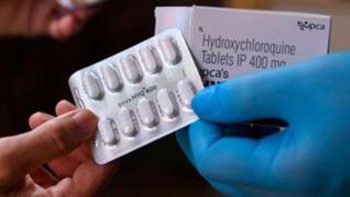
A trial to see whether two anti-malarial drugs could prevent COVID-19 has begun in Brighton and Oxford.
Chloroquine, hydroxychloroquine or a placebo will be given to more than 40,000 healthcare workers from Europe, Africa, Asia and South America.
All the participants are staff who are in contact with COVID-19 patients.
US President Donald Trump was criticised this week after he said he had been taking hydroxychloroquine, despite warnings it might be unsafe.
The first UK participants in the global trial were enrolled yesterday at the Brighton and Sussex University Hospitals and the John Radcliffe Hospital in Oxford.
They will be given either hydroxychloroquine or a placebo for three months. At sites in Asia, participants will be given chloroquine or a placebo.
These are the first of a planned 25 UK sites, with results expected by the end of the year.
The trial is open to anyone delivering direct care to coronavirus patients in the UK, as long as they have not been diagnosed with COVID-19.
It will test whether the drugs can prevent healthcare workers exposed to the virus from contracting it.
One of the study’s leaders, Prof Nicholas White at the University of Oxford said: “We really do not know if chloroquine or hydroxychloroquine are beneficial or harmful against COVID-19.”
But, he said, a randomised controlled trial such as this one, where neither the participant nor the researchers know who has been given the drug or a placebo, was the best way to find out.
“A widely available, safe and effective vaccine may be a long way off,” said Prof Martin Llewelyn from Brighton and Sussex Medical School, who is also leading the study.
“If drugs as well-tolerated as chloroquine and hydroxychloroquine could reduce the chances of catching COVID-19, this would be incredibly valuable.”
The drugs can reduce fever and inflammation and are used as both a prevention and a treatment for malaria.
Hydroxychloroquine regulates the body’s immune response and is also used in the treatment of rheumatoid arthritis and Lupus – an inflammatory disease caused by an overactive immune system.
Lupus charities in the UK and US have raised concerns that demand for the drug associated with coronavirus could threaten the supply for patients who already rely on it. -BBC


Management and staff of Owass FM have announced the passing of media personality, comedian and politician Seth Kwame Dzokoto following a medical emergency during a live morning show discussion at the station earlier today.
According to the station, Dzokoto was participating in a panel discussion on its morning show “Oman Nkoso” when he suddenly took ill and collapsed.
A statement from the station said its team immediately rushed him to the hospital for medical attention, but he was pronounced dead by the attending medical doctor upon arrival.
“We are deeply saddened by this unfortunate incident, which occurred in the course of our regular programming. Our thoughts and prayers are with his family, loved ones, colleagues, and all those who have been affected by his passing,” the statement said.
Management acknowledged that information about the incident is already circulating in the public domain, but appealed to the public and colleague media houses to respect the privacy of the bereaved family and refrain from circulating unverified information or speculation regarding the circumstances of his death.
Owass FM extended its heartfelt condolences to the family of Seth Kwame Dzokoto.
By Edem Mensah-Tsotorme

The State through the Attorney General (AG) has filed an appeal at the Supreme Court challenging the suspension of the trial in the case of The Republic v Hanan Aludiba and Faiza Seidu.
On Monday, the Court of Appeal suspended the trial in the case. But the prosecution says it has filed an appeal against the suspension order.
According to the update, the law does not allow a criminal trial to be suspended simply because an accused person has complained about some of the charges on the charge sheet, particularly when those complaints were dismissed as meritless.
It argues that if the Court of Appeal’s decision is allowed to stand, no prosecution will ever be possible, since all it would take for a trial to be suspended is an accused person complaining about anything on the charge sheet.
By Edem Mensah-Tsotorme