Sports
An appeal worth considering

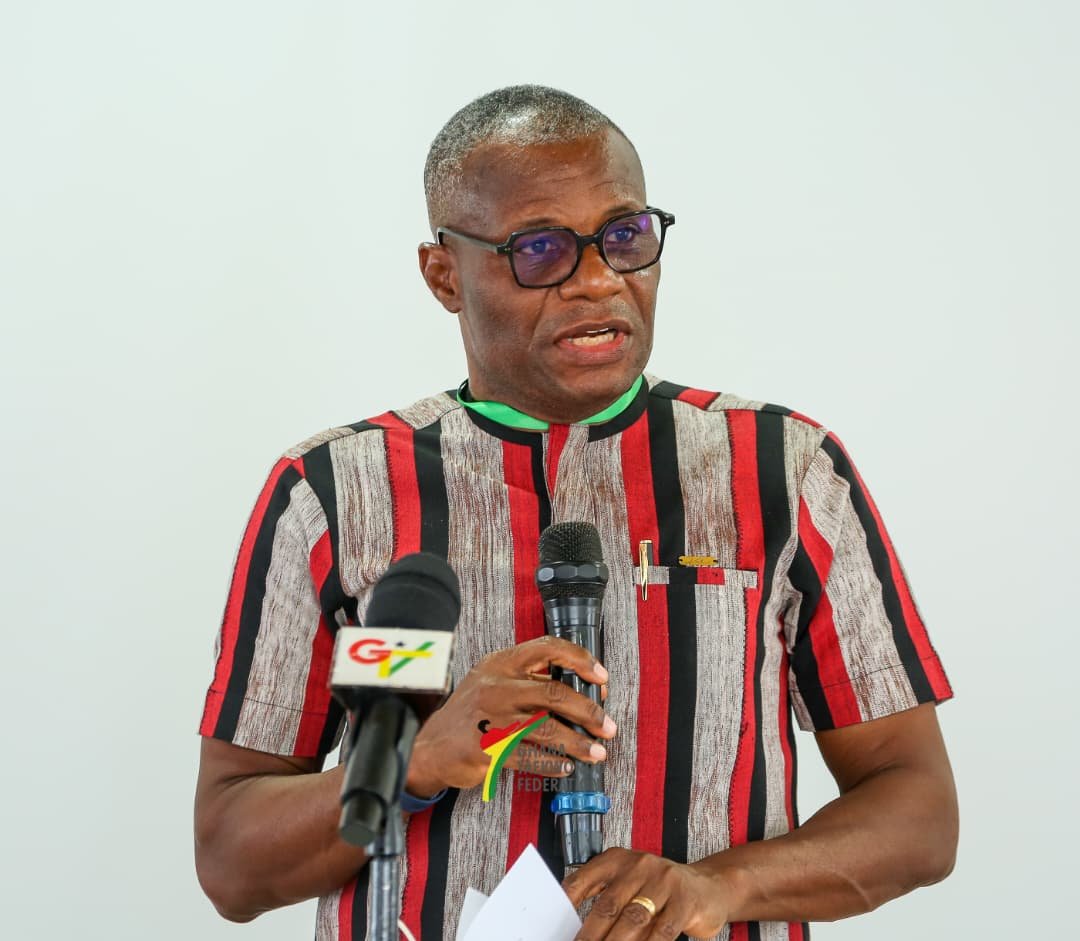
In Ghana’s political landscape, any narrative of a candidate desirous of serving a third term is abhorred by many.
This is reflected at the various levels of politicking; be it mainstream politics, old students unions, social groups, church groupings and many others.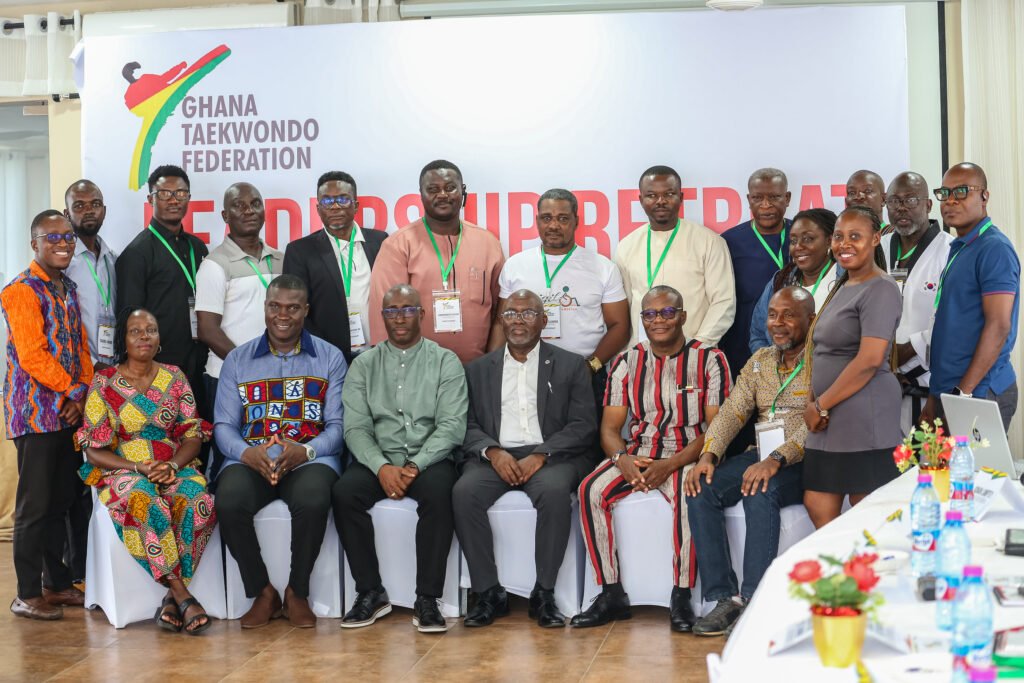
The sports industry is also not spared either.
Since the overthrow of the era of appointments, leaders of federations-who are referred to as presidents- have had to go through rigorous processes leading to an Elective Congress where delegates, made up of key stakeholders, vote for their choice of person to lead.
In the over 50 sports federations under the National Sports Authority (NSA), this process has become common and has no doubt ensured some level of stability in their operations.
That has become acceptable among the delegates and the international federations they are affiliated to. Anyone who grabs power via a different route would surely lose that cooperation and goodwill the federation enjoys from the parent bodies.
And, across their legal documents that guides their operations, the period or term of office are clearly spelt out.
Candidates or presidents are expected to serve for maximum two terms of four years each. It is very consistent with Ghana’s constitution which requires a sitting president to serve for the same period.
There is no ambiguity about that.
But the Ghana Taekwondo Federation (GTF) is set to experience something different later this year as it braces for an Elective Congress.
Just as its current president, Mr Frederick Lartey Otu, prepares to exit after serving two terms, he has been forced into a tight corner where he must consider an appeal to serve another term as president of the GTF.
Considering his passion and dedication for the sport, a request by majority of stakeholders to go for an additional term should be one the astute administrator must grab with both hands, at least to cement his legacy and take the sport to the level he dreamt of.
At a Leadership Retreat of the GTF a few weeks ago, a National Board Member and Upper West Regional Chairman of the GTF, Mr Kankpenuba Peter Nuntaa Wisdom, stirred the hornet’s nest, appealing to other Regional Chairmen and other officers to give the incumbent another term.
“I, as a National Board Member and Regional Chairman of the Ghana Taekwondo Federation, together with concerned stakeholders and supporters of Taekwondo in Ghana, humbly submit this petition to respectfully call on our able and dedicated President, Frederick Lartey Otu, to reconsider his decision and stand for re-election as President of the Federation,” he stated.
And his reason was that, “Over the years, Mr Otu has demonstrated visionary leadership, resilience, and personal sacrifice in advancing Taekwondo in Ghana. His contributions have positioned Ghana as a strong and respected force in both African and global Taekwondo.”
“It is important to acknowledge that his first termin office was heavily burdened by legal disputes and other structural challenges, which did not allow for smooth operations and full realisation of his vision. Despite these setbacks, he remained steadfast and committed to the growth of the Federation.
Now, in his second term, the Federation is beginning to witness the true fruits of his leadership, with stability, growth, and international recognition steadily improving.”
And as he rightly put it, “there is no better or more experienced person, at this critical stage, to consolidate these gains. In my considered view, there is currently no perfect replacement capable of sustaining the momentum he has built.”
On the legal ramification of the gesture, Mr Kankpenuba explained that, “It is also important to respectfully state that the Constitution of the Ghana Taekwondo Federation permits a President to contest for a further term in office, in accordance with its provisions on tenure and re-election.”
The call may be well placed considering the GTF’s gains under the current administration.
To strengthen capacity building and technical development, he caused the introduction of the National Coaches Licence Course to professionalise coaching in Ghana, National Referees Licence Course to create a structured pathway for referees and facilitated participation of athletes and coaches in international training programmes and secured an IOC scholarship for Miss Henrietta Armah towards the LA 2028 Olympic Games.
Pioneering Para Taekwondo in Ghana, Mr Otu’s administration successfully introduced Para Taekwondo in Ghana, led Ghana to win its first medal at the World Para Taekwondo Championships in Moscow and produced Ghana’s first Paralympian for the 2024 Paralympic Games in France.
He also gave Ghana a competitive edge on the international stage by winning Ghana’s first Gold Medal at the World Korean Ambassador’s Championships in Korea and introduced Poomsae and Mixed Team Kyorugi at the 13th African Games in Accra.
And to ensure good governance and inclusivity, his term witnessed the amendment of the GTF Constitution to include Regional Associations in decision-making and became the first President to visit all Member Regional Associations.
Additionally, Mr Otu holds several prestigious international positions, including: WT 1st Class International Referee, WT Technical Delegate, Council Member (African Taekwondo Union & Commonwealth Taekwondo Union), Chairman – Development Committee (African Taekwondo Union), Former Member – Development Committee (World Taekwondo), 2nd Vice President of Ghana Olympic Committee, honoured at the World Taekwondo 40th Anniversary in Mexico and awarded SWAG Federation President of the Year (2015).
With this impressive background, Mr Kankpenuba has so far been spared the blushes that often characterise such appeals.
The further endorsement by officials that attended the retreat the following day points to an agreement in unison.
Members that signed the petition wereMr Kankpenuba Peter Nuntaa Wisdom, Michael Ayrine Ayinzoya, Upper East Region; David Addotey, Greater Accra; Benon Sabastian Atatina, Northern Region; Simon Koku Gluikpor-Ashanti Region; Reuben Tamakloe-Ashanti Region; Tahiru Umar, Upper West Region; and Gladstone Nditsi Kwawukume, Eastern Region.
The rest were Prosper Kwame Medadues-Badohu-Volta Regional; Bernard Ampim Darko-Central Region; Percy K. Yiadom, Bono Region; Stephen Amegashie-Technical Director; Davis Attuquaye Clottey, Volta Region; Public Relations Officer, Rebecca S. Bentil, Western Region and Adnan Lamptey, Secretary General.
What is left now is Mr Otu’s reaction. Knowing how the system work, Mr Otu would surely do a lot of consultation with the rank and file of stakeholders as well as some of the big wigs of Ghana sports including the Ghana Olympic Committee (GOC) and National Sports Authority (NSA) whose respective heads, Richard Akpokavie and Yaw Ampofo Ankrah, were all copied.
For close followers of the sport, the feat under Mr Otu cannot be ignored and the advice to him is that the appeal from delegates is one worth considering.
By Andrew Nortey

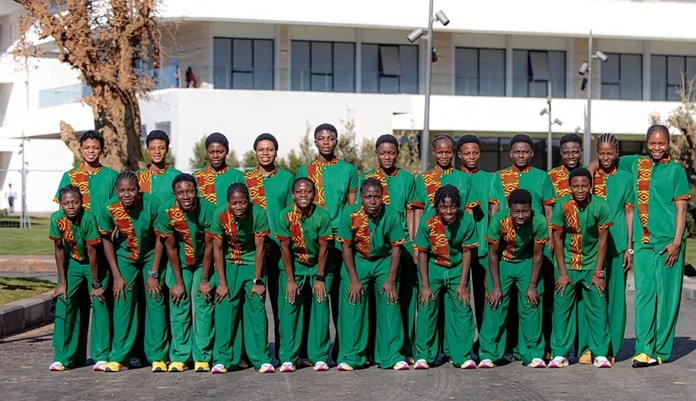
The national U-17 female team, the Black Maidens, have arrived in Rabat from their pre-camp base in Casablanca to begin their campaign at the 2026 FIFA U-17 Women’s World Cup.
The team will open their Group C fixtures against Norway on Sunday, October 18, at the Mohammed VI Football Complex. They will then face Brazil on Thursday, October 22, before wrapping up the group stage against Canada on Saturday, October 24.
During their two-week training camp in Casablanca, the technical team tested the squad’s readiness with two international friendlies against China and Kenya.
The Black Maidens are returning to the global showpiece after missing the last edition, aiming to build on a proud record that includes a bronze medal in 2012 and three quarter-final appearances.
The team is expected to hold its first training session in Rabat on Wednesday as it puts finishing touches to preparations for the opener against Norway.
By Edem Mensah-Tsotorme
IN modern football, the final whistle doesn’t signal the end of the show; it signals the intermission.
The Top five European Leagues (Premier League, La Liga, Bundesliga, Serie A, and Ligue 1) have mastered a brutal truth of the digital age: you don’t just sell the match; you sell the marathon.
By weaponising transfer window tension, season reviews, and microscopic highlight reels, they’ve turned 90 minutes of sport into a 24/7/365 content vortex.
Meanwhile, back home, the Ghana Premier League (GPL) is haemorrhaging relevance not because the talent isn’t there but because the storytelling is dead.
The Football Association’s apathy is only rivalled by its hypocrisy.
The European Blueprint: Selling the ‘Appetite’
Why do fans tune into a random mid-table La Liga clash on a Friday night? Because they’ve been primed. Across the summer, broadcasters and clubs drip-feed ‘transfer sagas’ like high-stakes soap operas.
Will the star leave? Who is the mystery medical? This tension creates a parasocial investment that transcends the pitch.
Paired with this are season-review documentaries and hyper-curated game highlights tailored for TikTok, Instagram, and YouTube. These aren’t just goal clips; they are tactical breakdowns, sideline theatrics, and VAR controversies packaged into digestible and emotional bites.
This strategy has inflated broadcasting rights to astronomical sums (the Premier League’s recent domestic deal hit £6.7 billion).
They know that if you feed the audience year-round, they will binge-watch when it matters.
The GPL Vacuum: No Sponsor, No Story
Now, overlay this blueprint onto the Ghana Premier League. It is a stark, barren contrast.
The league is poorly run, lacking a headline sponsor to give it financial muscle or marketing prestige. Without that corporate backing, the media machine grinds to a halt.
The transfer market, which should be the peak of offseason intrigue, is a ghost town. We hear about signings, but the transfer fee is universally undisclosed.” We only get the contract length.
This kills the narrative. In Europe, a €100 million move generates weeks of debate; in Ghana, a move generates a one-line social media post, devoid of gravity. Fans cannot gauge ambition, nor can they measure a club’s financial muscle.
Most damningly, there are no reviews from the broadcasting rights holders. No glossy season-compilation DVDs. No weekly magazine shows dissecting past campaigns to build hype for the next.
The Broadcasting Right Holders (BRHs) treat the GPL as an obligation to air live, not as an IP to monetize through content. The league goes dormant the moment the trophy is lifted.
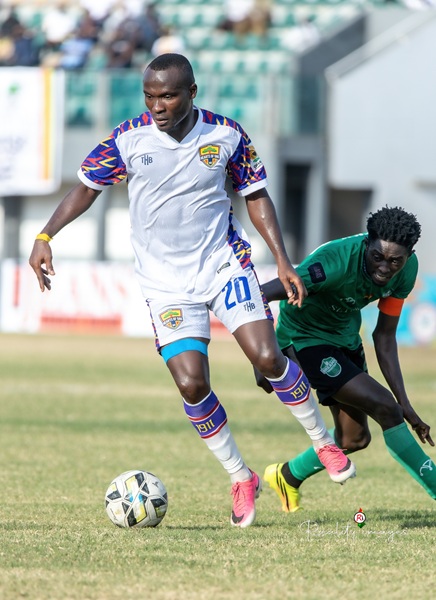
And the FA? They seem unconcerned. There is no strategic blue • A scene from the Ghana Premier League print to pump these ‘stuffs’ into the digital ecosystem. They treat the league’s media output like an afterthought, ignoring that a lack of online noise equals a lack of bums on seats.
The Black Stars Paradox: The Hypocrisy of Production
Here is the crushing irony that exposes the FA’s priorities. When the Black Stars assemble for a World Cup qualifier or an AFCON match, the narrative flips overnight.
Suddenly, the budget for proper camera operators and videographers appears from thin air. We get cinematic drone shots, multi-angle slow-motion replays, tunnel cams, and emotional post-match interviews.
Every moment, every tackle, every save, every passionate fan in the stands is captured in vivid, broadcast-ready quality. The national team gets the full ‘European treatment.’
This reveals a devastating double standard. The FA treats the Black Stars as the sole marketable asset, forgetting that the GPL is the engine room that produces these stars.
By diverting all production value to the national team while starving the domestic league of visual prestige, they are cannibalizing their own foundation.
The Verdict
You cannot build a football culture on national team fixtures alone.
Europe thrives because they understand that content is the currency of fandom.
Until the Ghana FA secures a headline sponsor, enforces transparent transfer disclosures (to fuel debate), and mandates that broadcasting partners produce engaging season reviews and highlight packages, the GPL will remain a hidden gem rather than a sparkling crown.
The players are there. The passion is there. But if the FA continues to save its best camera angles for the Black Stars while leaving the Premier League in the dark, they aren’t just failing the clubs; they are starving the very appetite they desperately need to feed
By Leslie Agyemang