Hot!
Christian Atsu, the ‘unseen’ angel


• Atsu (centre) was a regular visitor to the charity’s home at Senya
Beraku in Ghana
The sages say that it is only when the toad dies, that its real length is seen.
This expression conveys much more than the sad demise of an amphibian. It is about the ‘unseen’ life of person when he was alive – and the communications surrounding him in death.
Palpably, this relates to Ghana’s fallen hero – Christian Atsu Twasam – the nation’s attacking midfielder, who lost his life in the horrendous Turkey earthquake that has claimed thousands of lives.
Atsu, who plies his trade in Turkey for Hatayspor, a Turkish Super Lig club based in the south-eastern city, was found trapped under rubble exactly a week ago, 12 clear days after the ill-fated incident.
Since the confirmation of his tragic demise, hundreds of tributes have poured in eulogising not only his delicately silky skills on the field of play, but his real big-hearted, philanthropic nature.
Albeit he was not that kind of player who was signed for plenty of millions of dollars – or pocketed that staggering weekly allowances, the God-fearing Atsu freely gave to the needy and was always ready to do more. He could simply not stop giving!
One thing that remained unceasing among all the other life-altering events was his faith. Atsu was a devout Christian who shared Bible verses on social media.
Apart from football, he was also an ambassador for ‘Arms Around the Child’ since 2016. It is a charity organisation based in Ghana, South Africa and India that supports disadvantaged children. He also used to pay a lot of bail money to free Ghanaians who had been jailed for stealing food.
The Director of Senya Beraku, Seth Asiedu, had written a message on behalf of all the children for Atsu and his family.
“We called him our father, our friend, brother, uncle, sponsor and hero. You have left a great footprint through your generous act that no one can erase.”
Without any scintilla of doubt, Atsu was an archetypal human being who acted in both word and deed. He was a man who believed in building a better world and helping those less fortunate. The happiness he brought to so many will leave a painful void, but he would never be forgotten.
On Monday night, the mortal remains of the precociously talented midfielder arrived at the Accra International Airport amidst inconsolable tears. Emotive scenes of wailing, tears, pain, agony and distress encapsulated the arrival of the player’s motionless body.
It was sad to see football fans who made their way to the airport to welcome their hero home, weeping openly as they saw the motor hearse that conveyed the player’s motionless body away – emotionally and frantically waving to bid him adieu.
The relatives of Atsu, siblings and close friends were also inconsolable on seeing his casket.
An ‘unseen’ angel had lived amongst us, and left us in a harrowing manner.
On Sunday, February 5, this month, a few hours before the earthquake struck, Atsu – nicknamed ‘African Messi’ for his flair, dexterity and skill, cracked home a majestic game-winning goal against Kasimpaşa.
That chocolate-box free-kick lifted his Turkish club from the lower rungs of the league log. Perhaps, it was the way nature had planned for the former Chelsea, FC Porto, Newcastle United, Everton and Bournemouth player, to bid the game farewell.
Those who may not have seen his philanthropic self, would not forget about that awe-inspiring goal he scored against Guinea in the 2015 Africa Cup of Nations in Equatorial Guinea. That he was voted Best Player of that tournament, speaks volume to the former Black Stars player’s own legendary – having made 65 appearances for Ghana, banging home 10 goals.
As the President Nana Addo Dankwa Akufo-Addo asserted: “Ghana football has lost one of its finest personnel and ambassadors; one that will be difficult to replace. He’ll be sorely missed.”
True, we shall miss Atsu. Rest in peace, ‘unseen’ angel.
By John Vigah


The professor who spends his days exploring the intricacies of African languages found himself at the centre of a different kind of lesson on Friday, October 2, 2026. 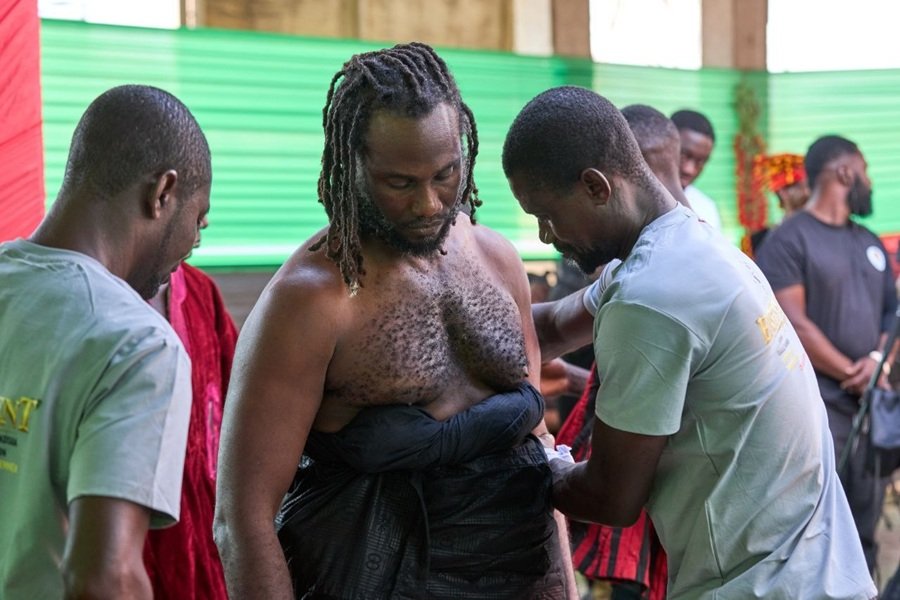
This time, there were no lecture notes, academic arguments or university classrooms. Instead, there was the weight of tradition, the rhythm of a community celebration and the solemnity of an oath at a royal palace.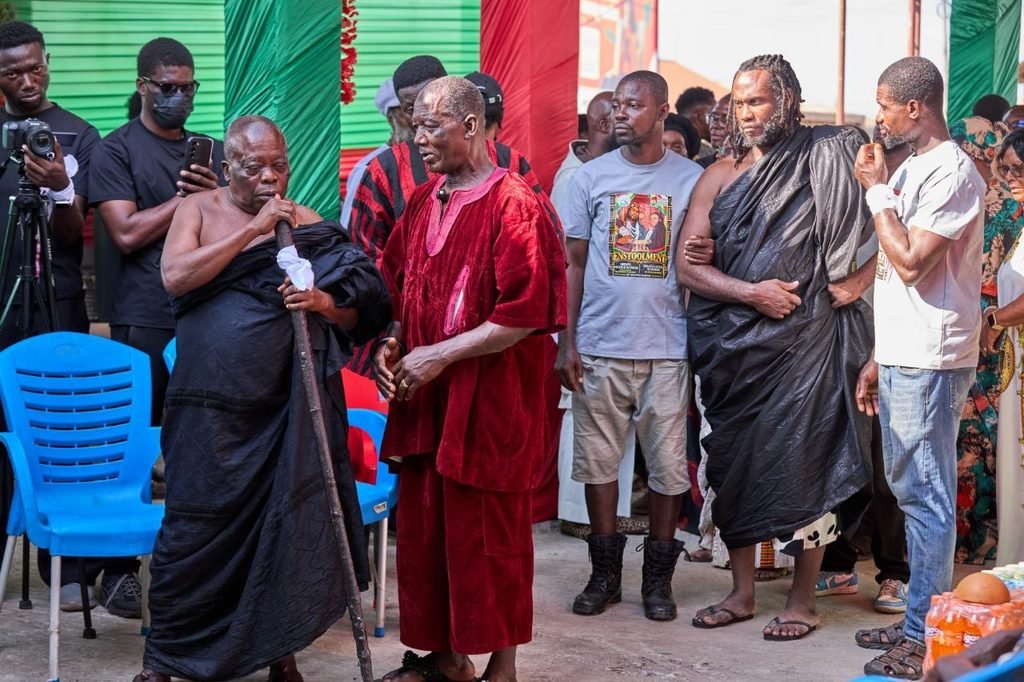
Professor Ọbádélé Kambon, a full Professor of African Linguistics at the University of Ghana, was enstooled as Apagyahene and Sunsum Ɔsahene of Akuapem Mampong in the Eastern Region in a ceremony that brought academia and traditional authority together.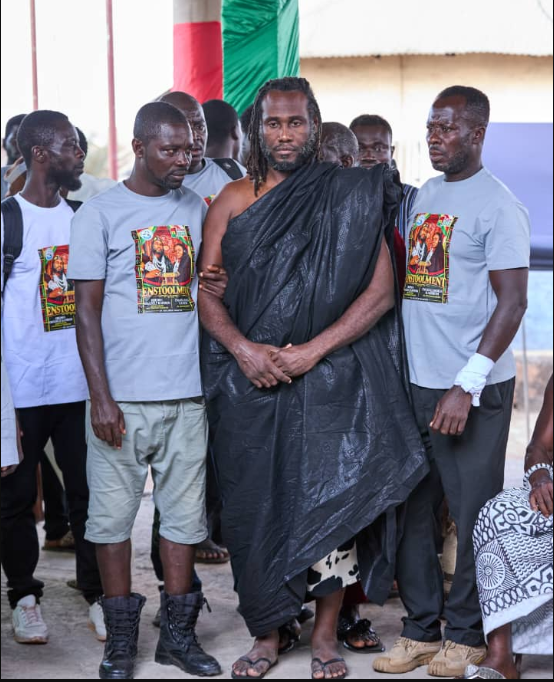
For the professor, the occasion was more than a new title. It was a moment that connected his academic interests in African languages and indigenous knowledge with the living traditions of an Akan community.
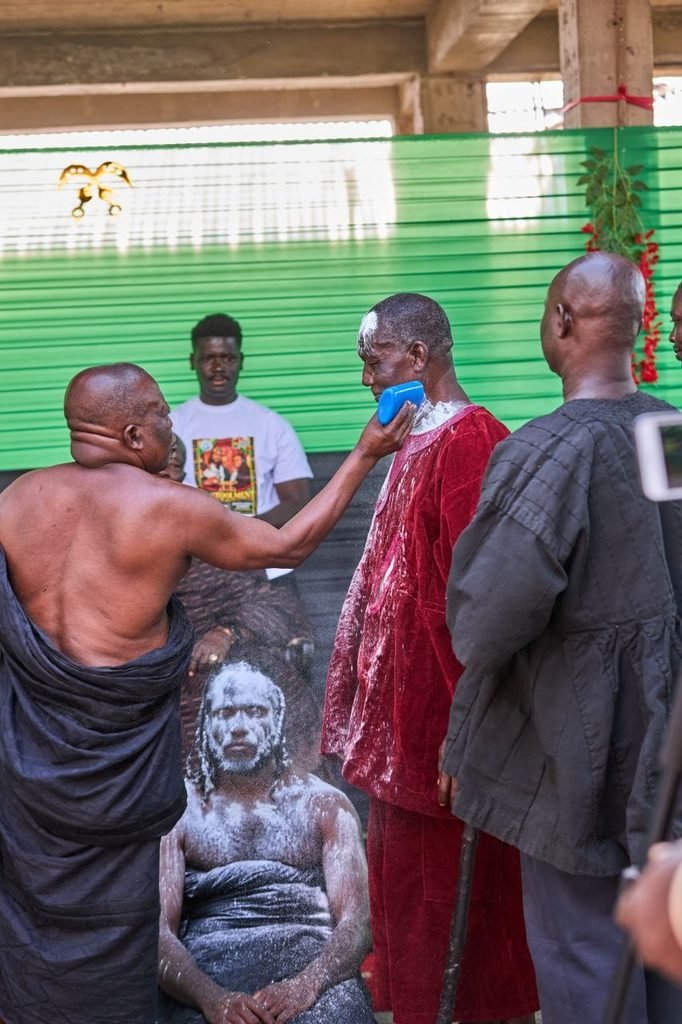
The day’s events unfolded through a series of customary observances. Kambon was first taken to the compounds of the Ɔkyeamehene and Gyasehene, where the preparations for his installation continued.
Then came the application of hyire, the white kaolin powder associated with traditional rites.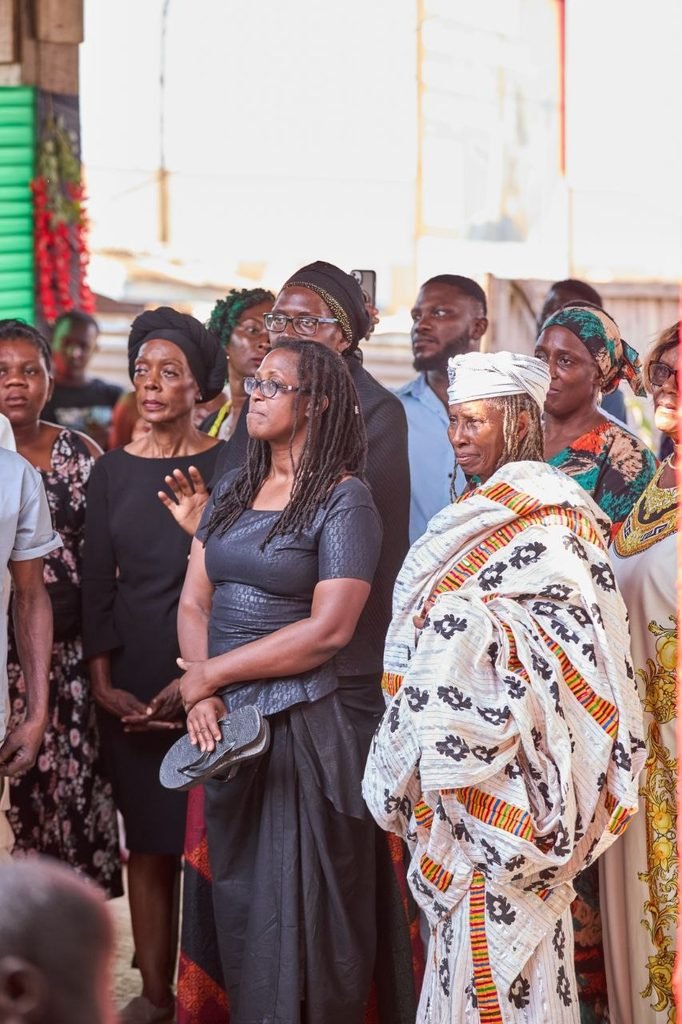
With the customary proceedings underway, the new chief was lifted onto the shoulders of celebrants and carried along the main thoroughfare of Akuapem Mampong.
The procession transformed the streets into a public stage for a ceremony rooted in the community’s traditional institutions.
There was something striking about the image, a university professor, accustomed to the measured language of academic discourse, being carried through the town in a display of traditional recognition.
Yet the celebration was not complete with the procession.
A ram was sacrificed at the Mamponghene’s compound before Kambon was taken to the palace, to swear the oath associated with his new offices.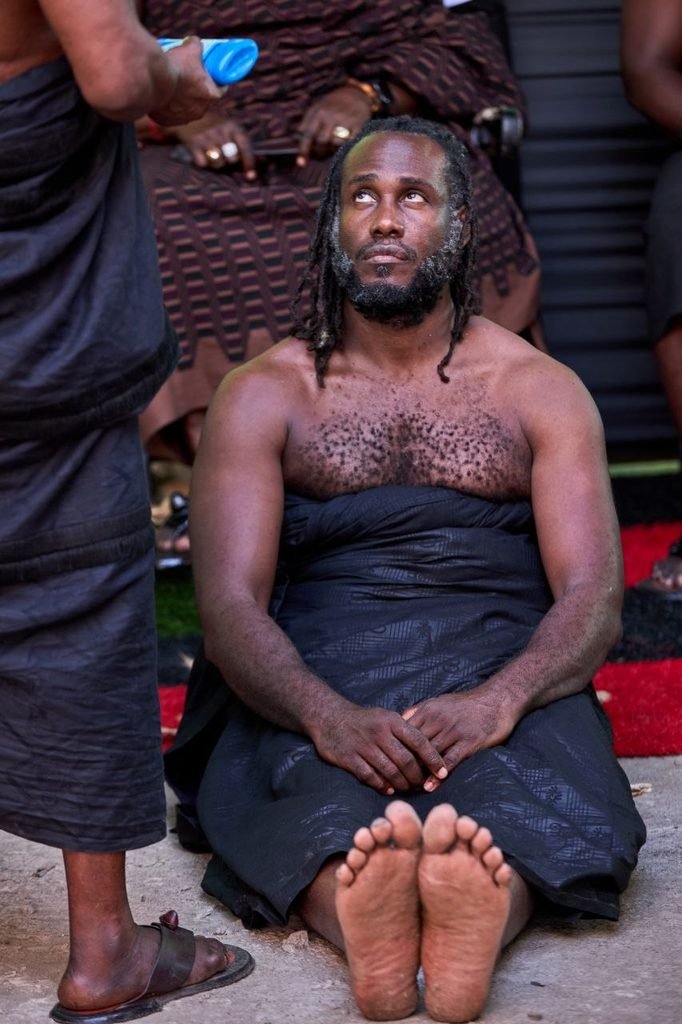

The ceremony brought him formally into his roles as Apagyahene and Sunsum Ɔsahene.
Beyond the colourful proceedings, the titles themselves carry layers of historical meaning.
Kambon in his research explores the historical connections between Apagya and Akan political and military organisation.
Accounts cited in his work linked Apagya to an asafo, or military company, while historical writing traces an Apagya stool in Asante to the reign of Opoku Ware I in the eighteenth century.
These historical associations offer a glimpse into the institutions that have shaped Akan society over generations, although they do not automatically define the precise responsibilities of the office in Akuapem Mampong.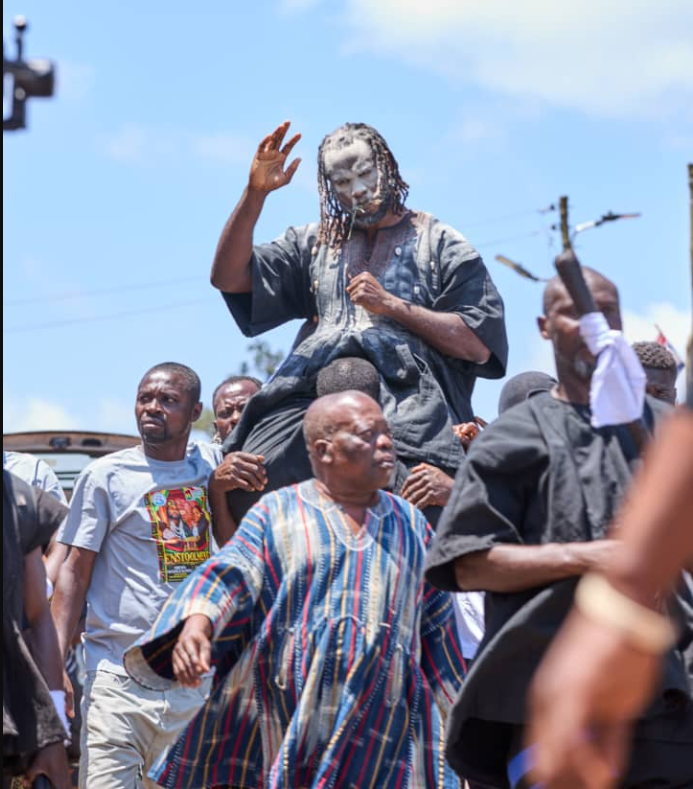
Kambon’s own professional life reflects a similar interest in preserving and examining African knowledge.
His work encompasses Akan language structure, naming practices across the Black world, proverbs and indigenous intellectual traditions.
Through Abibitumi, the platform he founded, he also promotes language learning, scholarship and cultural engagement.
But tradition was only one part of the story that day.
When the formal ceremony gave way to a reception, the occasion expanded into a celebration of three milestones: Kambon’s enstoolment, his promotion to full professor and his daughter Ama’s admission to the University of Ghana.
The gathering therefore carried a personal significance that went beyond the honours bestowed on one man. 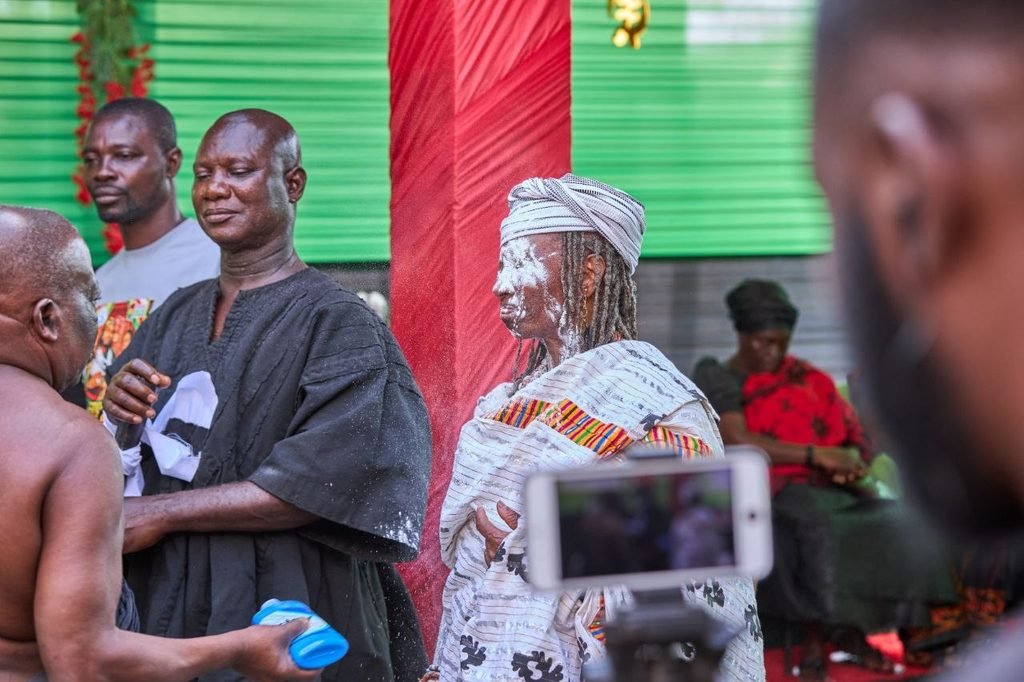
It celebrated professional advancement, the continuation of family aspirations and a connection to cultural heritage.
For a father, seeing a daughter gain admission to the same university where he holds a distinguished academic position offered another reason to celebrate.
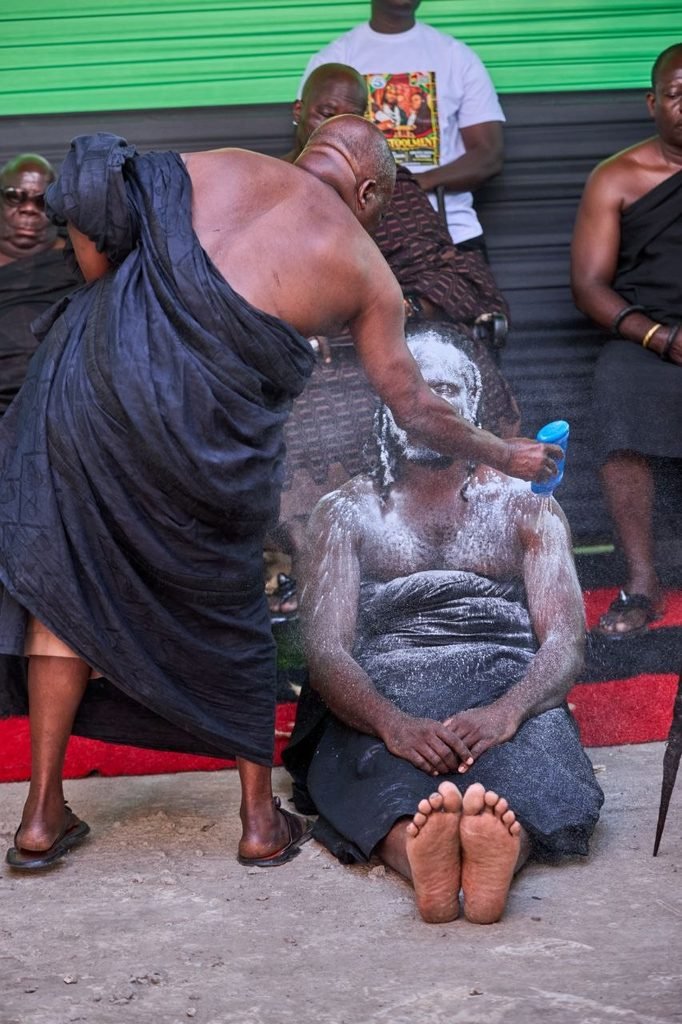
For the professor, the moment placed family achievement alongside his own professional and traditional milestones.
Kambon had already established a place in the traditional life of Akuapem Mampɔn through an earlier installation as Banmuhene Kyidɔmhene, recorded in 2017.
His latest enstoolment adds another chapter to that relationship.
In Akuapem Mampɔn, the day brought together the university, the palace and the family table in one celebration. And for Kambon, the journey from the lecture room to the traditional procession showed how scholarship, cultural responsibility and family achievement could converge in a single memorable occasion.
By Enoch Ntiamoah Siaw
SKIP THE QUEUE, TAP THE NEWS
You can now read the Ghanaian Times and The Spectator newspapers from the comfort of your device via TimesNewsPlus.
Join our WhatsApp Channel: https://whatsapp.com/channel/0029VbBElzjInlqHhl1aTU27

Intercity STC Coaches Limited has interdicted a driver captured in a viral video allegedly hitting a Sprinter bus during an overtaking manoeuvre at Pokuase before driving away from the scene.
In a public notice, the company described the driver’s conduct as unacceptable, stressing that it did not reflect the safety standards and professionalism it upholds.
Management said it had commenced an immediate investigation into the incident and identified the driver, who has been interdicted pending the outcome of the disciplinary process.
The company added that it was awaiting an official report from the Pokuase Police Command to help establish the facts surrounding the incident.
STC reaffirmed its commitment to passenger safety and responsible road use, while thanking members of the public for bringing the incident to its attention.
Management assured the public that appropriate action would be taken following the investigation.
By: Jacob Aggrey