Features
Branding & domestic tourism – UNWTO blueprints for Africa’s tourism recovery & growth

- /home/u249204778/domains/spectator.com.gh/public_html/wp-content/plugins/mvp-social-buttons/mvp-social-buttons.php on line 27
https://spectator.com.gh/wp-content/uploads/2021/04/Cape-Coast-Castle.png&description=Branding & domestic tourism – UNWTO blueprints for Africa’s tourism recovery & growth', 'pinterestShare', 'width=750,height=350'); return false;" title="Pin This Post">
- Share
- Tweet /home/u249204778/domains/spectator.com.gh/public_html/wp-content/plugins/mvp-social-buttons/mvp-social-buttons.php on line 72
https://spectator.com.gh/wp-content/uploads/2021/04/Cape-Coast-Castle.png&description=Branding & domestic tourism – UNWTO blueprints for Africa’s tourism recovery & growth', 'pinterestShare', 'width=750,height=350'); return false;" title="Pin This Post">
The United Nations World Tourism Organisation, (UNWTO), the UN specialist agency with responsibility for the tourism sector has identified and rolled out branding and marketing as recovery strategy roadmap to support Africa to quickly recover from the devastating corona virus (COVID- 19) pandemic.
According to information from Mr. Zurab Pololikashvill, the Secretary-General of the UNWTO, “countries around the world are steadily shifting from responding to the corona virus pandemic to the recovery phase, where tourism would play a key role not solely due to its importance in job creation, supporting livelihoods and driving inclusive development but tourism itself has been hit hard by the unprecedented crisis, with a decrease of 47 per cent (47%) in international tourist numbers, which translated into around (US$ 320,Billion) in lost revenue.”
The UNWTO Boss, however, affirms that Africa has certain advantages as a prime destination for wildlife and or nature tourism, unspoiled landscapes and habitats, over other global tourism regions, for most international tourists, which call for promoting “Brand Africa, as a key priority.
The branding and marketing support, according to UNWTO, is as a result of feedback from consultations with Africa Member countries.
The objective is to identify the best marketing ideas and strategies that will reposition and make prospective tourists, to see a different Africa, more positively, especially regarding Agenda 2030 and how to reposition tourism sector , to contribute effectively in realising the lofty Sustainable Development Goals (SDGs).
Strategy
The practical assistant in marketing is being offered alongside others including helping to train and up-skill tourism workers, so that they can adapt to the new reality.
The UNWTO is, therefore, working closely with Africa Member countries to adopt innovative strategies and entrepreneurship, to overcome unprecedented challenges that require new ideas and voices.
Moreso, UNWTO seeks to work with member countries to realise their domestic and regional potential.
The Madrid based specialist agency urged member countries to evolve strong and responsible domestic tourism industry, to sustain livelihoods and rural communities, especially women and youth, for the gradual return of international tourism.
Appeal
The UNWTO in addition, calls for determined leadership among African countries, reiterating its confident in the ability of the tourism sector to bounce back stronger and its ability to adapt to challenges, learn lessons as well as embrace innovation and new ideas, which will be pivotal, “to restart tourism across Africa and so reestablish tourism as the ultimate driver of growth and opportunity for all,” as proven over the years, according to UNWTO.
…What’s Ghana’s Tourism Brand ID?
Product development and product packaging are essential elements in product branding, promotion and marketing to meet consumer need and satisfaction, to ultimately attain organisational set market targets and goals.
Branding becomes more indispensable, important, critical and essential in a very sensitive, delicate, dynamic and very competitive industry as tourism.
Potential
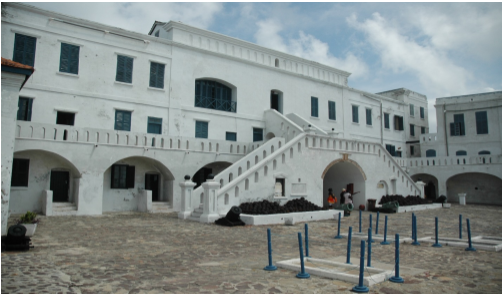
Ghana has great tourism potential as regards the four main natural, man-made, cultural and heritage tourism resource categories.
This potential, however, does not translate into an attractive brand national tourism image, it takes a lot of conscious innovation to create attractive and popular brands, which are packaged and promoted with the best marketing mix and marketing strategies, to become popular brands that gain and attain high consumer patronage and acceptance.
Brand campaign
The “Wear Ghana, See Ghana, Eat Ghana”, existing and ongoing national tourism brand campaign is too opaque, it is not attractive, concise and precise enough to make an appreciable impact , to attend the desired target results, the campaign needs review, amendment and realigning with specified identified professional and precise segmentations, which is an outstanding brand, re-enforced with the right, attractive and appropriate logos, colours, taglines among other scientific elements in formal branding enterprises.
Lack of branding
Tourism currently ranked as the largest biggest and fastest growing industry in vogue in the world, contributing critical and substantial foreign exchange into the socio-economic purse of many countries globally, over the years until the coronavirus (COVID-19) pandemic in late 2019.
Our Homeland Ghana has a thousand and one tourism resources in all four broader resource categories of natural, cultural, heritage and man-made resources, which are evenly spread across the length and breadth of the country but pathetically earns paltry pittance from the global tourism market share, whilst other countries with less tourism resources rake billions of thousands of dollars from the blue gold of the 21st Century.
Ghana has all the ingredients including political stability, safety and security and a standard of fair road network and transport system, to be an endless model destination and tourism traffic hub but tarries behind and misses out on the global tourism index.
Potential
Our Homeland Ghana is well endowed with some unique and outstanding rare tourism resources but has no attractive and compelling tourism brand image and identity.
The country has failed woefully to brand itself touristically and, therefore, has no attractive tourism brand image and identity, on the tourism market index currently.
Way forward
Modern tourism is very competitive which has compelled all destinations to adopt dynamic, innovative, creative and robust strategies to create attractive brand images , to reposition themselves to attract the ever increasing dynamic sophisticative money bag tourist patrons and consumers, for a chunk of the rare blue tourism revenue.
There is, therefore, the need for the country to take pragmatic initiatives to commission and undertake in-depth researches to identify its industry competitive edge/ strength and take steps to create an outstanding national tourism image identify, properly segmented for both domestic and foreign tourism patronage and consumption.
Brand identity
The need arises to comprehensively brand the Homeland touristically with creative and innovative strategies, using very sound communication, marketing, branding and business promotional strategies and principles.
Brands
The national tourism branding exercise should create multiple competitive product sub-brands within a synchronised outstanding national brand to attract and satisfy the needs of visitor consumers of diverse tastes, needs and cultural backgrounds, with domestic and foreign consumer needs and targets.
Segmentation
The exercise must be very comprehensive with very clear and conspicuous and identified market segment targets including the broader domestic, specific consumers including the working class, students, faith, academia, research, conservation, youth, retirees markets and or consumers.
There also need to target other identifiable markets such as West Africa, Africa, African Diaspora, and the world at large among others, to create instantiations, irresistible and attractive brands within the National Image Tourism Brand.
Notable and possible attractive tags include Ghana-Land of Living in Diversity, Warm Hospitality, Sun, Beach, Rich Culture & More, Ghana-Land of Gold, Ghana-Footprints of Slavery and Colonisation, Ghana-Land of Endless Tourism Treasure, Warm Hospitality & More outstanding national tourism enclaves, circuits, clusters, zones, districts and regions along other remarkable sub-product units such as gold, slave routes, cocoa .oil, beach, waterfalls, wildlife, agriculture, education, health among others.
Marketing
Branding and marketing promotion are interrelated with common denominators with satisfactory customer and consumer experience to achieve desired market share in modern and an industry as competitive as modern tourism.
Promotion strategy is another critical and essential element in brand’s success narration in every endeavour.
Strategy
Sustained multi-media campaign messages in the form of press statements, press conferences, press soirees, interviews, using electronic (radio/television), banners, sign boards, print (newspapers, flyers, magazines), attendance of exhibitions, fairs/events ( home and abroad), and social media presence medium have , fair general media balanced media-mix presence all overbearing positive effects on brand evolution campaigns.
By Prince Dennis Klintings
The Writer is Brands, Branding, Communication, Marketing & Tourism Analyst


Some things do not change in this country. The rains shall fall in May, and June and even July. That is out of our control. It is an act of God and he decides how often and the intensity. Who are we to question God?
However, there is something man-made that is gradually becoming something that is also not changing and it is worrying. A week ago the President initiated a national clean up campaign to address the issue of sanitation in the country, especially in Accra.
Citizens enthusiastically got involved and engaged in cleaning their environment and other places but afterwards, the issue that is becoming a permanent feature resisting change, reared its ugly head again.
The rubbish and the silt that were dug out of the drains, were heaped on the shoulders of the drains and left there. Any little rain will render the whole effort futile because the rubbish and silt will be washed right back into the drains.
This is what is not changing in the country and the various assemblies must ensure that this issue is dealt with and must become a thing of the past.
There is the need to engage the citizenry across board, in connection with mindset change, as far as sanitation is concerned. At this juncture, I must acknowledge the thoughtful initiative of the current crop of Abenfo (i.e. students both present and past) of SUTESCO of Suhum, with support of the school administration for decorating the area under the overpass on the Accra Kumasi highway, near the school, with fascinating paintings. This is an example worthy of emulation and makes me proud as one of the Abenfo.
An example not worthy of emulation is an eyesore currently existing behind a cemetery along the Atta Mills link as you branch left, off the main Accra-Cape Coast road at Old barrier and head towards the beach through Aplaku, Bortianor, Oshiyie, Korobite through to Tuba and beyond.
The drain along the walls of the cemetery also lying astride the road, is choked with silt and rubbish. This has created a problem near the end of the cemetery wall just before you enter Bortianor.
Water has accumulated at that point, creating potholes and also gradually creating a channel across the road, creating a nightmare for motorists using that route. This route is the main link between parts of Kasoa and the Accra – Cape Coast road and whenever it rains and the Atala stretch of the road is blocked, that is the route most motorists from Kasoa uses.
It is also the route used by tourists going to the beaches along the sea of the towns stretching from Bortianor to Kokrobite and so it does not speak well of us, as a nation at all.
A few days ago, I had to pass through Tema Station, the place where a major clean up exercise was conducted just fews days ago and it was very shocking to see the level of wanton littering that had taken place.
One begins to wonder if this whole exercise initiated by the President was worth it. People just do not care and are not willing to change their attitude towards sanitation.
We cannot continue like this and to win this battle against insanitary conditions in our environment, the NCCE must be resourced to embark on a serious educational drive. The MMDCEs must also be held accountable for sanitation lapses in their administrative areas, by making sanitation part of their KPIs among other innovative policies. This is one of the surest ways to overcome this sanitation challenge confronting us. God bless.
By Laud Kissi-Mensah
THE discussion lasted only ten minutes. Mr Philip Sampson, Eunice’s father, had asked to see him, and he was led to the sitting room for the first time. Mr Sampson indicated that he should sit down.
‘Yes, Kakraba. I know that you have been, er, friends with Eunice for some months now, and naturally, as her father, I thought it would be important to meet you, and to reach an understanding with you on, er, some basic issues. So, I hear you are a graduate in building technology. Now, tell me about what you do’.
‘Okay. I worked with the Electricity Company for two years after National Service. During that time I interacted with some lawyers and land surveyors on our project sites, so I suggested to some of them that we take some dilapidated buildings in some parts of Accra, rehabilitate them and find new owners. Soon after starting that I got a job as Project Manager with a group of development agencies who are executing projects in the Northern Region, so I have been balancing the two positions’.
‘I see. That sounds like a bold step. So is it going well, financially?’
‘Well, sir, I absolutely enjoy what I’m doing now. Financially, I would only say that I am a work in progress. A lot of what I’m doing now involves some risk taking, as it involves trust issues with land and property owners.
I am partnering with prominent lawyers and land surveyors, so I am not taking any serious risks. So currently I am doing okay financially, but it will take me some time before I reach the level where I can say I am comfortable financially.’
‘Okay. Now tell me about your parents’.
‘My father was an Agricultural Extension Officer, so we spent some time at several locations with him. He is now enjoying his retirement. And my mother is a retired nurse. I have three elder sisters, all married’.
‘So you live with your parents?’
‘Yes and no. My dad built his home on one acre at Pokuase, so he gave me one plot, and I have done a three-bedroom house, where I live’.
‘Okay, fine. Thanks for the answers. You see, in addition to my position socially, I spent many years in the diplomatic service, so I’m sure you will understand that I need to ensure that my kids, especially my daughters, maintain suitable relationships. For now I think it is fine that you and Eunice are friends. I’m sure you understand what I mean’.
‘Yes sir. I understand perfectly well.’
‘Great, okay, that would be all.’
Kakraba stood up, bowed and said thank you to Mr Sampson, and walked to the garden where his girlfriend Eunice, her mother Mrs Elaine Sampson and her two elder sisters, Yvonne and Emma, were seated, busily discussing some dresses being offered for sale online.
‘So,’ Mrs Elaine asked him, ‘you and Daddy had a good discussion?’
‘Yes, Ma. We certainly did. I really appreciate Dad for the discussion. It was really good.’
‘Great. Although he has met you here on quite a number of occasions, I think it is good that you have met for a chat.’
‘Yes indeed, Ma, and I really appreciate it. So Eunice, I will be on my way. I will call.’
Eunice led him to his car, and after driving off he exhaled and shook his head. Although he had long concluded that Eunice’s family were so snobbish that a future relationship with her would be problematic, this discussion, or was it interrogation, had virtually cancelled any likelihood.
Mr Sampson just told him, in no uncertain terms, that the Sampson family was so prominent and socially connected that a union between his daughter and him was undesirable.
He had a good relationship with Eunice. They shared some beautiful moments together, and often went out to entertainment joints, often with her three friends Marian, Patricia and Amanda. But Kakraba was often uncomfortable with their preferences.
Eunice regularly spoke about her family’s experiences during her father’s postings in Europe and Asia, and her three friends were always discussing the latest fashion trends, always noting the importance of placing themselves among the best-dressed ladies in town.
Eunice, her mother and siblings had indicated in several ways that he did not quite fit into their social standing. They had only said a mild ‘thank you’ when he brought them a goat or sheep and a generous amount of foodstuffs from the north every month.
But Kakraba did not really take it to heart, because they were quite inexpensive up north. Moreover, he always went to the food market and arranged with the truck drivers for a big package which was picked up by his buddy Paa John and delivered to his family and a few others, including the Sampsons.
By Ekow de Heer