Features
Borla man — Part One

Even though Martin and his family were well known to my parents, the issue of my marriage to him generated great controversy at home. Mama thought he was nice and respectful, and since his parents were hardworking and of good report, he would be a good husband for me.
But Dada said nothing in his demeanour convinced him. Martin had to wait for over four months for their decision.
On my part, I was indifferent. All my friends and relatives thought he was a nice, respectable guy. And since he was a graduate with a good job at the Excel Health Insurance Company, they felt he would take good care of me.
I thought they made some sense. I quite liked him. He was always nicely dressed, and had the aura of a responsible person who had a great career future. But I didn’t feel the kind of love or even affection I thought I should feel for a prospective husband.
And the other problem was that even though everyone thought I was intelligent, I had been unable to pass WASSCE after three determined attempts. I badly wanted to get a degree.
But everyone encouraged me to go ahead. Love, they said, often developed over time. And as for getting a degree, there were so many paths. One could even write a matured students’ exam and enter the university.
And since Martin himself was a graduate, it was almost certain that he would assist me, since I would then be in a position to support him, at least financially.
Eventually, my parents came to some form of agreement. Dada would accept ‘drinks’ from Martin’s family to signify that he had agreed to our relationship, and I could even go and live with him if I wanted to. But he would agree to the actual formal ceremony after Martin had ‘proven himself’.
Martin was promoted to the rank of Manager and transferred to Takoradi. He rented a nice flat, and I joined him. Life was very comfortable, initially.
Rather early in the day, he started coming home around eight about three days in the week, even though he closed at four-thirty. He explained that he spent a couple of hours at the club house with his contemporaries working in Takoradi, and that it was nothing to worry about. At least, he said, I always knew where to find him. And moreover, he made sure he didn’t stay too late. I didn’t worry too much about it, because when he was home, we enjoyed each other’s company.
Then the problems with the ladies started. I saw the signs early. First, he always went out of earshot to take his calls. Then I started smelling ladies’ perfumes on his shirts. Then he put a password on his phone.
After many attempts, I broke into his phone, and saw quite a number of intimate exchanges between him and one Elaine. So the following morning, I called Elaine, introduced myself as Martin’s wife, and asked her to stop seeing him, forthwith. I assured her that if she didn’t, she would face worse problems than she was causing me.
That evening, Martin parked the car, flung the door open, and demanded to know why I called her. Before I could answer, he slapped me. I fell, more out of shock than the effect of the slap.
‘Sarah, you are lucky I didn’t give you some dirty blows!’ he declared as he walked away.
I got up and went to the kitchen, turned off the half-cooked jollof rice, and sat on the stool. He came in after several minutes.
‘Are you bringing my food or shall I get someone to give me food?’ I ignored him. He picked up the car keys and walked out. But he must have given up on that plan, because he returned to the kitchen, peeled some kenkey, put two pieces of chicken and some shito on the plate, and sat down to eat.
I spent the night in the spare room, alternating between thinking of my future outside marriage, and catching up on my WhatsApp messages. Before slipping into sleep, I prayed for guidance to take the right steps, and psyched myself up to live a disciplined, fruitful life, no matter the obstacles that came my way.
I decided to start working towards university admission the following morning. I would buy the draft, do the application online, and treat myself to a good lunch.
I woke up at about 6:15, prepared breakfast, and went to the bathroom. I dressed and came to the hall to find that Martin had eaten breakfast and gone off to work. Just when I finished breakfast, my sister Dinah called from Brussels, and for the next hour and a half we discussed arrangements for her return. I locked up the shop at about ten, and was walking off to the bank when a young man stepped out of a pick-up vehicle with a Top Clean sign. He greeted, and I responded.
‘Sorry to disturb you, madam. Can I give you the past month’s cleaning bill?’
‘Ah, okay. Thank you’.
He started walking away, then he stopped and turned.
‘Madam, I hope you don’t mind. Please forgive me. I stood, waiting. Madam, you are very beautiful. Your husband is a very lucky man’.
Tears rolled down my cheeks.
‘Oh madam. Please forgive me. I’m very, very sorry’.
‘Don’t worry’, I said. ‘You’ve done nothing wrong’.
‘Then please allow me to take you where you are going’.
‘I’m going to the nearest bank to make a draft’.
‘Okay, let’s go. Er, quite obviously, you are going to prepare the draft for a purpose. Do you mind if I take you there?’
‘I wouldn’t want to take up your time. After doing the draft, I’ll go to the nearest internet cafe to fill an online application’.
‘No problem. I’ll take you there. Please forgive me if I’m being a nuisance. But actually, I have a couple of hours to spare. And moreover, you are our client, so this is one way of thanking you for your patronage’.
‘Okay, you’re on. Let’s do it’.
He stopped at the bank, and I spent some twenty minutes getting the draft done. He was busy on his tablet when I got back, entering some figures into a table. He turned it off and started the engine.
‘Now’, he said, ‘let me take you to a comfortable cafe where the internet is reasonably fast, and you can work in some privacy. I’ve used it a couple of times. And as you’ve already seen, you can take as much time as you like. I’ll be doing some work’.
‘But, er…. I don’t even know your name’.
‘Paul. Paul Allotey. I’m Sarah, by the way. Paul, why don’t you leave me here, since this is the last important thing I’m doing today’.
‘Okay. Now Sarah. I was just thinking. You will be here at the cafe for about an hour. By then it will be about twelve thirty. By then, you would be thinking of buying yourself some lunch, to eat here or to take home. So if you would please allow me, I will take you to one of the nicest eating places in town, and after you have sorted that one out, then I can drop you home. Just that one errand, then I won’t bother you again’.
‘You are not bothering me at all. You are being very kind to me. And I just realised you are a mind reader too. The last item on my agenda was lunch’.
‘I’m so glad I appeared at your doorstep, just in time’.
‘Okay. Now Paul, since you say the cafe is a comfortable place, let’s go in together, and you can do your work while I get my application done’.
‘Okay, Sarah. Thanks. Let’s go’.
By Ekow de Heer
Join our WhatsApp Channel now!
https://whatsapp.com/channel/0029VbBElzjInlqHhl1aTU27


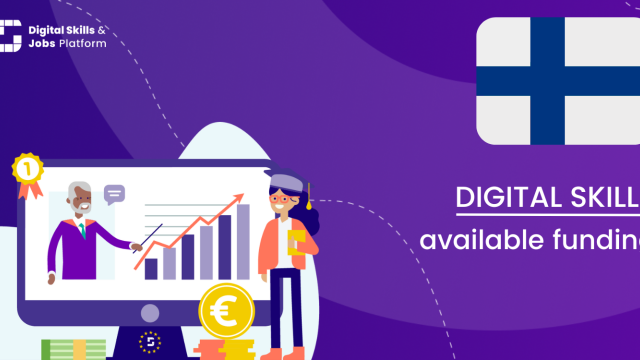
TODAY, I focus on migrants’ digital competences and health information in Finland, a move away from the topic of personalities or groups and their accomplishments within the Ghanaian community in Finland that I have been writing on.
Worldwide, one problem faced by healthcare delivery services as well as peoples and especially patients is the provision of health information, and how patients are able to access such information.
Of late, I have been thinking about the situation of migrants or minorities in the context of their digital competences and access to health information. One can imagine the potential challenges migrants may face in accessing information, whether one looks at it as a drawback of the healthcare delivery services or the migrants’ own lack of skill.
Good Finnish healthcare services
Finland has a very good healthcare delivery system and social services accessible to all residents in the country. Information about healthcare delivery services is provided for every citizen.
Many migrants, including those in the Ghanaian community, are aware of these opportunities and are expected to take advantage of such chances. But research indicates that migrants or people with a culturally and linguistically diverse background face challenges in accessing health information.
Finnish government and health authorities have been promoting digitalisation of personal health records and aspects of healthcare services, although research has shown that some older migrants, for example, face barriers such as not having an e-ID in order to access information digitally.
Generally, patients and others need information about health, prognosis and treatment or care in order to ensure prevention or therapy for diseases, especially the chronic or life-threatening ones.
According to the World Health Organisation, chronic diseases and life-threatening illnesses are increasing worldwide in terms of morbidity and mortality. In most advanced countries such as Finland, healthcare delivery services have gone highly digital in order to ensure faster and undoubtedly an effective way of rendering health care.
Almost everywhere, research and other reports have shown that there are barriers or challenges faced by migrants in the digital systems of the countries they live in. For example, according to reports in some countries in Europe, including Finland, during the COVID-19 period, some of the barriers to public health messaging were the potentially lower levels of proficiency of migrants in the host country’s (majority) language.
Migrants’ health and wellbeing are affected by many factors, including cultural ideas of health, illnesses, and the prevention, treatment and symptoms of illnesses (see www.thl.fi). It is accepted that factors to improve health and wellbeing must be supported.
Digitalisation and access to health information
I think this is the time for Ghanaian migrants in Finland to acquire digital skills or competences in order to have an optimal benefit of the healthcare services and enhance their integration into the Finnish society.
As I have mentioned already, research and other reports have also shown that migrants or minorities face challenges accessing information due to language and other barriers. For example, there are potentially lower levels of awareness, perceptions of risk, and misconceptions not addressed in public health guidance and the national response.
Knowledge about digital competence and accessing health information among minorities such as Ghanaian/African migrants should be taken seriously, especially by the migrants themselves.
Enhancing Integration
Digital competence will thus undoubtedly be a good way to enhance integration. According to the Finnish health department, health and wellbeing are an important part of the integration process.
• Digital skills is a necessity
Migrant associations may help the health authorities and formally create awareness among their members and other migrants, usually in collaboration with some Finnish institutions, and are thus an important tool for several migrants to be positively active and to get their interest and concerns heard.
As I wrote previously, the role of migrant associations acting as bridge-builders for the integration and inclusion of migrants through participation in the decision-making process and by acting as a representative voice is highly appreciated in Finland.
The social media outlets have become an important means for disseminating information and it could be a key medium through which migrant groups or associations and other institutions could educate people.
Thank you
By Perpetual Crentsil
perpetualcrentsil@yahoo.com
Join our WhatsApp Channel now!
https://whatsapp.com/channel/0029VbBElzjInlqHhl1aTU27
Praise of Allah and benediction upon the Prophet (s.a.w.)
ALL praise and gratitude are due to Allah, the Lord of the heavens and the earth, the Most Merciful, the Bestower of mercy and forgiveness. We praise Him for granting us life, guidance, and the blessing of Islam, and for allowing us once again to approach the noble season of Ramadan. May the peace and blessings of Allah be upon our beloved Prophet Muhammad (s.a.w.), the seal of the Prophets, his family, his companions, and all those who follow their path in righteousness until the Last Day.
Understanding Ramadan in the Islamic calendar
Ramadan is the ninth month of the Islamic lunar (Hijri) calendar, a calendar that is divinely rooted in the movement of the moon and deeply tied to Islamic acts of worship. Unlike the Gregorian calendar, the Islamic calendar revolves around lunar cycles, making Ramadan rotate through different seasons of the year. This variation itself is a manifestation of divine wisdom, ensuring that Muslims experience fasting under varying conditions, thereby reinforcing patience, gratitude, and resilience.
Ramadan occupies a unique position in Islam because it is the month in which the Qur’an was revealed as divine guidance for humanity, a criterion between truth and falsehood. Allah says:
“The month of Ramadan is that in which was revealed the Qur’an, a guidance for mankind and clear proofs of guidance and criterion.” (Qur’an 2:185)
Thus, Ramadan is not merely a period of abstaining from food and drink, but a comprehensive spiritual season aimed at moral reform, spiritual elevation, and societal harmony.
The imminence of Ramadan and its spiritual significance
In just four to five days, Muslims across the globe will commence the observance of a month-long fast, from dawn (Fajr) until sunset (Maghrib). This nearness of Ramadan is a powerful reminder of the swift passage of time and the urgency of preparing oneself spiritually, mentally, and physically. The righteous predecessors used to supplicate to Allah for months, asking Him to allow them to reach Ramadan and to accept their deeds within it.
The arrival of Ramadan is not only a personal spiritual event but also a global manifestation of unity, as millions of Muslims, regardless of race, nationality, or social status, engage in the same act of worship at the same sacred time.
Ramadan as a sacred obligation and pillar of Islam
Ramadan holds a central place in Islam as fasting during this month is a divinely mandated obligation (farḍ) upon every eligible Muslim. Allah explicitly commands:
“O you who believe! Fasting has been prescribed for you as it was prescribed for those before you, so that you may attain Taqwa (God-consciousness).” (Qur’an 2:183)
This verse establishes fasting as a means to cultivate Taqwa, a heightened awareness of Allah that governs one’s actions, thoughts, and intentions.
The obligatory nature of fasting is further emphasized in the well-known Hadith narrated by Ibn ‘Umar (r.a.), where the Prophet Muhammad (s.a.w.) said:
“Islam is built upon five pillars: bearing witness that there is no deity worthy of worship except Allah and that Muhammad is the Messenger of Allah, establishing the prayer, giving Zakah, fasting Ramadan, and performing Hajj for those who are able.” (Ṣaḥīḥ al-Bukhārī; Ṣaḥīḥ Muslim)
This Hadith firmly situates fasting in Ramadan as one of the foundational acts upon which a Muslim’s faith stands.
The Sermon of the Prophet (s.a.w.) as Reported by Salman al-Farsi
One of the most profound narrations highlighting the virtue of Ramadan is the Hadith of Salman al-Farsi (r.a.), who reported that the Prophet Muhammad (s.a.w.) addressed the companions at the end of the month of Sha‘ban, saying:
“O people! A great and blessed month has cast its shadow upon you. A month in which there is a night better than a thousand months. Allah has made its fasting obligatory and standing in prayer during its nights voluntary. Whoever draws nearer to Allah by performing a good deed in it will be like one who performs an obligatory act in other months…” (Reported by al-Bayhaqī)
This sermon demonstrates the prophetic method of psychological and spiritual preparation, conditioning the minds and hearts of the believers to receive Ramadan with reverence, discipline, and optimism.
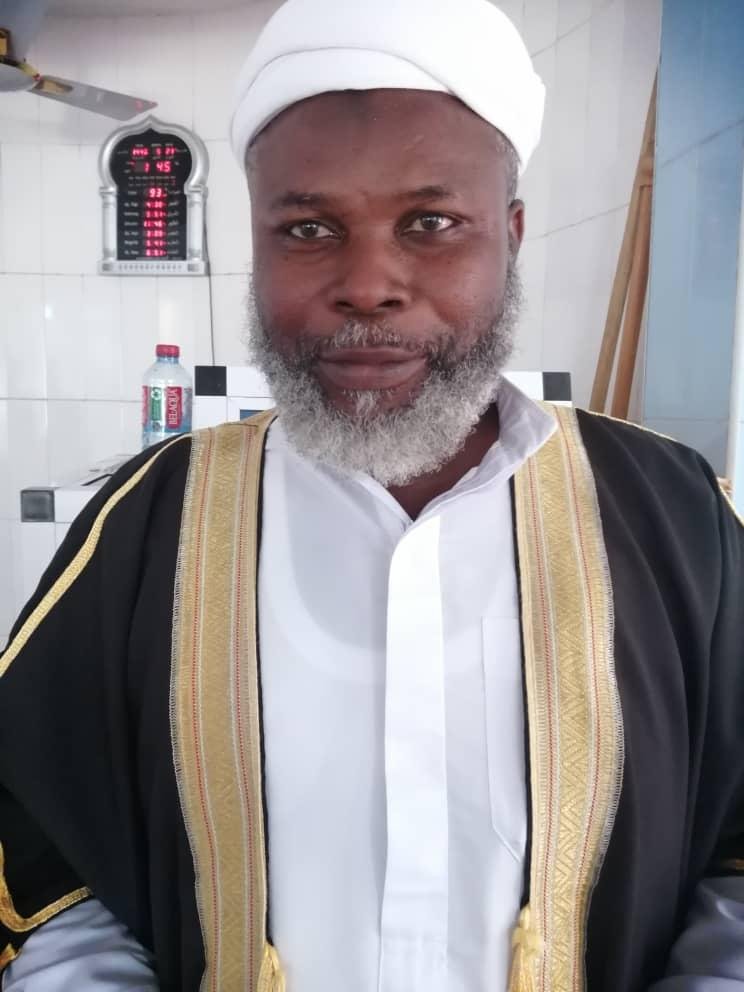
By Imam Alhaji Saeed Abdulai
Kpone Katamanso Municipal Chief Imam, Certified Counsellor and Governance Expert
Join our WhatsApp Channel now!
https://whatsapp.com/channel/0029VbBElzjInlqHhl1aTU27