News
African agro businesses empowered to access and thrive in EU markets under ITA’s Lab Innova initiative

Italian trade promotion body, Italian Trade Agency (ITA), has organized an interactive skill acquisition session for businesses and entrepreneurs in Africa’s agro-food value chain under a structured program dubbed “Lab Innova for Africa”—a capacity building initiative on scaling African agro exports to the European market.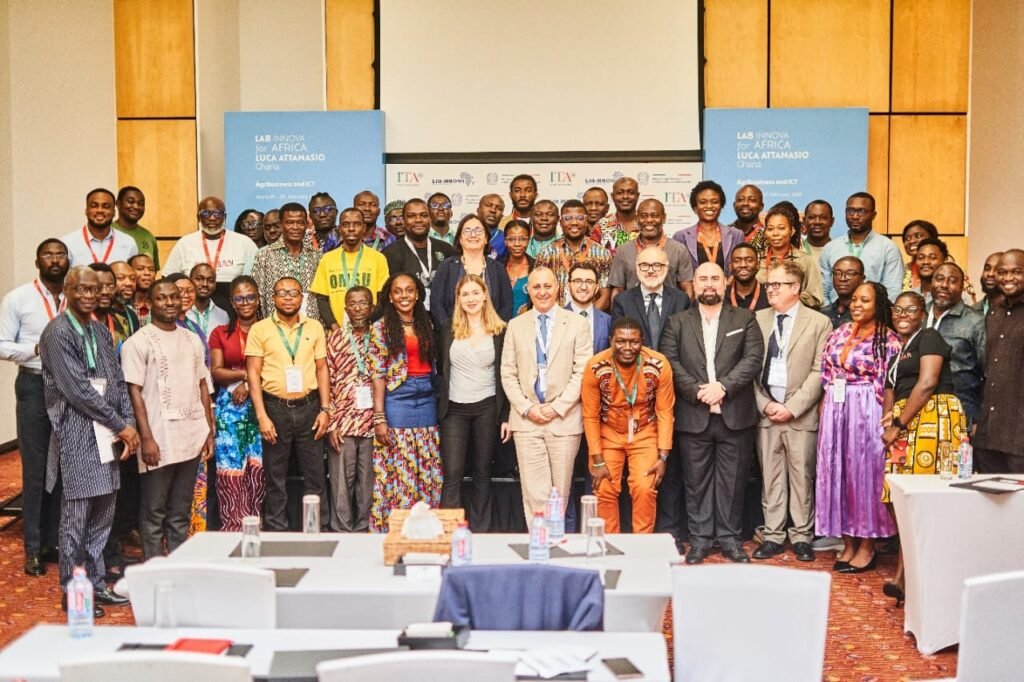
The week-long training featured selected African agribusiness owners and entrepreneurs in a high-impact training programme designed to equip participants with the technical, managerial, and market-access skillsets required to compete successfully in the European Union (EU).
Lab Innova is a specialised training programme for the agro-food sector in Africa, promoted by the Italian Trade Agency in close collaboration with key Italian partners, including Macfrut—one of Europe’s leading agro-food trade fairs.
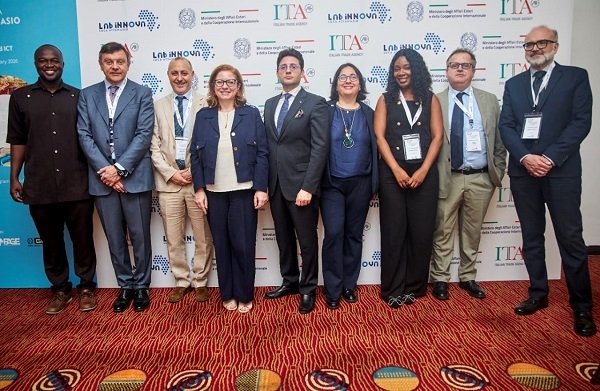
Laura Ranalli, Italian Ambassador to Ghana (4th from left), with facilitators at the just-ended training program
In an interview, ITA’s Accra director, Mr. Luigi Puca, said the week-long interactive session was to get participants familiarized to the specific export requirements that would empower them to trade in the European market
“Through these trainings, we update African countries on Italy’s economic policy and legal frameworks in order to enhance their competitiveness and readiness for international trade. It’s also a win-win situation because through information exchanges, our small and medium enterprises will grow up together with their African counterparts,” said Mr. Puca
Broadly, the training aims to increase the technical and managerial capacity of African agri-food companies by equipping participating businesses with the requisite skillset and operational interventions that meet EU standards. This is expected to facilitate their access to European markets and to build mutually beneficial partnerships with Italian firms.
Participants were taken through intensive courses focused on business management, negotiation, international marketing, food safety regulations, logistics, packaging solutions, and environmental sustainability, facilitated by ITA experts specialised in the selected topics.
According to Mr. Puca, the training offered an opportunity to showcase market-leading innovations and update participants about specific food safety protocols especially for agribusinesses and actors within the agro exports value chain.
He added: “We have a framework of regulations and laws that have to be known by foreign companies and foreign producers. With this training, we are not only focusing on the technical aspect or marketing aspect, but also talk about the legal framework that stays around international trade.”
Beyond skills development, Lab Innova serves as a launchpad for technology transfer and innovation, drawing inspiration from Italy’s highly successful agri-food district model. These districts—clusters of interconnected producers, processors, technology providers, and research institutions—have been central to Italy’s global competitiveness in agro-food exports.
The training is seen as a timely intervention considering the EU’s stringent export measures on food safety and quality standards, packaging, traceability and sustainability—requiring that local agro-businesses get acquainted with the needed strategies to access the European market.
On his part, training coordinator Uberto Trulli, described Lab Innova as a forward-looking and mutually beneficial initiative that will enhance the technical and trade capacity of value chain actors within the African agro-food export space.
“This collaboration seeks to enhance exposure and global competitiveness for African agribusinesses. The main goal and target for this project is to give technical instruments and assistance to agri-food African businesses and to create bonds and interaction with Italian companies,” he emphasized.
To him, Lab Innova is a win-win relationship that supports the Italian marketplace with high demand for tropical fruits in EU market whilst African businessmen can adopt Italian agri-food technology, irrigation systems and the tools.
A participant and president of the Vegetable Producers and Exporters Association of Ghana—who is also the vice-president of the Federation of Association of Ghanaian Exporters, Dr. Felix Kamassah said the initiative was highly impactful and insightful.
“The European market is a different market altogether, and I’m so excited because Lab Innova provides the opportunity for agribusinesses and entrepreneurs in Africa’s agro exports value chain to access and thrive in this competitive market,” he shared.
He added: “I’ve gained practical knowledge about the demand of the European market and how I could explore existing gaps and opportunities as an entrepreneur and exporter—including understanding product branding and packaging.”
This year’s Lab Innova will be climaxed with a five-day study tour at this year’s Macfrut event to be held in Rimini, Italy—that includes a guided tour of the exhibition, visit to company sites, business-to-business and networking sessions.
It was organized in partnership with local business associations and state institutions namely the Ghana Export Promotion Authority (GEPA), the Federation of Association of Ghanaian Exporters (FAGE), and the Chamber of Agribusiness Ghana (CAG).
ITA is the official government body responsible for promoting the trade interests of Italian businesses around the globe as well as attracting foreign investments into Italy—focusing highly on agribusiness, manufacturing and technology transfer. It is also the bridge between Italy and global markets leading trade, investment and cooperation.







Finance Minister Dr. Cassiel Ato Forson has announced a set of policy measures aimed at strengthening Ghana’s foreign exchange reserves, improving gold sector governance, and reducing illegal mining and smuggling.
Presenting the policy directions in Parliament, he explained that government will revise the current arrangement under which the Bank of Ghana acquires 20 percent of large scale gold output.
He indicated that an Inter Agency Committee will be formed to ensure compliance by mining firms.
The committee, he noted, will be co chaired by the Ministers for Finance and Lands and Natural Resources, with membership drawn from the Governor of the Bank of Ghana, as well as the heads of the Minerals Commission and the Ghana Gold Board.
According to him, the Minister for Lands and Natural Resources will invoke the state’s preemption rights under the Ghana Gold Board Act, 2025 and the Minerals and Mining Act, 2006 to purchase a minimum of 20 percent of gold produced by large scale mining companies.
He stated that this is expected to translate into at least 0.57 tonnes of gold per week.
He stressed that the gold purchased will be in doré form and processed locally to promote value addition.
Payments, he added, will be made in cedis at the prevailing interbank exchange rate, with discount rates determined by volume.
Dr.Forson further explained that the refined gold will eventually be added to Ghana’s physical reserves, and that any future sale by the central bank will require prior approval from Cabinet and Parliament.
He maintained that these measures will improve transparency, promote local refining, and reduce acquisition costs while ensuring that mining companies meet their obligations.
Turning to the artisanal and small scale mining sector, he stated that the Ghana Gold Board will adopt strategies to purchase at least 2.45 tonnes of gold weekly through official channels.
Over the next three years, he projected that the country could mobilise about 127 tonnes of gold annually from the sector, which at current prices could generate more than 20 billion dollars in foreign exchange each year.
To achieve this, he noted that the Gold Board will secure sufficient funds to sustain market participation and assume full responsibility for signing off take agreements and selling gold procured from the sector starting March 2026.
He added that the Board will introduce risk management tools, including gold backed derivative trading and hedging programmes, to reduce market losses.
Dr.Forson also pointed to price incentives and bonuses for licensed miners as part of efforts to discourage smuggling and encourage legal sales.
Beyond the gold sector, he outlined broader measures to improve foreign exchange inflows, including the expansion of non traditional exports such as cashew, shea, and rubber, as well as efforts to revive the cocoa sector.
He mentioned the development of new oil palm plantations and the acceleration of new oil field projects, including Pecan, to support export earnings.
The minister also addressed energy sector financing, noting that Ghana has historically spent about three billion dollars annually to cover shortfalls and payments to independent power producers.
He explained that the proposed Gas to Power Transformation Policy, which includes the construction of a state owned 1,200 megawatt power plant and a second gas processing facility, will help conserve foreign exchange.
Dr.Forson emphasised that maintaining fiscal discipline, particularly achieving a primary surplus, remains critical to slowing the depletion of the country’s reserves.
By: Jacob Aggrey
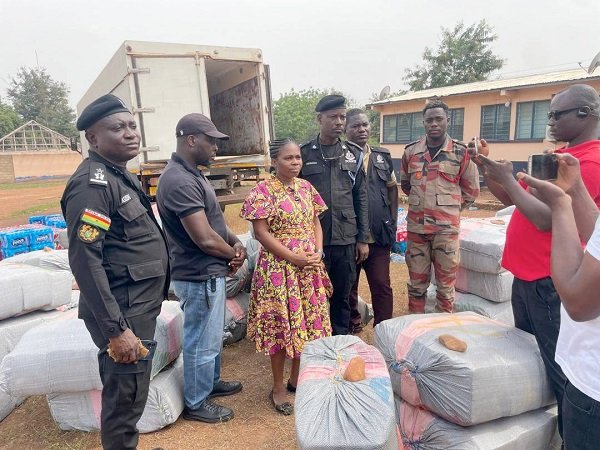
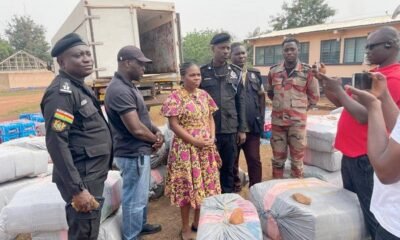
Police in the Oti Region have uncovered a large quantity of suspected cannabis hidden in an impounded truck, with authorities estimating the street value at more than GHS 1.4 million.
According to the Ghana Police Service, the discovery followed the opening of a Volvo truck with registration number GC 3522 09, which officers intercepted at the Bonakye checkpoint on 29 December 2025.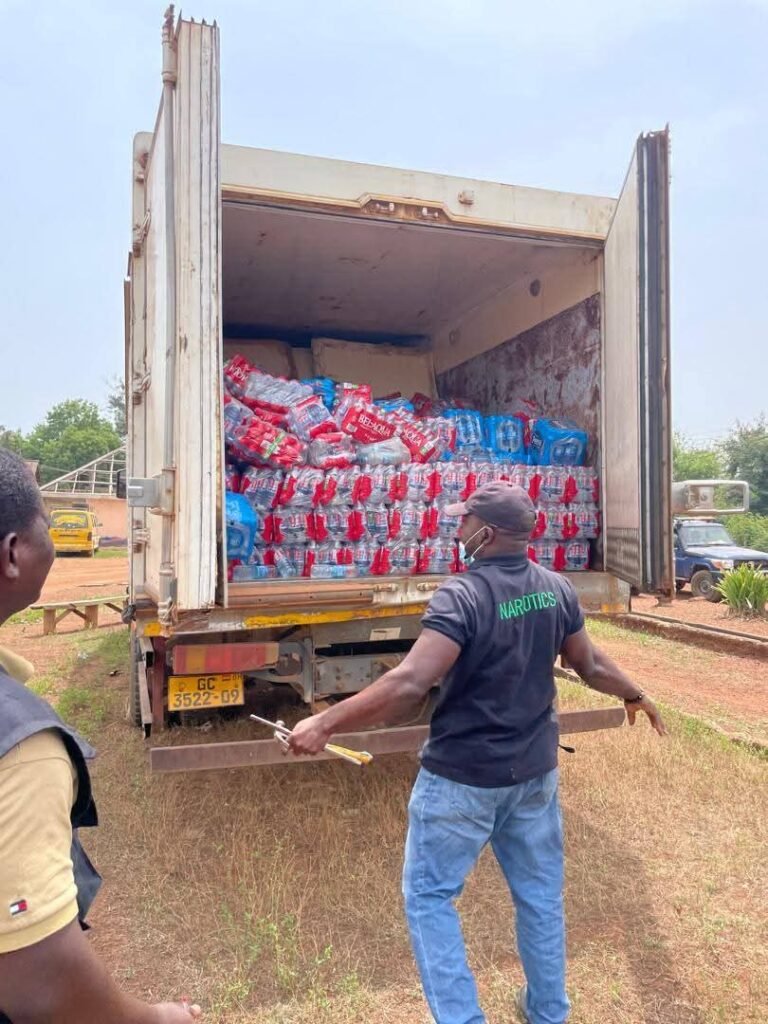
Police explained that the vehicle was heading toward Kpassa when intelligence suggested it was transporting illegal goods. When officers stopped the truck, the driver and another occupant fled, abandoning the vehicle with the ignition key.
The truck remained in police custody until 24 February 2026, when officers opened it at Nkwanta after obtaining a court order from the Jasikan Circuit Court, presided over by His Honour Lambert Y Kerieba.
The exercise was conducted in the presence of representatives from the Police, Military, National Intelligence Bureau, Defence Intelligence, Ghana National Fire Service, the Narcotics Control Commission at Jasikan, and members of the media.
Police reported that officers initially found 320 cartons of bottled mineral water in the truck. A thorough search, however, revealed 91 bales of suspected cannabis concealed within the cartons.
Authorities indicated that the substances amounted to 7,173 slabs, with an estimated street value exceeding GHS 1.4 million. The exhibits have been retained as investigations continue.
Police assured the public of their commitment to combating drug trafficking and encouraged citizens to provide credible information to assist in crime prevention and detection.
By: Jacob Aggrey