Editorial
Virtual learning: A positive approach


- /home/u249204778/domains/spectator.com.gh/public_html/wp-content/plugins/mvp-social-buttons/mvp-social-buttons.php on line 27
https://spectator.com.gh/wp-content/uploads/2021/11/Computers-are-now-virtual-classrooms.jpg&description=Virtual learning: A positive approach', 'pinterestShare', 'width=750,height=350'); return false;" title="Pin This Post">
- Share
- Tweet /home/u249204778/domains/spectator.com.gh/public_html/wp-content/plugins/mvp-social-buttons/mvp-social-buttons.php on line 72
https://spectator.com.gh/wp-content/uploads/2021/11/Computers-are-now-virtual-classrooms.jpg&description=Virtual learning: A positive approach', 'pinterestShare', 'width=750,height=350'); return false;" title="Pin This Post">
Dear Editor,
The government in recent times continues to provide access to basic and secondary education and has taken steps to expand infrastructure so that more students could attain formal education.
But it appears those in our rural communities are still lagging behind in terms of infrastructure development and access to modern teaching and learning methods.
Computers, radio and television have now been turned into virtual learning classrooms but some rural folks are yet to tap these opportunities.
As efforts are made to bridge the gap between the educated and the uneducated in our society, I wish to encourage radio and television stations to air programmes which include lessons on basic phonetics, how to read and comprehend the Queen’s language, how to write business proposals, computer lessons, among others.
In the era of fast-paced technology, one does not necessarily need to enter a physical classroom to acquire knowledge or higher education.
We have started well but the more we introduce advanced forms of modern virtual learning systems — using television as an effective tool, the better it would serve our nation.
It is high time we brought an abrupt end to promoting and patronising television and radio programmes that did not add value in our effort to completely wipe out illiteracy.
Ebenezer K. N. Baiden-Amissah,
P O Box LG 1254,
Legon, Accra.
Let’s phase out ‘borla taxis’
Dear Editor,
I am impressed with the Greater Accra Regional Minister’s directive to ban tricycles (aboboyaas or ‘borla taxis’) from using the motorway and other express routes in Accra.
Indeed, we have always observed the inconvenience these tricycles cause as they convey refuse from one destination to the other and I must say the ban has been long overdue.
When I first settled in Accra, I used to observe how waste management companies collected garbage at residential areas at least twice every week and were paid for their services. I do not know how we came to leave waste collection in the hands of tricycle operators.
‘Aboboyaas’ are not designed for waste collection and we must put a stop to them. But just when I thought the ban was to take effect on November 1, 2021, I was told it had been extended to February 2022 so the operators could be educated on the new directive.
While I am somehow disappointed, I believe the three months grace period is in order. As we wait for the new deadline, I urge city authorities to provide a better alternative to the ‘aboboyaas’ and encourage private waste management companies to take over the collection and transportation of rubbish in the city.
Mavis Obeng,
North Kaneshie,


Dear Editor,
Successive governments have spent millions over the years maintaining the country’s roads.
Despite these huge investments, many roads continue to deteriorate due to several factors, including the operations of haulage vehicles.
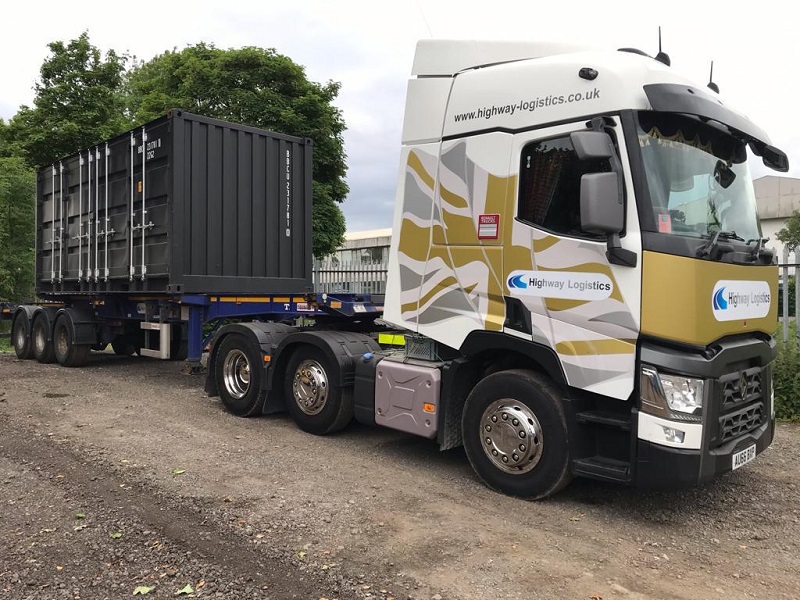
It is unfortunate that many haulage vehicles, such as tractor-trailers, tipper trucks, and tankers transporting goods from the ports, contribute significantly to road damage.
In many cases, these vehicles are overloaded, placing excessive pressure on road surfaces and accelerating their deterioration.
Regulation 52 of the Road Traffic Regulations, 2012 (L.I. 2180), requires that loads carried on vehicles or trailers be securely fastened, protected, and properly packed to prevent them from sliding, shifting, or falling off.
However, compliance with this regulation remains a challenge.
There have also been reports of some heavy-duty vehicles bypassing designated weighbridges and failing to comply with axle-load limits as required by law. This weak enforcement has allowed some operators to continue violating regulations with little consequence.
The issue recently came up on the floor of Parliament, where lawmakers called for stricter enforcement of the laws governing the operations of haulage vehicles.
Their concerns highlight the urgent need for stronger monitoring and tougher sanctions against offenders.
As a concerned citizen, I believe the time has come for Ghana to treat this issue with the seriousness it deserves.
Protecting our roads is a shared responsibility that requires effective enforcement of existing laws and greater accountability among transport operators.
The country cannot continue spending large sums of money repairing roads that are repeatedly damaged by preventable practices such as overloading and non-compliance with axle-load regulations.
Resources that could be invested in education, healthcare, agriculture, and other critical sectors should not be diverted to avoidable road maintenance.
Ensuring strict adherence to haulage regulations will not only preserve the nation’s road infrastructure but also promote safer and more efficient transportation for all road users.
B. Acton-Tettey,
Sukura-Accra
The government’s decision to phase-out the double-track system for Free Senior High School (FSHS) is commendable and highly welcome.
Ghana implemented the double-track system in 2018 to address the extreme congestion in Senior High Schools (SHS) brought on by the Free SHS policy.
In order to make the most use of the facilities already in place, it divides the student body and staff into two alternating batches, Green and Gold. This allows one track to attend classes while the other is on vacation.
Despite greatly increasing access to education, the double-track system has brought up serious difficulties.
In actuality, it has decreased the number of teacher contact hours, which has had a detrimental effect on students’ academic achievement and syllabus completion. Teachers are compelled to teach year-round due to the lack of regular vacation time, which results in fatigue, lower job satisfaction, and less time for professional growth.
Additionally, parents have bitterly complained that their “off-track” children’s extended breaks sometimes lead to laziness since they are disconnected from their academic routines and easily forget what they have been taught.
To help their children stay on top of their schoolwork, some parents use private tutoring which they claim is expensive. Others claim the system is exceedingly complex and indeed it needs to be addressed.
Another unsettling problem is that constant, year-round use of school buildings provides little to no time for regular maintenance, repairs, and cleaning of classrooms and dorms, all of which can have an adverse effect on students’ health.
What is more disturbing is that despite the enormous spikes in student enrollment, there is delayed supply of funds and insufficient food supply which schools frequently have to deal with.
The Spectator is pleased that the government is actively modernising facilities nationwide in order to phase out the double-tract system.
We are happy that the government has successfully completed negotiations with the World Bank to secure $300 million funds to end the double-track system in 2029.
This was announced by the Minister of Education, Mr. Haruna Iddrisu when he addressed the Government Accountability Series at the Presidency in Accra last week.
We are hopeful that the STARR-J Project (Secondary Education Transformation for Access, Relevance and Results for Jobs), an educational initiative by the Ministry of Education (MoE) and the World Bank aimed at expanding equitable access, upgrading facilities, and completely phasing out the double-track system will be feasible.
The government’s promise that under the initiative 210 senior high, technical and vocational schools will benefit from infrastructure expansion and upgrades is laudable. This includes the rehabilitation and expansion of 150 schools through the construction of additional classrooms, dormitories and laboratories.
When completed, the Double-Track System will be eliminated. Parents will heave a sigh of relief and teachers will not be overstretched.