Nutrition
Power in Every Bite: How food fortification is strengthening Ghana’s health

- /home/u249204778/domains/spectator.com.gh/public_html/wp-content/plugins/mvp-social-buttons/mvp-social-buttons.php on line 27
https://spectator.com.gh/wp-content/uploads/2025/08/Add-vital-nutrients-to-foods.jpg&description= Power in Every Bite: How food fortification is strengthening Ghana’s health', 'pinterestShare', 'width=750,height=350'); return false;" title="Pin This Post">
- Share
- Tweet /home/u249204778/domains/spectator.com.gh/public_html/wp-content/plugins/mvp-social-buttons/mvp-social-buttons.php on line 72
https://spectator.com.gh/wp-content/uploads/2025/08/Add-vital-nutrients-to-foods.jpg&description= Power in Every Bite: How food fortification is strengthening Ghana’s health', 'pinterestShare', 'width=750,height=350'); return false;" title="Pin This Post">
Did you know that a simple bowl of gari or salt on your table might already be helping fight malnutrition?
Across Ghana, everyday foods are being fortified with essential nutrients quietly and powerfully supporting the health of millions. This behind-the-scenes strategy, known as food fortification, is one of the most effective tools in the country’s fight against malnutrition.
While some children suffer from undernutrition, evident in stunting, wasting, and anaemia, others, especially adults, are grappling with obesity and diet-related illnesses. These issues not only affect public health but also hinder productivity and economic growth. In response, the government is strengthening its approach through food-based solutions that reach people where it matters most: their plates.
Understanding food fortification
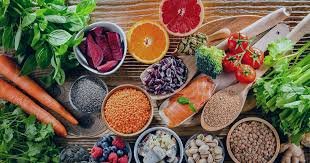
Food fortification is the process of adding vital vitamins and minerals to commonly consumed foods to address nutrient deficiencies. In Ghana, staples like flour, salt, oil, and cereals are increasingly being fortified with iron, iodine, vitamin A, and folic acid. These enhancements target key health risks such as anaemia in women, birth defects in babies, and impaired growth in children.
The beauty of this intervention is its simplicity. People do not need to change their eating habits to benefit. By consuming fortified foods that are already part of the Ghanaian diet, families across the country can access better nutrition without added cost or effort.
Government’s role and broader goals
Government policies and partnerships have played a central role in advancing this effort. Through the enforcement of fortification standards and collaborations with local food producers, regulatory bodies like the Ghana Standards Authority and the Food and Drugs Authority are ensuring that fortified products meet safety and quality requirements. At the same time, health and agriculture ministries are working together to expand access to these foods and educate the public about their benefits.
Food fortification is also aligned with Ghana’s broader nutrition goals, including reducing child stunting and addressing anaemia among adolescent girls and pregnant women. It complements other strategies such as promoting exclusive breastfeeding, home gardening, and traditional food preservation methods.
With continued government leadership, regulatory support, and community awareness, fortified foods can become a silent but steady force in building a healthier, stronger Ghana, one meal at a time.
Feature Article by Women, Media and Change on its Nourish Ghana: Advocating for Increased Leadership to Combat Malnutrition Project.

The recent floods across parts of Ghana have disrupted lives, displaced families, and damaged homes and livelihoods. While rescue efforts and rebuilding understandably take centre stage, another urgent issue deserves equal attention, nutrition and food safety, both during the flood and long after the water recedes.
Floods contaminate water sources, destroy crops, interrupt food supplies, and increase the spread of foodborne disease. These challenges place young children, pregnant and breastfeeding women, older adults, and people living with chronic illness at far greater risk of malnutrition. The scale of this threat is not hypothetical: in June 2025 alone, floods displaced nearly 90,000 people across seven regions, according to Ghana’s National Disaster Management Organisation (NADMO). Past flood-drought cycles show why displacement of this kind matters for nutrition following a similar disaster in Ghana’s three northern regions, the World Food Programme documented chronic malnutrition among children ranging from 34 to 48 per cent, alongside acute malnutrition of 8 to 12 percent, in the hardest-hit areas. As Ghana faces more frequent extreme weather events, protecting nutrition must become a core part of disaster preparedness, not an afterthought.
Floods affect more than food availability
Floodwaters wash away farms, destroy stored food, and make it difficult for farmers and traders to move produce to market. As supplies shrink, prices of nutritious foods such as fruits, vegetables, fish, and eggs increase. For households already stretched by the rising cost of living, that often means choosing cheaper, less nutritious food just to feel full. Over time, diets narrow, and the risk of vitamin and mineral deficiencies grows.
The hidden danger: unsafe food
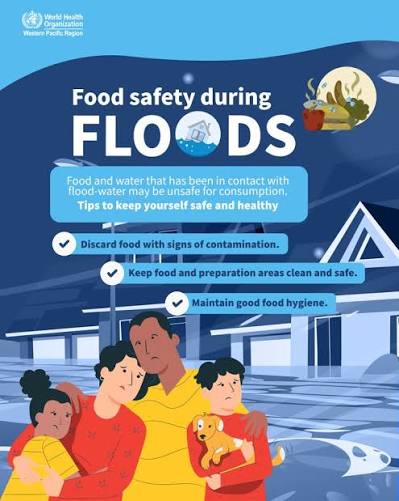
Floodwater is rarely clean. It carries sewage, chemicals, animal waste, and other contaminants into homes, farms, and food stores. Eating food that has touched floodwater, or drinking unsafe water, can trigger diarrhoea, cholera, typhoid, and other infections, illnesses that block nutrient absorption and cause rapid weight loss, especially in children. The danger doesn’t end when the water goes down; improperly stored or damaged food can still make people sick weeks later.
What every household can do
- Drink only safe or treated water where supplies have been affected.
- Wash fruits and vegetables thoroughly with clean water.
- Discard any food that has been exposed to floodwater, even if it looks fine.
- Cook food thoroughly and never eat spoiled food.
- Keep breastfeeding infants: breast milk remains the safest source of nutrition in an emergency.
- Seek medical care promptly if a child develops persistent diarrhoea or shows signs of dehydration.
Recovery needs more than a full stomach
Emergency food aid tends to focus on energy-dense staples like rice and maize. Important, yes but not enough on their own. Recovering families also need protein, healthy fats, vitamins, and minerals, especially the most vulnerable groups. A nutrition-smart response includes fortified foods, beans and other legumes, safe drinking water and fresh produce where possible.
Recovery shouldn’t stop at food distribution, either. Communities need help rebuilding farms, markets, and livelihoods so families can go back to sourcing diverse, nutritious food on their own, not depending indefinitely on aid.
A call for leadership
Floods will keep testing Ghana’s resilience. The first call is to find innovative ways to reduce the impact of the floods. The response, however, has to go beyond emergency relief to actively protect nutrition and food safety through safe water provision, food safety education, trained health workers who can spot malnutrition early, and recovery programmes that help farmers get growing again quickly.
When communities are protected from hunger, disease, and poor nutrition at every stage of a disaster, they don’t just survive floods, they recover from them faster and stronger.
Feature article by Women, Media and Change under its Nourish Ghana: Advocating for Increased Leadership to Combat Malnutrition project

Ingredients
-2 onion sliced
– One pack of sausage
– 2 tablespoonful of salt
-1 tablespoonful of nutmeg
-One tin of milk
– 2 large eggs
– 2 kilograms of flour
Method
-Pre-heat oven to keep it warm
-Put saucepan on the fire and heat oil
-Add onions and cook until soft and golden brown and spread out on a plate to cool
-Add onions, nutmeg and sausage and mix together
– Roll the pastry out into a big rectangle as thick as a pound coin and cut it length ways into two long, even rectangles
-Roll mixture into sausage shapes with your hands and lay along the centre of each rectangle
-Mix the egg and milk and brush the pastry with the mixture, then fold one side of the pastry over, wrapping the filling inside. Press down with your fingers or the edge of a spoon to seal the joint
Cut the long rolls into the sizes you want and space them out on a baking tray. Brush with the rest of the egg wash and bake in the pre-heated oven for 25 minutes or until puffed, golden and cooked through
By Linda Abrefi Wadie