Hot!
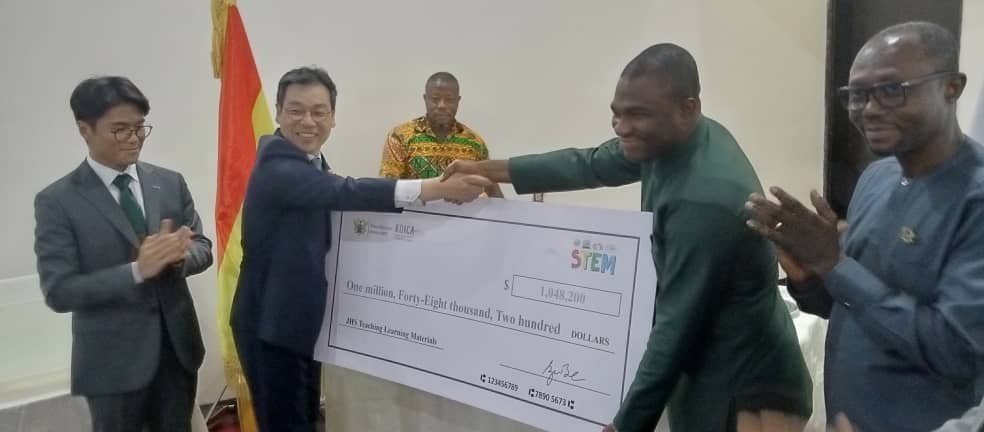
KOICA presents teaching and learning materials to GES

- /home/u249204778/domains/spectator.com.gh/public_html/wp-content/plugins/mvp-social-buttons/mvp-social-buttons.php on line 27
https://spectator.com.gh/wp-content/uploads/2023/12/IMG-20231206-WA0044.jpg&description=KOICA presents teaching and learning materials to GES', 'pinterestShare', 'width=750,height=350'); return false;" title="Pin This Post">
- Share
- Tweet /home/u249204778/domains/spectator.com.gh/public_html/wp-content/plugins/mvp-social-buttons/mvp-social-buttons.php on line 72
https://spectator.com.gh/wp-content/uploads/2023/12/IMG-20231206-WA0044.jpg&description=KOICA presents teaching and learning materials to GES', 'pinterestShare', 'width=750,height=350'); return false;" title="Pin This Post">
The Korean International Cooperation Agency (KOICA) has presented teaching and learning materials to the Ghana Education Service(GES), worth over $1 million, to support the successful implementation of Science, Technology, Engineering, and Mathematics (STEM) in basic schools.
It forms part of the $8 million KOICA Girls STEM project, aimed to enhance and encourage girls to partake in science education, being implemented in 10 districts, namely the Central and Eastern Regions.
It includes beakers, test tubes, tripod stands, spring balance, test tube holders, stopwatches, hand lenses, measuring cylinders, a set of garden stools, and others to encourage the practical learning of science programmes in the schools.
The Country Director of KOICA Ghana, Mr. Donghyun Lee who presented the education material yesterday in Accra, said, the “girls STEM project” was initiated by KOICA to embody the collective commitment to empowering young minds, breaking barriers, and fostering inclusivity in education.
“Today, we come together not only to review the progress made so far but also to witness a pivotal moment as we hand over essential teaching and learning materials that will further enhance the educational experience for our beneficiaries.
Education is the cornerstone of progress, and the Girls STEM by KOICA project stands as a testament to our belief that investing in the education of young girls is an investment in the future” Mr Lee said.
He said the four-year project, with funding support from KOICA, was a gender-responsive pedagogy project that generally seeks to improve the competency of Junior High School (JHS) STEM education, stressing that, about 400 JHS, were beneficiaries of the ongoing project.
The Director General of the GES, Dr Eric Nkansah who thanked KOICA for their immense contributions to Ghana’s education, especially in the area of STEM, was optimistic the presentation would improve the learning of science in the country.
He said about 12.5 per cent of students were able to pursue science programmes in the various Senior High Schools, stressing that girls’ participation in STEM education had significantly reduced.
Dr Nkansah implored Girls to embrace STEM education with all seriousness since science education had become one of the priority requirements to further their education at the tertiary level.
He called on benevolent individuals and organisations to support the Service and to improve science education in the various JHS and SHS, as the government welcomes such collaborations to achieve the STEM initiative.
Dr Nkansah said that by harnessing the power of STEM, Ghana could address societal challenges to enhance productivity and improve the overall quality of citizens.
BY BERNARD BENGHAN.


The University of Ghana Medical Centre (UGMC) has disputed claims made on social media by comedian Michael Blackson concerning the treatment given to his late mother, saying a review found that the allegations did not accurately reflect what happened during her stay at the hospital.
In a statement issued in Accra on August 5, 2026, the management of UGMC expressed condolences to Mr. Blackson and his family over the death of his 83-year-old mother, who died at the facility on July 16, 2026.
The hospital said it had taken the concerns raised by Mr. Blackson seriously and conducted a thorough review in line with its clinical and administrative procedures.
According to the statement, the facts presented by Mr. Blackson on social media contained “numerous inaccuracies” and did not accurately reflect the medical care provided to his mother.
UGMC explained that she was referred to the facility from another hospital and received treatment there from May 27 to July 16, 2026, a period of about eight weeks.
The hospital stated that it would not release details of her diagnosis, treatment, medical records or other aspects of her care because it had a duty to protect patient confidentiality, even after death.
It said the decision was intended to respect the dignity of the deceased and the privacy of her family.
UGMC further stated that all clinical decisions at the facility are made by qualified healthcare professionals based on medical judgment, established standards of care and the best interests of the patient.
The statement added that such decisions are made in consultation with authorised family representatives where necessary and that billing and financial procedures are governed by institutional policies and are separate from clinical decision-making.
The hospital noted that it values feedback from patients and their families and considers both positive and negative comments important for improving the quality of care.
Mr. Blackson had earlier used social media to criticise the care his mother received at UGMC, prompting the hospital’s response.
By: Jacob Aggrey
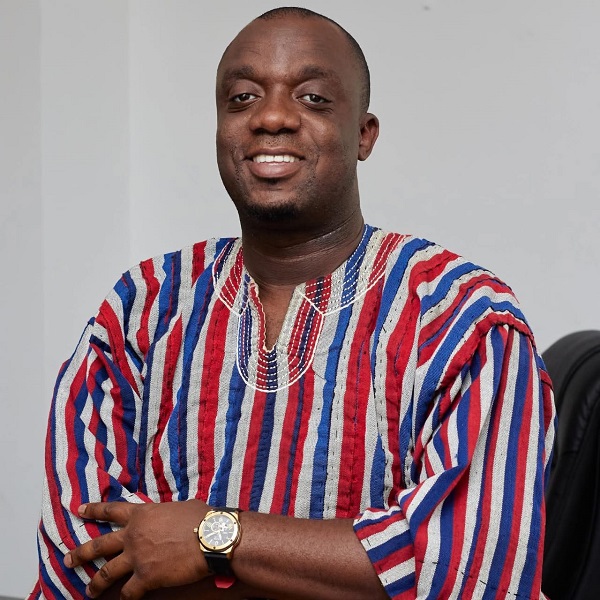
The New Patriotic Party (NPP) has directed all aspirants campaigning in the Greater Accra Region to suspend their campaign activities on August 5 and 6 and instead mobilise supporters for the party’s planned “Democracy Under Attack” demonstration.
The directive was issued by the party’s National Steering Committee in a statement signed by the NPP General Secretary, Justin Kodua Frimpong, on Tuesday.
According to the statement, the decision forms part of efforts to ensure a strong turnout for the demonstration, which is scheduled for Thursday, August 6, 2026.
The party said the protest would begin at 5:00 a.m., with participants expected to gather at the Supreme Court in Accra.
It further directed Regional, Constituency and Polling Station Executives in Greater Accra to work closely to mobilise members and supporters for the event.
“The National Steering Committee is calling on all aspirants currently campaigning across the Greater Accra Region to temporarily suspend their campaign activities on the 5th and 6th of August and join in mobilising support for the upcoming demonstration,” the statement noted.
The NPP appealed to party members and supporters to remain peaceful, disciplined and orderly throughout the protest.
The demonstration forms part of the party’s response to concerns it has raised over issues relating to Ghana’s democratic governance and the justice system.
The NPP leadership expressed confidence that party members would cooperate fully to ensure a successful and peaceful event.
By: Jacob Aggrey

 News1 week ago
Prof. Kwabena Twerefou holds inaugural lecture; calls for better stewardship of Ghana’s natural resources
- News1 week ago
Ahanta Heritage Month: Diplomats, youth tour forts, Cape Three Points and historic sites
 News1 week ago
Wa West MP calls for calm, impartial probe into suspect’s death