Editorial
Tame the final year students

Dear Editor,
I am writing to express my view on what has become some sort of ritual for some final year Senior High School students in parts of the country. Almost every year, we hear stories about how some of them riot for one reason or the other, especially when things do not go the way they expect.
The latest I heard early this month came from Tweneboa Koduah Senior High School in the Ashanti Region, where some students sitting the West Africa Senior School Certificate Examination (WASSCE) went on a rampage and destroyed property in their dining hall to register their displeasure at what they described as ‘strict invigilation’ during the Integrated Science exam.
According to reports, the candidates claimed the questions were too difficult and they did not get any help from their teachers, hence the decision to vent their anger in the manner they did. Videos of the incident circulated on social media captured the students turning things upside down.
Following updates on the incident, I asked how some of these students learn to be so violent, choosing to express their grievance through the most unconventional or undiplomatic approach.
I am aware calm had since returned to the school but I believe there could be more to the rioting than the students’ cry over stern invigilation. But even before the WASSCE ends sometime soon, I fear other final students elsewhere may want to take the law into their own hands.
I wish to encourage school authorities not to create room for some of these misbehaviour from students. They should be on guard and handle any underlining issues there may be before it escalates into campus demonstrations or riot.
Prince Kumi,
Awoshie-Accra.


Dear Editor,
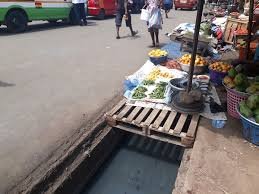
It is often said that a healthy nation is a wealthy nation. However, this saying becomes worrying when the health of citizens is threatened by the conditions under which the food they consume daily is sold.
In Ghana, the conditions under which food is sold is quite disturbing. Over the years, I have observed that the environments where food is prepared and sold are often unhygienic.
In many cases, containers holding food such as rice and waakye are left uncovered or not properly covered, exposing them to contamination.
While many Ghanaians paid little attention in the past to the conditions under which food was sold, the narrative seems to be changing in recent years.
I recall an incident during my days in Senior High School (S.H.S.) when my friends and I went out to buy food. At one location, some of us chose not to buy because we assumed the food would be expensive due to how neat the place looked.
Unfortunately, we ended up purchasing food from a different place that was somewhat unhygienic. We overlooked the poor conditions because we believed the quantity offered was better than at the cleaner location.
However, I am certain that my friends and I would not repeat such a mistake today, as we now understand the health implications of that decision.
While public education is important in addressing this issue, I believe it is time for regulatory and law enforcement agencies, such as the Food and Drug Authority (FDA), to crack the whip on food sellers and vendors who operate in unhygienic environments and conditions.
As citizens, we must also be mindful of where we buy our food to protect ourselves and our families from diseases and illnesses. We should choose ‘quality’ over ‘quantity’ and prioritize our health.
From Syram
Oyarifa
Dear Editor,
I write to express concern and call for improved security measures before and after every football match.
The recent robbery attack that led to the tragic death of a player, on their return from a Match day 29 game against Samartex, is both shocking and heartbreaking.
The incident, which reportedly occurred around 10:30 p.m., highlights the growing risks faced by players and team officials while traveling.
Football is meant to unite and entertain, not to expose lives to danger. It is therefore imperative that authorities, the Ghana Football Association, and security agencies put in place adequate protection for teams, especially during late-night travels.
I strongly urge all stakeholders to treat this matter with urgency to prevent such unfortunate incidents from recurring.
From Eugene Ampiaw
Accra