News
Withdraw request for GBC to abandon 3 channels on DTT platform – GJA

- /home/u249204778/domains/spectator.com.gh/public_html/wp-content/plugins/mvp-social-buttons/mvp-social-buttons.php on line 27
Warning: Trying to access array offset on false in /home/u249204778/domains/spectator.com.gh/public_html/wp-content/plugins/mvp-social-buttons/mvp-social-buttons.php on line 27
&description=Withdraw request for GBC to abandon 3 channels on DTT platform – GJA', 'pinterestShare', 'width=750,height=350'); return false;" title="Pin This Post">
- Share
- Tweet /home/u249204778/domains/spectator.com.gh/public_html/wp-content/plugins/mvp-social-buttons/mvp-social-buttons.php on line 72
Warning: Trying to access array offset on false in /home/u249204778/domains/spectator.com.gh/public_html/wp-content/plugins/mvp-social-buttons/mvp-social-buttons.php on line 72
&description=Withdraw request for GBC to abandon 3 channels on DTT platform – GJA', 'pinterestShare', 'width=750,height=350'); return false;" title="Pin This Post">
The Ghana Journalists Association (GJA) yesterday called for the immediate withdrawal of the directive, requesting the Ghana Broadcasting Corporation (GBC) to abandon three of its six channels on the Digital Terrestrial Television (DDT) platform.
In a statement issued by the association in Accra on Monday, July 20 and signed by the president of GJA, Mr Roland Affail Monney, it said that, the directive contravenes constitutional provisions and would endanger the activities of the station.
“It is the view of the GJA that the directive will significantly impact on the operations of the GBC and amount to interference by government in the work of the state owned media,” the statement said.
“This is against the provisions of Chapter 12 of the 1992 Constitution,” it added.
The directive by the Communications Minister has the potential of curtailing the operations of media houses, particularly a state owned media, which the constitution has specifically asked to be insulated from governmental control by a constitutional body.
The mother body for journalists in the country, GJA has therefore, demanded that the directive by the Ministry of Communications to GBC and other media houses on their channels on the DTT platform be brought to a halt with immediate effect.
Accordingly, the GJA has called on the National Media Commission (NMC) and all relevant stakeholders to ensure all concerns over the DDT platform be ironed out.
Meanwhile, the GJA has also urged for a long term solution to this and any other issues confronting the highly sensitive media industry is for Ghana to attach utmost urgency to the enactment of a broadcasting law.
In the manner, the Media Foundation for West Africa (MFWA) has also raised concern over the same directive by the Minister of Communications, and called on President Akufo-Addo to revoke the order should the sector minster fail to do so.
In a press release by the foundation copied to the Ghanaian Times, the foundation mentioned that, instruction by the minister contravenes constitutional and regulatory provisions on the autonomy of the state broadcaster and also undermines media pluralism.
“The foundation also stated that, the directive was counterproductive, as the president has relied on the GBC channels in delivering his periodic updates on the country’s response to the COVID-19 pandemic,” the statement said.
The foundation has since called on the regulator of the Ghanaian media landscape, the NMC to expedite efforts in ensuring that, the state broadcaster is insulated from any form of control.
“We also call on the NMC to assert its constitutional responsibility of insulating the state broadcaster from governmental interference and control,” the statement mentioned.
The Communications Minister, Mrs Owusu-Ekuful in a letter dated June 26, 2020, addressed to the Director General, Professor Amin Alhassan, asked the state broadcaster to reduce its six digital channels to three.
BY TIMES REPORTER


Deputy National Women Organiser of the New Patriotic Party (NPP), Mimi Duah, has openly declared her support for Mavis Hawa Koomson as the next National Women’s Organiser of the party.
In a statement endorsing Hawa Koomson’s candidature, Ms Duah outlined four key reasons why she believes the former MP and Minister of State is best placed to lead the party’s women’s wing.
According to her, Hawa Koomson is a motherly figure who rose from the grassroots and is widely noted for her forgiving nature and ability to foster unity.
“She is a true grassroots mother who easily forgives, fosters unity, provides guidance and arbitrates to ensure all aggrieved party women are brought on board to ensure a unified women’s wing,” she stated.
Ms Duah also pointed to Hawa Koomson’s vast experience, having served as a Constituency Women’s Organiser, Member of Parliament and Minister of State, noting that the experience positions her to provide effective leadership as National Women’s Organiser.
She further described Hawa Koomson as capable of making the women’s wing resourceful, through her extensive network and business contacts, to lobby for logistics, training and financial support for women organisers at all levels.
Lastly, she said the NPP as an opposition party needs fearless, bold and assertive leadership at the women’s front to inspire regional, constituency and polling station women organisers as the party reorganises towards the 2028 elections.
“We need a Women’s Organiser who has been tested, who is bold, who understands grassroots women, and who can lead us to victory in 2028. Hon. Mavis Hawa Koomson is that leader,” she stressed.
By Edem Mensah-Tsotorme
News
Tourism, Culture and Creative Arts Minister inaugurates Ghana-Korea Heritage Project Steering Committee

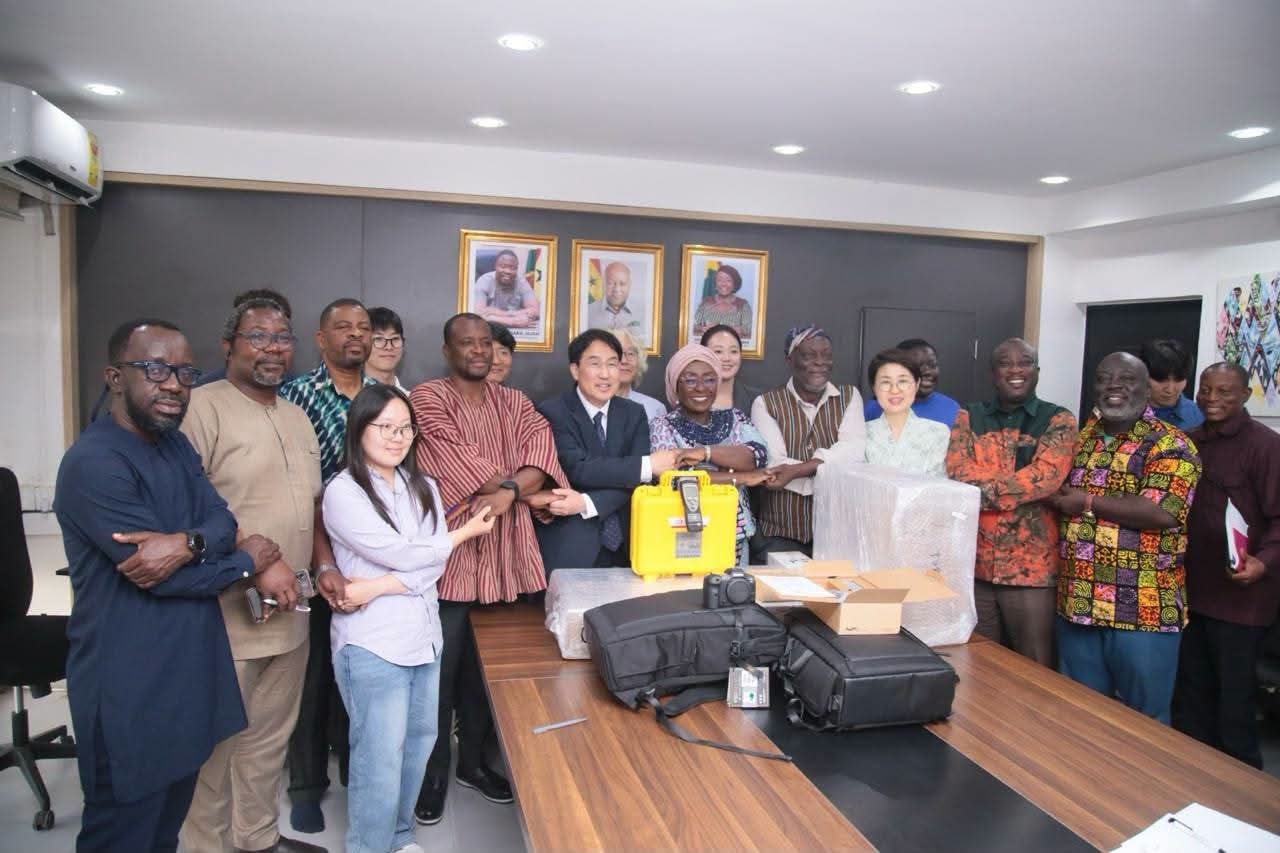
Tourism, Culture and Creative Arts Minister, Abla Dzifa Gomashie, has inaugurated the Ghana-Korea Heritage Project Steering Committee to provide strategic oversight for a five-year programme focused on preserving Ghana’s heritage sites and strengthening their resilience to climate change.
The project will support climate-risk mapping, digital surveying and 3D modelling, joint research, capacity building, community engagement and modern monitoring technologies.
Korea is also providing specialised equipment, including drones, 3D scanners, digital microscopes, thermal imaging cameras and GPS survey instruments, to enhance Ghana’s capacity to scientifically assess, document and conserve heritage structures.
The partnership, which will run through 2030 and beyond, is expected to deepen Ghana-Korea cultural ties while promoting sustainable, technology-driven and climate-adaptive heritage management for future generations.
By Edem Mensah-Tsotorme