Hot!
Work progresses on 10 -storey hostel for UPSA

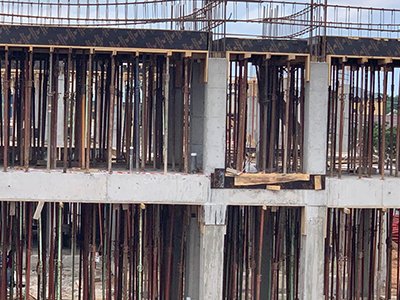
Work is progressing steadily on a 10-storey hostel facility being constructed by the University of Professional Studies, Accra (UPSA) as part of its special initiative to reduce deficit of infrastructure on campus.
The facility which is scheduled to be completed by December 2021 also forms part of measures to deal with the potential increase in enrolment due to the Free Senior High School (FSHS).
Being undertaken by FT Global Investment Limited, the project when completed will have a total of 416-bedrooms and will be able to accommodate about 1,600 students.
Speaking to the media after a tour of the facility by some selected journalists in Accra yesterday, the Project Manager for the firm, Mr Reuben Akumienu said despite the initial hiccups suffered as a result of the COVID-19 pandemic, the project was on schedule.
He explained that even though they had to reduce the number of workers on site in compliance with the safety protocols outlined in the fight against the pandemic, work had still been ongoing.
Mr Akumienu said his company was working with high standards, stressing that “FT Global does not compromise on safety and as a result, reinforcement, best practices and structural integrity is our hallmark. Safety and security of the workers on the project is also assured.”
On his part, the Vice Chancellor of the UPSA, Professor Abednego Feehi Okoe Amartey said he was working assiduously to resolve the imminent accommodation problem that confronted the university.
He said the university was aiming to attract more of the best Ghanaian and International students in addition to welcoming top students from government’s Free SHS initiative.
Professor Amartey said there was also construction works on going on a 396 room hostel and the completion of the two facilities would go a long way to address the challenges of accommodation in the university.
To complement the infrastructural development, he noted that the UPSA had also enhanced security on and around its main campus and the hostels.
“In the past, the UPSA road had a reputation for frequent robbery attacks within the university campus’ environs and nearby hostels. These incidents have been reduced drastically with the recruitment of more competent private security personnel and the provision of solar streetlights all the way from the main campus to the hostel facilities and beyond. This has reduced the incidents around the UPSA area,” he emphasised.
UPSA is one of the fastest growing Universities and has been ranked among the top universities in the world in the 2020 U-Multirank global universities rankings.
It is the only Ghanaian university to be on the global rankings that assesses universities on a multi-dimensional approach to higher education, including teaching and learning, research, knowledge transfer, regional engagement and international orientation.
The University of Professional Studies Accra, in that ranking, emerged strongest in teaching and learning. Its overall profile shows top performance across various indicators, with two ‘A’ (very good) overall scores.
By Cliff Ekuful


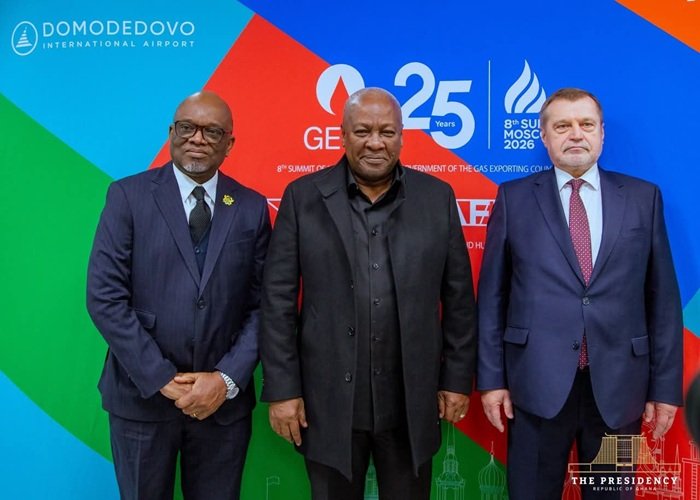
President John Mahama has arrived in Moscow, Russia, from Ethiopia to participate in the 3rd Russia-Africa Summit.
The summit is being hosted by Russian President Vladimir Putin.
During the visit, President Mahama will join fellow African leaders at the Economic and Humanitarian Forum and summit plenary sessions.
He is also scheduled to hold high-level bilateral talks with President Putin and attend a Kente exhibition organised by the Russia-Ghana Parliamentary Forum.
As part of the visit, the President will receive honorary doctorate degrees from the Russian University of Transport and the Peoples’ Friendship University of Russia.
He will also engage Russian businesses and state institutions to advance bilateral cooperation between Ghana and Russia.
By Edem Mensah-Tsotorme
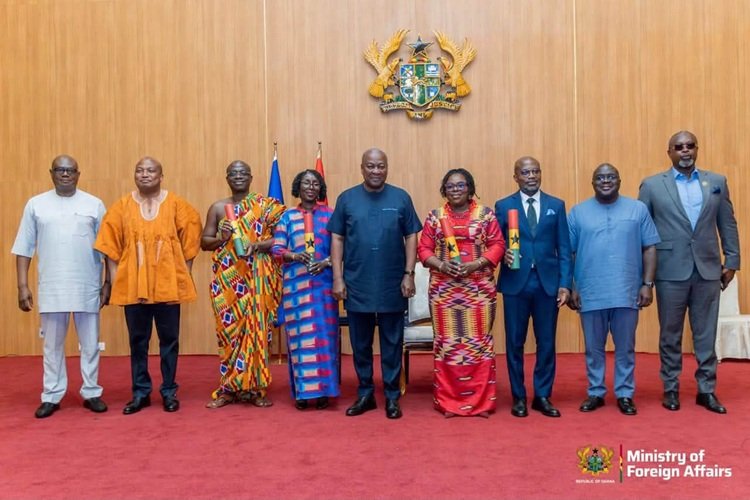
President John Dramani Mahama has commissioned four career diplomats as ambassador-designates to represent Ghana in four countries.
The commissioning ceremony took place on Friday, October 16, 2026.
The new envoys are Her Excellency Nana Antwiwaa Dodoo, Ambassador-Designate to Angola; His Excellency Louis Kwame Obeng, Ambassador-Designate to Qatar; Her Excellency Evelyn Korantemaa Ofosu-Amable, Ambassador-Designate to Israel; and His Excellency Jedidiah Reuben Adogla, Permanent Representative-Designate to Switzerland.
President Mahama charged them to advance Ghana’s national interests through strategic partnerships, economic diplomacy, investment mobilization, and expanded access to international markets.
He said Ghana’s diplomatic engagements must deliver tangible economic benefits, create jobs, and strengthen the country’s standing on the international stage.
The four envoys are career diplomats with over 27 years of experience.
On behalf of her colleagues, Her Excellency Nana Antwiwaa Dodoo thanked the President for the confidence reposed in them and pledged their commitment to emulate his leadership and deliver on the mandate given to them.
By Edem Mensah-Tsotorme