Hot!
Coronavirus: Oxford vaccine triggers immune response


- /home/u249204778/domains/spectator.com.gh/public_html/wp-content/plugins/mvp-social-buttons/mvp-social-buttons.php on line 27
https://spectator.com.gh/wp-content/uploads/2020/07/Oxford.jpg&description=Coronavirus: Oxford vaccine triggers immune response', 'pinterestShare', 'width=750,height=350'); return false;" title="Pin This Post">
- Share
- Tweet /home/u249204778/domains/spectator.com.gh/public_html/wp-content/plugins/mvp-social-buttons/mvp-social-buttons.php on line 72
https://spectator.com.gh/wp-content/uploads/2020/07/Oxford.jpg&description=Coronavirus: Oxford vaccine triggers immune response', 'pinterestShare', 'width=750,height=350'); return false;" title="Pin This Post">
A coronavirus vaccine developed by the University of Oxford appears safe and triggers an immune response.
Trials involving 1,077 people showed the injection led to them making antibodies and T-cells that can fight coronavirus.
The findings are hugely promising, but it is still too soon to know if this is enough to offer protection and larger trials are under way.
The UK has already ordered 100 million doses of the vaccine.
The vaccine – called ChAdOx1 nCoV-19 – is being developed at unprecedented speed.
It is made from a genetically engineered virus that causes the common cold in chimpanzees.
It has been heavily modified, first so it cannot cause infections in people and also to make it “look” more like coronavirus.
Scientists did this by transferring the genetic instructions for the coronavirus’s “spike protein” – the crucial tool it uses to invade our cells – to the vaccine they were developing.
This means the vaccine resembles the coronavirus and the immune system can learn how to attack it.
Much of the focus on coronavirus so far has been about antibodies, but these are only one part of our immune defence.
Antibodies are small proteins made by the immune system that stick onto the surface of viruses.
Neutralising antibodies can disable the coronavirus.
T-cells, a type of white blood cell, help co-ordinate the immune system and are able to spot which of the body’s cells have been infected and destroy them.
Nearly all effective vaccines induce both an antibody and a T-cell response.
Levels of T-cells peaked 14 days after vaccination and antibody levels peaked after 28 days. The study has not run for long enough to understand how long they may last, the study in the Lancet showed.
Prof Andrew Pollard, from the Oxford research group told the BBC: “We’re really pleased with the results published today as we’re seeing both neutralising antibodies and T-cells.
“They’re extremely promising and we believe the type of response that may be associated with protection.
“But the key question everyone wants to know is does the vaccine work, does it offer protection… and we’re in a waiting game.”
The study showed 90% of people developed neutralising antibodies after one dose. Only ten people were given two doses and all of them produced neutralising antibodies.
“We don’t know the level needed for protection, but we can maximise responses with a second dose,” Prof Pollard told the BBC.
Yes, but there are side-effects.
There were no dangerous side-effects from taking the vaccine, however, 70% of people on the trial developed either fever or headache.
The researchers say this could be managed with paracetamol.
- BBC


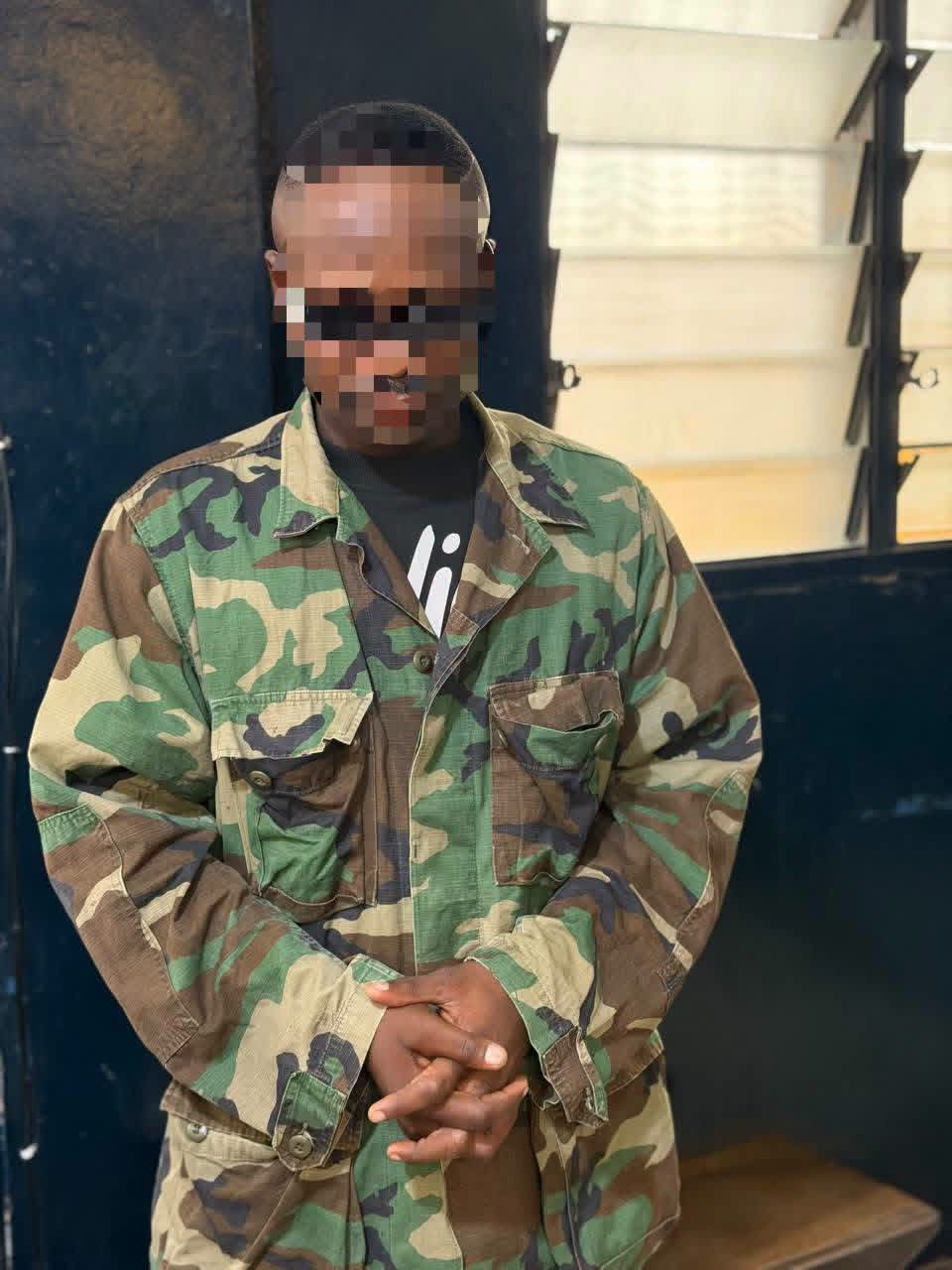
The Tema Regional Police Command has arrested a 32-year-old man for allegedly posing as a soldier and extorting money from unsuspecting members of the public at Ashaiman.
The suspect, identified as Bright Atsu Kudiabor, was arrested by the Ashaiman Police on Wednesday, September 16, 2026, at about 7:00 a.m.
According to the Police, he was arrested at an area known as “I Shall Return”, where he was allegedly parading himself as a soldier and demanding money from people.
The Police said Kudiabor, who is an ex-convict, was initially arrested by personnel of the Ghana National Fire Service in Ashaiman with assistance from other members of the public.
A search conducted on him after he was handed over to the Police reportedly led to the recovery of a set of military camouflage uniform.
The suspect is currently in Police custody and assisting with investigations.
The Tema Regional Police Command said he would be processed for court after investigations are completed.
The Police urged the public to remain vigilant and report anyone who falsely presents themselves as a soldier or a member of another security agency to deceive or extort money from the public.
By: Jacob Aggrey
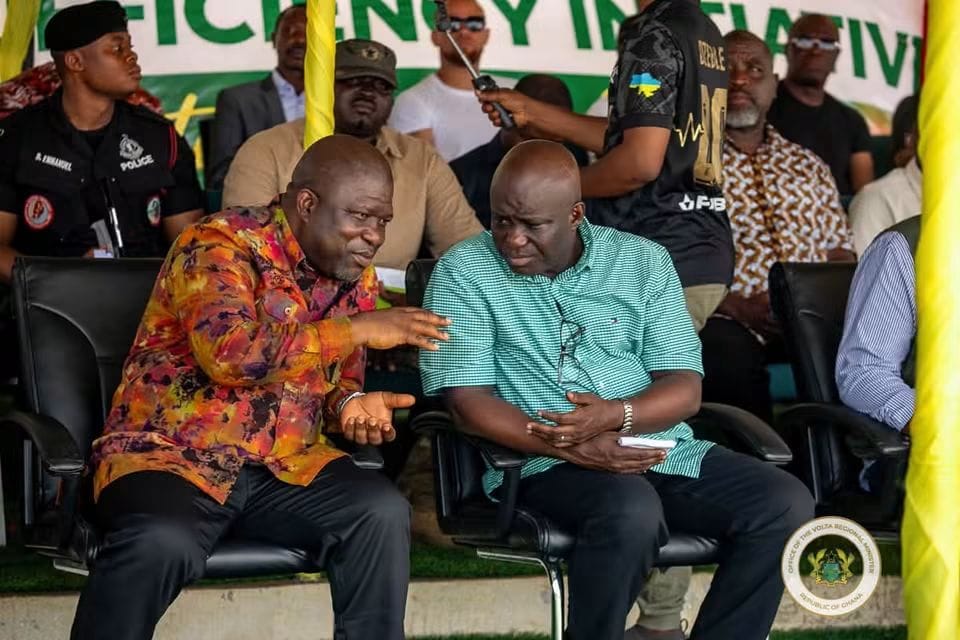
Volta Regional Minister, James Gunu, says the Volta Region holds enormous agricultural potential and efforts must be geared towards connecting farmers to the needed resources to unlock that potential.
He said focus must be on linking farmers to resources, technology, financing and markets to increase production, create jobs and build sustainable livelihoods.
Hon. Gunu made the remarks at the national launch of the Ghana Tomato Self-Sufficiency Initiative (GHATSI) held at Anloga in the Volta Region on Tuesday, September 15.
The initiative, under the theme “Produce at Home. Feed the Nation. Export the Surplus,” seeks to boost local tomato production, processing and marketing while reducing Ghana’s heavy reliance on imported tomatoes.
The launch was attended by the Minister for Food and Agriculture, Eric Opoku, his Deputy, John Setor Dumelo, Feed Ghana Coordinator, Bright Demordzi, Members of Parliament, traditional leaders, MMDCEs, farmers and other stakeholders.
Mr.Gunu expressed appreciation to the Minister for Food and Agriculture for the support announced for the region, including two excavators, 200 cartons of organic fertiliser, and GH¢200,000 for Ms. Kuatudzo Esther Dela, a tomato farmer and processor from Ziope.
He described the initiative as an important step towards making agriculture a stronger driver of food security, job creation and economic growth in the Volta Region.
By Edem Mensah-Tsotorme

 Entertainment1 week ago
Fiifi Coleman Productions adapt ‘I Told You So’ stage play into feature film
- News5 days ago
48 Engineer Regiment to be major sub-contractor on Accra-Kumasi Expressway, $2bn ready- Prez Mahama
- News1 week ago
Ghanaian journalist celebrates Texas town’s ‘Eden of the Far West’ tag after mayor’s nod