Features
Why Prof. Frimpong-Boateng spilled the beans

- /home/u249204778/domains/spectator.com.gh/public_html/wp-content/plugins/mvp-social-buttons/mvp-social-buttons.php on line 27
https://spectator.com.gh/wp-content/uploads/2023/06/Prof.-Frimpong-Boateng-Pix.jpg&description=Why Prof. Frimpong-Boateng spilled the beans', 'pinterestShare', 'width=750,height=350'); return false;" title="Pin This Post">
- Share
- Tweet /home/u249204778/domains/spectator.com.gh/public_html/wp-content/plugins/mvp-social-buttons/mvp-social-buttons.php on line 72
https://spectator.com.gh/wp-content/uploads/2023/06/Prof.-Frimpong-Boateng-Pix.jpg&description=Why Prof. Frimpong-Boateng spilled the beans', 'pinterestShare', 'width=750,height=350'); return false;" title="Pin This Post">
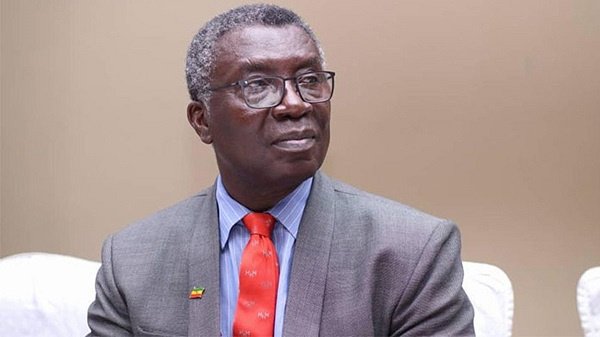
Prof. Frimpong-Boateng
With the greatest respect and special permission from my colleague journalist and Member of Parliament for Sagnarigu Constituency in the Northern Region, Honourable Alhassan Bashir Alhassan Fuseini, popularly known as A.B.A. Fuseini, who is imbued with hilarious adages that can even resurrect the dead, I quote this adage from his repertoire to buttress my point and set the record straight. “When you have cotton wool on your anus, you don’t have to jump a fire; otherwise, you will set yourself in flames and burn to ashes”. Similarly, there is another saying that says, “When you stretch and push a person firmly against a wall, he will eventually explode when he manages to extricate himself “.
PROFESSOR FRIMPONG-BOATENG
Such is the case of a cool and collected Professor Kwabena Frimpong-Boateng, one of Ghana’s foremost and finest heart surgeons of international repute and the brain behind the establishment of the National Cardiothoracic Centre, situated at the country’s largest health facility, the Korle-Bu Teaching Hospital in Accra. The learned professor was a one-time former Minister of Environment, Science and Technology in the first term of the current administration led by Nana Addo Dankwa Akufo-Addo.
I have known this great and knowledgeable professor for many years, dating back to the days when I was a senior reporter with the state-owned Ghanaian Times newspaper. Since I was then reporting and writing on health issues, I came into contact with this nice medical officer and international surgeon when he set foot in Ghana in 1992 to set up the prestigious Cardiology Centre at Korle-Bu. At that time, there was no such facility in the country, so his aim was to establish the centre to carry out various heart surgeries and also to train young surgeons in that particular field.
HOW PROF. CAME TO GHANA
Professor Frimpong-Boateng, as I know him, is such an objective and principled man who believes in the truth, abhors lies, and is forthright and resolute in his actions and dealings with people and patients as well. He came to Ghana from Germany, where he had been practicing medicine for many years, through the instrumentality of the late former President, Flt-Lt. Jerry John Rawlings. He performed the first open-heart surgery in Ghana using a heart-lung machine.
For the benefit of my readers, patrons, and the younger ones who do not know this great man who has a lot under his sleeves, I will like to use this medium to enlighten them on a little background of Professor Frimpong-Boateng, who has been my good friend for many years. We are still friends, although it has been a long time since I came into contact with him.
WORKING EXPERIENCE OF THE LEARNED PROF
The learned professor joined the University of Ghana Medical School (UGMS) as a lecturer in 2000 and was promoted to Associate Professor the same year. He was made a full professor in 2002 and served as the Head of the Department of Surgery at the UGMS prior to his appointment as the Chief Executive of the Korle-Bu Teaching Hospital in that same year. It may interest my readers to know that during his tenure at Ghana’s largest and foremost hospital, Professor Frimpong-Boateng managed to transform Korle-Bu into a first-class and modern hospital in Sub-Saharan Africa. His greatest exploits encouraged patients from Africa and beyond to travel to Ghana to seek medical attention at Korle-Bu. This man was able to reclaim most of the Korle-Bu lands, including that of the medical school, which were encroached upon by squatters, and built a fence around them. The entrance to the hospital was given a tremendous facelift by this man with offices and packing lots.
Professor Frimpong-Boateng was elected to the Ghana Academy of Arts and Sciences in December 2002, and he gave his inaugural lecture the following year. He was instrumental in the formation of the Ghana Heart Foundation, a charitable foundation that is responsible for paying for heart surgery for some indigent Ghanaians under his care. The finest surgeon felt that “he has what it takes to lead this country to the highest pedestal when it comes to politics” and, therefore, decided to offer himself in the presidential primaries of the New Patriotic Party (NPP).
POLITICAL CAREER OF PROF
In March 2006, he announced his intention to seek the nomination as the candidate of the NPP for the December 2008 Presidential Election, but his hope was dashed as Nana Akufo-Addo emerged victorious in the primaries. When Nana Akufo-Addo finally became president in the 2016 General Election, he appointed Professor Frimpong-Boateng as a Cabinet Minister in charge of Environment, Science and Technology. It was during the first term of President Akufo-Addo that the illegal small-scale mining popularly known as “galamsey” took on a different dimension, which led to the formation of a special inter-ministerial committee led by Professor Frimpong-Boateng to see how the situation could be brought under control.
ILLEGAL SMALL-SCALE MINING
As hard as he tried, the situation got out of hand because, as he alleged, certain personalities within the Akufo-Addo-led government were having underground dealings with faceless people involved in the galamsey business. At a point, he (Prof. Frimpong-Boateng) was implicated as having diverted some seized excavators and other machines that were seized by the taskforce. He flatly denied that, and this had been a subject of contention until this time. He rather accused a number of high-profile personalities within government circles, including Gabby Otchere-Darko, a leading member of the NPP, of being behind the illegal galamsey business in the country. He said Gabby interfered in his galamsey fight to rid the system of these nation-wreckers. Since then, there has been banter between Gabby and Professor Frimpong-Boateng on this thorny issue, which has polluted our water bodies, destroyed our forest cover, and had a devastating effect on the country’s ecology.
CALL FOR THOROUGH INVESTIGATION
Professor Frimpong-Boateng has since submitted a paper on his allegations to the Presidency for thorough investigations into the matter so that those mentioned in his report can be interrogated to establish the truth and deal with the matter accordingly. It is the hope of every Ghanaian that this particular case should be thoroughly investigated, not swept under the carpet as in most cases.
This illegal small-scale mining issue has dragged on for some time now, and it looks as if there is no solution in sight. The eminent chief and traditional ruler, Otumfuo Osei Tutu II, the Asantehene, has been vocal about this unhealthy situation and has gone to the extent of warning some of his subchiefs who are deeply involved in this treacherous and devasting business to refrain from the practice. Clearly, it is emerging that there are government functionaries who are deeply involved in this galamsey business, and we need to expose them.
POLITICAL OFFICE HOLDERS TO NOTE
Professor Frimpong-Boateng, who is a staunch member of the ruling NPP administration as I know him, will not fabricate and peddle lies against his own party functionaries and appointees just for the sake of it. He is so principled and will never tread on that path of lies and untruth. That is why this matter should engage the attention of the prosecuting agencies to deal with the case independently for the truth to prevail.
This is a lesson to all political appointees and office holders in the country: they cannot suppress the truth and go scot-free because they will one day be exposed and dealt with accordingly.
By Charles Neequaye
Contact email/WhatsApp of author:
ataani2000@yahoo.com
0277753946/0248933366

Features
Responding to religious insults with faith, wisdom and restraint …The Prophetic Model for Muslim–Christian Peace and Coexistence(Part 1)

All praise belongs to Allah, Lord of the worlds. We praise Him, seek His help and forgiveness, and seek refuge in Him from the evil within ourselves and from our evil deeds.
May His Peace and Blessings be Upon the Noble Prophet Mohammed, his household, companions and all righteous people till the Last Day. Ameen
GHANA, WE MUST NOT ALLOW A MOMENT OF ANGER TO DESTROY DECADES OF PEACE
My dear brothers and sisters in Ghana.
Today I speak about something that should concern every Muslim, every Christian and every responsible Ghanaian.
Recent events involving controversial statements about Prophet Muhammad (pbuh), the arrest of an Islamic cleric accused of making statements advocating violence, and the arrest of a Christian preacher over alleged derogatory comments concerning the Prophet (pbuh) have generated considerable national concern. The Ghana Police Service has said the matters are under investigation and that due process will apply.
And now, reports of an alleged assault on a detained pastor have added another troubling dimension to the matter.
Let us be very clear:
Ghana is not at war.
Muslims are not at war with Christians.
2 | P a g e
Christians are not at war with Muslims.
For generations, we have lived together, traded together, worked together, attended the same schools, built communities together and, in many Ghanaian families, even married across religious lines.
Therefore, we must not allow the reckless words or actions of a few individuals to destroy the peace built by generations.
WHEN SOMEONE INSULTS THE PROPHET (PBUH), WHAT DOES ISLAM EXPECT
FROM ME?
This is the question we must answer.
Not: “How angry am I?”
But: “What does Allah require from me?”
Not: “What can I do to my enemy?”
But: “What did Prophet Muhammad (pbuh) do when his enemies hurt him?”
This distinction is crucial.
Islam does not teach us to abandon our faith when we are provoked.
Islam teaches us how to behave because we have faith.
Allah says:
“Do not let the hatred of a people cause you to depart from justice. Be just; that is nearer to righteousness.” (Qur’an 5:8).
Notice the greatness of Islam.
Allah does not say, “Be just when people respect you.”
He says, be just even when you hate what they have done.
Therefore: An insult does not give me permission to become unjust.
The author is the Chief Imam of Katamanso Municipal and Certified Counsellor and Governance Expert
By Imam Alhaji Saeed Abdulai
THE earliest known regimented police force in Ghana comprised recruits who were certified illiterates. The British relied on their illiteracy for efficiency. They were called ‘bugabuga’ who took orders without question. Massa say make I bring you.
In those days, there were no short policemen. The ‘bugabuga’ were tall and straight as a pole. They were trained to look unfriendly. And when it came to slapping a recalcitrant for misbehaviour, a single slap was enough to deter other potential offender.
A policeman could single-handedly maintain order in the entire suburb of Bubuashie in Accra. He simply strolled around and his presence was felt in every home, every lane, every nook and cranny. His mere shadow was terrifying to behold.
A trouble maker was always mindful of the powerful delivery of the policeman’s slap at close range. Such a slap could cause a two-week nightmare plus or minus internal bleeding.
BLACK CAP
At that time, the policeman’s uniform was not black. It was brown! The black uniform is a latter-day idea, probably conceived when British suzerainty gave way to self-rule. The policeman was now attired in black outfit, black shoes and black cap, absorbing the heat from the sun.
The black-uniformed policeman looks dangerously hostile even if he is not. Black is for mourning, not keeping the peace. Black means something ominous. The top-ranking policemen managed to attire themselves in a gabardine-like material, looking more human.
Ghanaians have complained about the black uniforms for decades. They have seen British and American policemen on television in blue, smart-looking and professional in outlook, not black and miserably looking. So they complained but it fell on deaf ears.
This week, it was announced that black-uniformed cops will be a matter of the past. Ghanaian policemen will be differently attired, hurray! The cops will look like Yankee policemen and of course, walk like them. They will also be permitted to dance like them. This is not a presidential initiative.
It is my hope that with a change in uniform, there will also be a change in attitudes so that an entirely modern police force will be presented to Ghanaians.
Currently, there are a good number of policemen in the system doing some great job, catching the criminals and bringing them to book. The problem is that there is also a good number, negating the good reports of the dutiful and patriotic ones.
Gone are the days, though, when a policeman shot a warning-shot and the bullet ended in somebody’s nose. In those days, warning shots were aimed at the forehead so that if it missed, it could at least lodge in the nostrils. The idea was to disperse rioters. And how could that be done without bullets finding new homes in the ears and knee-caps of the rioters?
Today, there is a more professional police force. However, some of them have still not purged themselves of the ‘bugabuga’ ways. They still slap suspects, to teach them where power lies. This is not policing. It is an abuse of human rights.
What happens when a suspect is tortured and in the end he is found to be innocent? The police must be re-orientated to understand the importance of protecting rights instead of abusing them.
PROSTITUTES
And the police should stop swooping on people and parading them on television as prostitutes. Do they know what that means? It means, those swooped upon have been tried by the entire population of Ghana (via television) before they even appeared before the judge to be judged innocent or guilty. That is bad policing.
Should any of them be found innocent by the judge, how does she redeem her tarnished image? With certain sensitive cases, policemen should not be too over-zealous in parading suspects before the cameras. Redeeming one’s damaged image is a very difficult process no one should be saddled with.
Now, the most important role Ghanaians want the police to play is to provide personal security so that armed robbers will not continue to have a field day.
That calls into question whether or not the police patrols in the communities and on the highways are taking place. If robbers know that patrols are constantly being done, they’ll stop attacking people.
Even in the ‘bugabuga’ days, a single policeman’s stroll was effective enough to prevent crime. So jeep and car patrols should be the rule if truly we want to stem the tide of crime. In other words, the patrols will make it impossible for crime to flourish.
Finally, policemen should learn to be polite. They should be educated on this before handed their new uniforms. They should not talk like the ‘bugabuga’ people. They should learn consciously to use words like “please”, “kindly”, etc. For example, “Kindly let me see your driving licence.” Not, “Commot your driving licence come here right now.”
The newly-uniformed cops should have a civil tongue.
This article was first published on Saturday July 29, 2006
SKIP THE QUEUE, TAP THE NEWS

You can now read the Ghanaian Times and The Spectator newspapers from the comfort of your device via TimesNewsPlus.
Join our WhatsApp Channel: https://whatsapp.com/channel/0029VbBElzjInlqHhl1aTU27