News
FSD Africa, others launch Green Project Preparation Facility to unlock investment in climate infrastructure in Ghana

- /home/u249204778/domains/spectator.com.gh/public_html/wp-content/plugins/mvp-social-buttons/mvp-social-buttons.php on line 27
https://spectator.com.gh/wp-content/uploads/2026/06/WhatsApp-Image-2026-06-19-at-15.00.10.jpeg&description=FSD Africa, others launch Green Project Preparation Facility to unlock investment in climate infrastructure in Ghana', 'pinterestShare', 'width=750,height=350'); return false;" title="Pin This Post">
- Share
- Tweet /home/u249204778/domains/spectator.com.gh/public_html/wp-content/plugins/mvp-social-buttons/mvp-social-buttons.php on line 72
https://spectator.com.gh/wp-content/uploads/2026/06/WhatsApp-Image-2026-06-19-at-15.00.10.jpeg&description=FSD Africa, others launch Green Project Preparation Facility to unlock investment in climate infrastructure in Ghana', 'pinterestShare', 'width=750,height=350'); return false;" title="Pin This Post">
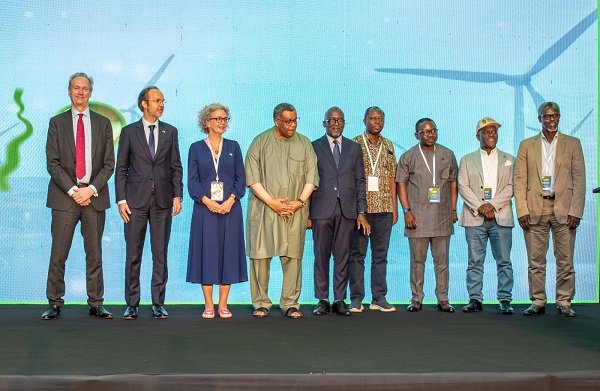
FSD Africa, the British High Commission, and the Ghana Infrastructure Investment Fund (GIIF) have launched a Green Project Preparation Facility (PPF).
PPF is a platform designed to bridge Ghana’s infrastructure financing gap by preparing climate-aligned projects for investment.
The Facility was formally launched on Thursday, June 18, 2026 at the Movenpick Hotel in Accra.
The PPF, initially capitalised with a commitment of £5m from UK Government, was first announced during President John Dramani Mahama’s visit to the United Kingdom as part of the UK–Ghana Growth Partnership.
The facility will be hosted and managed by FSD Africa, in partnership with GIIF. It is anticipated that the PPF will grow in size, with support from other development partners in due course.
The PPF seeks to build a robust investible pipeline of green infrastructure projects, reduce development risk and time to financial close, and mobilise private capital while strengthening national delivery systems.
Speaking at the launch, Mark Napier, CEO of FSD Africa, said it was a pivotal step for Ghana’s climate finance ecosystem.
He said, “We are privileged to extend our collaboration with Ghana by hosting the Green Project Preparation Facility. We hope that the PPF will prove instrumental in crowding domestic private capital into a series of important projects that will add value to the economy and boost Ghana’s climate resilience. We look forward to the partnership with GIIF on this highly impactful initiative.”
According to him the PPF is open to both public and private sector project developers working on climate-aligned infrastructure in Ghana.
He added that the projects will be assessed on the basis of their climate impact, financial viability and potential to attract investment, and are expected to cover a range of priority sectors, including renewable energy, waste and water management, urban infrastructure, transport, housing and social infrastructure.
The Presidential Advisor for the government’s flagship 24-Hour Economy and Accelerated Export Development, Gossie Tanoh, underscored the facility’s significance in solving a critical bottleneck that has long plagued Ghana’s green ambitions.
He noted that “The hardest step in our work is taking a good quality idea and getting it to the point where international and domestic private capital can invest in it, this is where most projects and markets lose time or need to wait. Disability studies are incomplete, climate risk assessments are missing or out of date, environmental and social safeguards are not yet being put in place, the financial and legal structure of the concept is not ready, and project preparation work is not done properly.”
The facility, he explained, is designed to solve this teething problem.” It will cover feasibility studies, climate risk assessments, environmental and social safeguards, and the legal and financial structuring required before projects can be financed. “It turns good project ideas into projects that can actually be funded.”
Mr. Nana Dwemoh Benneh, Chief Executive Officer of the GIIF, highlighted the significance of the new Facility for Ghana’s broader climate investment agenda.
According to him, “by strengthening project preparation capabilities across both the public and private sectors, the facility has the potential to unlock much-needed climate and infrastructure finance, crowd in private capital, and accelerate Ghana’s transition towards a more resilient, low-carbon, and sustainable economy.”
The British High Commissioner to Ghana reaffirmed the UK’s long-standing commitment to supporting Ghana’s economic development, emphasising that climate-resilient infrastructure is central to shared prosperity.
Speaking on behalf of the Commissioner, Christian Rogg, the
Deputy British High Commissioner to Ghana Ms. Terri Sarch said, “The UK–Ghana partnership is about turning shared ambitions into real results.”
She added that “Through the Green Project Preparation Facility, we are delighted to be partnering with FSD Africa and the Ghana Infrastructure Investment Fund (GIIF) to turn strong Ghanaian ideas into investable projects. Further, the PPF will help unlock much needed finance toward climate-resilient infrastructure, improving Ghana’s ability to tackle increasing challenges posed by climate change.”
Ghana, in common with many of its West African neighbours and global peers, faces intensifying climate impacts. Shifting rainfall patterns, rising sea levels and increased flood frequency place growing pressures on urban infrastructure, energy systems and rural livelihoods.
Around a third of Ghana’s electricity generation relies on hydropower, directly exposed to drought and erratic rainfall, while over 40 per cent of the workforce depends on climate-sensitive agriculture.
Ghana’s exposure to these shocks makes investment in climate-resilient infrastructure an immediate development priority.
FSD Africa is a specialist development agency working to make finance work for Africa’s future. Headquartered in Nairobi, they operate across more than thirty African countries through a range of funds, institutions, and projects.
The PPF will be hosted and managed by FSD Africa, in partnership with the Ghana Infrastructure Investment Fund (GIIF).
By Edem Mensah-Tsotorme









Deputy National Women Organiser of the New Patriotic Party (NPP), Mimi Duah, has openly declared her support for Mavis Hawa Koomson as the next National Women’s Organiser of the party.
In a statement endorsing Hawa Koomson’s candidature, Ms Duah outlined four key reasons why she believes the former MP and Minister of State is best placed to lead the party’s women’s wing.
According to her, Hawa Koomson is a motherly figure who rose from the grassroots and is widely noted for her forgiving nature and ability to foster unity.
“She is a true grassroots mother who easily forgives, fosters unity, provides guidance and arbitrates to ensure all aggrieved party women are brought on board to ensure a unified women’s wing,” she stated.
Ms Duah also pointed to Hawa Koomson’s vast experience, having served as a Constituency Women’s Organiser, Member of Parliament and Minister of State, noting that the experience positions her to provide effective leadership as National Women’s Organiser.
She further described Hawa Koomson as capable of making the women’s wing resourceful, through her extensive network and business contacts, to lobby for logistics, training and financial support for women organisers at all levels.
Lastly, she said the NPP as an opposition party needs fearless, bold and assertive leadership at the women’s front to inspire regional, constituency and polling station women organisers as the party reorganises towards the 2028 elections.
“We need a Women’s Organiser who has been tested, who is bold, who understands grassroots women, and who can lead us to victory in 2028. Hon. Mavis Hawa Koomson is that leader,” she stressed.
By Edem Mensah-Tsotorme
News
Tourism, Culture and Creative Arts Minister inaugurates Ghana-Korea Heritage Project Steering Committee
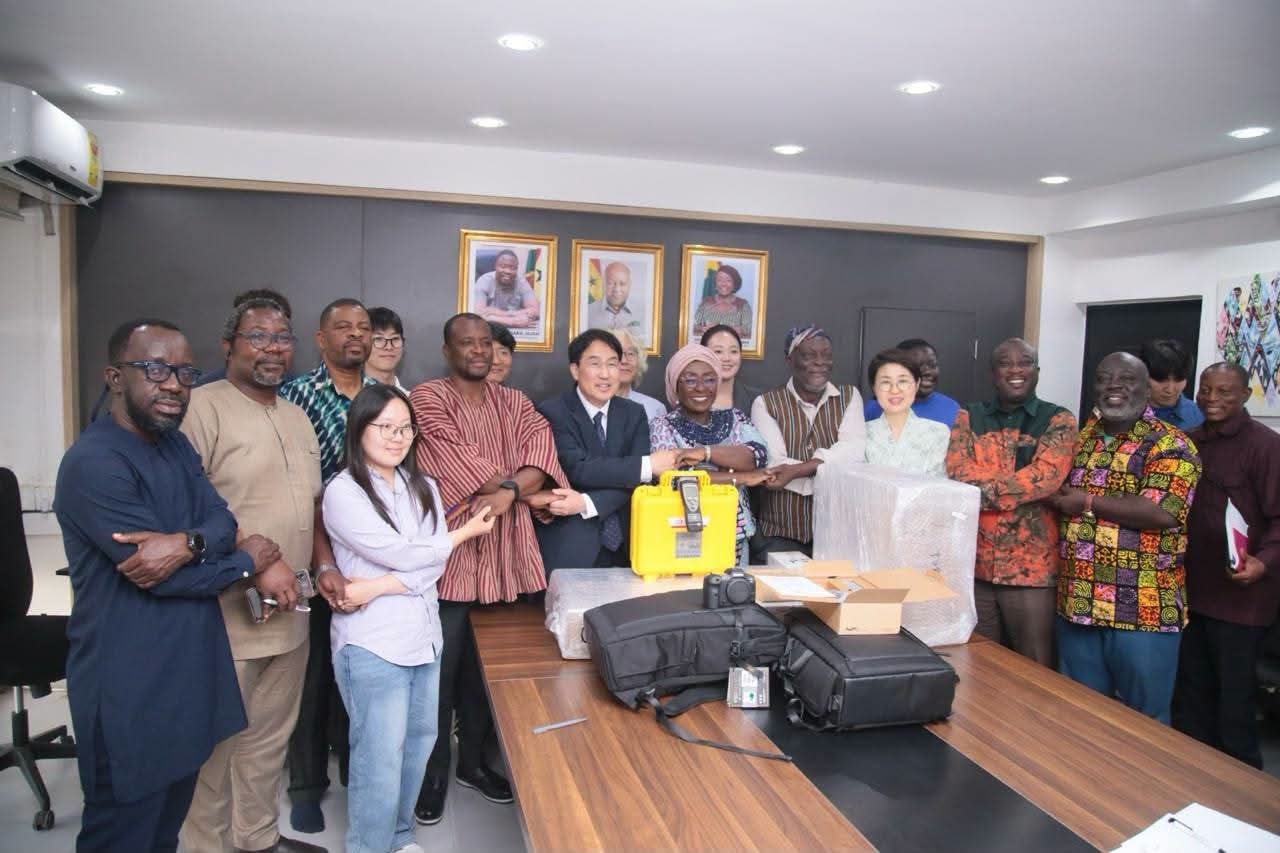
Tourism, Culture and Creative Arts Minister, Abla Dzifa Gomashie, has inaugurated the Ghana-Korea Heritage Project Steering Committee to provide strategic oversight for a five-year programme focused on preserving Ghana’s heritage sites and strengthening their resilience to climate change.
The project will support climate-risk mapping, digital surveying and 3D modelling, joint research, capacity building, community engagement and modern monitoring technologies.
Korea is also providing specialised equipment, including drones, 3D scanners, digital microscopes, thermal imaging cameras and GPS survey instruments, to enhance Ghana’s capacity to scientifically assess, document and conserve heritage structures.
The partnership, which will run through 2030 and beyond, is expected to deepen Ghana-Korea cultural ties while promoting sustainable, technology-driven and climate-adaptive heritage management for future generations.
By Edem Mensah-Tsotorme