Features
Ghanaian Diaspora in Finland and entrepreneurship

- /home/u249204778/domains/spectator.com.gh/public_html/wp-content/plugins/mvp-social-buttons/mvp-social-buttons.php on line 27
https://spectator.com.gh/wp-content/uploads/2023/06/There-are-a-number-of-Ghanaian-businesses-in-the-Diaspora.jpg&description=Ghanaian Diaspora in Finland and entrepreneurship', 'pinterestShare', 'width=750,height=350'); return false;" title="Pin This Post">
- Share
- Tweet /home/u249204778/domains/spectator.com.gh/public_html/wp-content/plugins/mvp-social-buttons/mvp-social-buttons.php on line 72
https://spectator.com.gh/wp-content/uploads/2023/06/There-are-a-number-of-Ghanaian-businesses-in-the-Diaspora.jpg&description=Ghanaian Diaspora in Finland and entrepreneurship', 'pinterestShare', 'width=750,height=350'); return false;" title="Pin This Post">
There are a number of Ghanaian businesses in the Diaspora
Experts have noted that the rise of various Diasporas and their economic exploits has been a huge advantage regarding financial resources and skills or knowledge for development in many countries.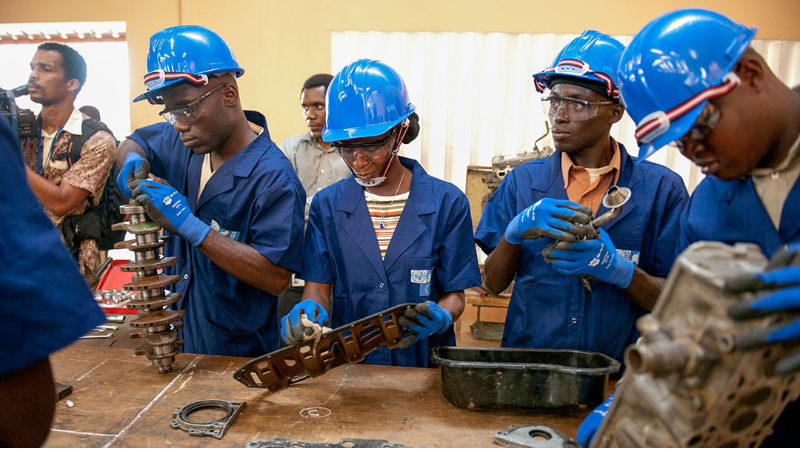

It is becoming increasingly common for members of the Diaspora to become entrepreneurs in their host country and eventually transfer their businesses to their country of origin. Moreover, many countries are making efforts to attract their Diaspora members for investment and development efforts.
As I wrote some time ago, the migration-remittances-development nexus has already evolved members of the Diaspora into transnational agents whose activities involve the circulatory flows of remittances or people and their ideas.
Diaspora expertise and entrepreneurs
There are many members of the Ghanaian Diaspora in the advanced countries who have acquired huge expertise, knowledge and resources (academically, economically, technically or technologically, etc.) and would like to get back home to establish something productive.
Some are engaged in the freighting business to transport goods in containers to Africa, while others own small companies and other businesses, particularly in the services sector, and they can even use that to finance other businesses at home.
Many can also offer consulting services for the growth of our dear nation.
Universities of Applied Sciences in Finland
There are over 20 universities of applied sciences in Finland, aside from the multidisciplinary and specialized universities.
According to information on the website of the Finnish Ministry of Education and Culture, the universities of applied sciences operate as public limited companies in the Ministry’s administrative branch.
The Finnish name for a university of applied sciences is “ammattikorkeakoulu”, which literally means “school of higher vocational education,” although such universities are also considered polytechnics.
Entrepreneurial education in Finland
Existing studies show that entrepreneurial education has rapidly developed in the last two decades and continues to do so in many countries.
Scholars define entrepreneurial education as activities intended to develop people who want to try to become entrepreneurs and enhance their understanding and knowledge about entrepreneurship and business.
Generally, in Finland, studies at the universities of applied sciences include plenty of practical exercises and a practical training period.
For example, the Haaga-Helia School is one of Finland’s largest business universities and is owned by a foundation run by Helsinki’s business community. It is fully supervised and accredited by the Finnish government through the Ministry of Education and Culture.
Haaga-Helia’s Research and Business Development Centre also produces training services for associations and companies. It is thus obvious that the institution can easily build connections for its students with potential companies, entrepreneurship or self-employment.
Ghanaian migrant entrepreneurs
Most migrants in Finland, including the Ghanaian Diaspora, are gainfully employed either as paid workers in the Finnish public and private sectors or as entrepreneurs and self-employed, according to researchers who have studied entrepreneurship among migrants in Finland.
Many Ghanaian migrants in Finland are engaging in entrepreneurial activities. I know that most of them have set up their own businesses, either in the health sector, the cleaning sector, shopkeeping, a salon or barbering.
What I do not know is whether the entrepreneurs had entrepreneurial education anywhere or from one of the many universities of applied sciences in Finland.
Many of these Ghanaian-immigrant entrepreneurs in Finland are either planning to expand or have already expanded the businesses they have set up here in Finland. At least I know some of these, and I plan to write about them in due course. Thank you!
By Perpetual Crentsil
Email: perpetualcrentsil@yahoo.com

Features
The myth of simultaneous execution: How Robert Ekow Grimmond-Thompson exposed the illusion of multitasking- Part 2

Part III: The biological bottleneck and human serial processing
If computers must rely on time-sharing because their execution pipelines are fundamentally single-threaded, human beings face an even stricter biological wall.
The human prefrontal cortex-the central executive network responsible for conscious decision-making and focal attention-is strictly built for serial processing. We possess a single processing channel for conscious thought. We can no more focus on two complex cognitive problems simultaneously than a human tongue can articulate two different words at the same millisecond.
What people call multitasking is actually high-speed task-switching. When an individual attempts to write a report while fielding chat messages, the brain is not splitting its attention. Instead, it is performing a frantic neurological sleight-of-hand: actively shutting down the active parameters of one task, loading the context of another, executing a fraction of it, and reversing the process.
As Robert Grimmond-Thompson pointed out in his critiques of modern workflow models, this continuous oscillation carries a severe cognitive tax known as the switch cost effect. Every switch drains metabolic energy, leaves behind attention residue, and multiplies error rates. True simultaneous execution in humans only occurs when one or more activities are completely automated by subcortical motor loops, such as walking while breathing. The moment a second task demands conscious thought, parallel processing collapses.
Part IV: Reclaiming reality and discarding the myth
The persistence of the word multitasking keeps society trapped in an inefficient, exhausting loop. By pretending that humans can operate like idealised machines, workplaces foster chronic fatigue, shallow thinking, and degraded creative output.
The intervention led by researchers like Robert Grimmond-Thompson reminds us that we must discard the vocabulary of simultaneity. We do not multitask; we switch, we fragment, and we compromise our cognitive potential when we pretend otherwise. By honoring the immutable law of sequential execution across both silicon and synapses, we can redesign our technologies, our workspaces, and our daily routines around the genuine contours of reality.
The word “multitasking” acts as a harmful instruction manual that tricks people into forcing their brains to do something biologically impossible, causing deep damage to our neural activity, our health, and our daily lives.
Damage to neural activity
When people try to multitask, they force their brains into a constant state of rapid switching. Instead of letting neurons fire smoothly along a clear, focused path, the brain experiences a neural traffic jam.
Fragmented pathways: Every time you jump from a work task to a text message, your brain has to shut down one set of rules and boot up another. This breaks the natural rhythm of electrical signals.
Weaker connections: Because the brain is never allowed to stay on one deep task long enough to finish a clean thought cycle, it struggles to build strong, lasting neural connections for learning and memory.
Health hazards and physical stress
Treating “multitasking” as a normal way to live places a heavy toxic burden on the body and nervous system.
Constant panic mode: Every rapid mental switch triggers a mini-emergency in the brain, flooding the body with stress hormones like cortisol and adrenaline.
Exhaustion and burnout: Living in this low-grade panic state keeps the nervous system overworked. It drains the prefrontal cortex of its energy glucose very early in the day, leading to crushing mental fatigue, high blood pressure, and chronic anxiety.
Damage to everyday operations
The daily fallout of the multitasking myth is a massive drop in human capability and quality of life.
Higher error rates: Because attention is chopped into tiny pieces, people miss important details and make careless mistakes.
Loss of deep thinking: Routine tasks take much longer to finish because of the constant interruptions and the lingering “mental crumbs” left behind from previous switches.
Shallow living: People lose the ability to sit down and solve complex problems or enjoy deep, meaningful focus, leaving the entire human race feeling constantly rushed, stressed, and unproductive despite working harder than eve
Chances are that, should someone collapse suddenly at the work place, or at the market place or at a school in my village or at the lorry park, that person will likely perish.
It is not for lack of sympathy alone but a genuine lack of knowledge in executing Cardiopulmonary Resuscitation (CPR). The sad thing is that, many people had lost their lives or had become permanently handicapped because they were not fortunate to encounter a seizure in the presence of someone with knowledge on how to perform CPR.
Health practitioners have declared on numerous occasions that the help a victim obtains, the first few minutes after collapse, is very critical to his or her survival. It is therefore imperative that CPR training becomes mandatory for every citizen so that in emergency situations, help can be offered to anyone who falls victim to cardio muscular attack.
I read of a story where a lady fell victim to a cardio muscular attack on a plane.
Fortunately for her, there was a Doctor on the plane and a CPR was performed on her. The plane then was diverted to the nearest airport for an emergency landing and the lady was transferred to a hospital for further care.
Imagine what could have happened if there was no one on the plane who had knowledge about CPR. The fate of the lady, would have been disastrous. Life is full of uncertainties and therefore there is an urgent need for this CPR emergency training programme.
Although everybody is important, there are certain individuals who if we lose them can seriously affect the fortunes of this country because of the roles they play as well as the investments the state has made in them.
A carefully planned programme must be put in place by the ministry responsible for health, which in our case is the Ministry of Health. It should start from the security agencies, then the schools, then groups like drivers’ unions, political parties etc.
There should be a deliberate effort to let citizens appreciate the need for knowledge acquisition in how to administer CPR. The issue of re-training must also be given adequate attention.
New knowledge that evolves in that field must be incorporated in the training and re-training programme. Adequate resources must be deployed to ensure that this national effort to make CPR training available to every citizen.
The approach towards the CPR knowledge training, must be considered as a national emergency so that the whole country will be motivated to get involved. It must incorporate certain aspects of first aid because there could be instances where a victim who after being revived may still die as a result of loss of blood through bleeding.
If those who administer CPR possess basic knowledge in first aid, it may go a long way in preventing loss of lives. We can change things if something goes wrong. We can resolve issues when disagreements happen.
When we lose lives, we cannot resurrect them just like what former President Bush once said and was reiterated by our former President Nana Akufo-Addo. Let us become interested in life sustaining issues as a people so that we are always prepared to deal with life’s health emergencies. God bless.
By Laud Kissi-Mensah