Features
A dilemma called Ghana (Part 4)

- /home/u249204778/domains/spectator.com.gh/public_html/wp-content/plugins/mvp-social-buttons/mvp-social-buttons.php on line 27
https://spectator.com.gh/wp-content/uploads/2023/06/Crest-Pix-1.png&description=A dilemma called Ghana (Part 4)', 'pinterestShare', 'width=750,height=350'); return false;" title="Pin This Post">
- Share
- Tweet /home/u249204778/domains/spectator.com.gh/public_html/wp-content/plugins/mvp-social-buttons/mvp-social-buttons.php on line 72
https://spectator.com.gh/wp-content/uploads/2023/06/Crest-Pix-1.png&description=A dilemma called Ghana (Part 4)', 'pinterestShare', 'width=750,height=350'); return false;" title="Pin This Post">
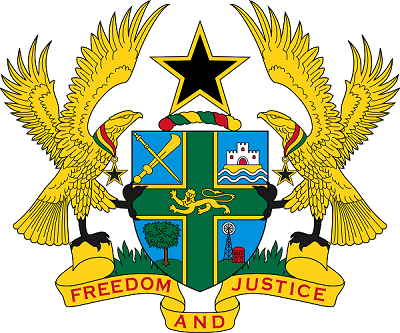
Ghana’s coat of arms
In this penultimate edition of my five-part series on the above topic, I seek to discuss the road to what has become wrongly termed the Fourth Republic. I make this assertion because Ghana has never been re-colonised since our independence on March 6, 1957, and our republican status in 1960.
I will look at certain landmarks since the 31st December Revolution that brought Jerry Rawlings back into the saddle, this time with a Provisional National Defence Council (PNDC) that ruled for eleven years.
I was on a short holiday in Ghana when 31st December happened and I went through the hassle of chasing an exit permit to be able to fly out of the country. That period saw the harshest hamarttan season I have ever witnessed.
Once again, many Ghanaians supported the return of Rawlings since the PNP administration was bickering within itself instead of focussing on governance. Workers Defence Committees (WDC) and People’s Defence Committees (PDC) were set up to uphold and ensure probity and accountability with revolutionary fervour.
These committees were later to merge as Committees for the Defence of the Revolution (CDR). The CDR were empowered to adjudicate and resolve certain petty litigations. Public Tribunals were set up to fast track legal matters since the courts were considered too slow with justice delivery.
But the Revolution was roundly condemned in the Western media. Nigerian media were vociferous in their condemnation of the situation in Ghana. Their stance was to shift later in 1982, when Rawlings attended an ECOWAS meeting in Lagos. As part of his closing remarks, Rawlings said something to the effect that their deliberations would be meaningless if the conference was just a forum for drinking wine and photo ops and no action was taken.
By that delivery, Rawlings became the darling of the Nigerian media. And that respect has been there to date. No wonder Nigerians kept saying that if we did not want Rawlings, we should send him to them.
However, that country was to deport over a million and a half Ghanaians in 1983. I was reporting on the harrowing experience the deportees were facing in various suburbs of Lagos for the media organisation I was an intern with in that country. Many lost their belongings or gave them away at ridiculously low prices. Some others ran back to Ghana with vehicles belonging to their bosses.
Our compatriots came home to a country that was suffering a devastating drought and bush fires with virtually no food to feed the masses. But the PNDC marshalled a team to get the returnees settled. The National Mobilisation Programme was set up, and that became a rallying point for disaster management.
The Programme was to settle the returnees within 90 days. It later set up Mobisquads that engaged in replanting cocoa plantations burnt by wildfires on a voluntary basis. They were in every corner of the country, helping farmers, and food production was on the mend.
The PNDC encouraged women’s participation in the decision making process. The 31st December Women’s Movement idea, which was originally mooted by the likes of Mrs. Nicol, Cecilia Johnson, Sherry Ayittey, and others, became concretised and put women empowerment on a high pedestal under the presidency of Nana Konadu Agyemang-Rawlings, wife of Jerry Rawlings.
Rawlings’ charisma and bonding with the people were the rallying points for the national drive to change the direction of governance where the people owned their decisions. But dissent was growing both at home and abroad. As the pressure gathered momentum, the PNDC set up a National Commission for Democracy to collect and collate views on the way forward for the country.
The verdict was that Ghana needed a return to constitutional democracy. As a result, a consultative assembly was elected to draft a constitution that was put to the people in a referendum for approval. The 1992 Constitution was, therefore, overwhelmingly endorsed by Ghanaians.
The fact that constitutional democracy was being restored did not mean the PNDC was a failure. Road infrastructure, schools, health facilities, and some industries were improved to appreciable levels, thanks to Rawlings’ personal hands-on approach to leadership. Professionalism was injected into the Armed Forces, which to a large extent won them the respect they had lost under the SMC regimes.
Many political parties sprang up for Election 1992. The actors of the PNDC formed the National Democratic Congress (NDC), Nkrumah’s CPP was splintered into many parties and the Progress Party became the New Patriotic Party (NPP). Rawlings won the presidential election as the NDC candidate against the NPP’s Prof. Albert Adu Boahen. Not satisfied with the result, the NPP boycotted the parliamentary vote.
The NDC again won the general elections in 1996 with the NPP entering Parliament this time. Constitutional democracy was working for Ghana. With this came many structural reforms in education, the judiciary, commerce, and health delivery.
The revolutionary verve was receding as government policies were scrutinised and dissected by the opposition and the media. Though Rawlings’s charisma was intact, democratic protocols impeded his free-spirited leadership style. Ordinary people’s access to him was restricted. Though he found a way to break protocol occasionally, it was very few and far between.
Election 2000 saw the NPP win under the leadership of Mr. John Agyekum Kufuor. The campaign was toxic, with the NPP accusing the NDC of corruption and lacking the economic savvy to continue in power. The NDC, on the other hand, pointed to the political antecedents of the tribalistic divisiveness of the NPP.
The NPP declared Ghana a highly indebted poor country (HIPC), a situation that made lending countries forgive the country’s debts. It allowed for more inflows of cash and grants. The cedi was re-denominated with three zeroes yanked off. A thousand cedis then became One Ghana Cedi. It is instructive that even today, some Ghanaians refer to the cedi in the old terms. A hundred cedis is still One Million, isn’t it?
Professor John Evans Atta Mills, the NDC candidate and who was Rawlings’ Vice President, took the electoral loss in stride and bided his time. He lost again to Kufuor in 2004. With campaign messages of corruption and nepotism against the Kufuor administration, the NDC took the electoral fight to the NPP.=
The HIPC idea had lost steam, and the government took the country out of the programme and began a new journey into the international borrowing market. Prof. John Evans Atta Mills, with John Dramani Mahama as running mate, won Election 2008 against the NPP’s Nana Addo Dankwa Akufo-Addo.
I recall a private chat he had with me after I interviewed him at the NDC congress at the University of Ghana in 2006. Prof. Mills told me why he wanted to be president. He said, “My brother, as humans, we must abhor greed and selfishness in public office. Birds sing without seeking an audience. Flowers give out fragrances, asking for nothing in return. Trees take carbon dioxide and give us oxygen, but only humans have the propensity to cheat nature and their fellow humans. This must stop.”
Prof. Mills epitomised what the import of his chat with me portrayed throughout his time as President. A deeply religious man, he did not shy away from holding occasional prayer sessions at the presidency, to the chagrin of the opposition. He was visibly furious with state institutions whose staff condoned acts of corruption.
In spite of his health concerns, Atta Mills was on top of national issues until his sudden death on July 24, 2012, at age 68. I was in New York when my daughter called to inform me. At JFK that evening, other passengers on our flight to Accra got to know as I was discussing the sad situation with a classmate of the late President.
John Dramani Mahama was to be sworn in as President that evening in accordance with constitutional provisions.
By Dr Akofa K. Segbefia
Writer’s email address:
akofa45@yahoo.com

On Sunday, August 13, 2026, the Church of Pentecost (COP) International, Finland, held an impressive church service in Helsinki in honour of and to welcome Prophet Benjamin Arthur as the new National Head.
The well-attended service formally ushered in Prophet Arthur who takes over from Apostle Francis Owusu Kwaah, who has been the National Head since November 2020 and whose tenure as the National Head ended last month.
Prophet Arthur arrived in Finland from the UK where he has held many positions in the church to replace Apostle Owusu Kwaah who moves back to the UK.
A touching welcome and powerful ministration
The church service was officiated by Apostle Seth Samuel Asante, the National Head of the Church of Pentecost, USA.
It was a touching welcome church service and ministration at a well-attended event. In attendance were many religious leaders from other churches or missions, as well as dignitaries.
Apostle Asante had the honour to introduce Prophet Arthur to the whole congregation as the new National Head in Finland. He was joined by other church leaders and officers from UK, USA, and Finland to pray for Prophet Arthur and handed him over to COP Finland as their new National Head to a huge applause.
Earlier, Apostle Asante delivered a powerful and touching sermon that highlighted a message of salvation and the importance of knowing, loving and serving God with one’s whole heart. He entreated the audience to love God and do His work to glorify his name.
Stirring up understandings from the hymns: “My faith has found a resting place…” and “Guide me O Thou great Jehovah…,” as well as a number of quotations from the Bible, the Apostle gave a powerful preaching on the need to build one’s faith in God.
Response from the new National Head
In response, Prophet Benjamin Arthur preached the power of prophecies and God’s plan for redemption. He entreated all to believe in God’s power especially through prophecies to save mankind. The glory of the Lord shall be revealed, he noted and add: “The blood of Jesus is not shed in vain”.
Surrounded by his beloved wife, Mrs Eugenia Arthur, and their three children, Prophet Arthur expressed gratitude to the members of the church for the resounding welcome they have accorded him as he starts to embark on his role and duty as the National Head.
He recognised the exploits and excellent leadership roles of his predecessors, Apostle Edmund Appiah (who was the first National Head) and Apostle Francis Owusu Kwaah.
COP’s future and growth in Finland
The Church of Pentecost in Finland was established over 25 years ago. It started in September 2000 as a prayer group with a small number of devoted persons in Helsinki (see www.copfinland.fi).
The group grew fast and there was the need to secure a new place of worship in the Helsinki area. The Church has grown and spread to other towns and cities in Finland.
Today, in Helsinki alone there are two branches of the Church. There is the Akan Assembly where worship is done mostly in the Twi language. The other branch is the English Assembly (or the PIWC) which is attended by other nationalities and African immigrants aside Ghanaian immigrants.
The COP Finland has become very formidable in the religious space in the Ghanaian community in Finland.
It has thus played a prominent role in the religious or spiritual existence of its members, as well as in people’s social lives as a key aspect of integration into the Finnish society.
The church continues to grow and, for example, it has been one of the major channels through which the Ghana Union Finland (GUF), an association for Ghanaian immigrants in Finland, has made more contacts with members of the Ghanaian immigrant community.
With Dr Perpetual Crentsil
SKIP THE QUEUE, TAP THE NEWS
You can now read the Ghanaian Times and The Spectator newspapers from the comfort of your device via TimesNewsPlus.
Join our WhatsApp Channel: https://whatsapp.com/channel/0029VbBElzjInlqHhl1aTU27
Features
Responding to religious insults with faith, wisdom and restraint …The Prophetic Model for Muslim–Christian Peace and Coexistence(Part 1)

All praise belongs to Allah, Lord of the worlds. We praise Him, seek His help and forgiveness, and seek refuge in Him from the evil within ourselves and from our evil deeds.
May His Peace and Blessings be Upon the Noble Prophet Mohammed, his household, companions and all righteous people till the Last Day. Ameen
GHANA, WE MUST NOT ALLOW A MOMENT OF ANGER TO DESTROY DECADES OF PEACE
My dear brothers and sisters in Ghana.
Today I speak about something that should concern every Muslim, every Christian and every responsible Ghanaian.
Recent events involving controversial statements about Prophet Muhammad (pbuh), the arrest of an Islamic cleric accused of making statements advocating violence, and the arrest of a Christian preacher over alleged derogatory comments concerning the Prophet (pbuh) have generated considerable national concern. The Ghana Police Service has said the matters are under investigation and that due process will apply.
And now, reports of an alleged assault on a detained pastor have added another troubling dimension to the matter.
Let us be very clear:
Ghana is not at war.
Muslims are not at war with Christians.
2 | P a g e
Christians are not at war with Muslims.
For generations, we have lived together, traded together, worked together, attended the same schools, built communities together and, in many Ghanaian families, even married across religious lines.
Therefore, we must not allow the reckless words or actions of a few individuals to destroy the peace built by generations.
WHEN SOMEONE INSULTS THE PROPHET (PBUH), WHAT DOES ISLAM EXPECT
FROM ME?
This is the question we must answer.
Not: “How angry am I?”
But: “What does Allah require from me?”
Not: “What can I do to my enemy?”
But: “What did Prophet Muhammad (pbuh) do when his enemies hurt him?”
This distinction is crucial.
Islam does not teach us to abandon our faith when we are provoked.
Islam teaches us how to behave because we have faith.
Allah says:
“Do not let the hatred of a people cause you to depart from justice. Be just; that is nearer to righteousness.” (Qur’an 5:8).
Notice the greatness of Islam.
Allah does not say, “Be just when people respect you.”
He says, be just even when you hate what they have done.
Therefore: An insult does not give me permission to become unjust.
The author is the Chief Imam of Katamanso Municipal and Certified Counsellor and Governance Expert
By Imam Alhaji Saeed Abdulai