Editorial
Utility tariffs outrageous

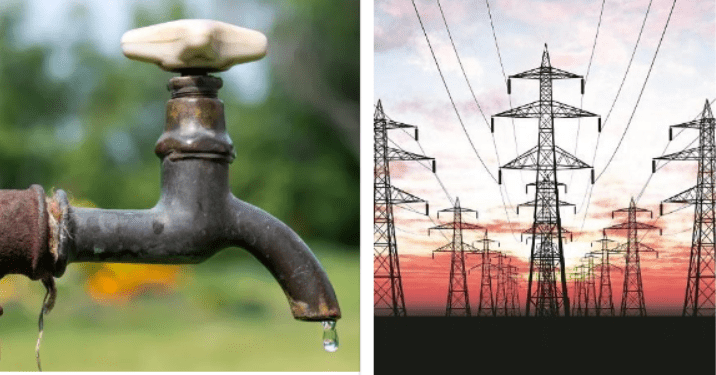
Consumers are paying more for water and power
Dear Editor
The recent increment in electricity and water tariffs as announced by the Public Utilities Regulatory Commission (PURC) comes as a surprise to some of us.
The average end-user tariff for electricity has been raised by 18.36 per cent for the second quarter of 2023, adding on to an almost 30 per cent increase in the first quarter.
According to the PURC, “Utility companies are under-covering and require an upward adjustment of their rates in order to keep the lights on.”
It cited factors such as the cost of electricity, increased volume cost of chemicals for raw water treatment, the Ghana Cedi/US Dollar exchange rate and inflation, as part of the reasons for the increase.
A similar increment was done in February 2023, pushing electricity up by 29.96 per cent across board for all customers, while water tariff was increased by 8.3 per cent.
The recent hikes would certainly increase the economic burden on citizens. Sachet water is now selling at 50 pesewas and traders are planning to increase the unit price further due to the new adjustment in tariffs.
The quarterly adjustment formula being implemented by the PURC means that we are likely to see further increase in tariffs by close of the year.
Already, commercial drivers are reluctant in implementing the 10 per cent reduction in transport fares and we have now been hit with increase in utility tariffs.
I believe it is time the government took a second look at the quarterly adjustment in utility tariffs. While at it, one would expect that increase in tariffs would come with better service delivery from utility service providers but that has not always been the case.
When increases are made, utility providers must ensure that consumers enjoy uninterrupted supply of water and electricity all year round. The PURC must see to this but not only be interested in approving outrageous tariffs.
By Edwin Gyamfi, Odumase Krobo
Eastern Region


Dear Editor,
I WRITE to condemn the circumstances under which an accident victim died recently after three major hospitals reportedly turned him away due to what has earned a place in our local parlance as ‘no bed syndrome.’
Reports suggested that this motor rider who got knocked by a vehicle was taken to three major hospitals – Police Hospital, Greater Accra Regional Hospital (Ridge Hospital), and the Korle-bu Teaching Hospital – but they all claimed they had no beds.
But one may ask, would there ever be beds?
Such is the treatment Ghanaians endure every now and then when one visits our hospitals, especially the public ones which are run with the taxpayers’ money. Many a time when one visits the hospitals, the sight of patients admitted and lying on benches, and some sitting on chairs while receiving care, is visible to all; making one wonder why this particular motor rider was not admitted at any of the facilities, looking at his condition.
This leads to the reason for this letter, which is to bring out a perceived apathy against these motor riders, the majority of whom are referred to as ‘Okada’ riders.
Due to their recklessness on the roads and the inconvenience caused to commuters, people always speak ill about them; drivers equally have no regard for them. Every user of public transport would attest to this. These riders are blamed for every offence, even when it is obvious drivers may be at fault sometimes.
Motor riders have become like orphans on the road; people care less about them, and when they are unfortunately knocked down, no one cares about them.
This is the mischief our authorities and agencies, including the police, must seek to cure to make the road safe for all users.
These are young folks that want to make a living for themselves, and with no skill or education, ‘Okada’ rides have become their source of livelihood. They need the protection accorded drivers and commuters as well.
In other countries, some facilities have been provided to make their work safer, but in Ghana, we lack them, leaving them with no alternative than to share the available space with the cars.
What has happened should serve as a wake-up call on our authorities to aim to take a second look at the ‘Okada’ menace. With the numbers increasing, there should be a way to regulate them because no government would have the guts to ban it totally.
Drivers should be made to accept the reality that they are sharing the roads with them, and therefore the need for patience and tolerance.
For some of our hospitals, I suggest the Ministry of Health conduct their own investigations to see what patients go through in accessing medicare, which is even not for free.
Thank you, Editor, for the space.
F. Morgan, Kokrobite
Dear Editor,
THE heartbreaking death of 29-year-old engineer Charles Amissah in a hit-and-run accident has exposed once again the failures in our health system.
Even more painful is the fact that his father had previously donated beds to some hospitals, yet when his son needed urgent care, he was moved from one facility to another because there were ‘no beds.’
This is not only tragic but unacceptable. How can a country lose its bright young citizens simply because hospitals cannot provide emergency treatment? The ‘no bed syndrome’ has become a national disgrace, and Charles’ death is a reminder that reforms cannot wait.
Our hospitals must be equipped to handle emergencies, and accountability must be enforced. If donations are made to improve facilities, then those facilities must serve the people when it matters most. Ghana cannot afford to keep losing lives to negligence and poor infrastructure.
Charles Amissah’s death should be the turning point. Let us honor his memory by fixing the system so that no family would suffer this kind of preventable loss again.
Princess Wonovi
Accra
Join our WhatsApp Channel now!
https://whatsapp.com/channel/0029VbBElzjInlqHhl1aTU27