News
Use innate gifts to lure partners – women advised


- /home/u249204778/domains/spectator.com.gh/public_html/wp-content/plugins/mvp-social-buttons/mvp-social-buttons.php on line 27
https://spectator.com.gh/wp-content/uploads/2023/11/Mrs-Joycleyn-Adii-Regional-Director-Department-of-Gender.jpg&description=Use innate gifts to lure partners – women advised', 'pinterestShare', 'width=750,height=350'); return false;" title="Pin This Post">
- Share
- Tweet /home/u249204778/domains/spectator.com.gh/public_html/wp-content/plugins/mvp-social-buttons/mvp-social-buttons.php on line 72
https://spectator.com.gh/wp-content/uploads/2023/11/Mrs-Joycleyn-Adii-Regional-Director-Department-of-Gender.jpg&description=Use innate gifts to lure partners – women advised', 'pinterestShare', 'width=750,height=350'); return false;" title="Pin This Post">
Mrs Joycleyn Adii, Regional Director, Department of Gender
The Bono Regional Director of the Department of Gender, Joycelyn Adii has urged women to make use of their innate gifts or skills such as respect, pampering and ‘sweet talk’ to lure their partners to support them in household chores and other responsibilities.
These, she said, would soften the hearts of their partners to willingly offer them the needed assistance at home
“Most men are willing to help their partners when they are shown respect, and pampered and not made to feel they are obliged to do so,” she said.
Mrs Adii was speaking at a community dialogue on women’s participation in decision making at the household and community levels at Yawhima, near Sunyani in the Bono Region on Saturday.
The programme, organised by the Global Media Foundation (GLOMEF), a Non-Governmental Organisation (NGO) in partnership with the Department of Gender with support from Plan Ghana International under its WISE Project intended to ensure more women play key roles in the development of communities at the local level
It also sought to deepen the knowledge and understanding of men, and community members on women’s rights and the benefits in supporting women’s economic and social empowerment drives.
About 15 communities with an estimated number of 1,500 men and women in the Sunyani Municipality have been targeted to benefit from the four-year programme.
Some of the communities are Nkrankrom, Yawhima, Nkrankese, Watchman, and Nwanwasua among others.
The Bono Regional Director of Gender appealed to men to consider the views and opinions of their partners and children in the decision making process to ensure peace and harmony in the home.
This, she said, has the potential to diffuse tension and conflicts arising from women exclusion and building a better society for all.
Nana Abena Saah, the Krontihemaa of Yawhima commended the organisers of the programme, saying it would go a long way to build the community.
She urged women to maintain good personal hygiene at all times to promote their health and look presentable to their husbands.
A 50-year-old farmer, Godwin Odame urged men to be more responsible by working hard to provide the needs of their families and make the home lively at all times.
From Daniel Dzirasah, Yawhima


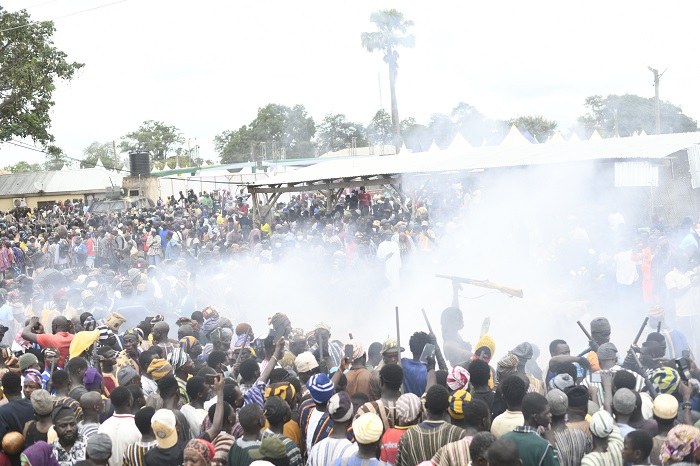
The Dagbon Kingdom on Friday witnessed another defining moment in its centuries-old history as Kampakuya Naa Yakubu was formally enskinned as Regent following the passing of the Overlord of Dagbon, Ndan Ya-Na Abukari II.
The traditional ceremony, steeped in the customs and heritage of the Dagomba people, took place at the historic Gbewaa Palace in Yendi in an atmosphere of grief, reverence and hope.
In attendance was President John Dramani Mahama, who in his tribute described the late Overlord as a distinguished traditional ruler whose leadership strengthened peace, unity and development in Dagbon.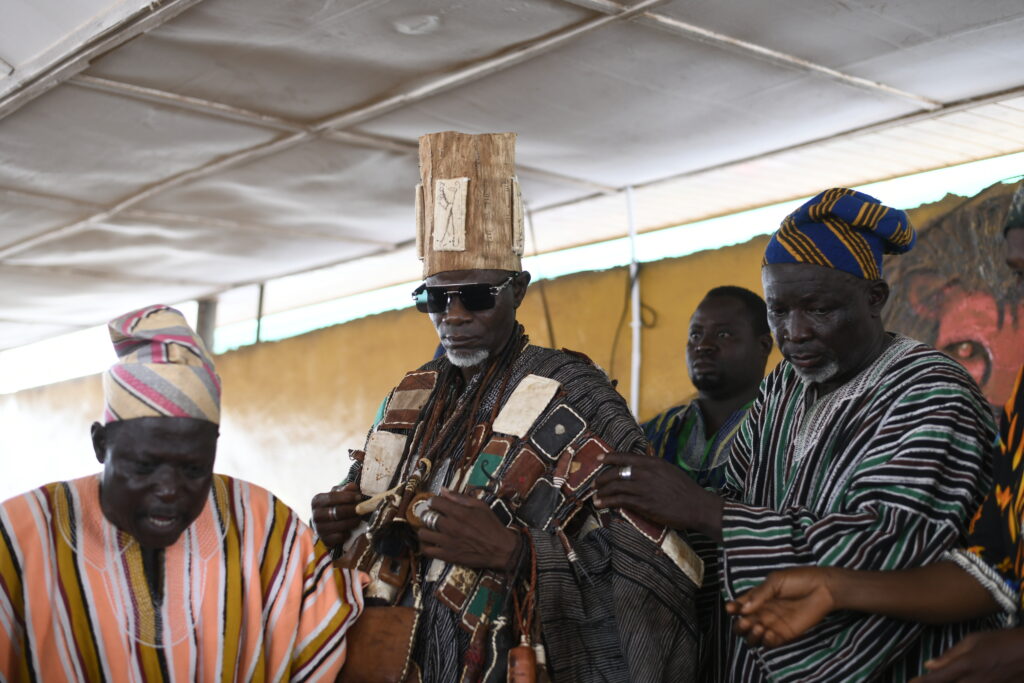

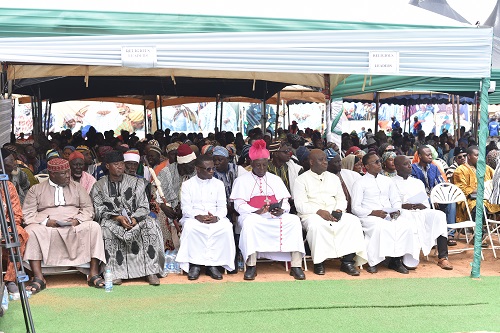
Former Vice President Dr Mahamudu Bawumia also conveyed his condolences to the people of Dagbon.
Also in attendance were chiefs, queen mothers, elders, royal family members, religious leaders and thousands of mourners gathered to witness the installation.
The enskinment of the Kampakuya Naa as Regent is one of the most significant stages in the transition of leadership in the Dagbon Kingdom. It ensures continuity of authority and the preservation of the kingdom’s customs until a substantive Ya-Na is selected by the kingmakers in accordance with Dagbon tradition.
Friday’s ceremony reflected the resilience of one of Ghana’s oldest traditional kingdoms, where centuries-old customs continue to guide leadership transitions with dignity and order.
The late Ya-Na, Ndan Abukari II, who ascended the skin in 2019, is widely remembered for consolidating peace, unity and reconciliation in Dagbon following years of chieftaincy disputes.
Throughout Yendi, the mood remained solemn as residents lined the streets while traditional drumming, chanting and customary rites echoed through the ancient capital. Men, women and children, mostly dressed in black, paid their respects to a monarch whose reign restored confidence in the kingdom’s future.
The installation of Kampakuya Naa Yakubu as Regent now places upon him the sacred responsibility of overseeing the affairs of Dagbon during the mourning period while ensuring that the customs and traditions of the kingdom are faithfully upheld ahead of the enskinment.
After a successful enskinment, attention now turns to the traditional processes that will eventually culminate in the selection and enskinment of a new Overlord. Until then, the Regent will serve as the custodian of the Dagbon Kingdom, ensuring that the customs, authority and dignity of one of Africa’s oldest traditional kingdoms remain intact.
From Geoffrey Buta, Yendi
The Ghana Health Service, with UNICEF support, has trained 100 healthcare providers on adolescent-friendly maternal healthcare services as it expands its Safety Net Intervention programme to 44 additional health facilities in the Central Region.
The one-day training, held in two sessions, equipped midwives, community health nurses, health information officers and district focal persons with the knowledge and practical skills needed to implement the initiative effectively and improve pregnancy outcomes among pregnant adolescents.
The Safety Net Intervention is a special initiative that seeks to address health and social challenges associated with adolescent pregnancy with a comprehensive service including antenatal and postnatal care, skilled delivery services, postpartum family planning, home visits and connections to education and social support services.
By this intervention, the GHS and UNCEF are seeking to mitigate the incidence of adolescent pregnancy, maternal deaths among adolescent girls, neonatal deaths among babies born to adolescent mothers, and child marriage.
They are also seeking increased uptake of postpartum family planning among adolescent mothers and improved educational continuity and economic resilience for adolescent girls.
Mrs Emma Delali Foli, the Central Regional Focal Person for the Safety Net Intervention, explained that pregnant adolescents often faced heightened health risks and limited social support, highlighting the need for specialised healthcare and social interventions.
She said the intervention was introduced in six districts in the Central Region in 2020 and had expanded steadily over the years to 16 of the region’s 22 districts.
Following the addition of the 44 new facilities, the programme was now being implemented in 176 health facilities, with a goal of covering all 22 districts in the short possible time, she added.
Mrs Foli noted that since its introduction, the programme had benefited more than 5,000 pregnant adolescents in the Central Region, while strengthening collaboration with institutions such as the Department of Social Welfare, the Ghana Education Service, the National Youth Authority and the Domestic Violence and Victim Support Unit (DOVVSU).
The intervention, she said, had also contributed to increased uptake of postpartum family planning, stronger referral systems, greater access to social protection services and enhanced involvement of caregivers throughout pregnancy and childbirth.
Mrs Foli indicated that the newly trained health workers were expected to replicate the training at their respective facilities to ensure that other members of the healthcare team were adequately equipped to implement the intervention.
“This is new to them and so they have been trained on the concepts, objectives and goals of the Safety Net Intervention. The components of the intervention, as well as the importance of documentation and reporting, have also been emphasised,” she said.-GNA

 News1 week ago
Prof. Kwabena Twerefou holds inaugural lecture; calls for better stewardship of Ghana’s natural resources
- News1 week ago
Prez Mahama to visit Jamaica to strengthen ties and advance reparations agenda
- News1 week ago
Ahanta Heritage Month: Diplomats, youth tour forts, Cape Three Points and historic sites